I’ve just come back from a glorious week around the East Neuk of Fife.
East Neuk is a little peninsula on the east coast of Scotland, north of the Firth or Forth and south of the Firth of Tay. There’s lots of arable farming here and the coastline is dotted with beautiful old fishing villages.
We stayed in Anstruther, an excellent base for walks along the Fife Coastal Path. On this particular walk we headed northeast from Anstruther, snapping glorious coastal scenes along the way. Halfway along, we were presented with the otherworldly forms of the Caiplie Caves, ancient sandstone sea caves that now stand alone unexpectedly from the coastline. Beyond, we finally arrived at Crail for a lunch break before enjoying the scenic harbour and historic houses.
Considering we were hiking in February we couldn’t have asked for better conditions: crystal clear atmosphere, low light, and powerful winds.
All photos taken on my Sony α7ii using my Sony 24-240mm F3.5-6.3 OSS zoom and Rokinon 14mm f2.8 ED AS IF UMC prime lenses. RAWs developed in Lightroom, merged in Photomatix, then edited and finalised in Photoshop.
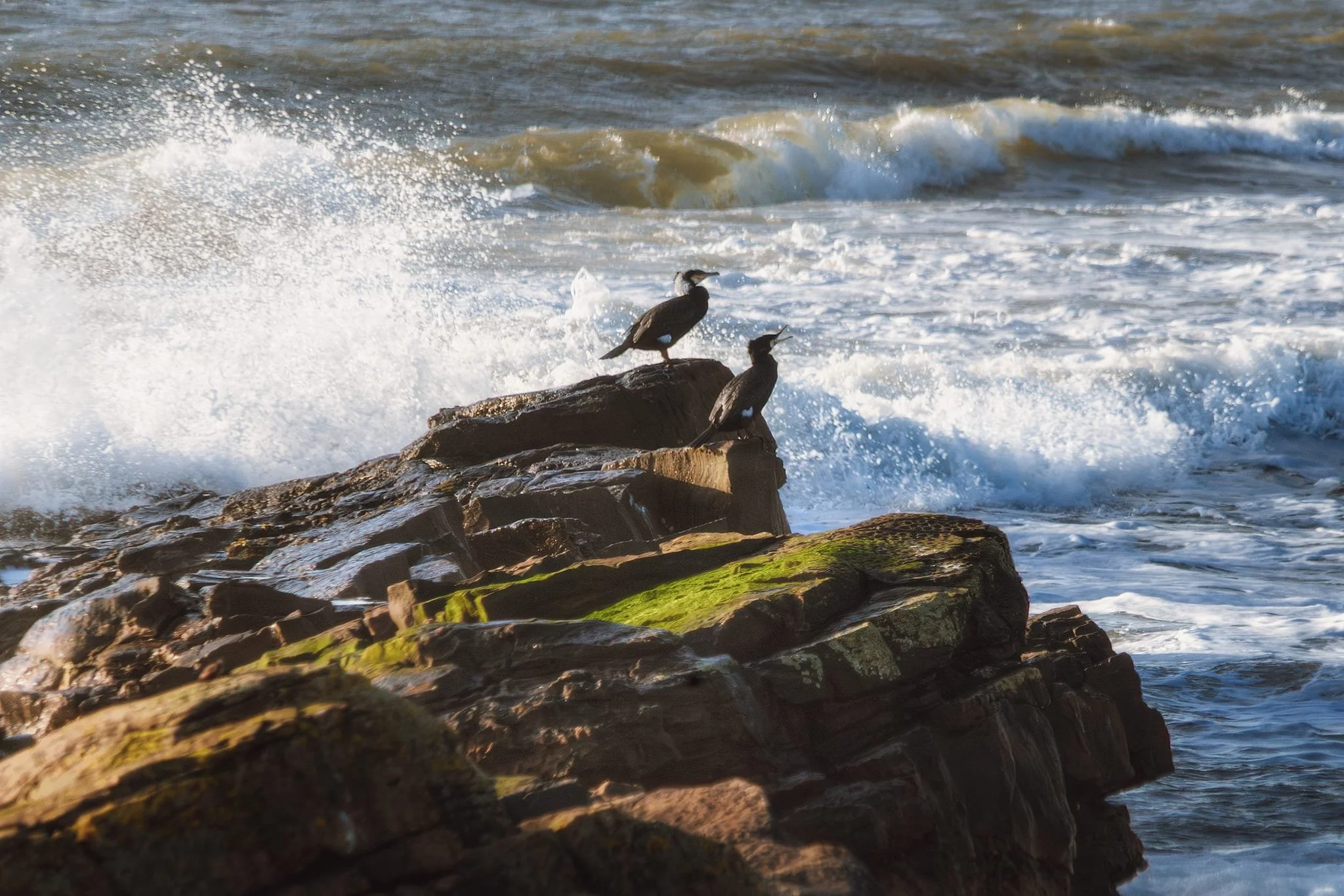
Shags/Cormorants (not sure which) resting on the exposed crags near Cellardyke as the powerful winds smacked the sea into the coast.
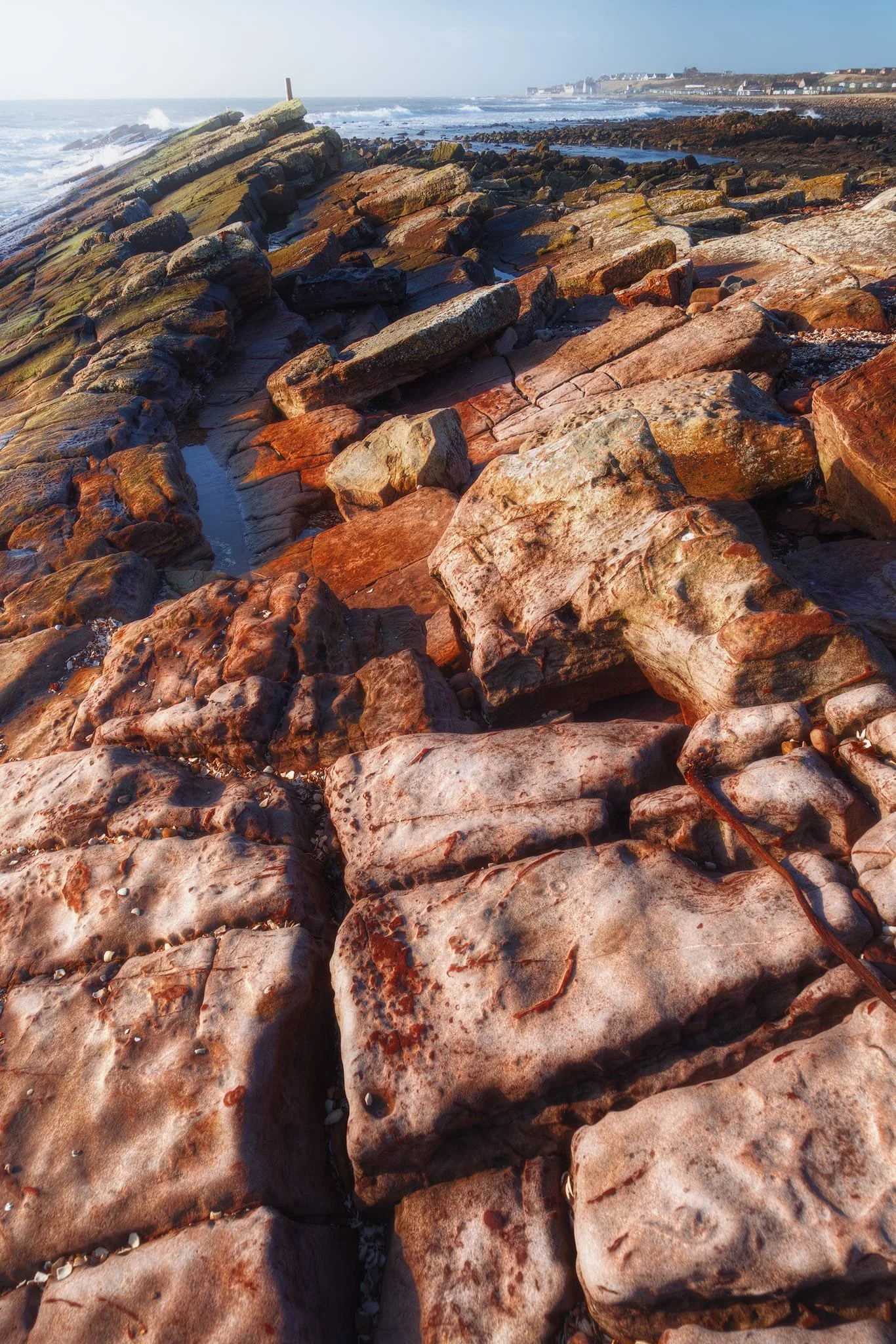
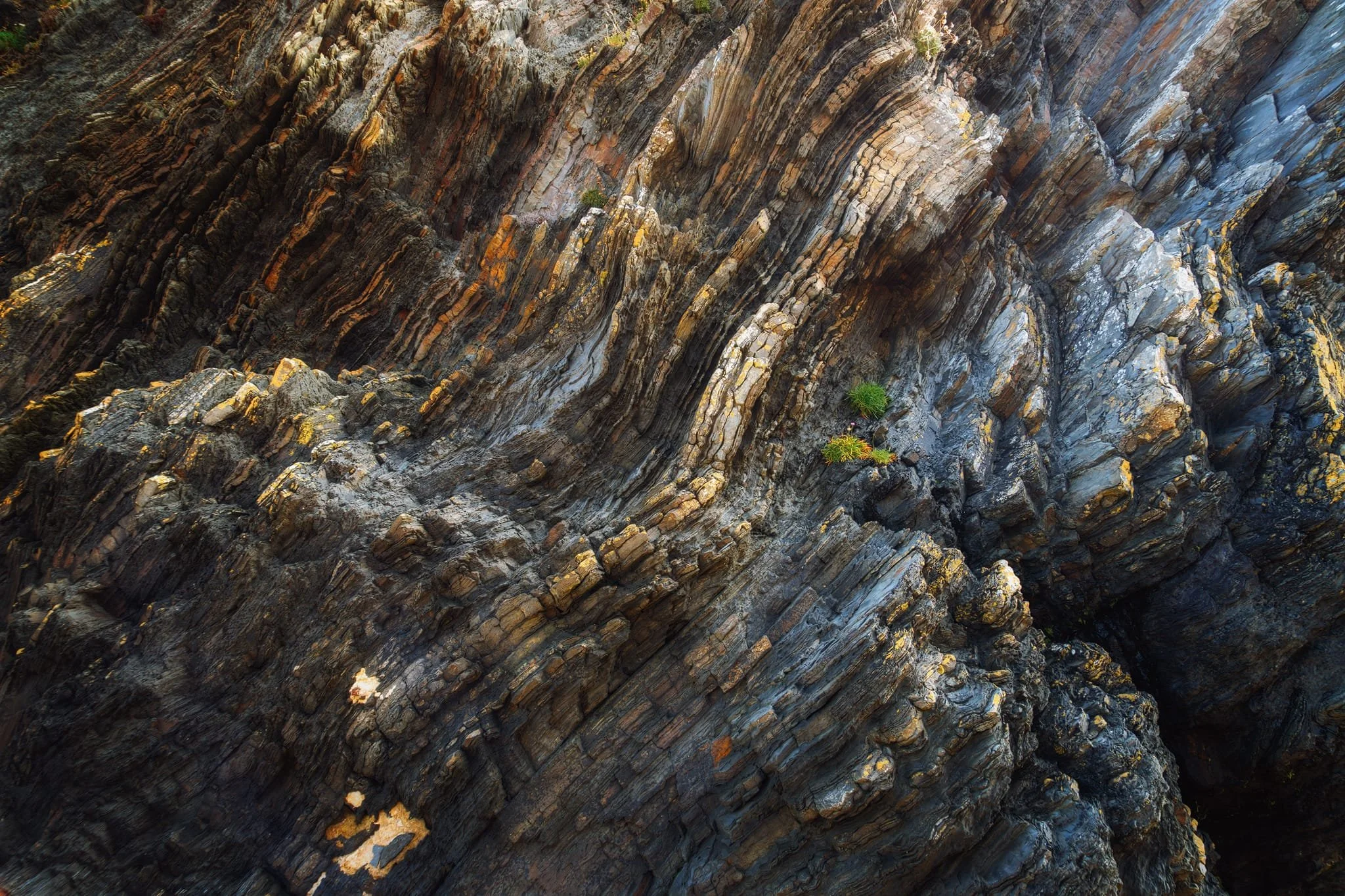
What you’re looking at is from a time between 359 and 299 million years ago. The reddish-brown rocks contain a lot of iron oxide and were formed when Scotland was near the equator in a warm climate. The layers of sandstone and mudstone show how they were built up in ancient shallow seas and river deltas. Over the years, shifts in the earth’s crust created the rectangular patterns you see, and the coast being worn away by waves shaped this impressive platform.
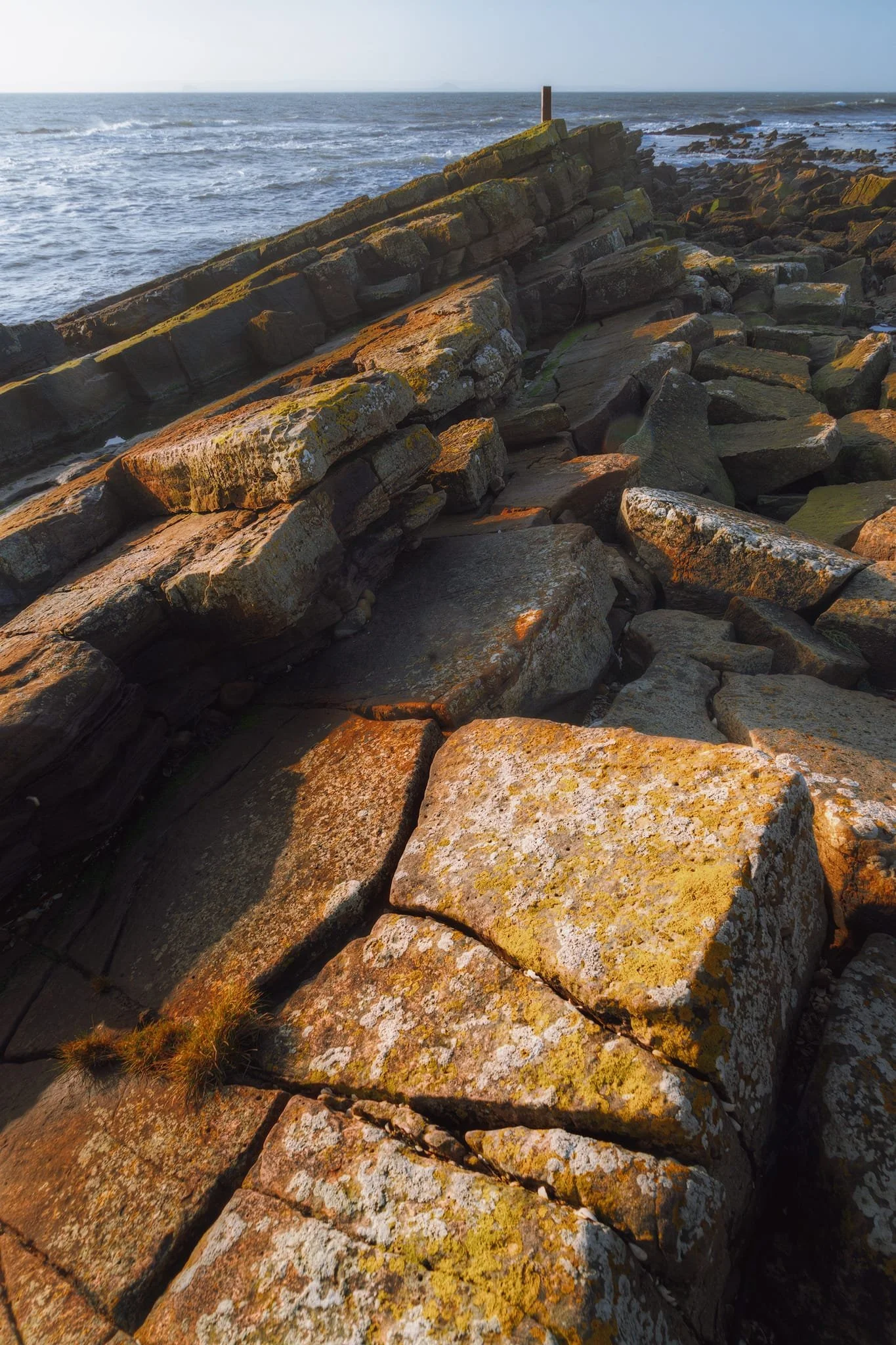
The striking column-like shapes of the rocks in Cellardyke come from ancient seabed materials that have been broken apart by tectonic forces. The unique yellow-orange colour is caused by lichen growing on the rocks and the rusting of iron minerals. This pattern appears almost like it was designed, but it was actually formed naturally as the rocks cracked over millions of years in response to pressure.
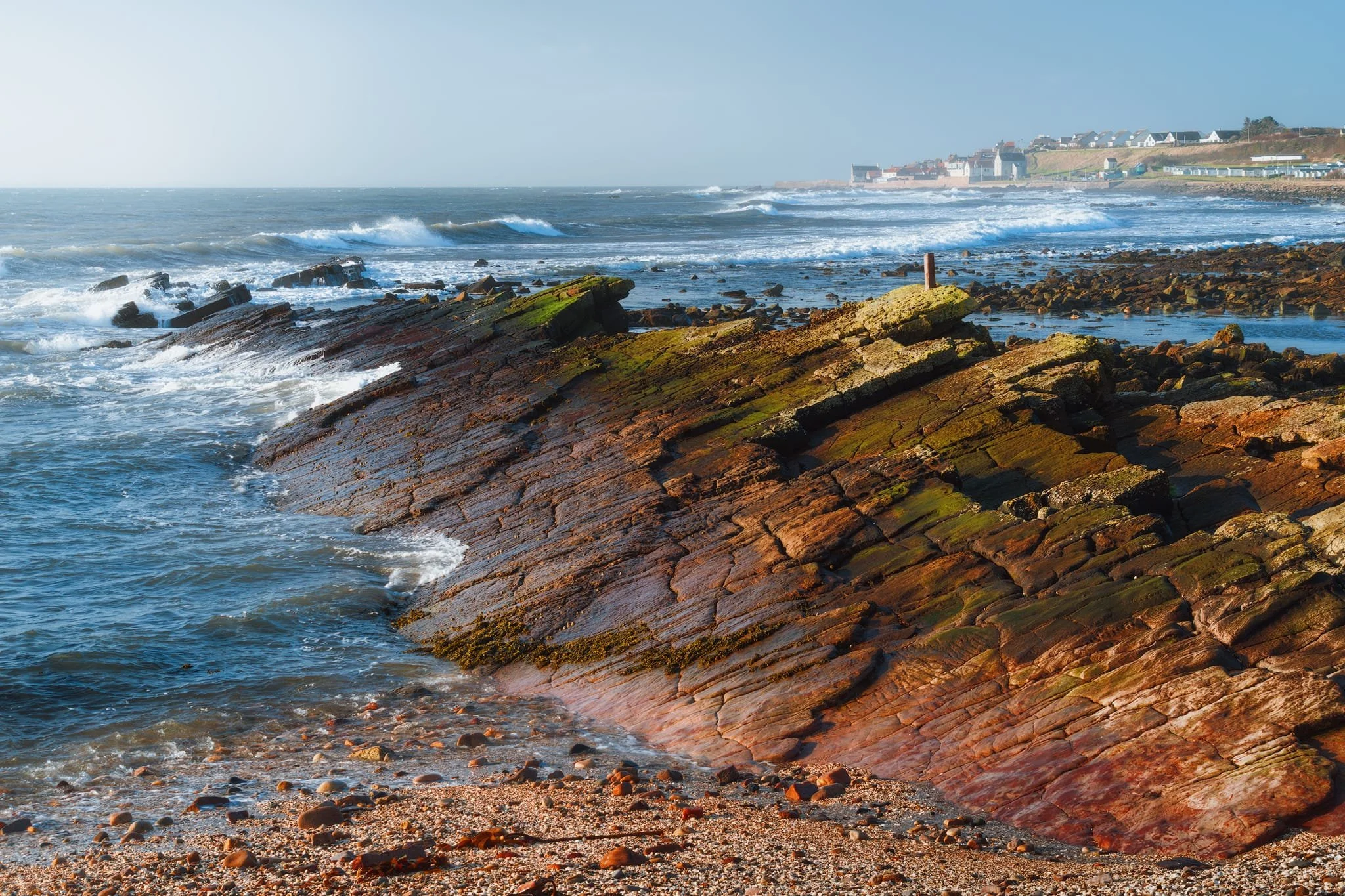
Standing back from these fascinating formations show them in context. A slightly hazy but clear day just about reveals Cellardyke in the background, whilst strong gusts push wave after wave into the coastline. A dramatic yet peaceful scene.
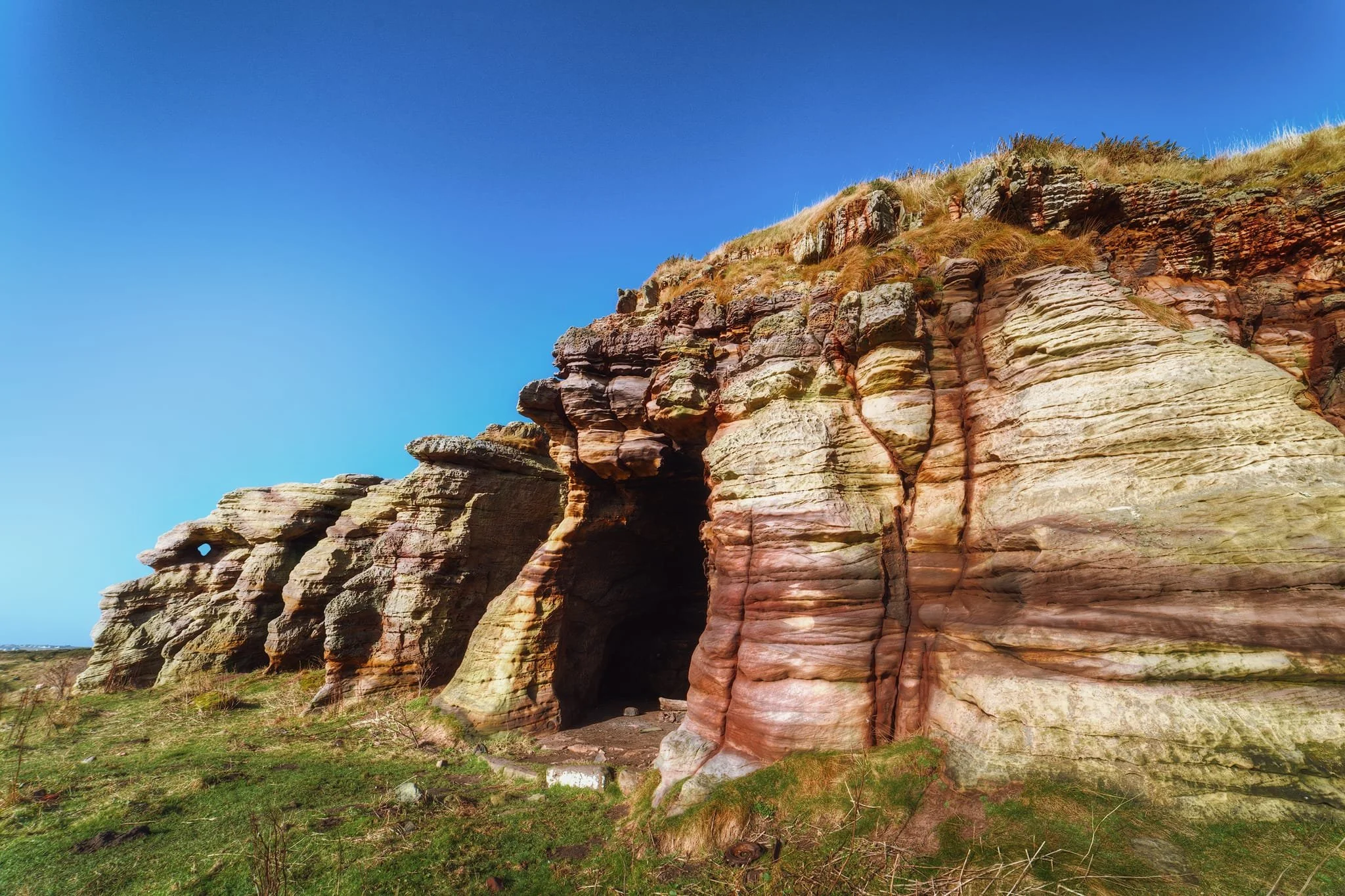
Roughly halfway between Anstruther and Crail this striking formation suddenly arrests your attention. These are the Caiplie Caves. They feature beautiful formations from around 370 to 360 million years ago. They’re notable for their bright stripes of pink, red, yellow, and cream colours, which show how the environment changed when the rocks were formed in ancient river systems and floodplains. The caves were shaped over time by the action of sea waves, which gradually wore away the softer rock layers while leaving the harder ones intact. This process created natural shelters along cracks in the rock, which were important as refuges for early Christian settlers in the coastal area of Fife. Isn’t it fascinating?
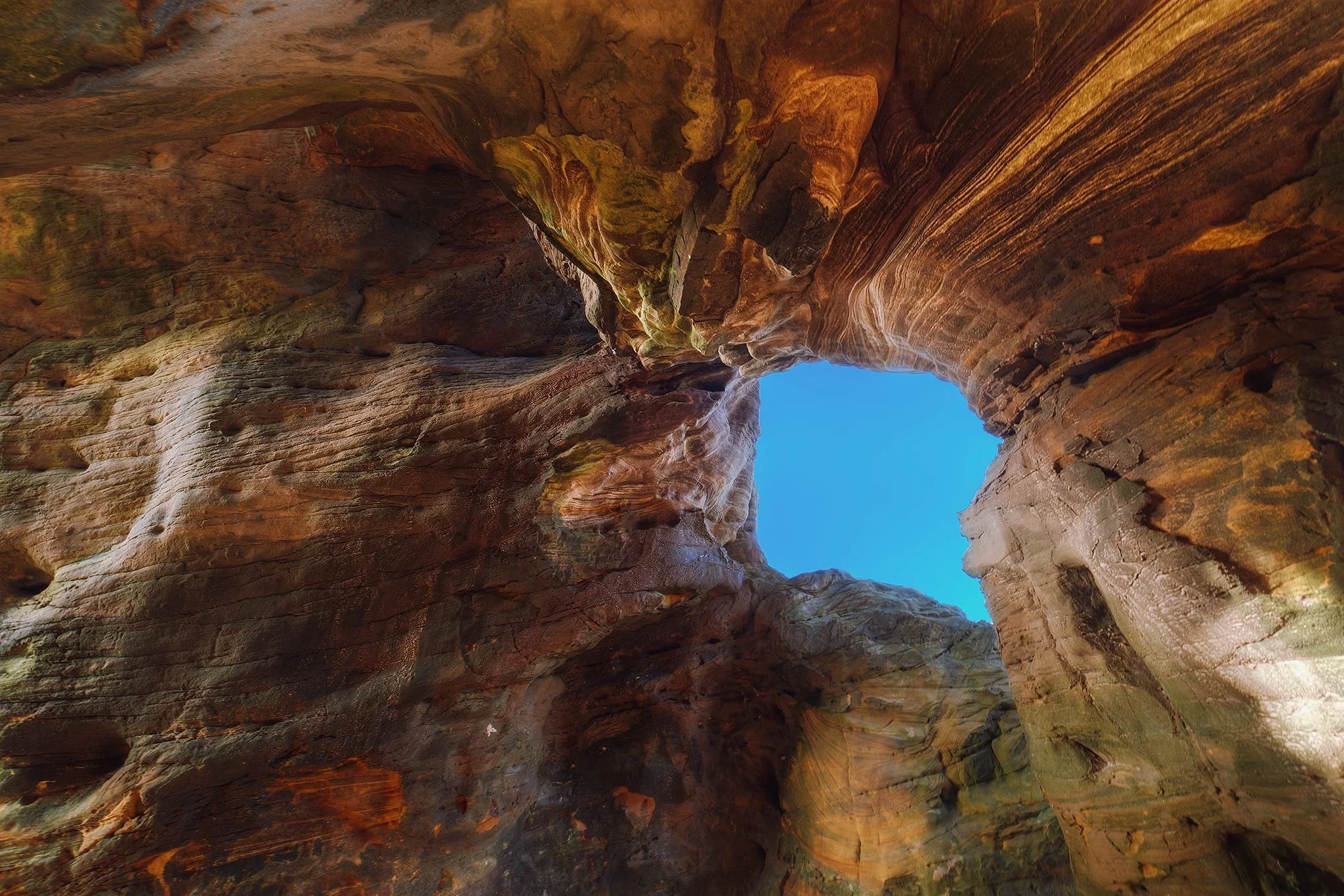
Like an over-excited child, I equipped my ultra-wide 14mm lens and went hunting for compositions. In the bigger cave I spotted a small “window” and used the incredible patterns and formations in the rocks to serve as a compositional leading line.
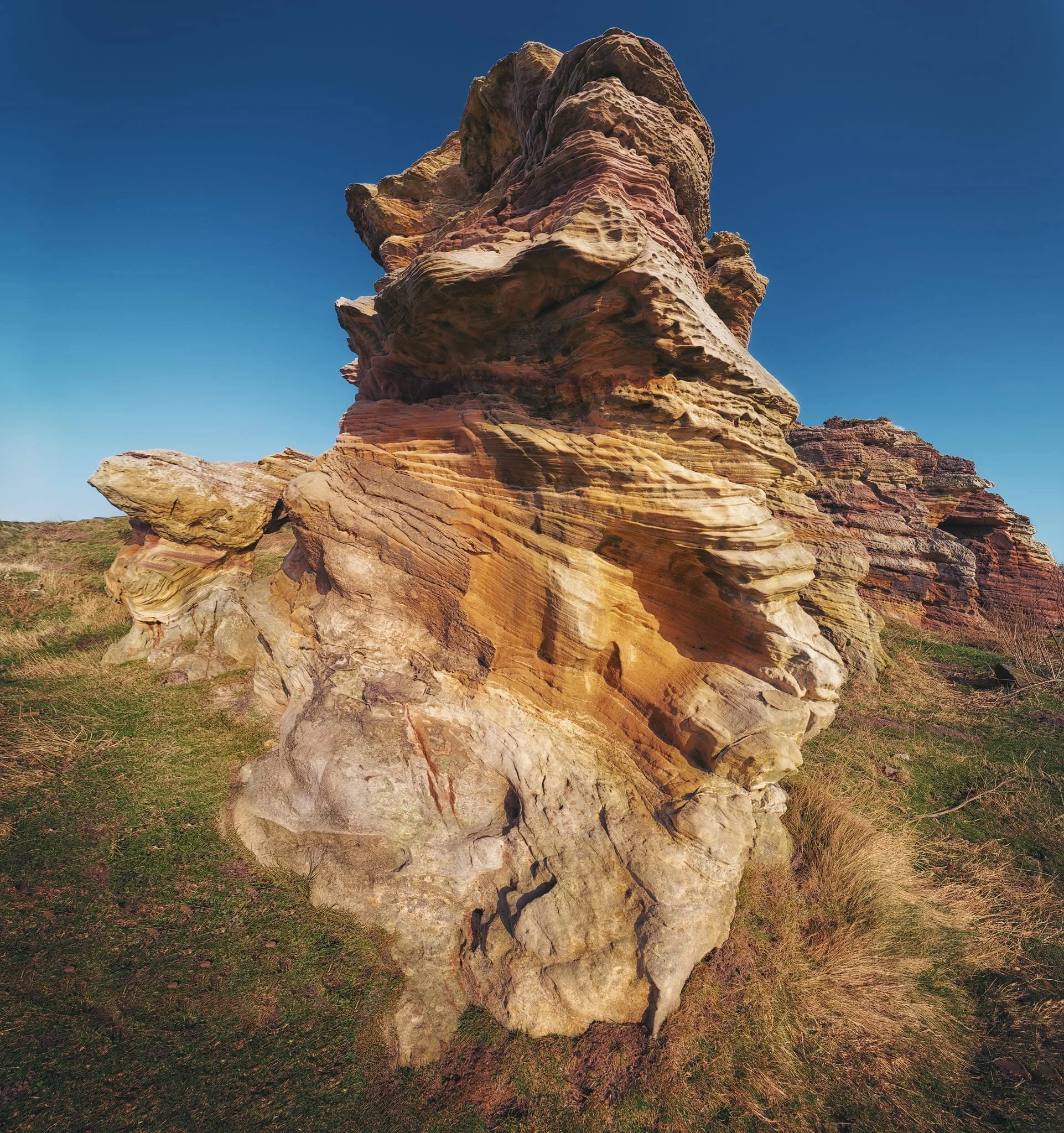
For this unique view of the caves’ southwestern profile I shot seven landscape photos, stacked top to bottom, to create this ultra-expansive vertorama.
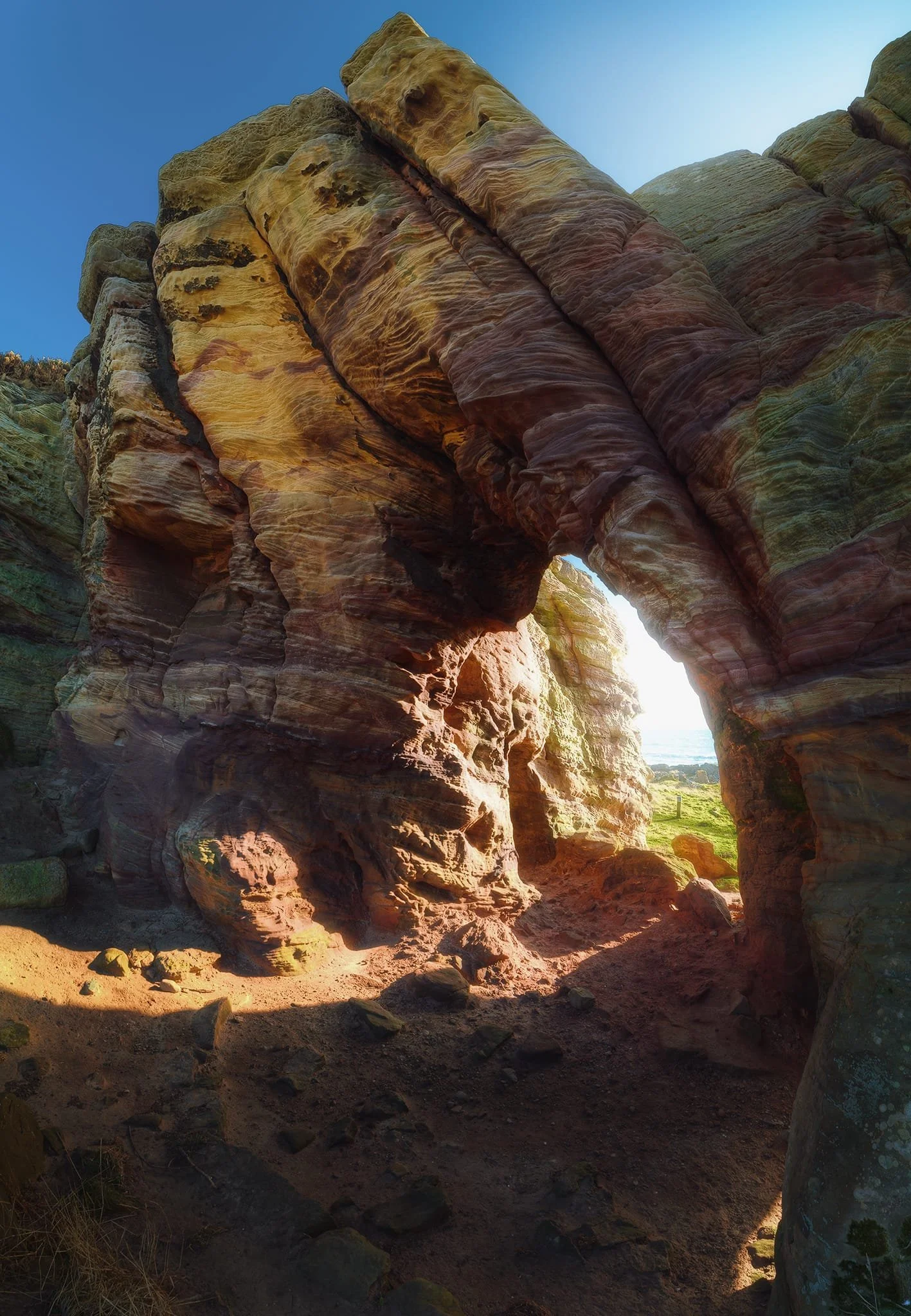
Similarly, this time from behind the largest cave, I shot six landscape photos stacked top to bottom to achieve this mind-bending vertorama composition. The low morning sun blasted light through the opening, pulling out all the gorgeous textures and colours.
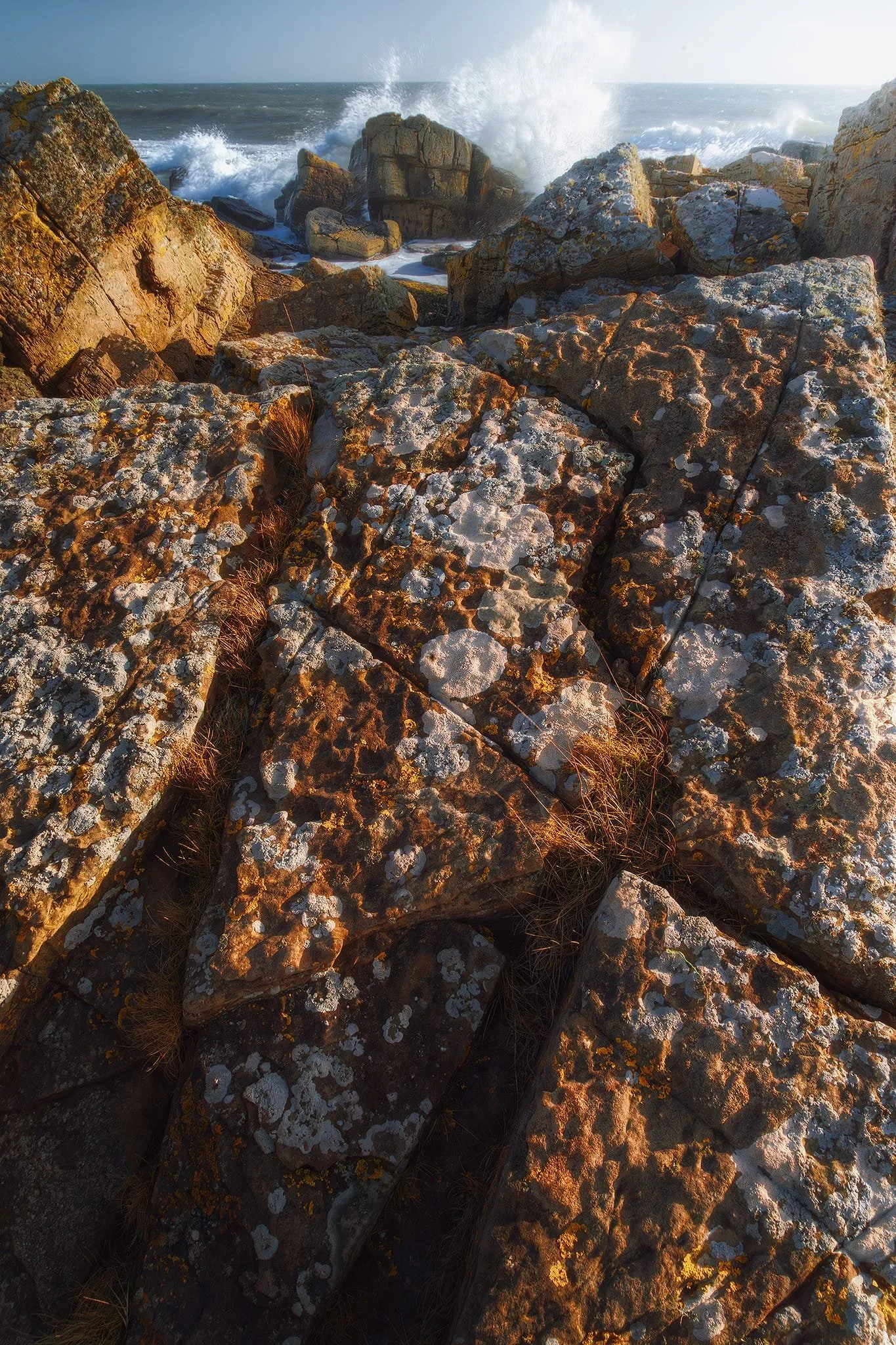
Further along the coast, near the old Salt Pans of Crail, a stretch of massive boulders were being battered by the relentless waves pushed on by the powerful gusts. I clambered all over them looking for compositions and waited for the waves to explode over the boulders.
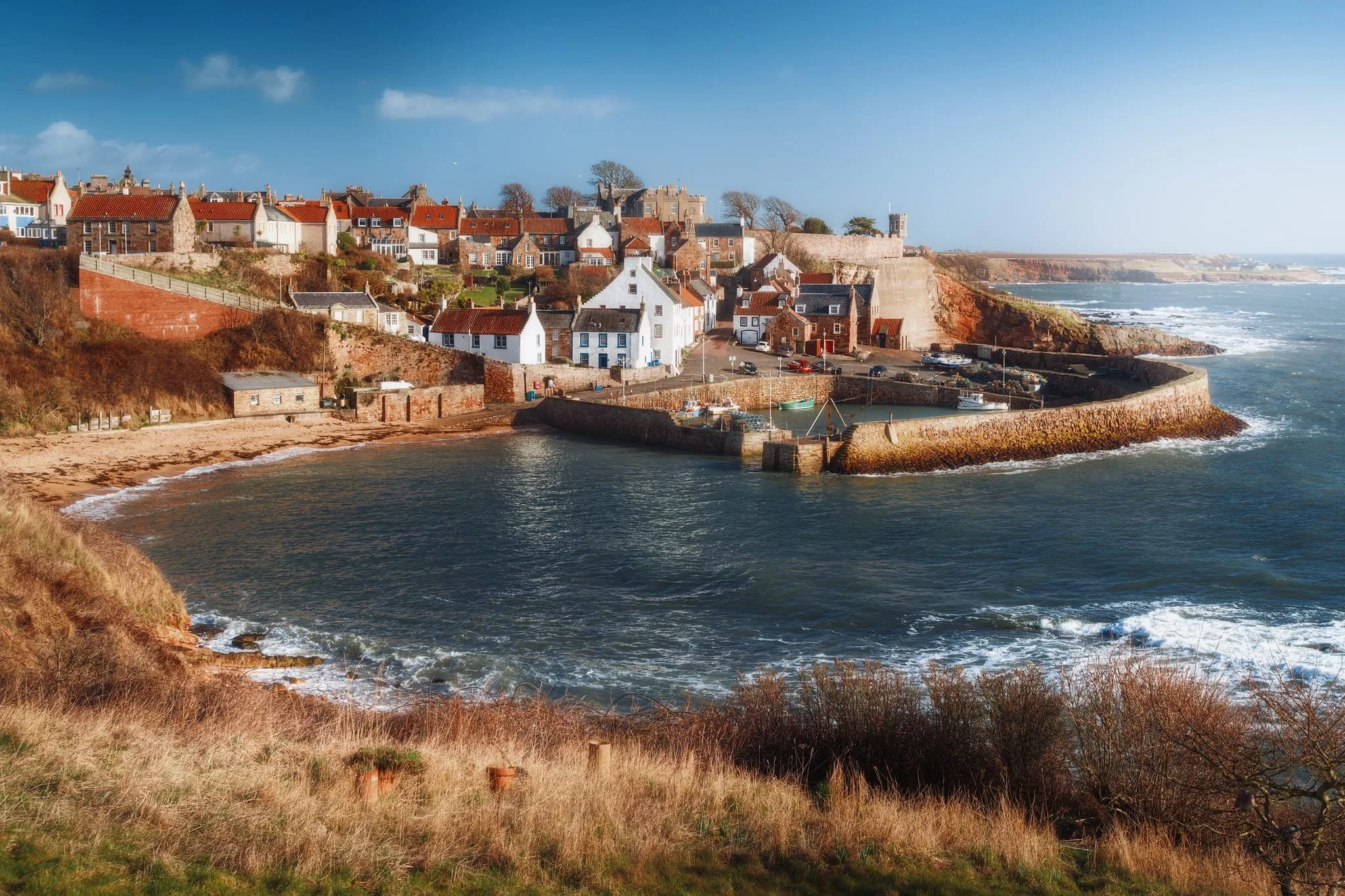
Finally, the approach to the picturesque Crail and its harbour. You’ll commonly see along the eastern coasts of Scotland and England that houses here are typically roofed with pantiles. These are a type of fired roof tile, normally made from clay, and characteristically S-shaped.
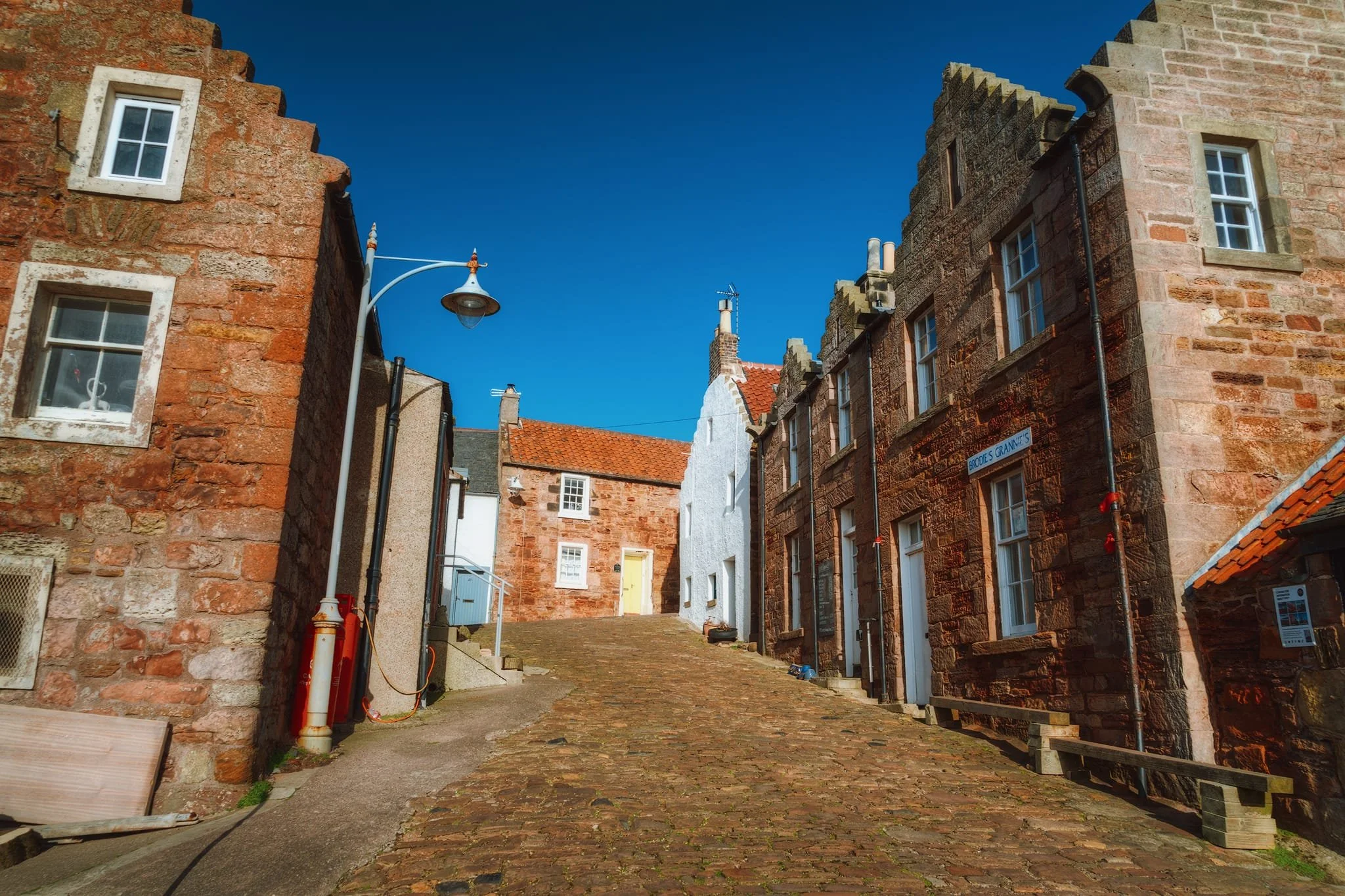
Looking up the still-cobbled King Street. Here another architectural characteristic of eastern Scottish buildings becomes visible: crow-stepped or “corbie” stepped gable-ends. The term “corbie steps” is more common in Scotland; the Scots word “corbie” meaning “crow. We probably nicked this design idea from Belgium and the Netherlands.
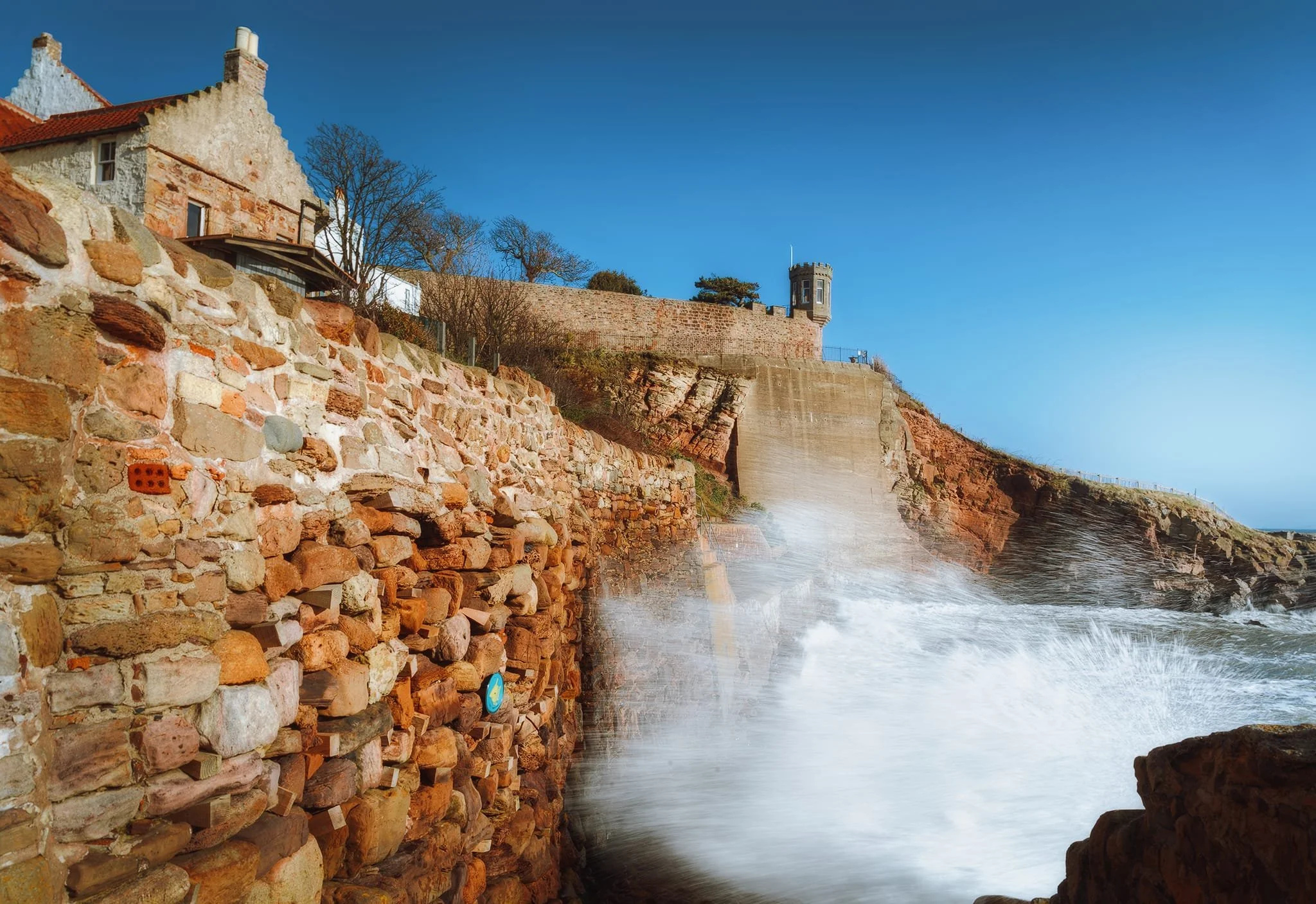
Below the old castle fortifications, the full might of the sea and wind were on display, slamming against the harbour walls.
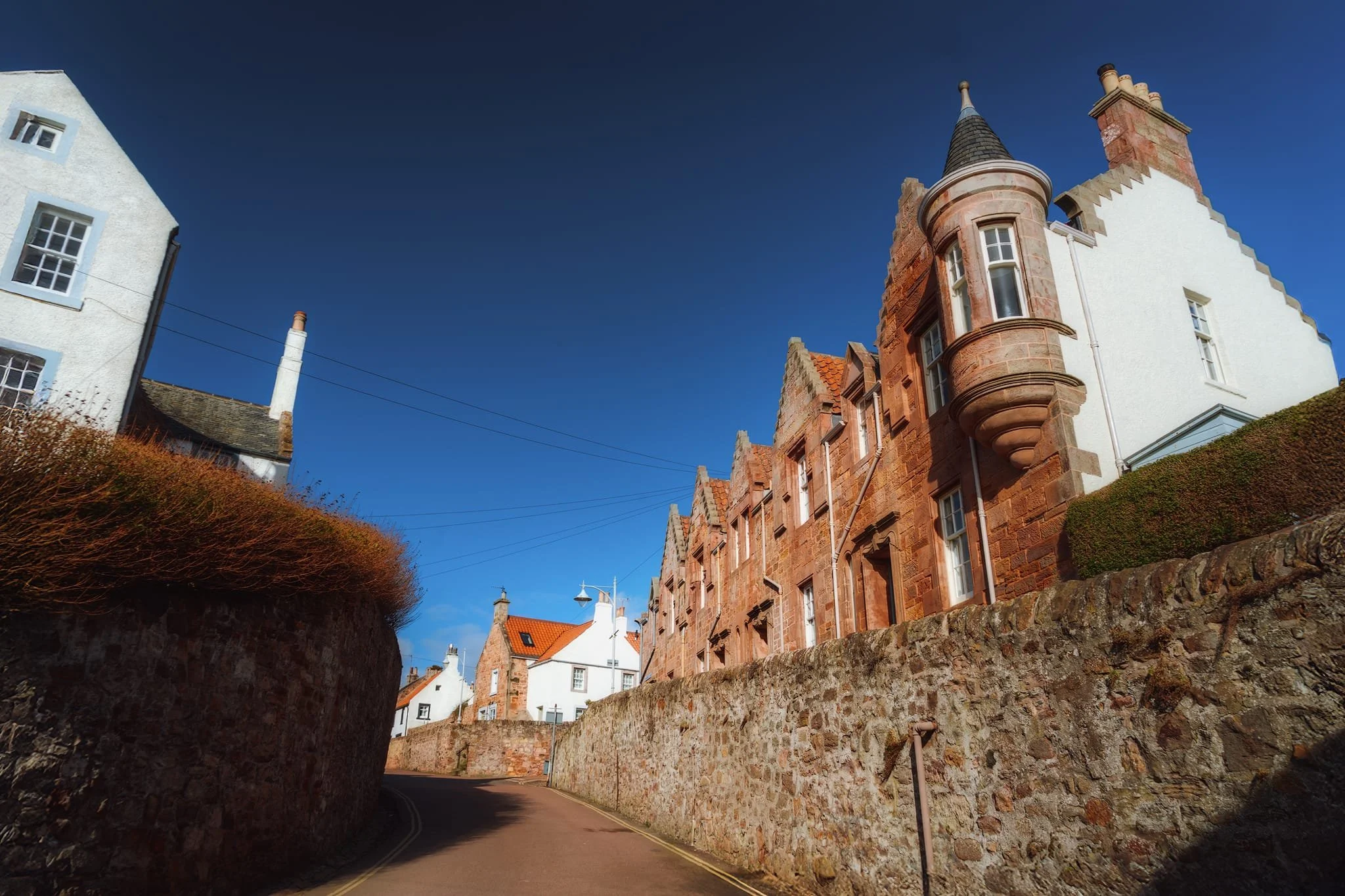
Looking up Shoregate and taking in the beautiful architectural style around Crail.