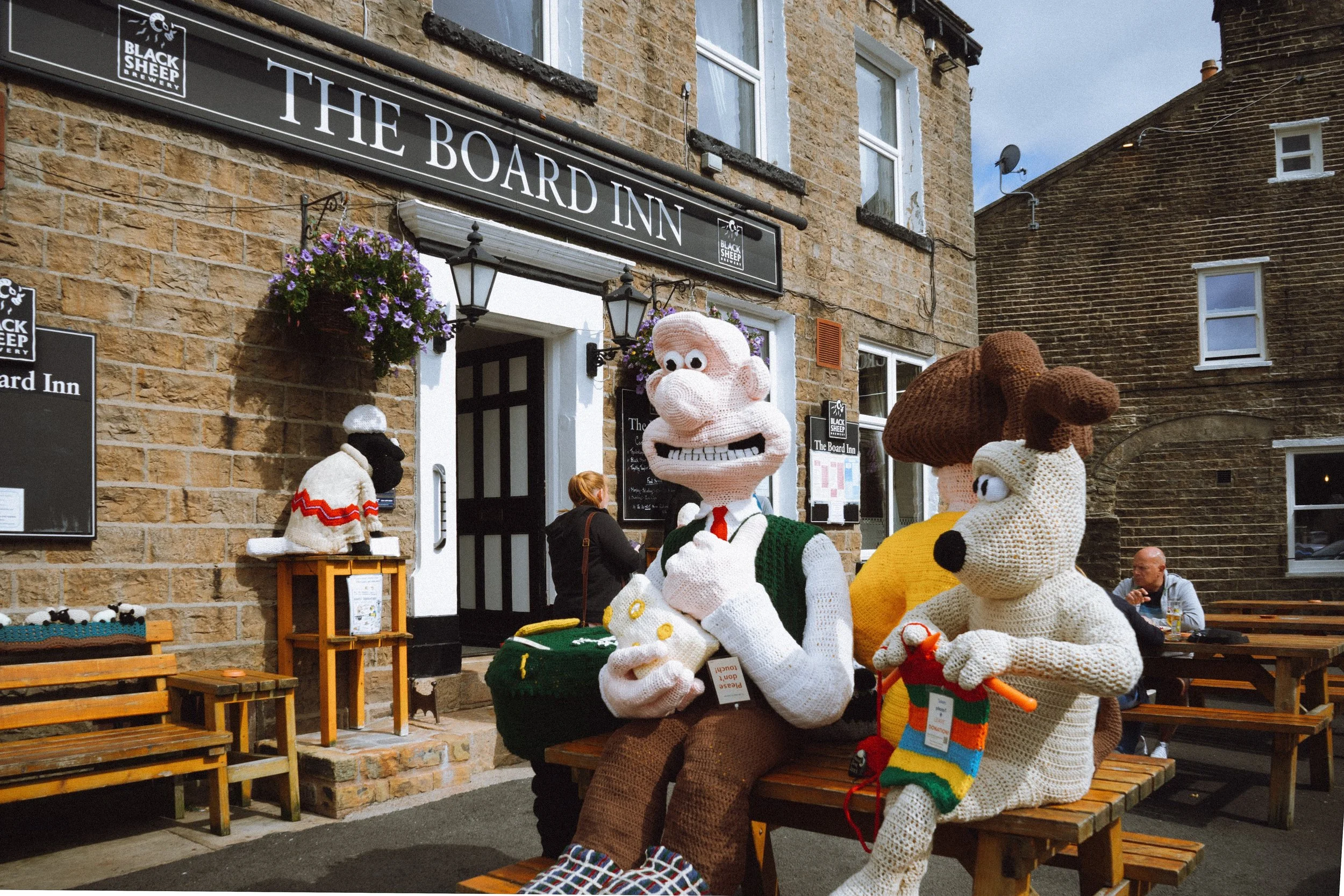

Here’s something a little different.
Every September volunteers for Heritage Open Days organise events and open up usually private buildings to celebrate the culture and heritage of England. Best of all, all of these events and visit are free.
We did some scouting on the Heritage Open Days website and found that a lot of usually closed off/private buildings in Appleby-in-Westmorland were opening up for talks and tours of these historical buildings. Armed with an ultra-wide 14mm lens and my steady 28–70mm, we set about to explore and document.
It turned out to be a fascinating morning and afternoon. Appleby-in-Westmorland is already steeped in history, and has managed to retain a lot of its architectural heritage. Being able to enter some of these buildings, some of which were 400+ years old, and document them as best I could was a joy and an honour.
All photos taken on my Sony α7ii using my Sony FE 28–70mm f3.5–5.6 OSS zoom and Rokinon 14mm f2.8 ED AS IF UMC prime lenses. RAWs developed in Capture One, then finalised in Photoshop.
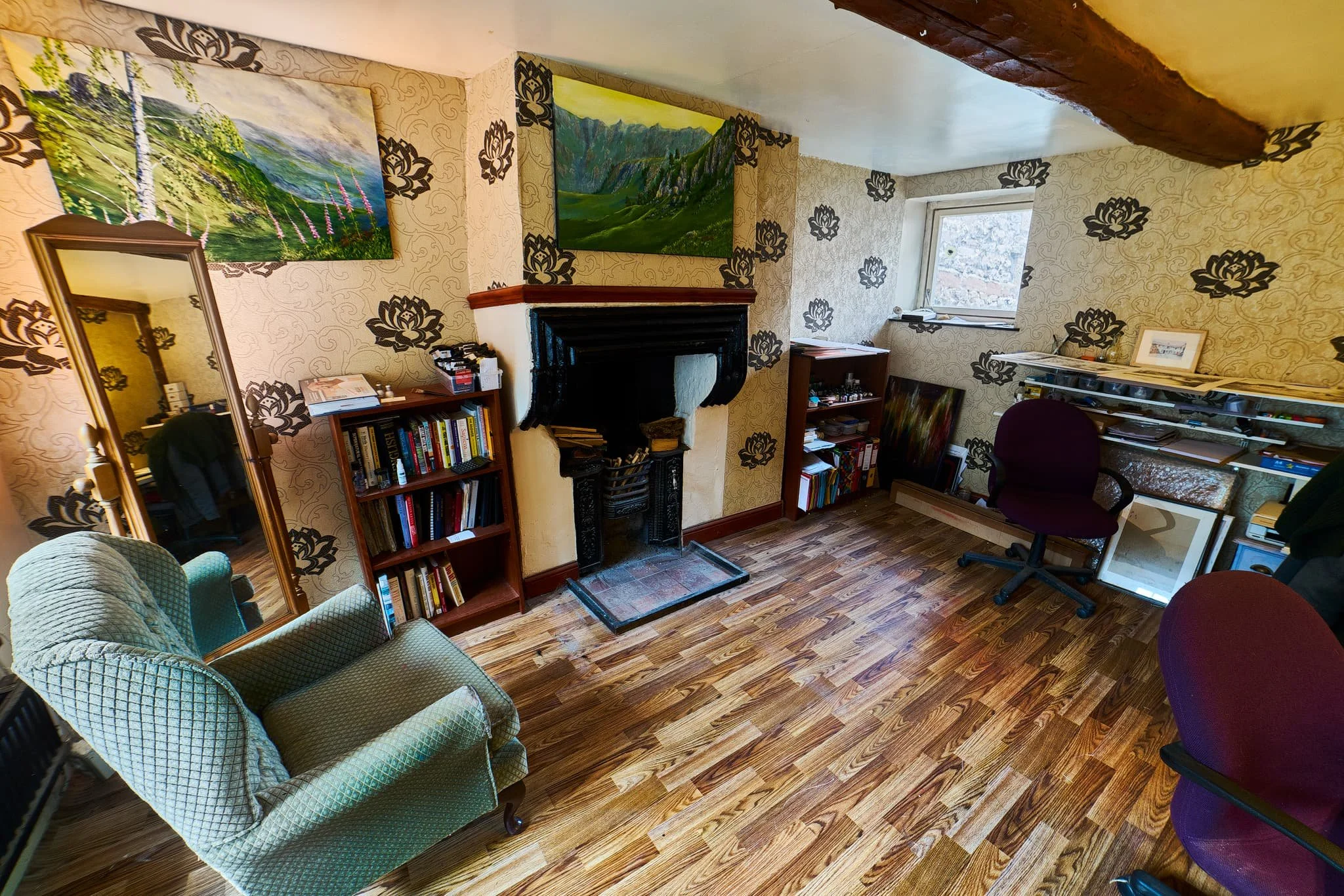
This is the study room of the Colour Makers House, on High Wiend in Appleby. This building was rebuilt in 1677 CE and has the datestone to prove it. It is currently undergoing a full refurbishment.
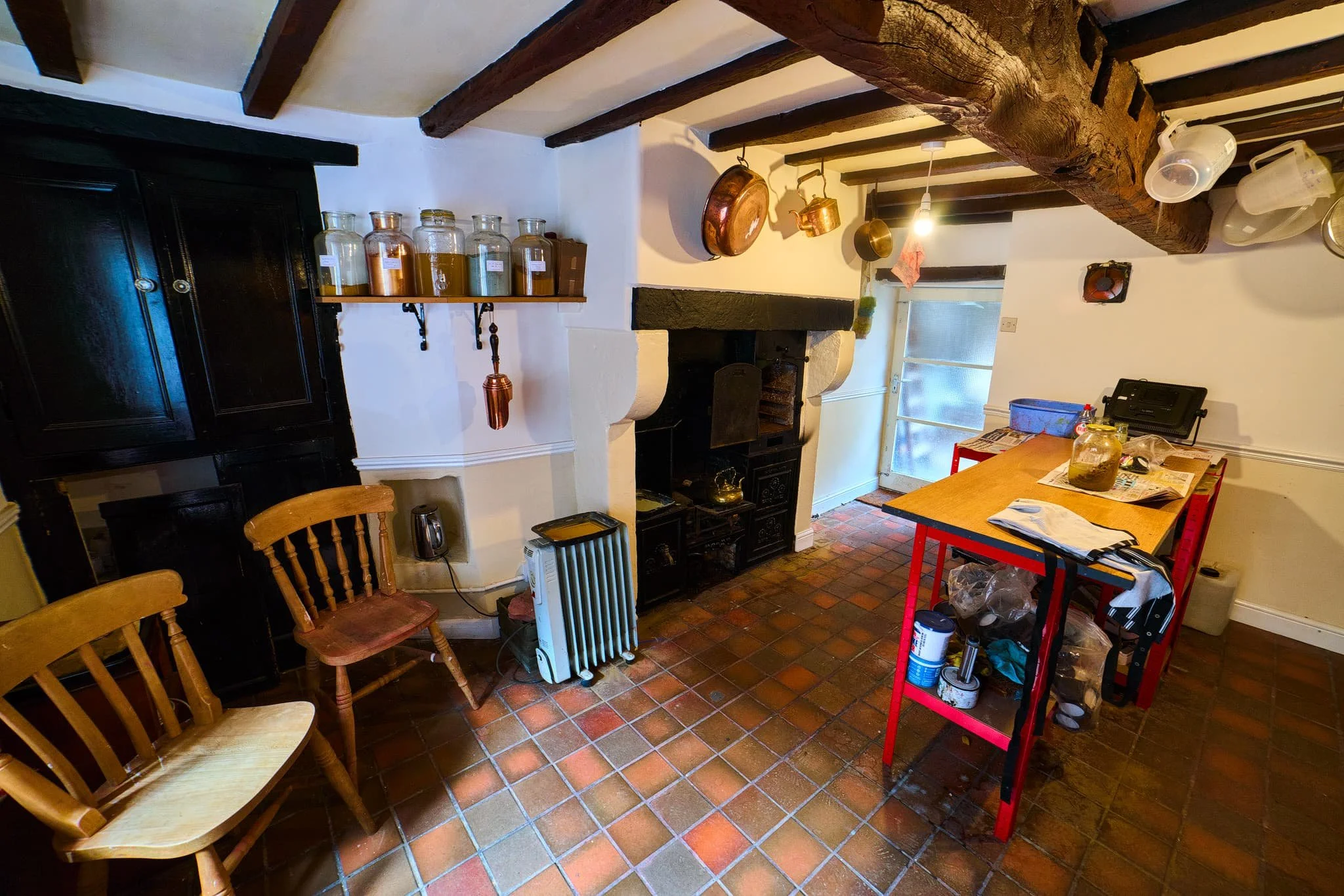
The kitchen, retaining the original range and oven, complete with oak beams.
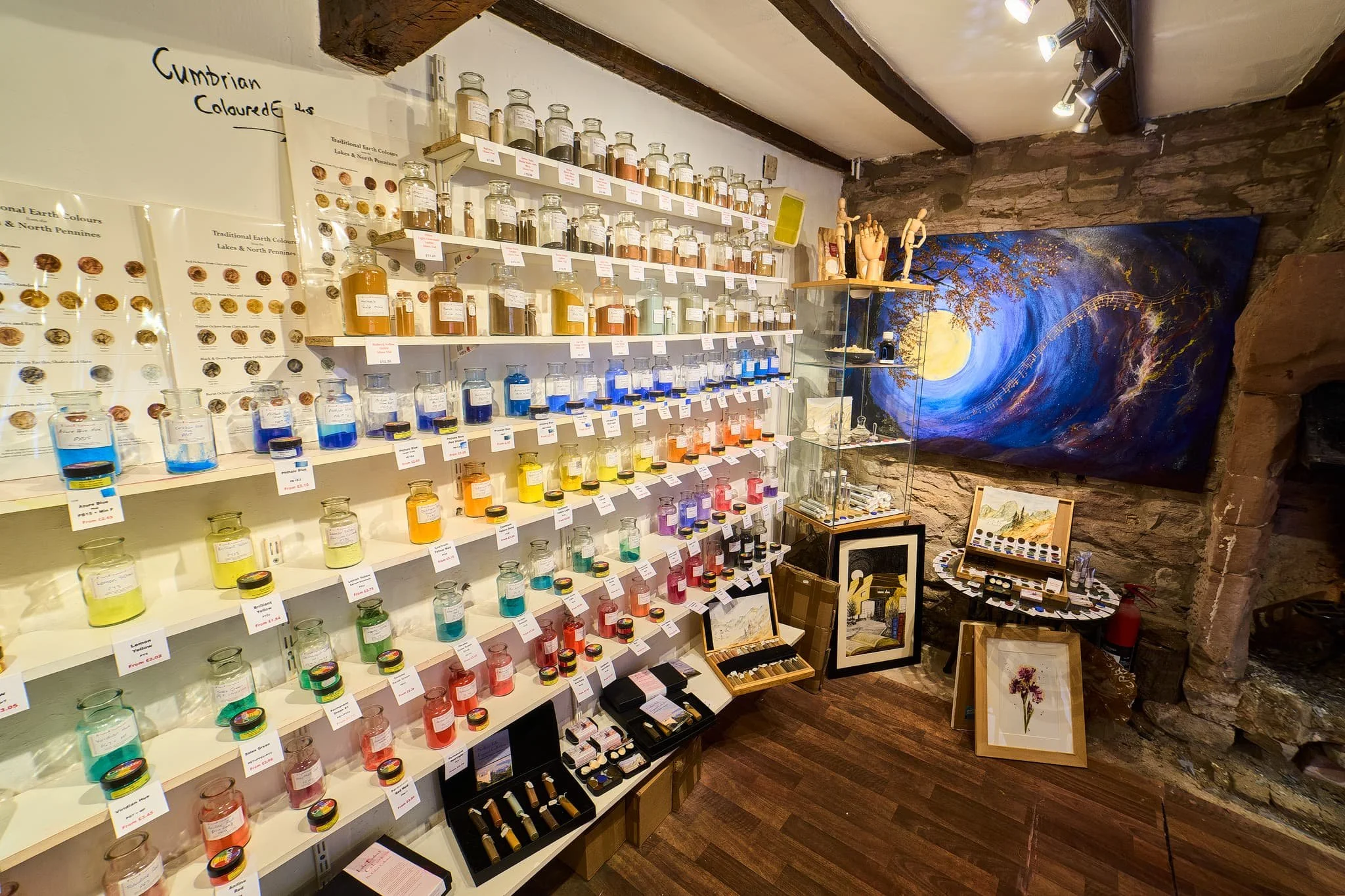
The building has become home to a unique Artist Colourman’s Shop making pigments and paints from naturally foraged earth and rocks from Northern England. A gentleman there was demonstrating techniques used for over 4,500 years.
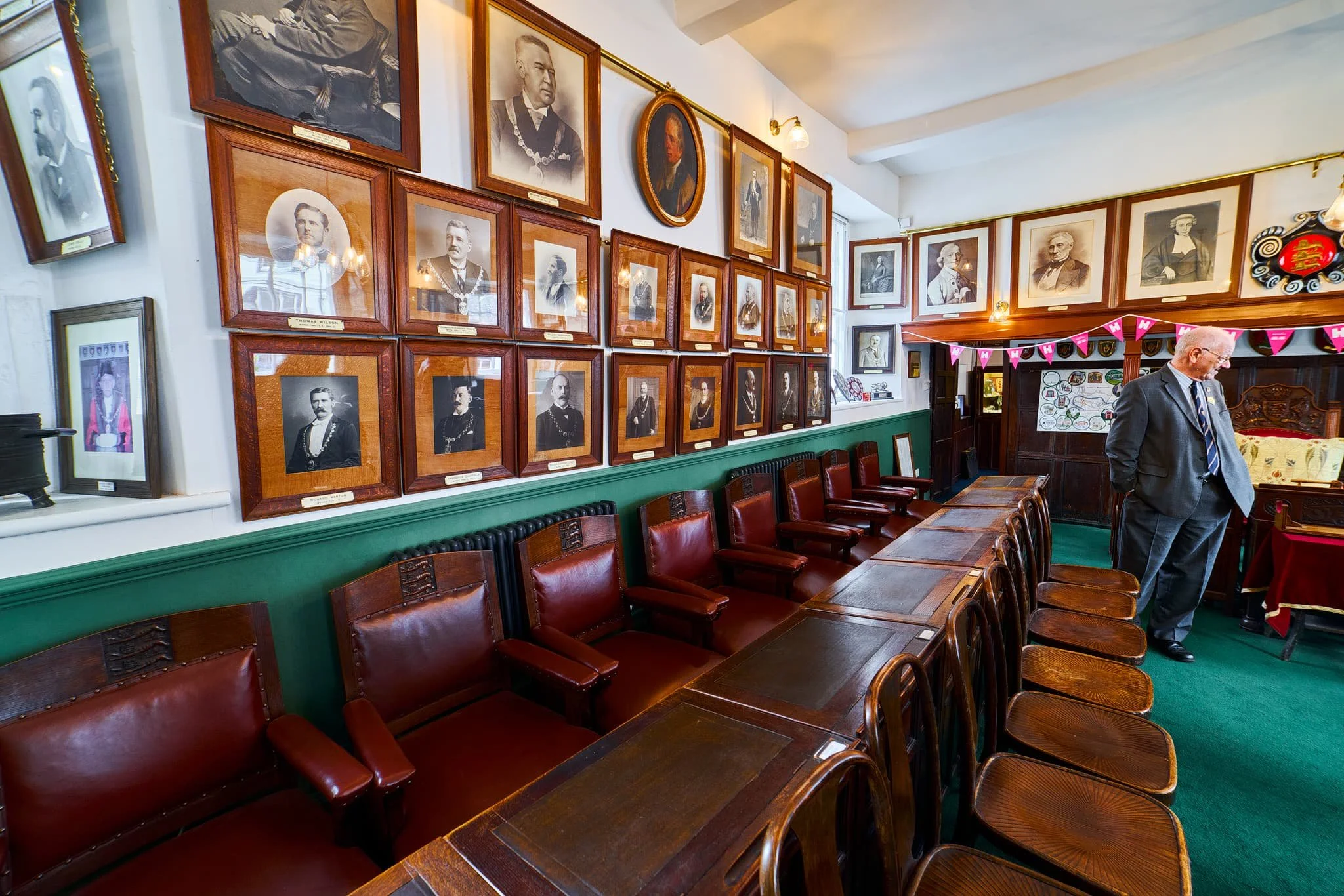
Inside the Council Chamber of Appleby’s Moot Hall. “Moot” comes from the Old English word mōt, meaning a meeting place. The Moot Hall was built in 1596 CE. Unlike many similar Moot Halls up and down the country, Appleby’s is rare in that it’s still used for its original purpose as a Council Chamber. The walls are lined with paintings and photos of all the mayors that have served Appleby over the centuries.
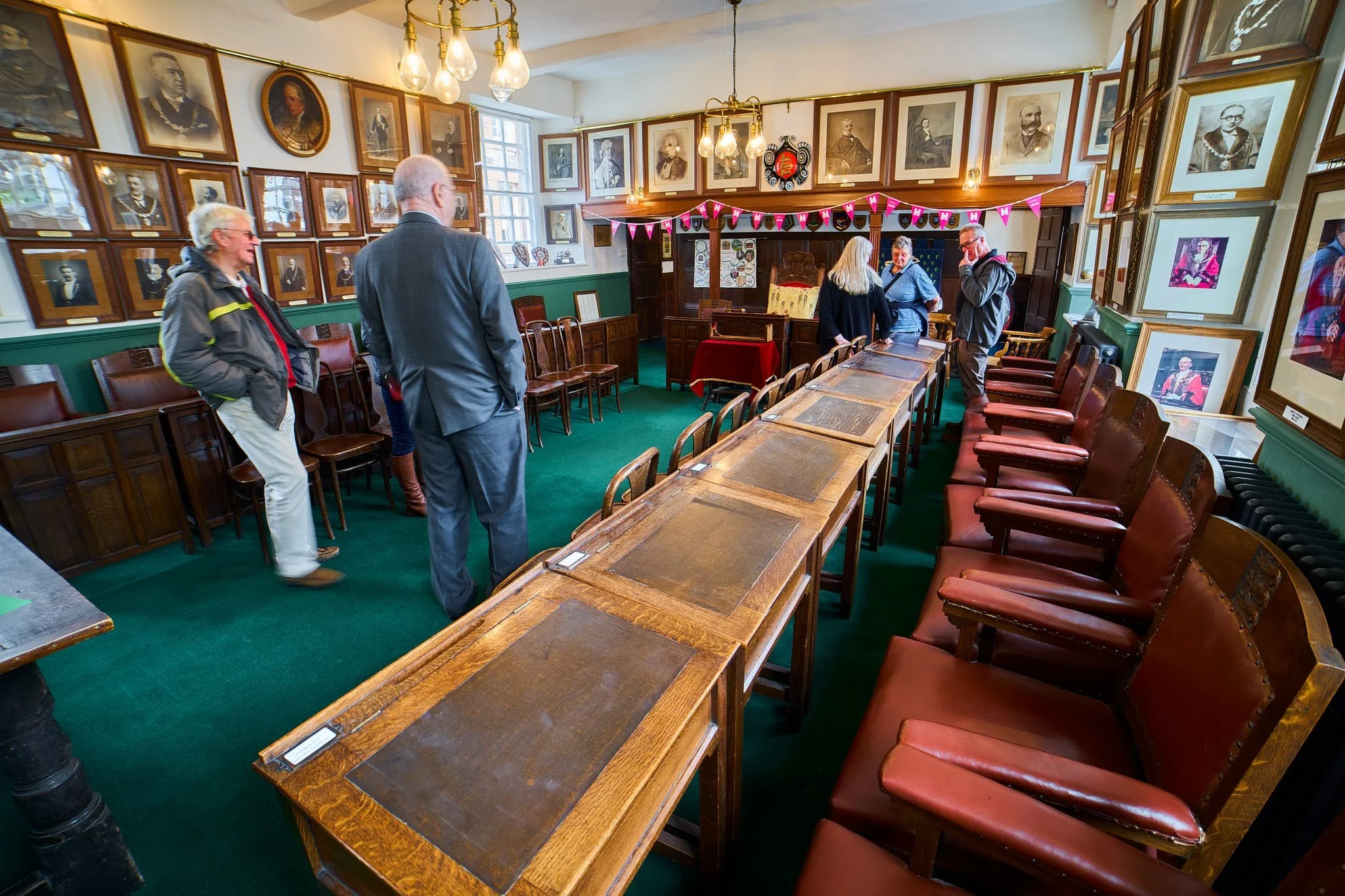
Appleby Moot Hall is also one of the earliest purpose-built Moot Halls in England. It’s had alterations made in the 18th and early-19th centuries, and was recently restored in 2022.
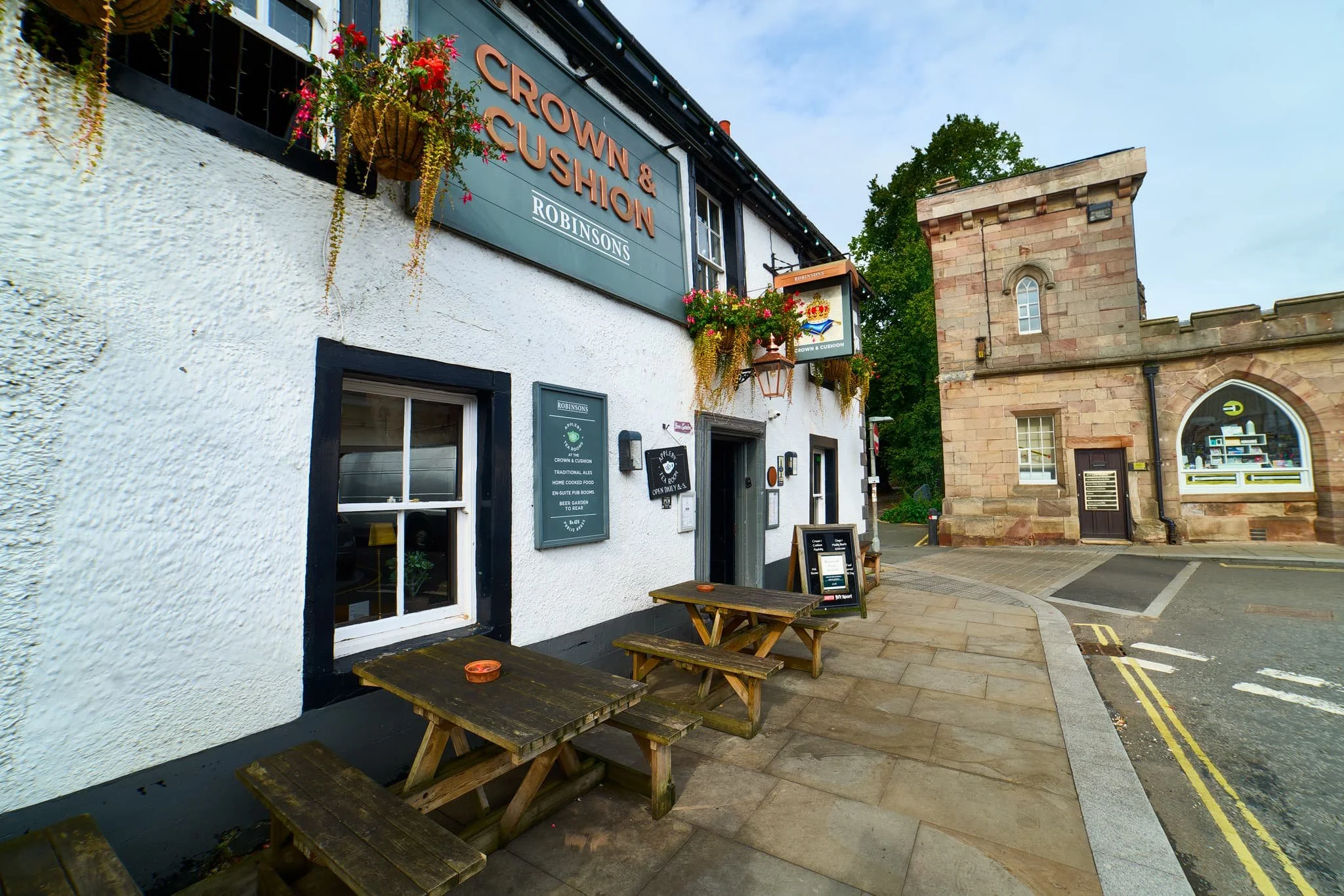
The Crown & Cushion, formerly listed as the Crown and Cushion Hotel and Wilson’s Stores, was probably constructed from an earlier building in the mid-1700s.
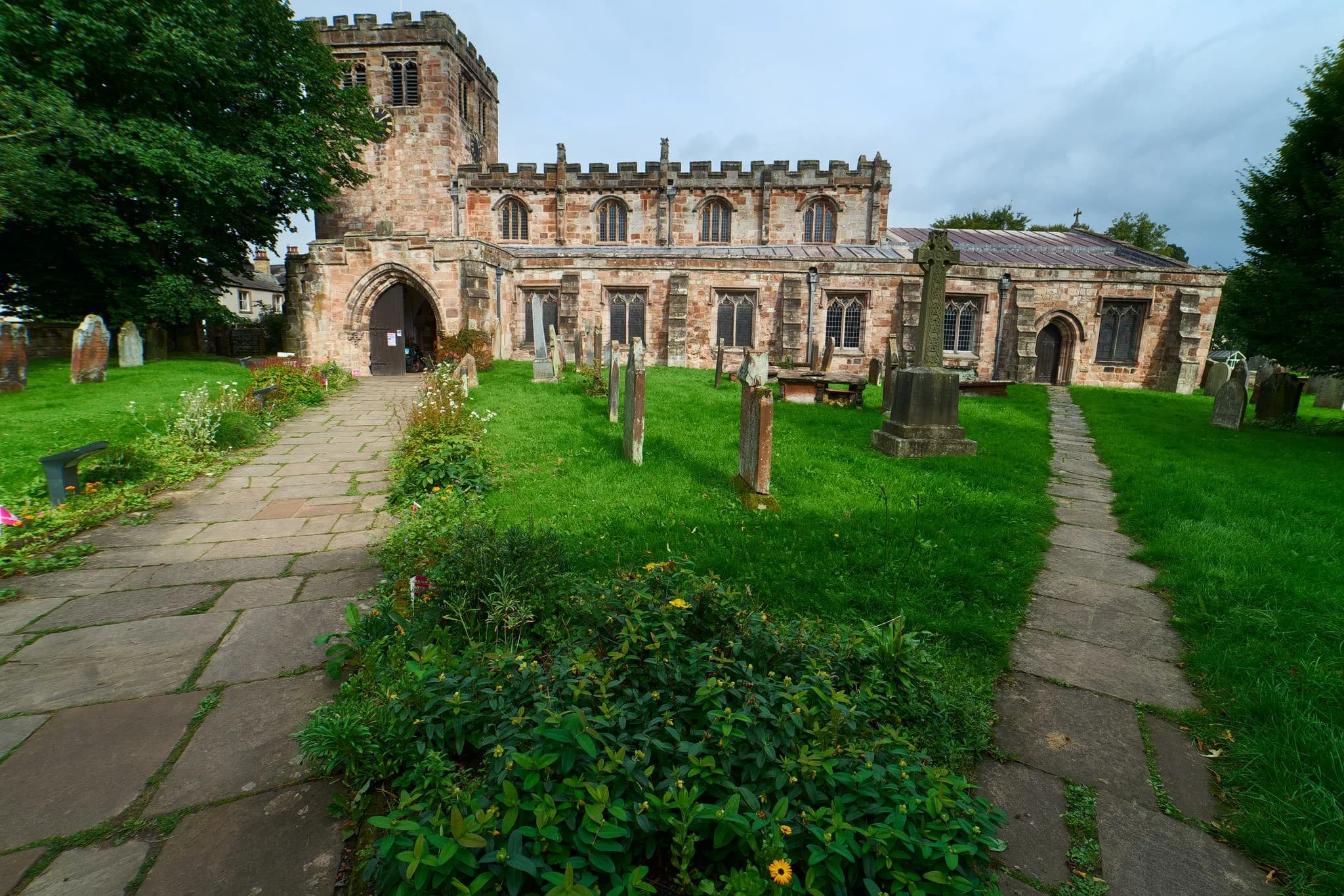
The way to St. Lawrence’s Church. It retains a significant amount of its architectural heritage, with an early 12th century foundation in addition to a reset Norman entrance and the lower parts of a defensive Norman west tower.
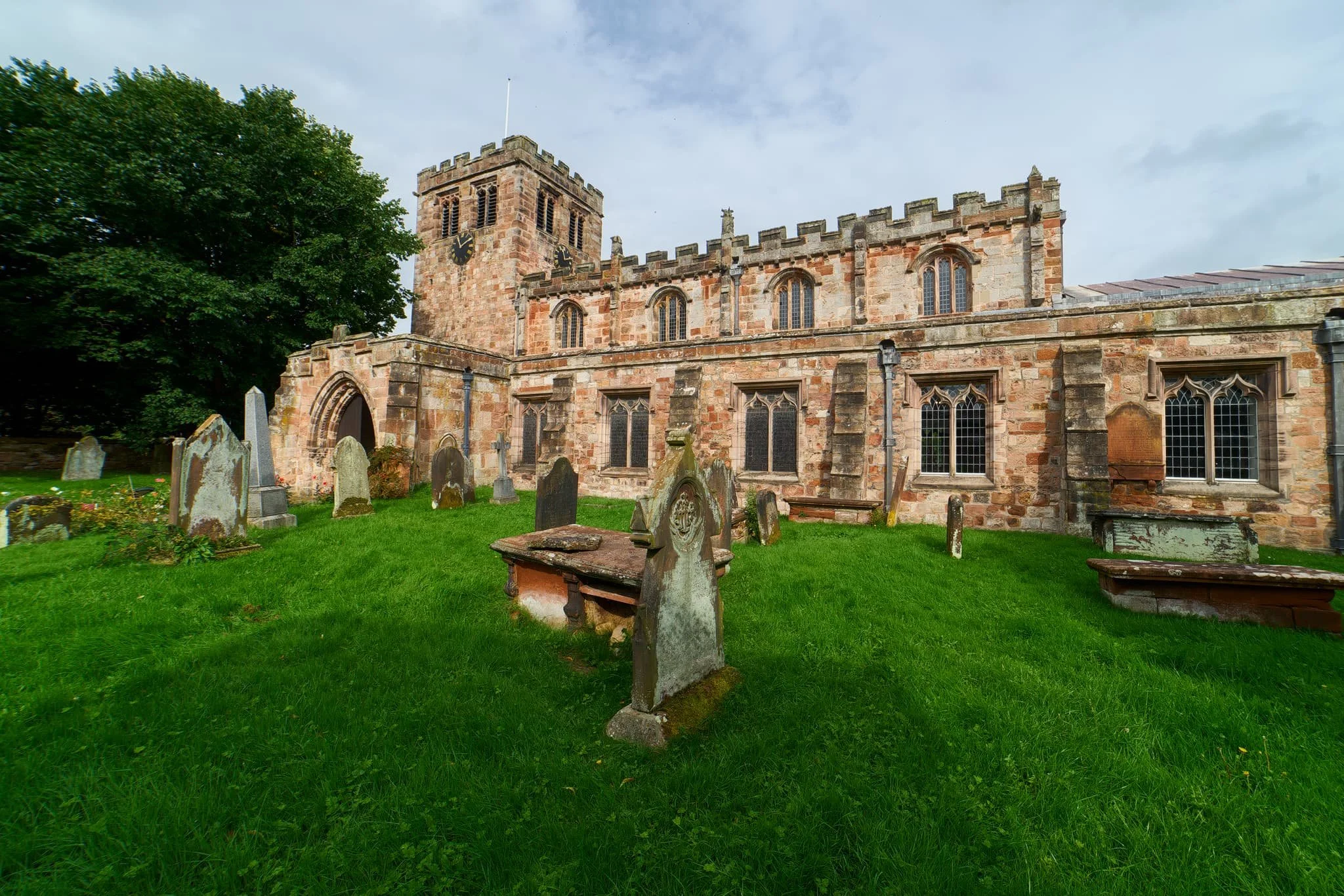
St. Lawrence’s Church includes a 13th-century porch, and a 14th-century nave and aisles, restored in the 17th and 18th centuries with 19th and 20th century alterations.
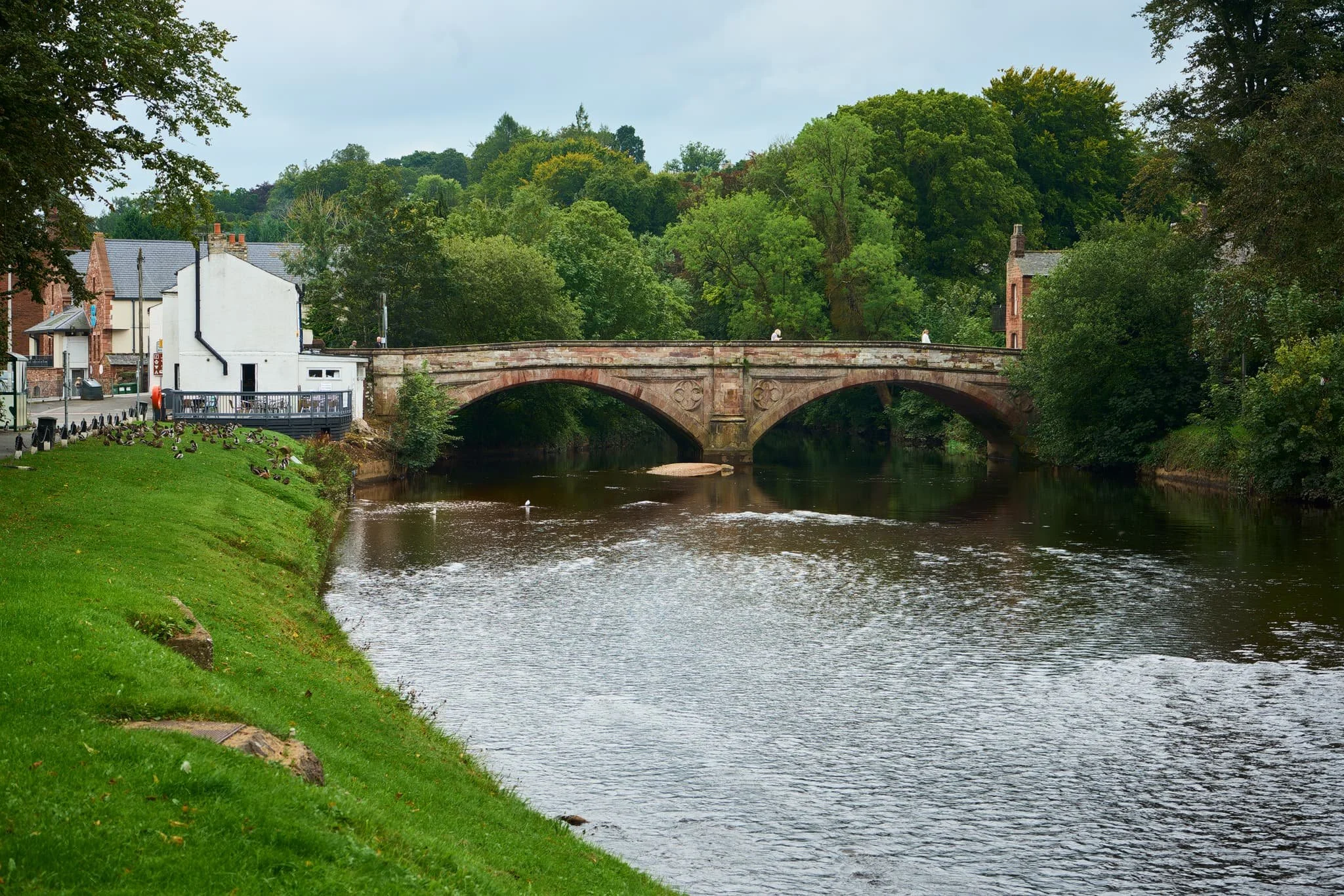
St. Lawrence’s bridge, built in the late 19th century to replace a much earlier structure. Every May/June Appleby sees thousands of people from the Gypsie/Traveller community, who come from all over the UK and Ireland for the Appleby Horse Fair. A custom at the Fair is to take their horses down to the Sands, pictured above, and into the River Eden where the horses are washed.
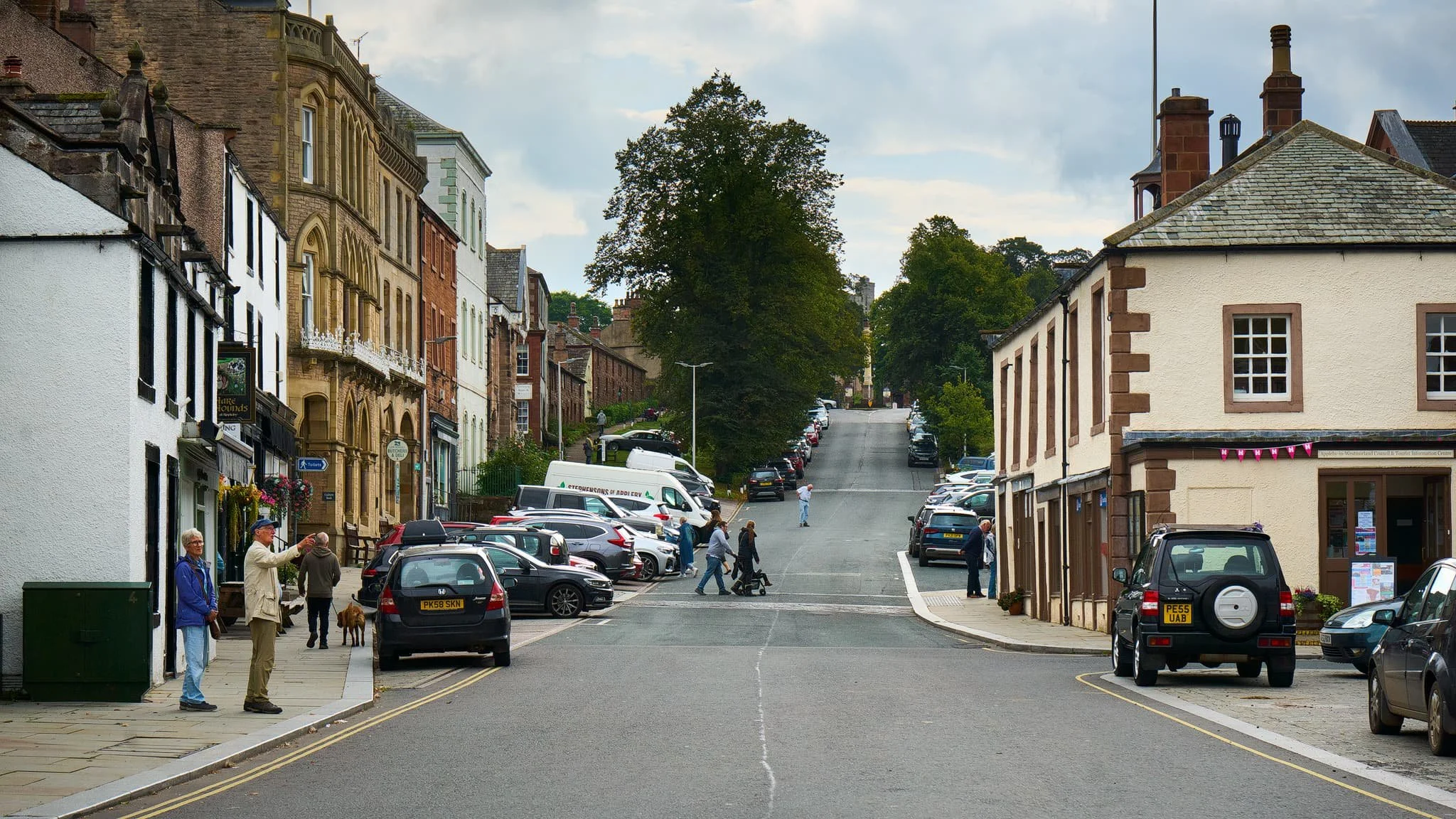
Looking up the historic Boroughgate from the near the junction with Low Wiend. Now that Sunday Service was finished, it was time to check the interior of St. Lawrence’s church.
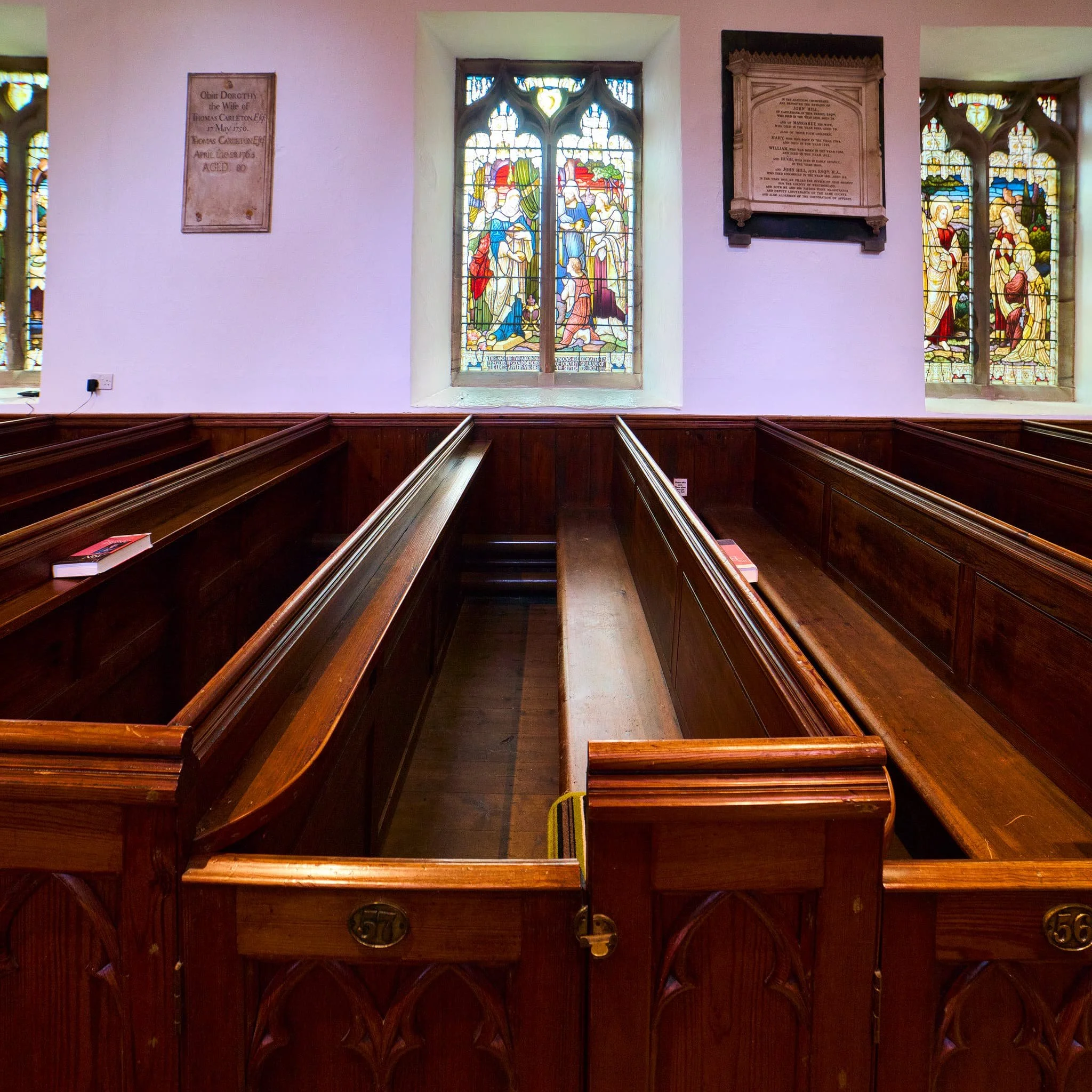
Inside the church, medieval traceried Gothic screens with a variety of stained glass window illustrations attest to the historical interest of this building.
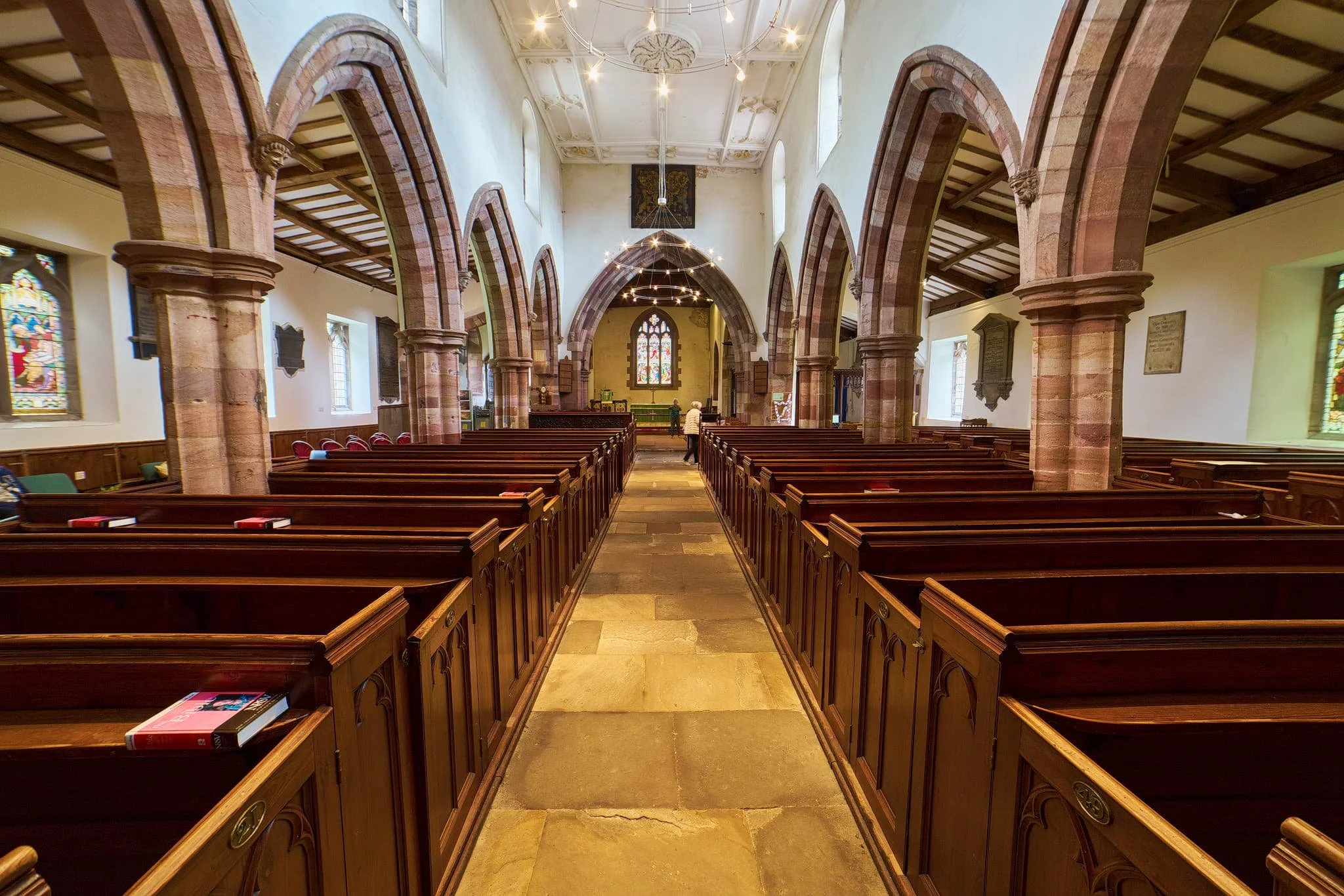
The nave of the church. The pews were installed in the 1700s, and the nave ceiling was plastered in the early-mid 1800s.
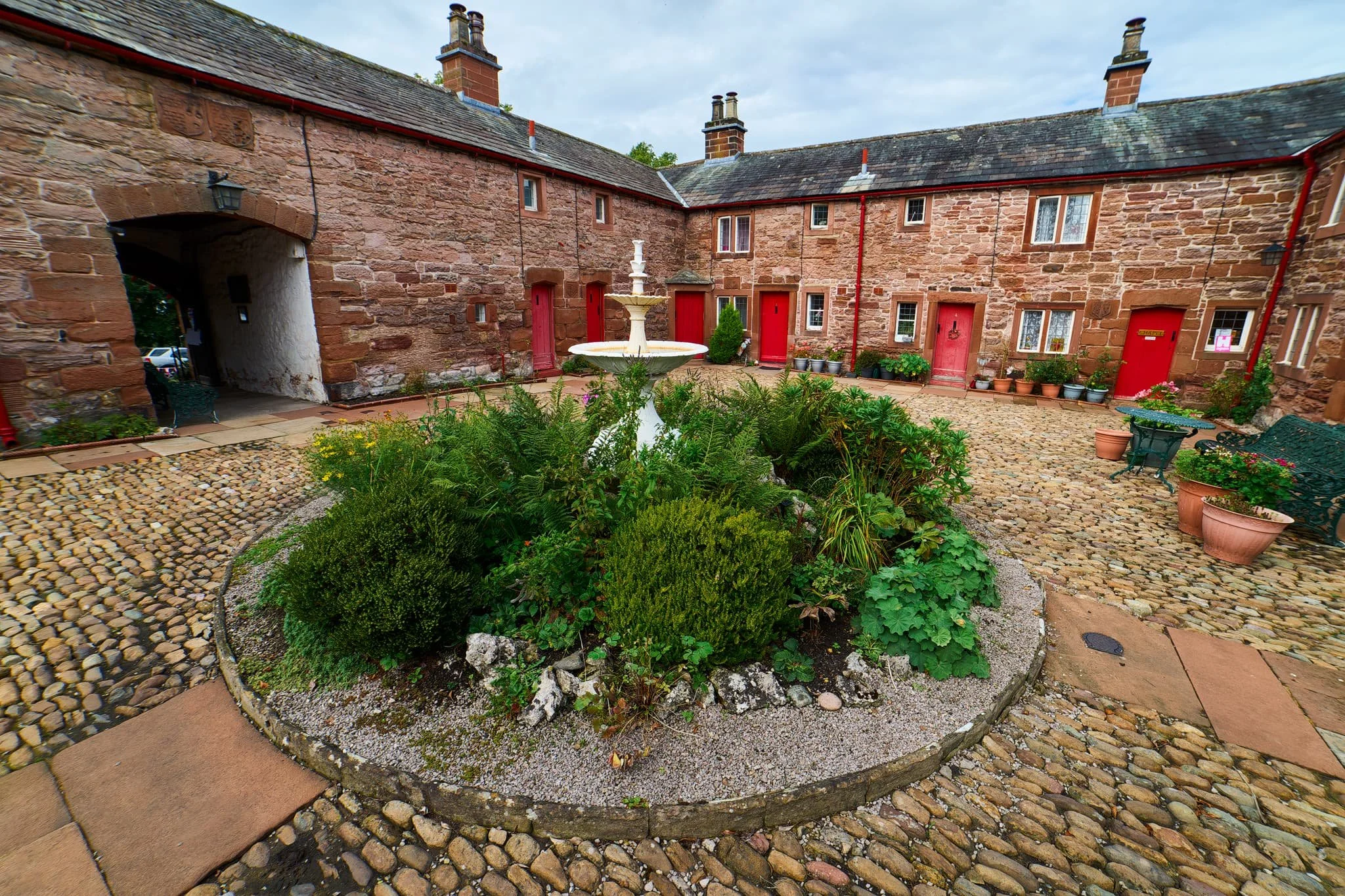
Ascending Boroughgate, our next stop was St. Anne’s Almshouses. Inside the courtyard we were delighted with what we found; a different world tucked away from the ongoings of the main road.
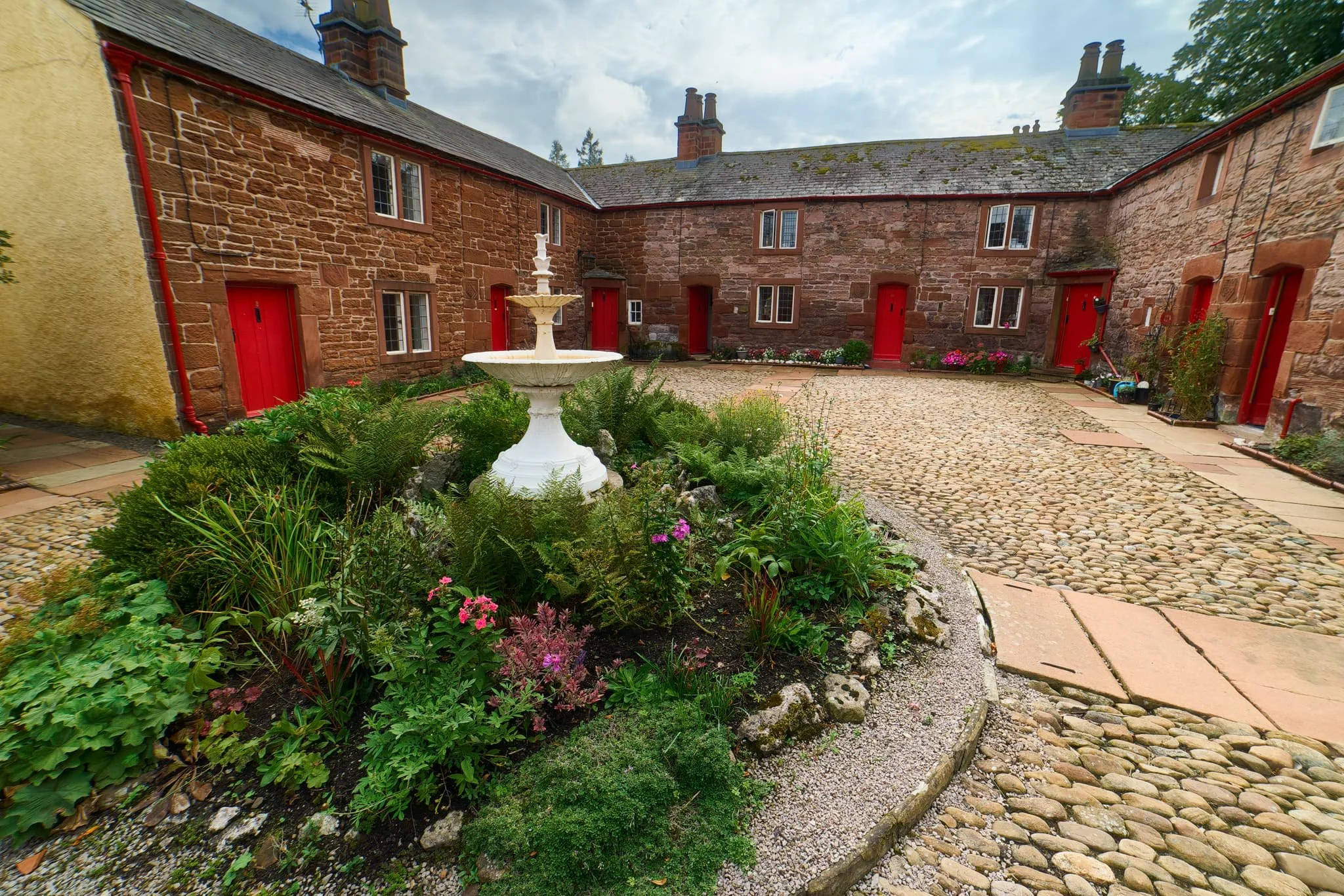
St. Anne’s Hospital was founded by Lady Anne Clifford in 1653 CE and for more than 350 years, ageing, widowed, or single ladies have lived there rent free. The upkeep of the almshouses has been paid for by Holme Farm, which was gifted by Lady Anne for the benefit of the almshouse.
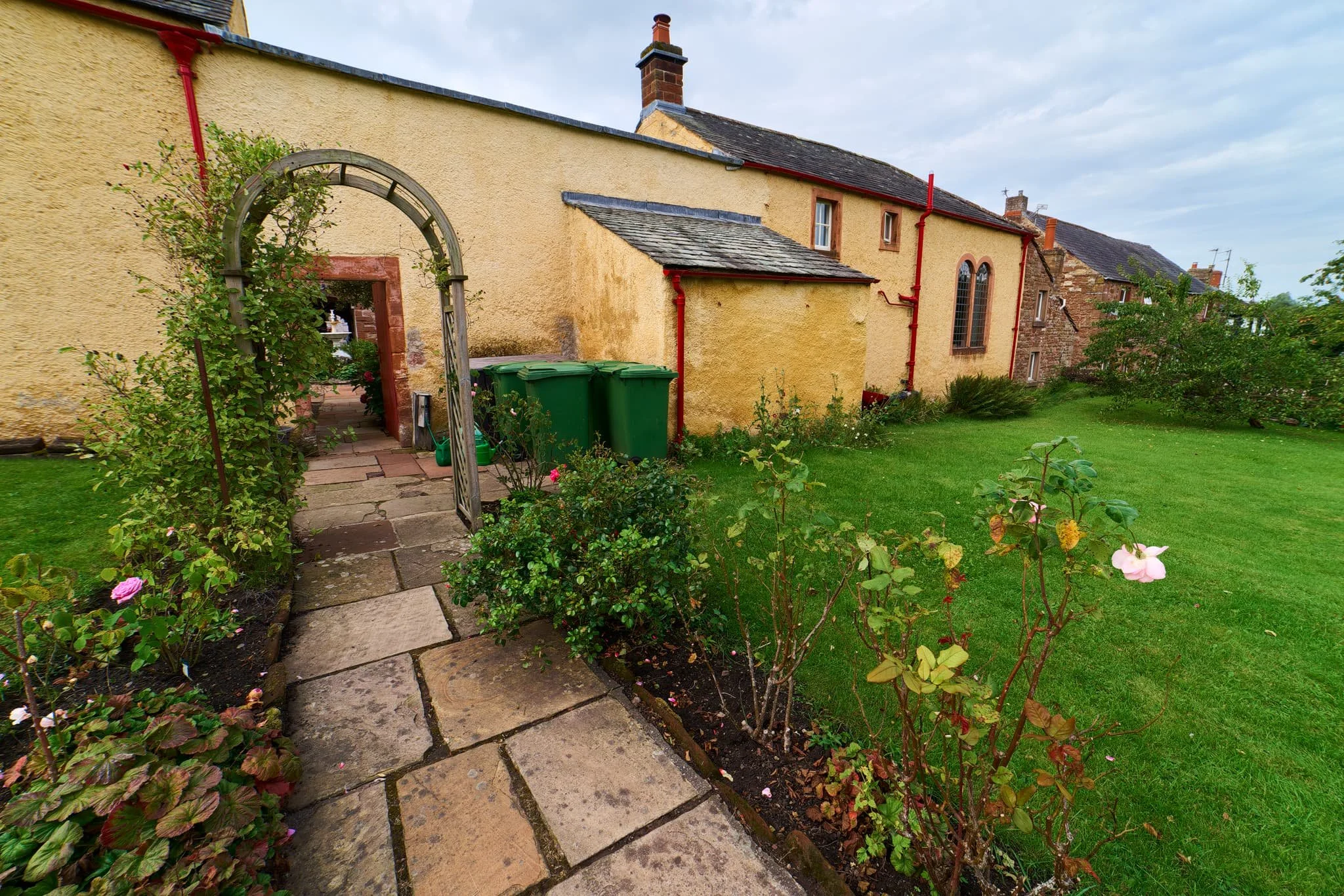
There is space to the rear where the ladies were each given a strip of land on which to grow their own produce.
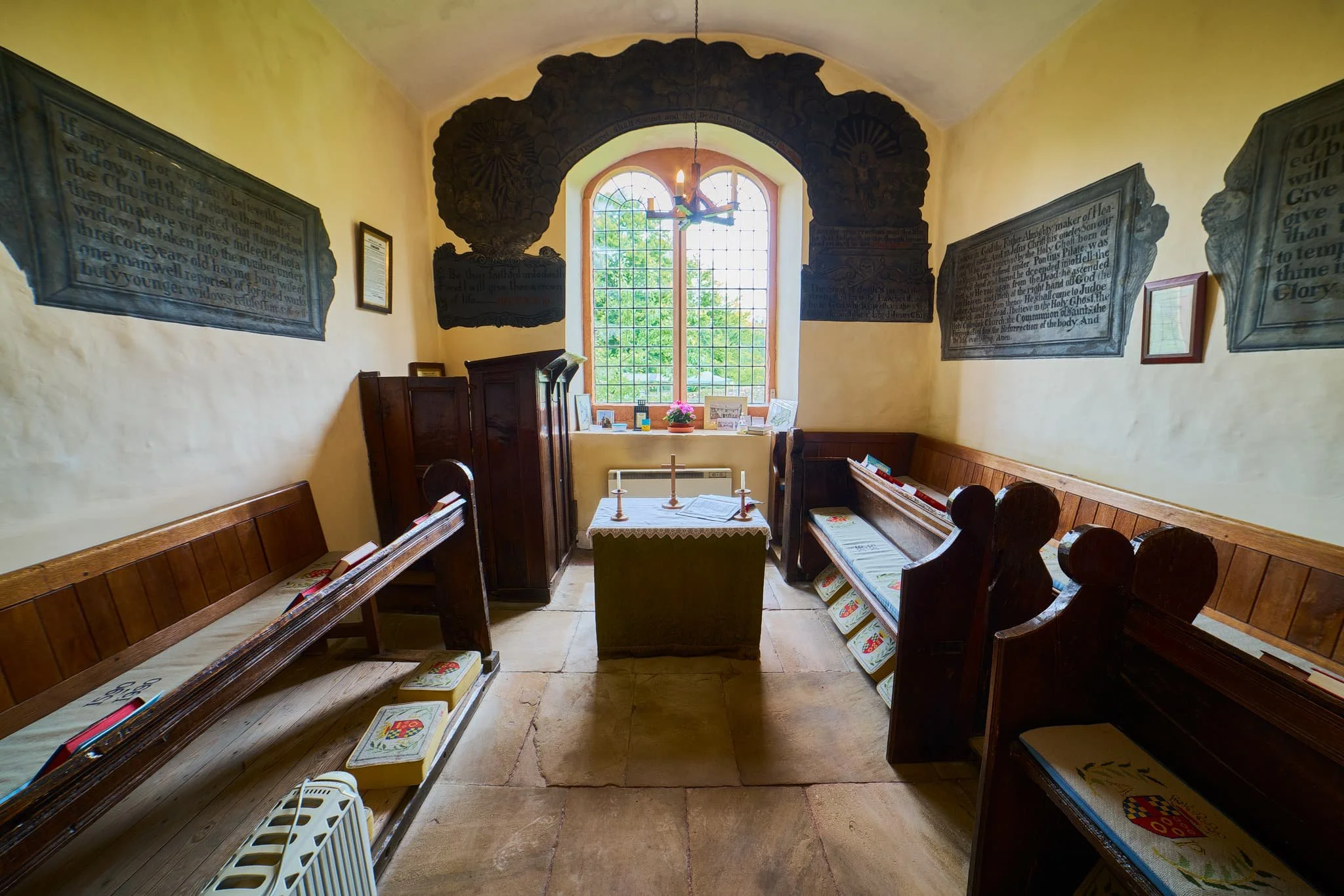
The grounds include a small private chapel, which retains some original 17th century fittings and wall paintings.
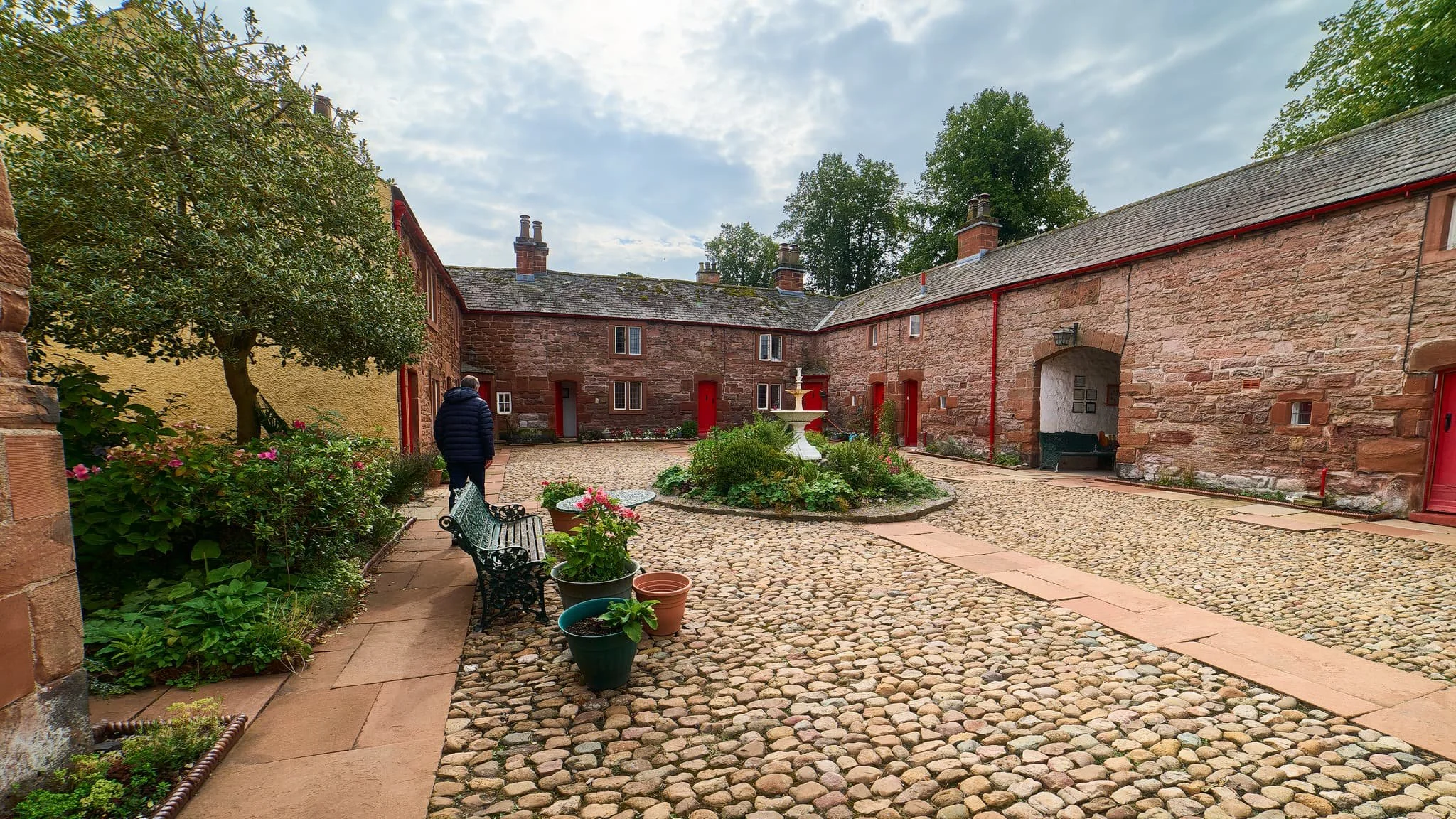
The coat of arms over the archway belongs to Lady Anne and her mother, and the others around the yard represent Lady Anne’s noble connections.
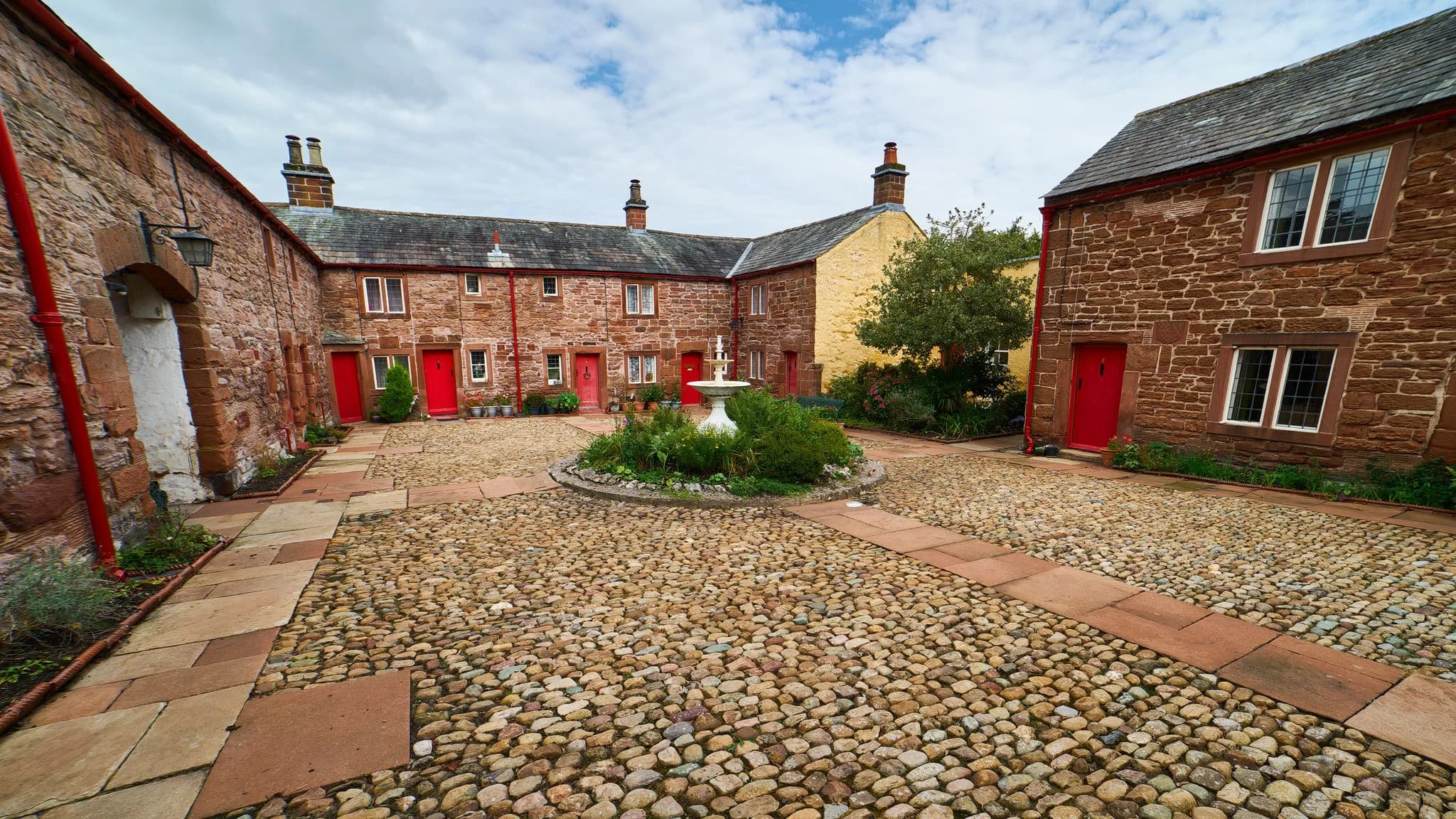
I was amazed at how immaculately kept these 350+ year old almshouses were. A true testament to their original purpose.
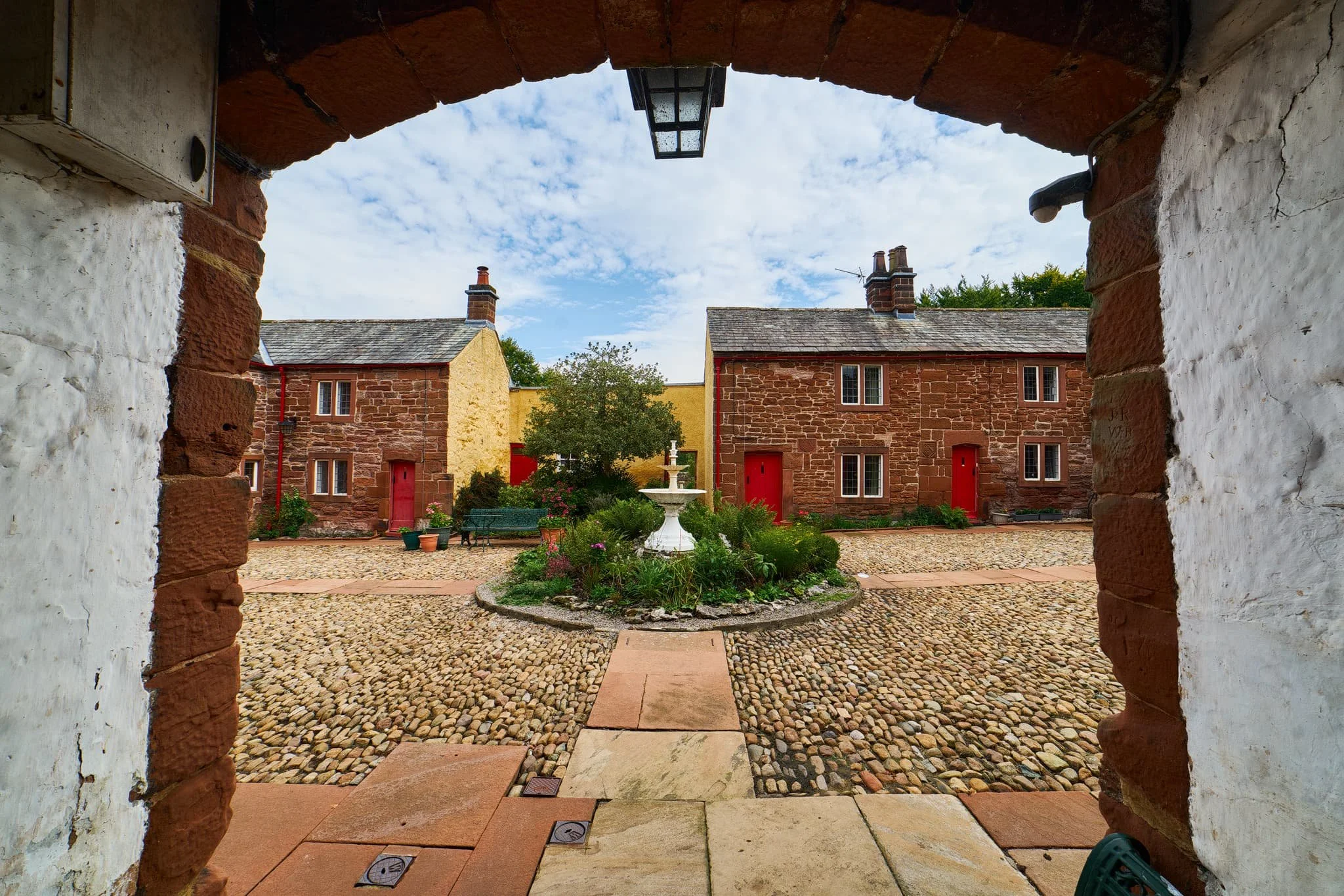
In the mid-1800s, one of the houses (number six) was demolished to create a wider opening from the courtyard to the rear gardens; the former communal hall was converted to a house by way of replacement.
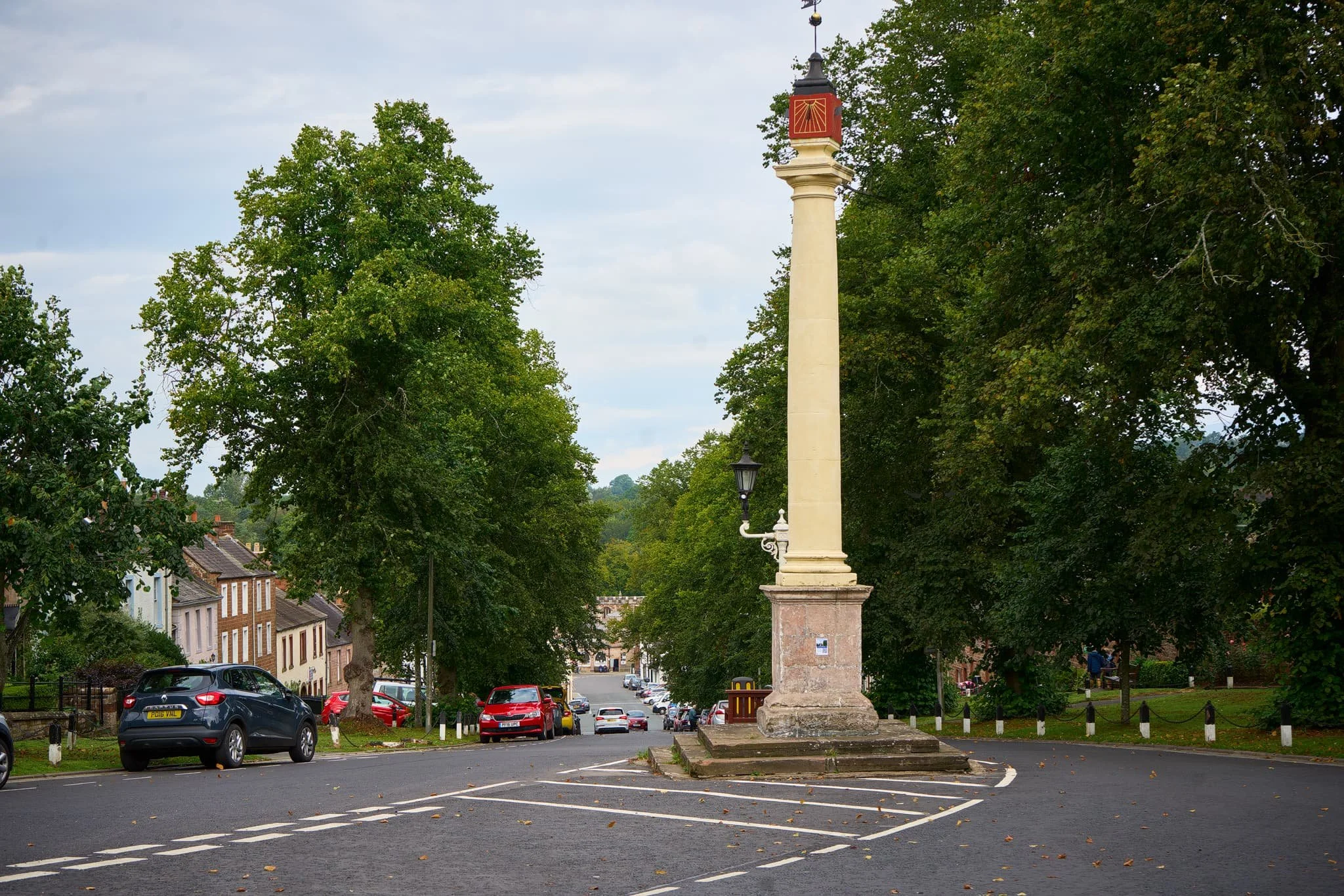
At the top of Boroughgate is High Cross, a 17th-century stone Tuscan column on a square base and with a square top. It bears the inscription “Retain your loyalty Preserve your rights”. A windvane was added on top in 1936.
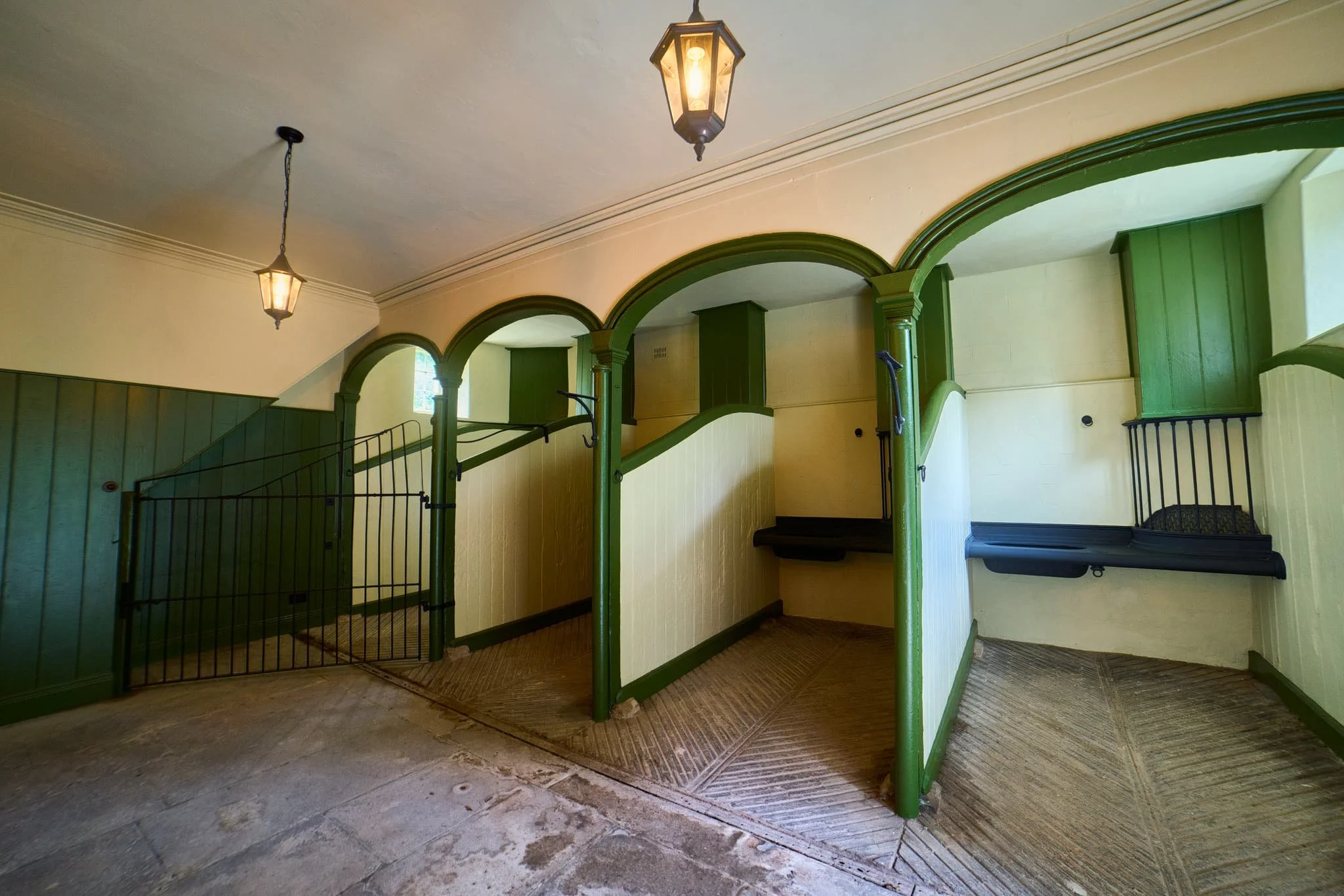
Further south from Boroughgate, beyond Appleby Castle, is Castle Bank House. Privately owned, we were allowed a wander of the grounds, stables, and art gallery. Built in the 18th century, these stables were particularly fine.
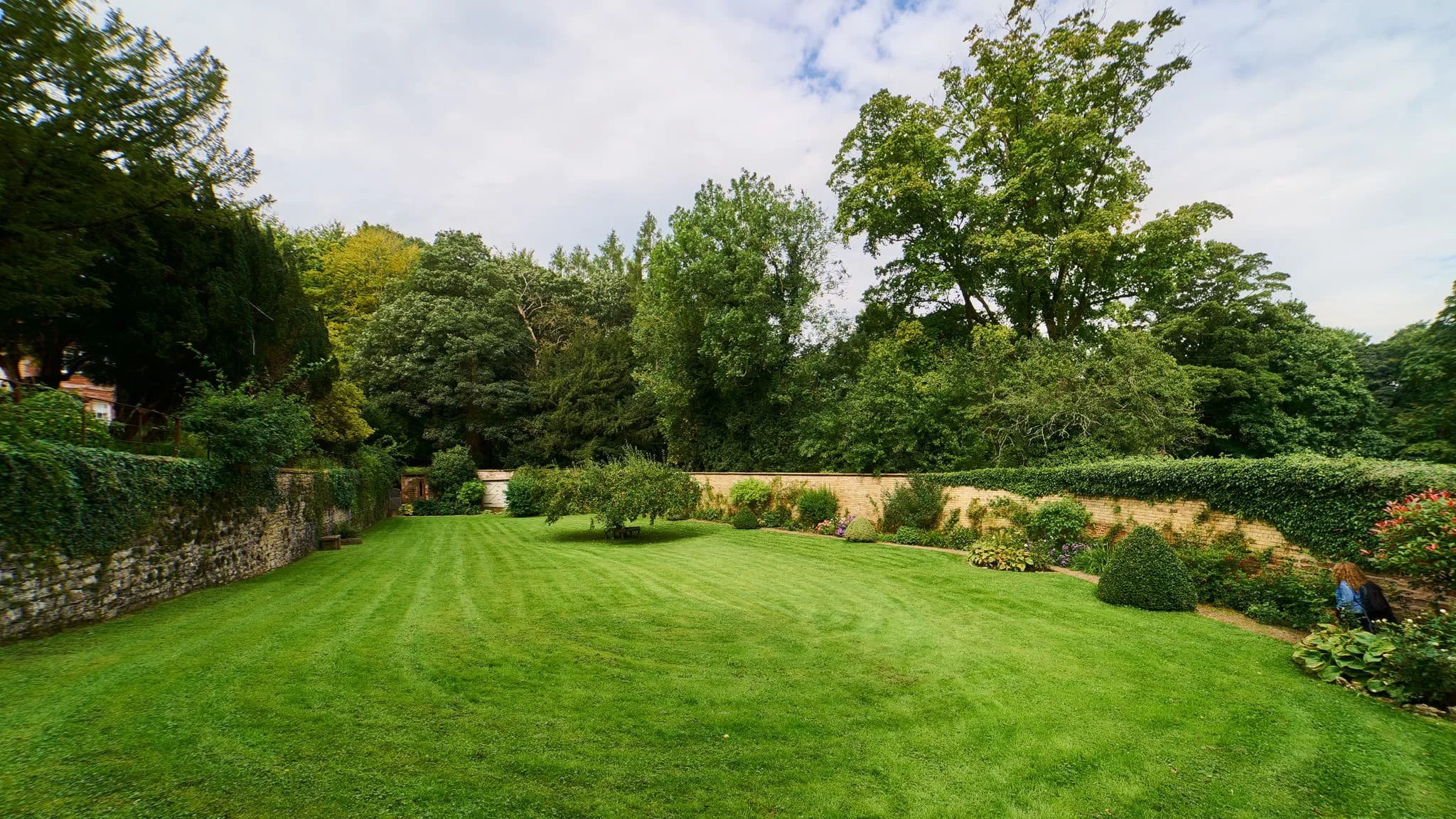
The walled garden below the house was chock full of bugs and insects enjoying all the flowers and plants.
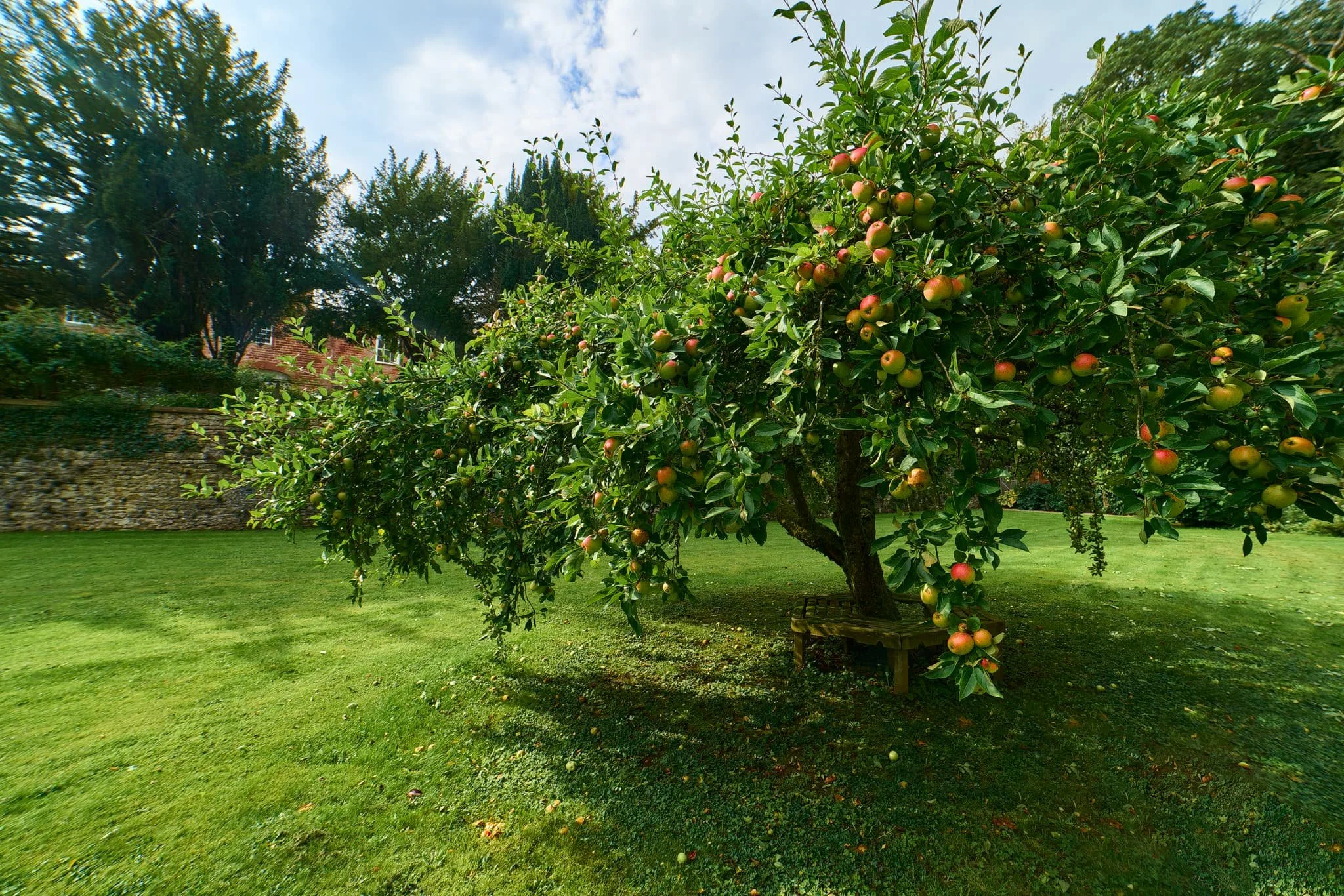
Slap bang in the middle of the walled garden, an apple tree, brimming with fruit.
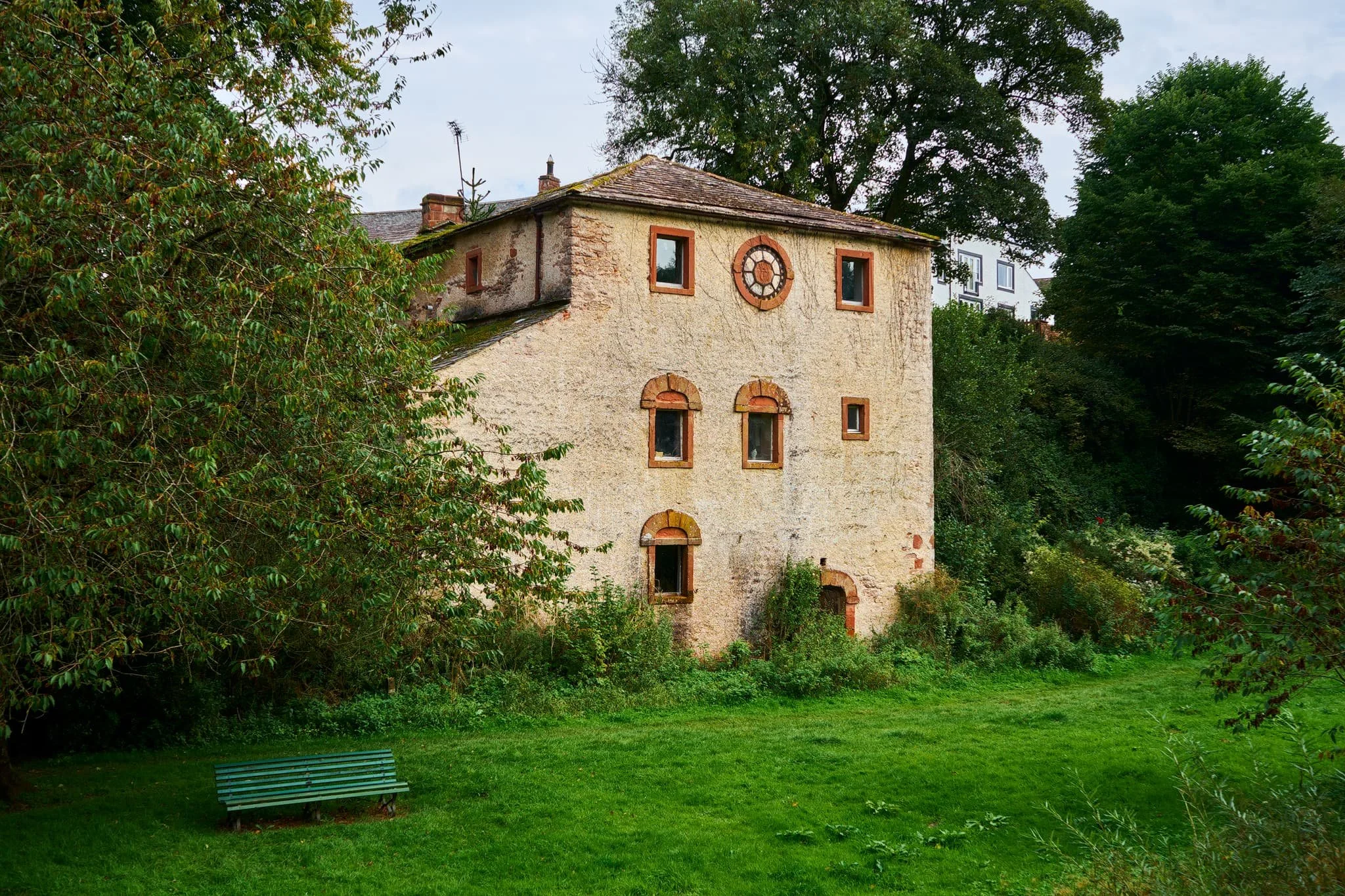
We took the minor road north east from Castle Bank House and over the River Eden via a footbridge. Halfway across the bridge, Bongate Mill caught our eye. An 18th century former corn mill.
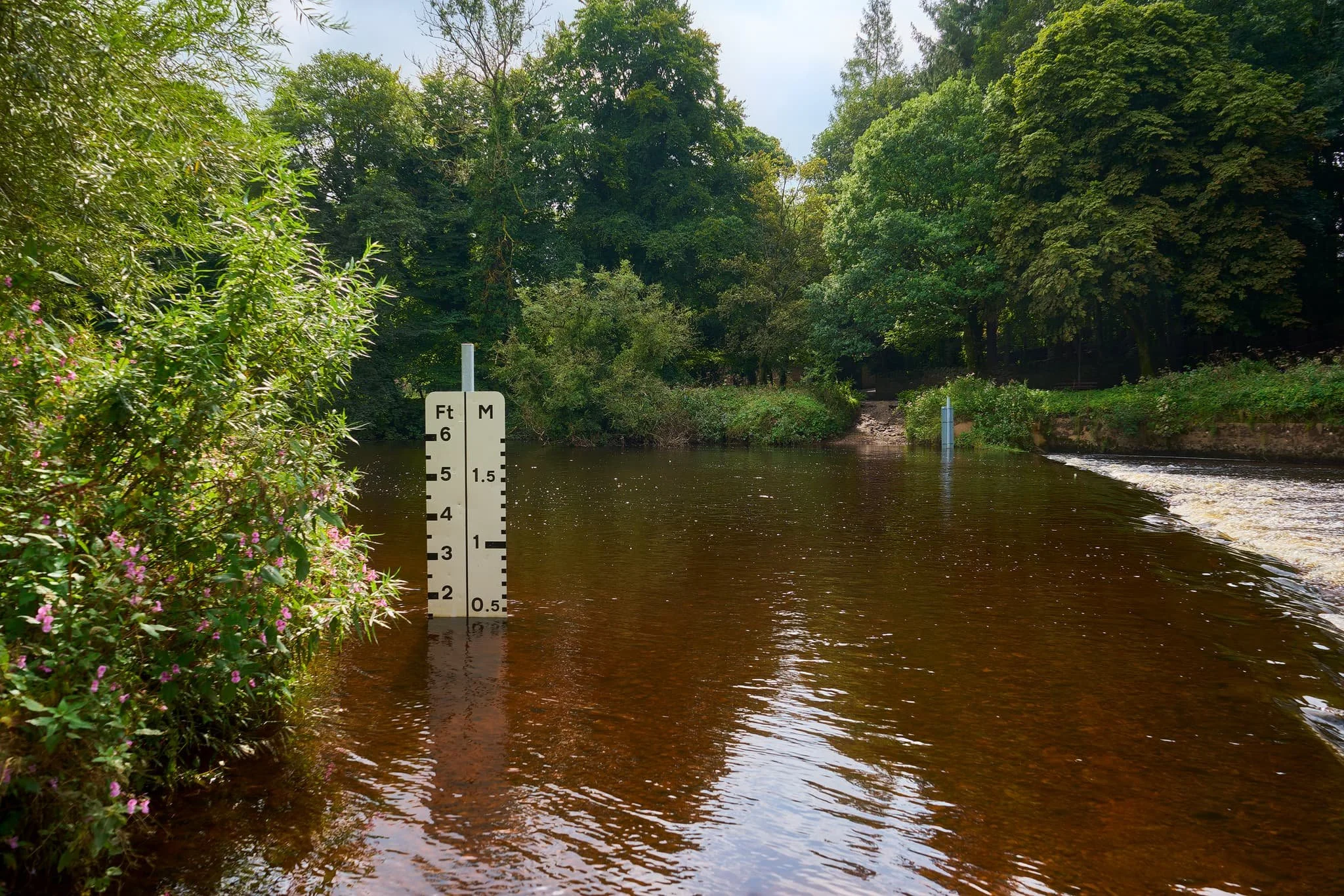
Across the bridge and by the riverside we could see that there were river gauges. This means that, yes, you can technically ford across the river in your car to continue along the “road”. No thank you.
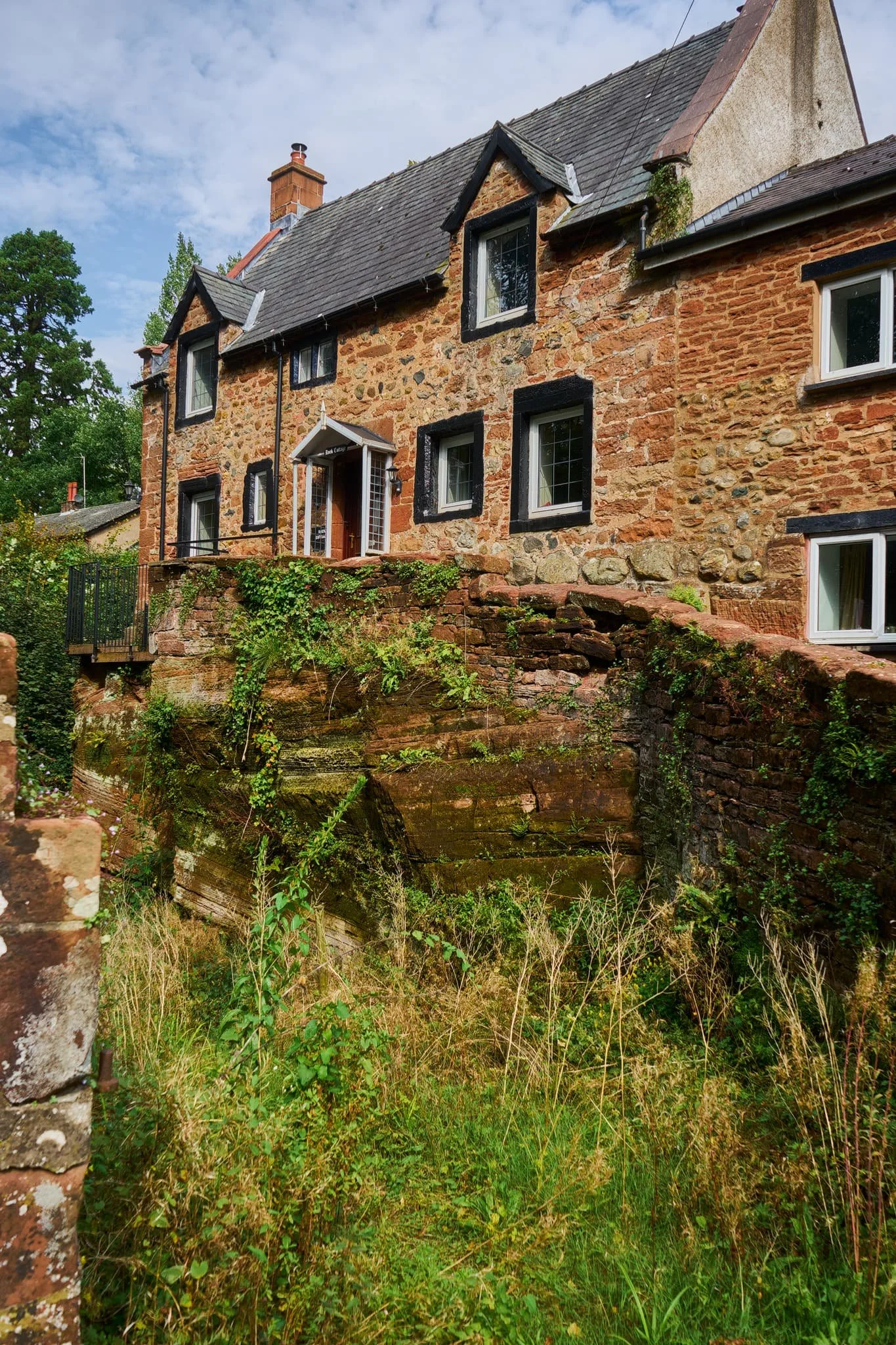
The appropriately named Rock Cottage, built on top of a giant crag of red sandstone.
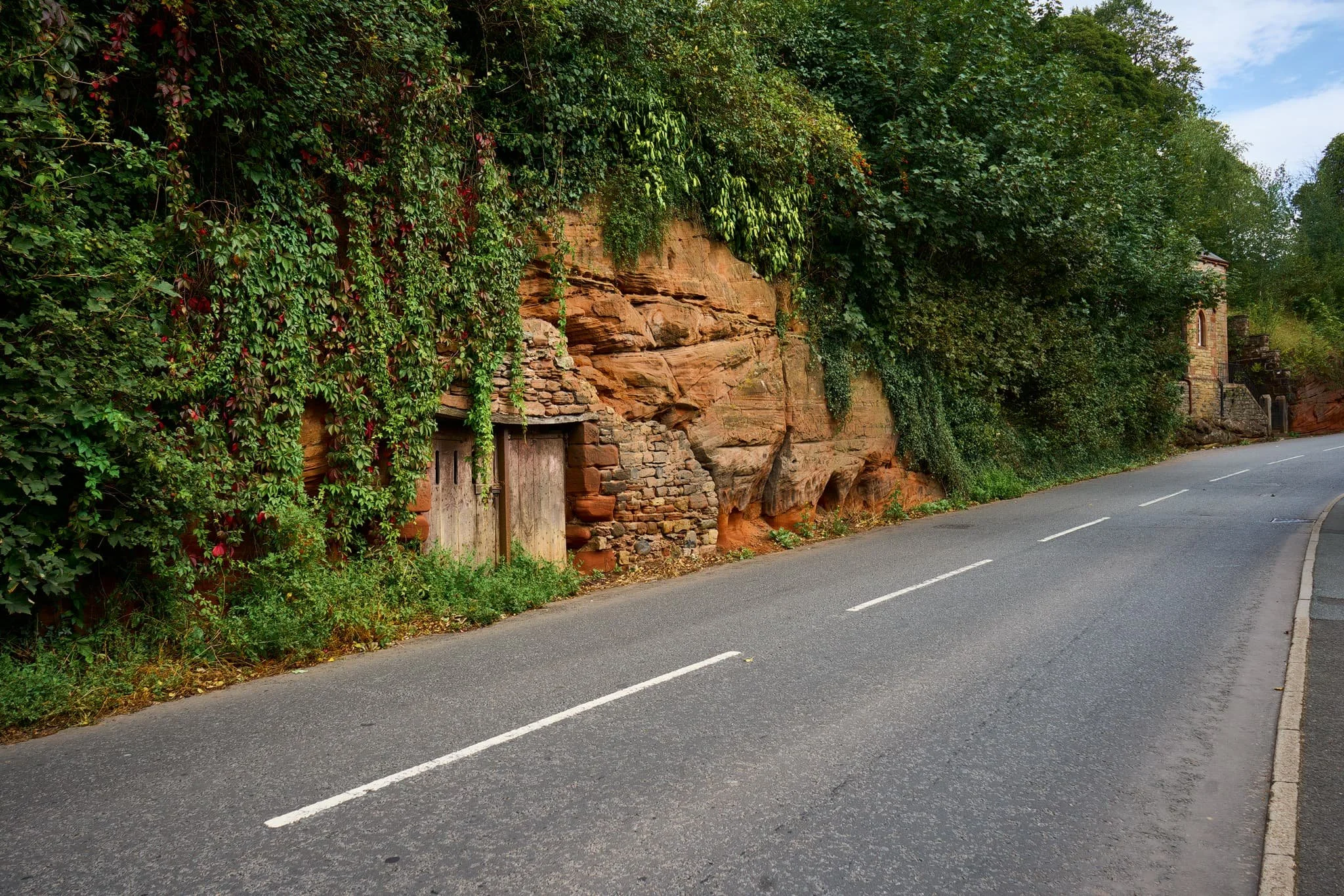
Near the old Church Institute buildings, we spotted this wee little door built right into the sandstone crags along the road. What is it’s purpose? What is it for? Who knows?
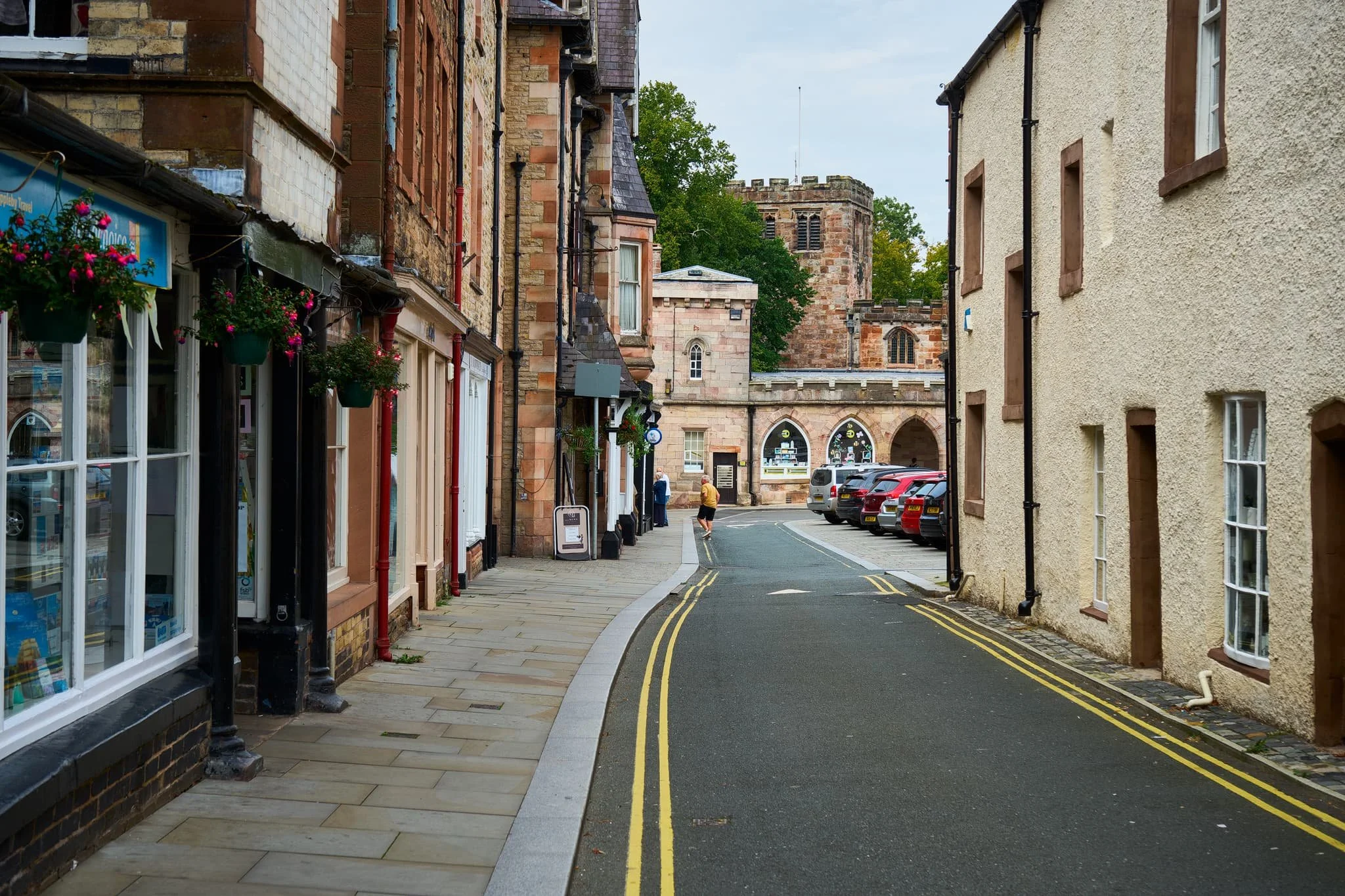
A final shot looking down the historic Boroughgate towards St. Lawrence’s church, before making our way back to the car.