Despite being in peak summer, it wasn’t all glorious sunshine during our week in Northumberland.
On this particular day I poured over the various weather apps and services I check to ascertain temperatures, chances of rain, atmospheric conditions and more. From what I could see, if we stayed near the coast of Northumberland around Bamburgh we could probably avoid a lot of storms that were moving southwards.
After a beautiful morning of sunshine wandering around the beaches of Bamburgh and Budle, another glance at the weather services indicated a storm moving in over the area. This was also self-evident as the clouds above the beach and castle of Bamburgh were getting dark and foreboding. Lisabet and I nipped into a pub for lunch and decided on another beach further north that we hadn’t explored before: Cheswick Sands.
Thankfully, this was the correct decision. Not only did the rain fall as soon as we arrived at the pub (thank you, Lord Crewe Hotel), but the conditions at Cheswick Sands were blessedly dry. More than that, Cheswick Sands is beautiful. The area features extensive dunes, soft beaches, and fantastical sandstone formations to play around with photographically.
I made perhaps some of the finest seascape compositions I’ve ever done.
All photos shot on my Fujifilm X-T2 using my three prime lenses: a Samyang 35mm f/1.2, a Laowa 9mm f/2.8, and an adapted Pentax SMC 55mm f/2.0. All images were made 80% in-camera using a customised Velvia film simulation, with minor edits and corrections after in Lightroom and Affinity Photo.
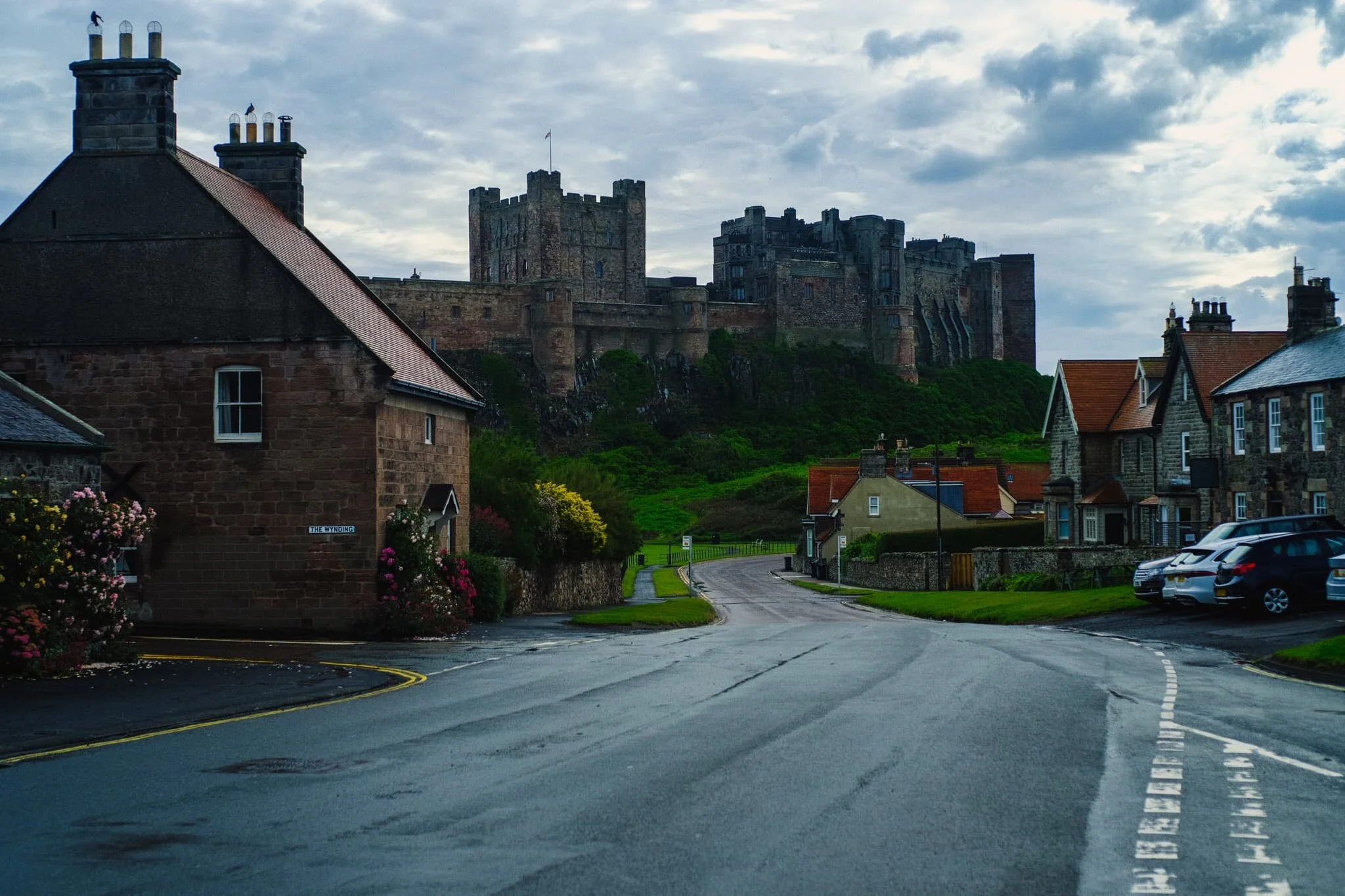
An early start meant we were able to park freely in Bamburgh and wander around the village with few people around. Pretty much no matter where you are in Bamburgh, the castle is sure to dominate the skyline.
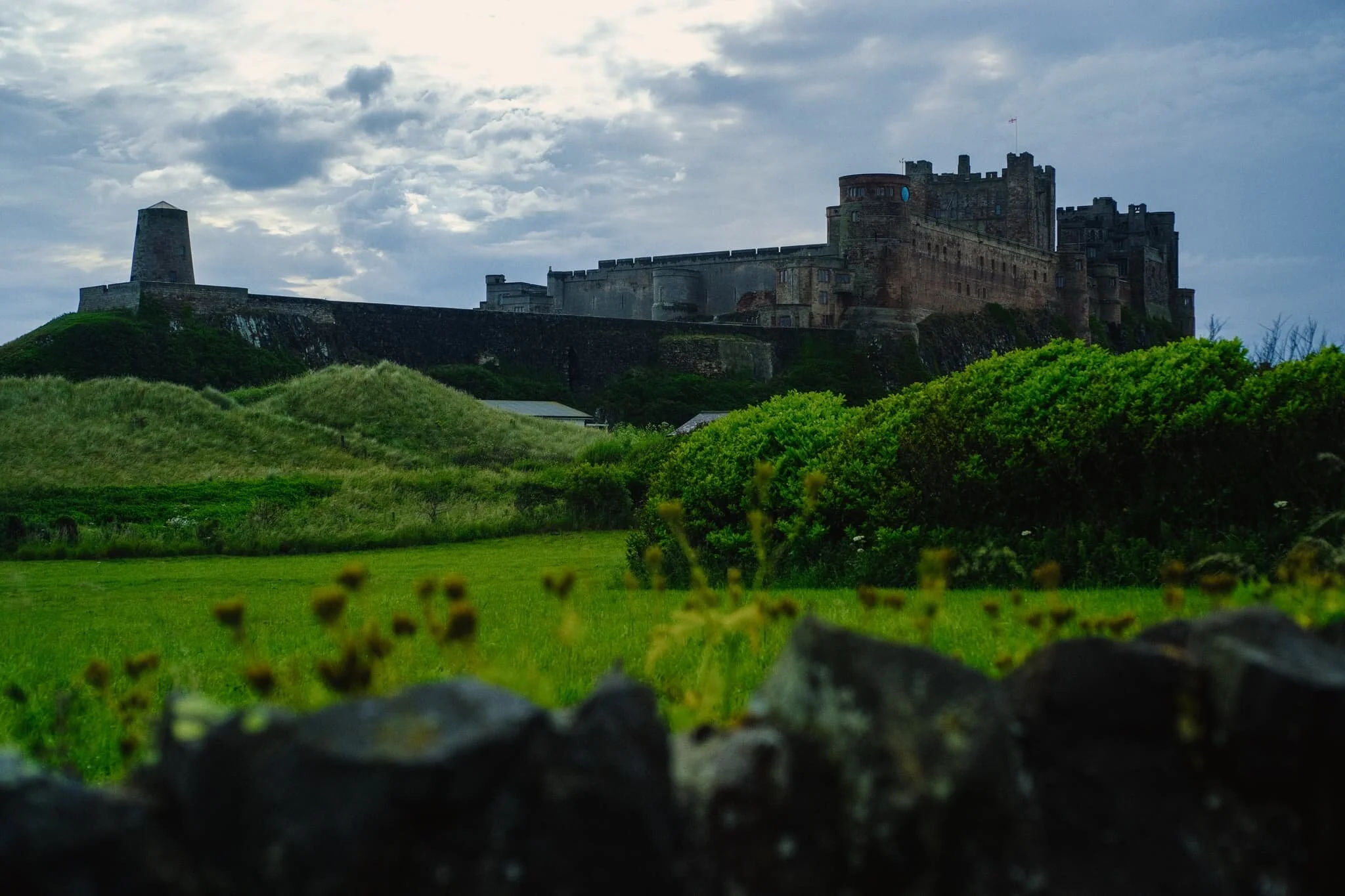
The grounds around Bamburgh Castle were looking particularly lush and verdant.
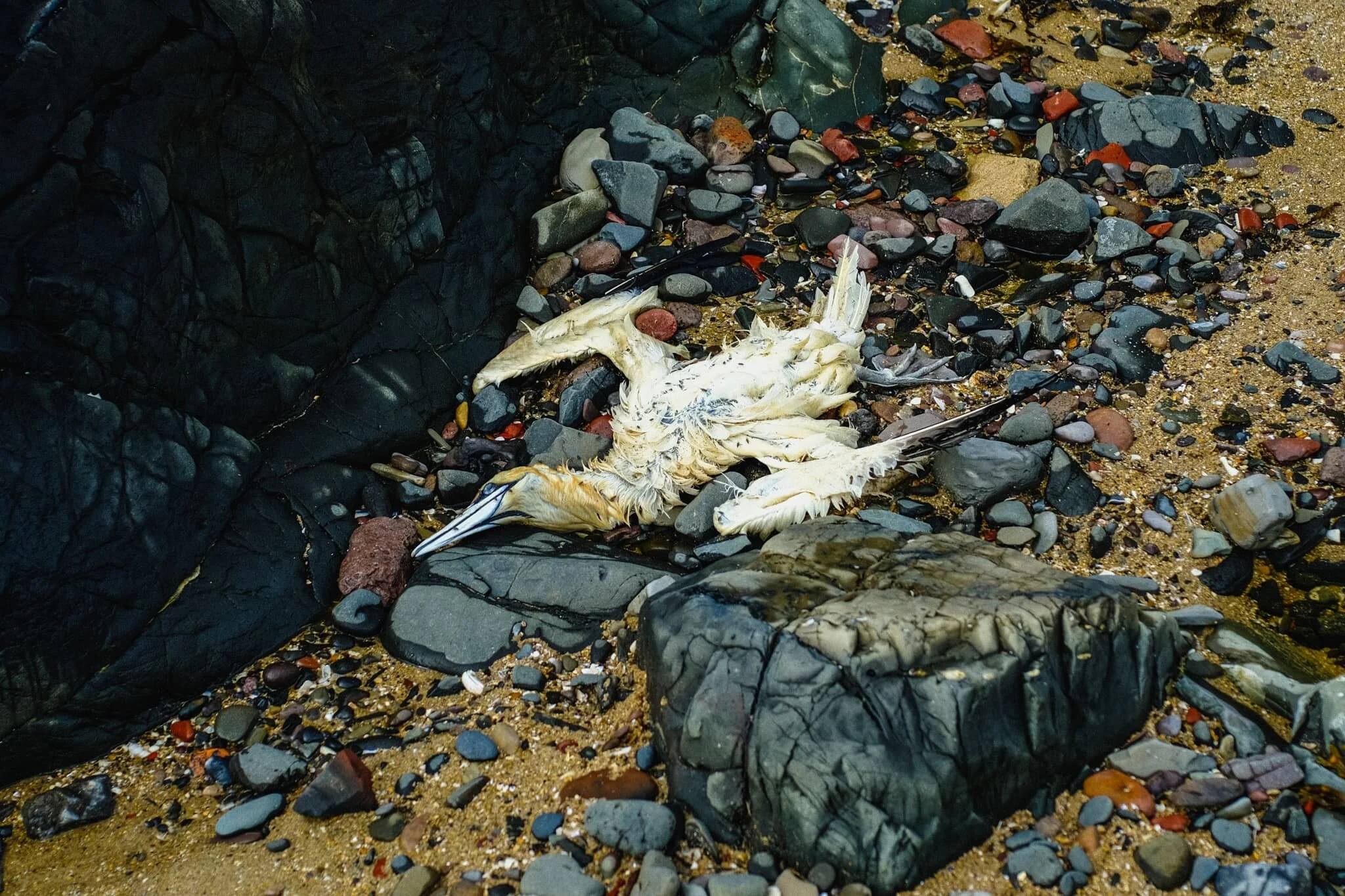
Not something I expected, or wanted, to see when clambering around Harkess Rocks on Bamburgh beach. A dead Northern Gannet ( Morus bassanus ). You tend to see these beautiful birds more around cliffs and isolated rocky islands, so I’m not sure why this one was found near the beach.
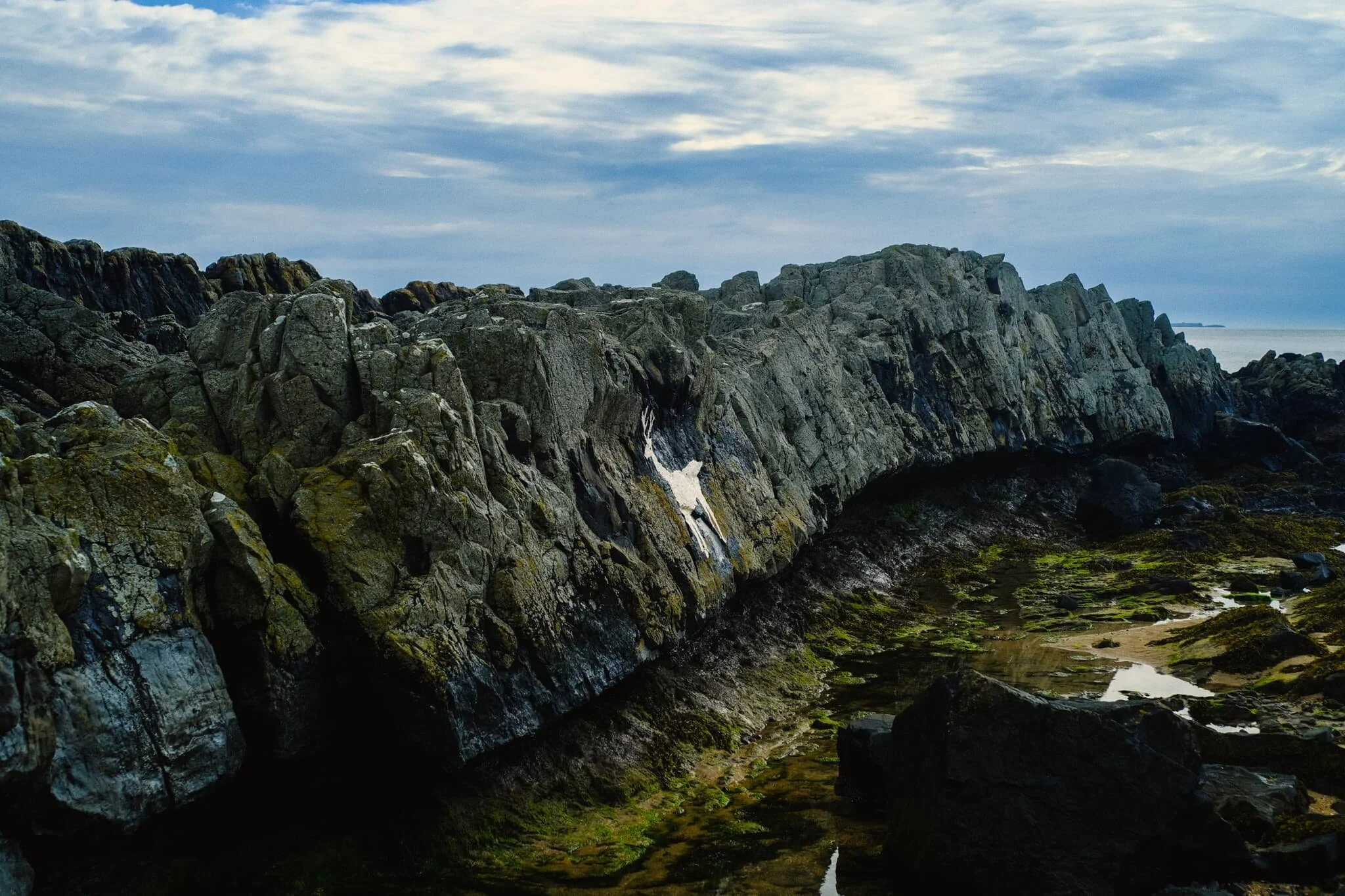
My first aim of the morning at Bamburgh beach was to head to Harkess Rocks, which separates Bamburgh beach from Budle Bay. Here one can find a painted deer. Is it prehistoric? A recent piece of art? No-one’s quite sure. One story says that it was painted because a white stag jumped into the sea to escape hunters. Another story reckons it was painted by Italian prisoners of war during World War 2.
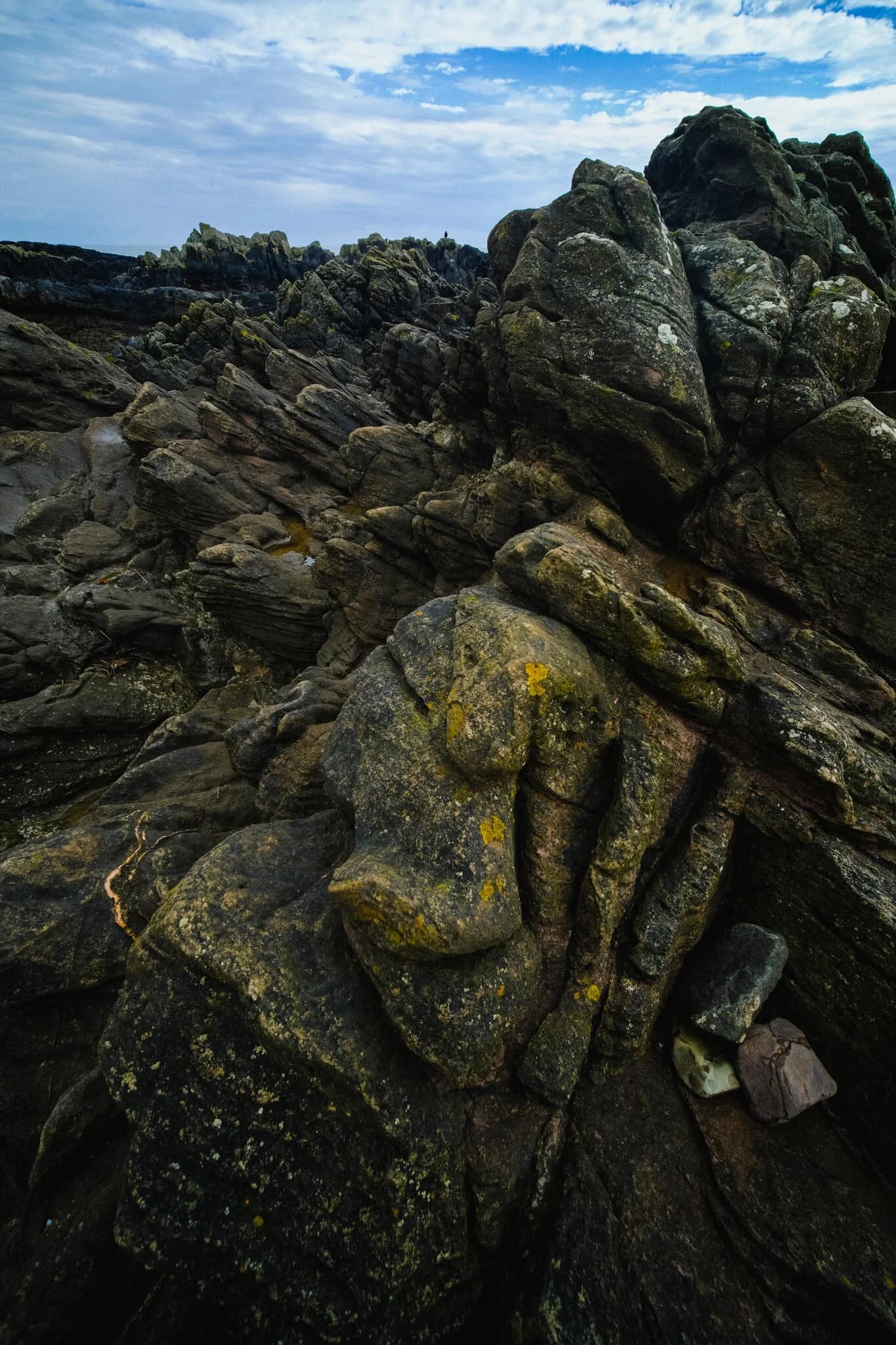
Harkess Rocks and Blackrock Point features a prehistoric fault line and a confusing jumbled mass of ancient volcanic rock. Compositionally, I think this area is better to shoot when the tide is in, allowing the water to better separate the shapes of the rocks.
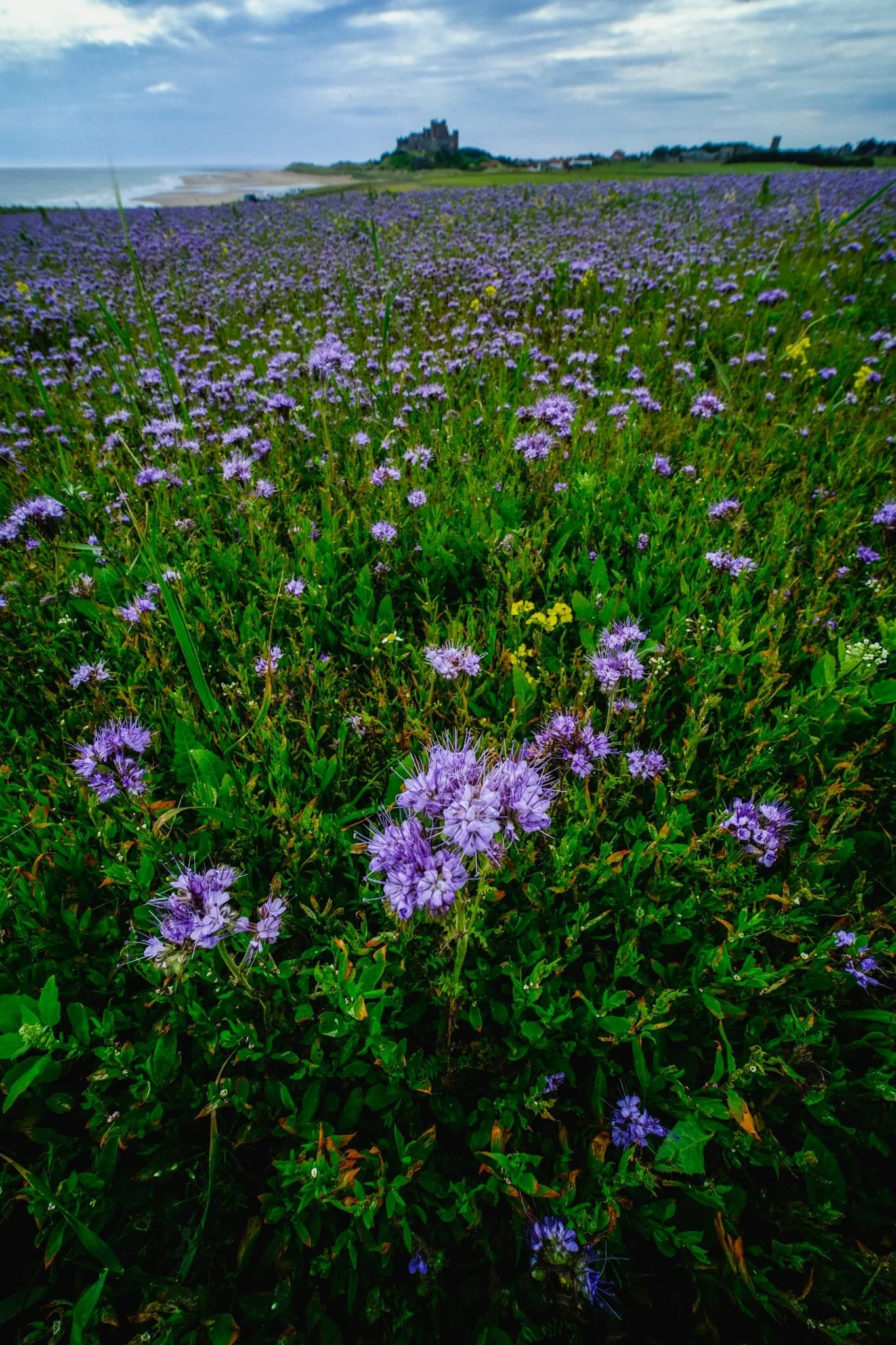
Above Harkess Rocks is Bamburgh Moor, where Lisabet alerted me to a field full of these beautiful flowers ( Phacelia tanacetifolia or Purple Tansy ). You can read about the farmers who manage this field and why they sow the flowers here .
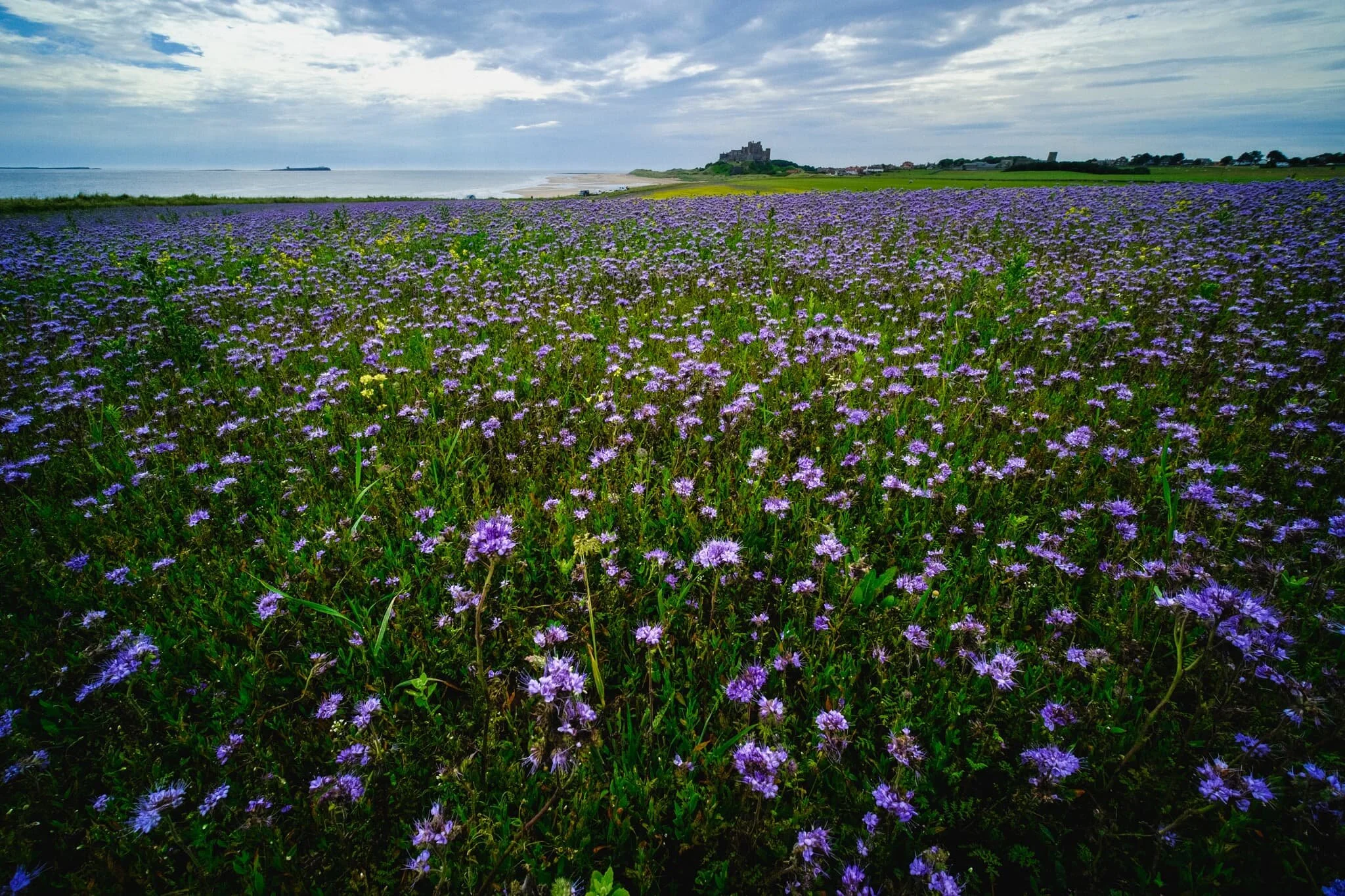
You’ve gotta admit, it’s a pretty stunning scene.
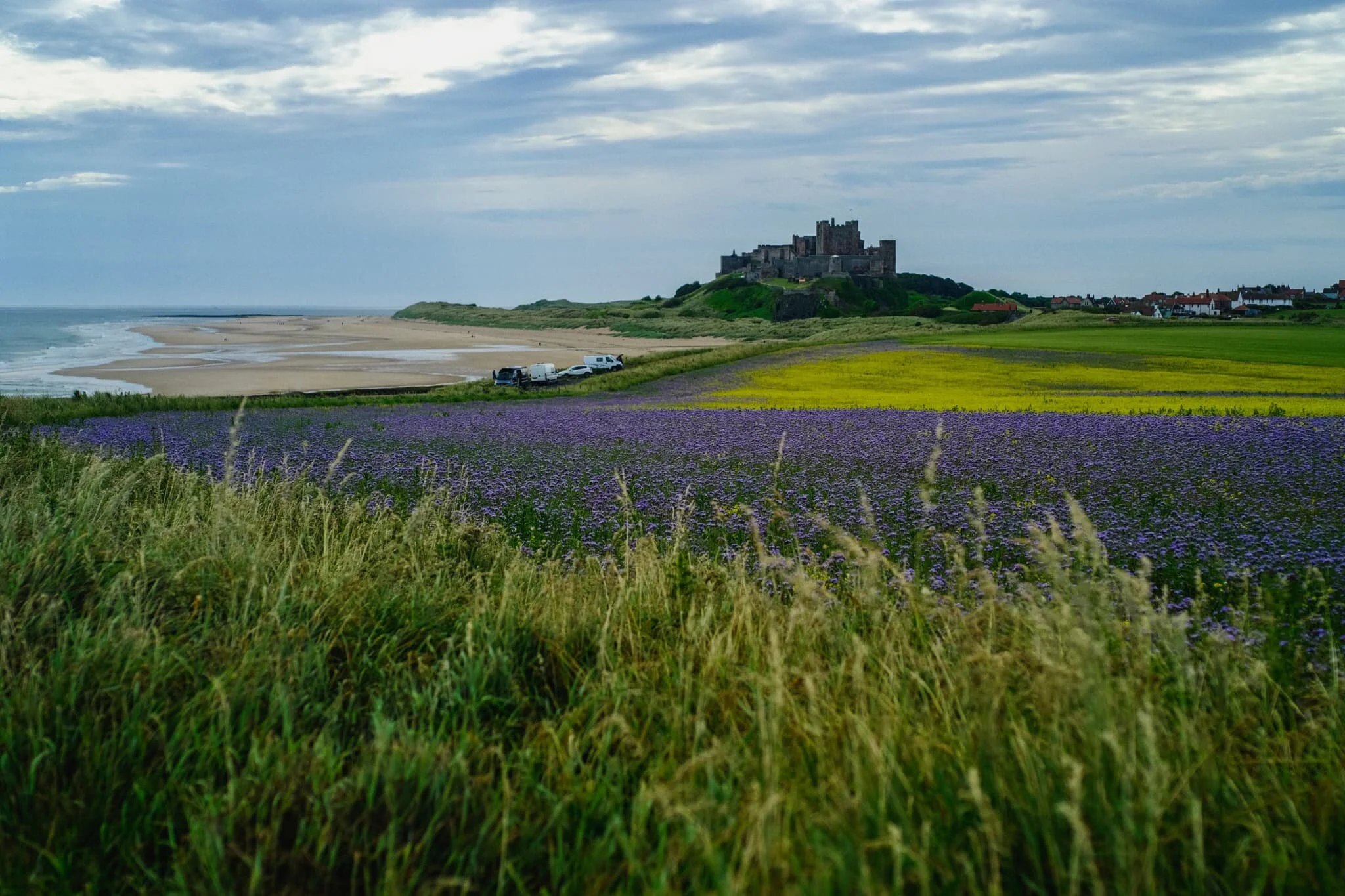
More of the layering of the scene is involved in this composition as the day started to brighten up.
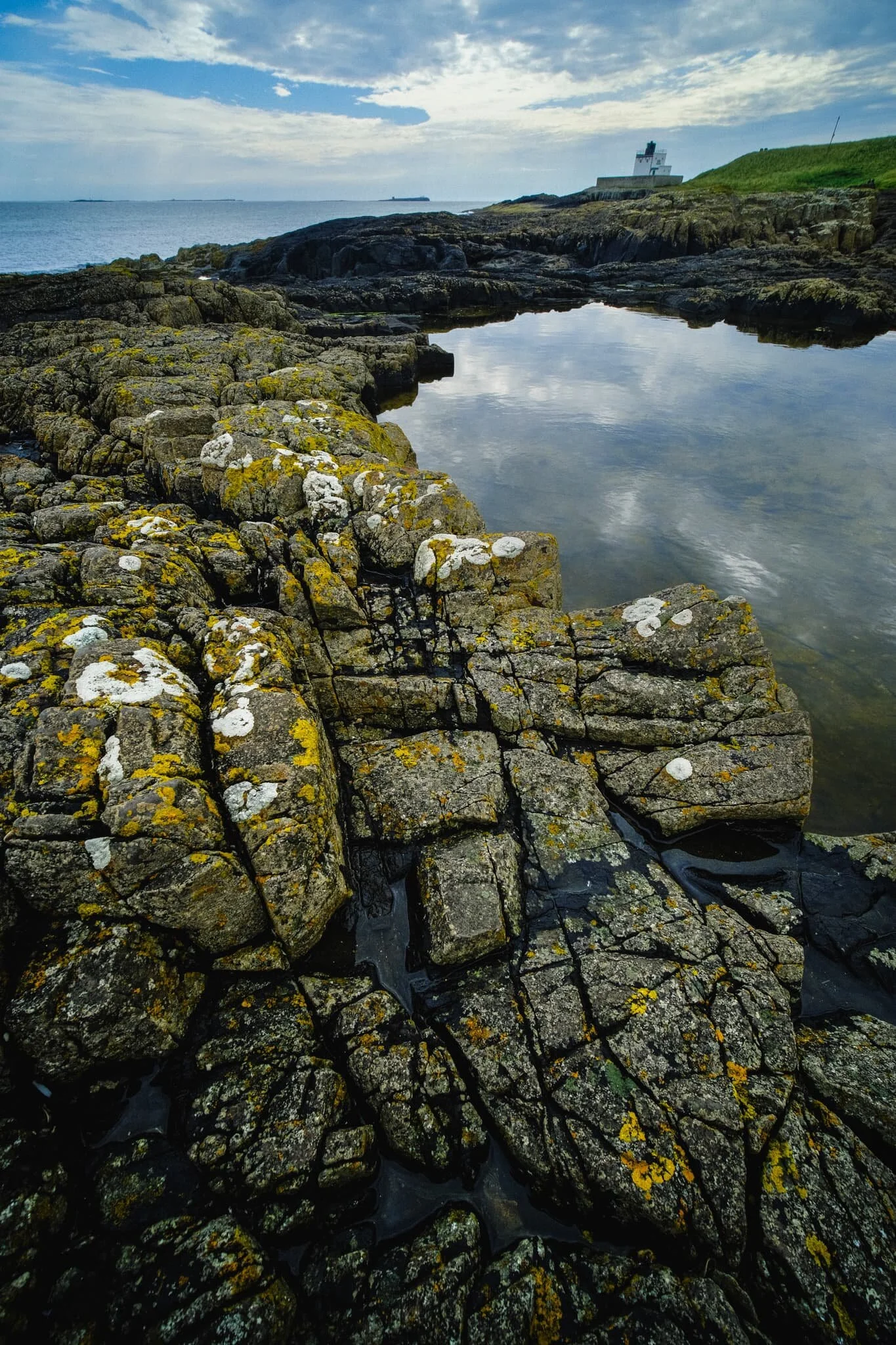
North of Bamburgh Lighthouse, around Blackrocks Point, we found this open rock pool surrounded by these tessellating structures of volcanic rock. Made for a lovely, if challenging, composition.
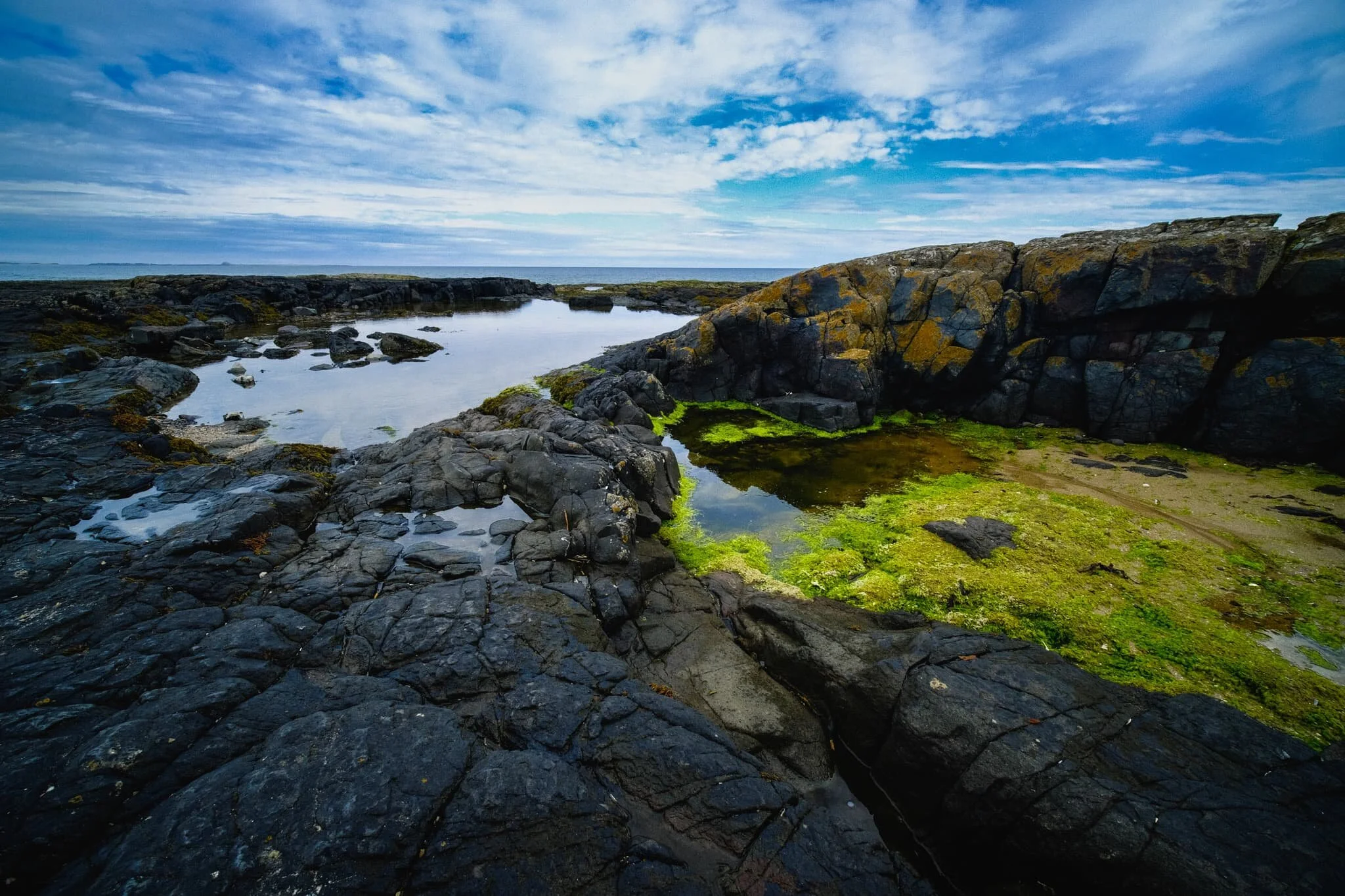
Back from the main rock pool, I spotted another smaller rock pool filled with vivid lime green sea moss. I lined up a composition to create a kind of Figure-of-8 shape in the middle of the frame, surrounded by the dark volcanic rocks of Blackrocks Point.
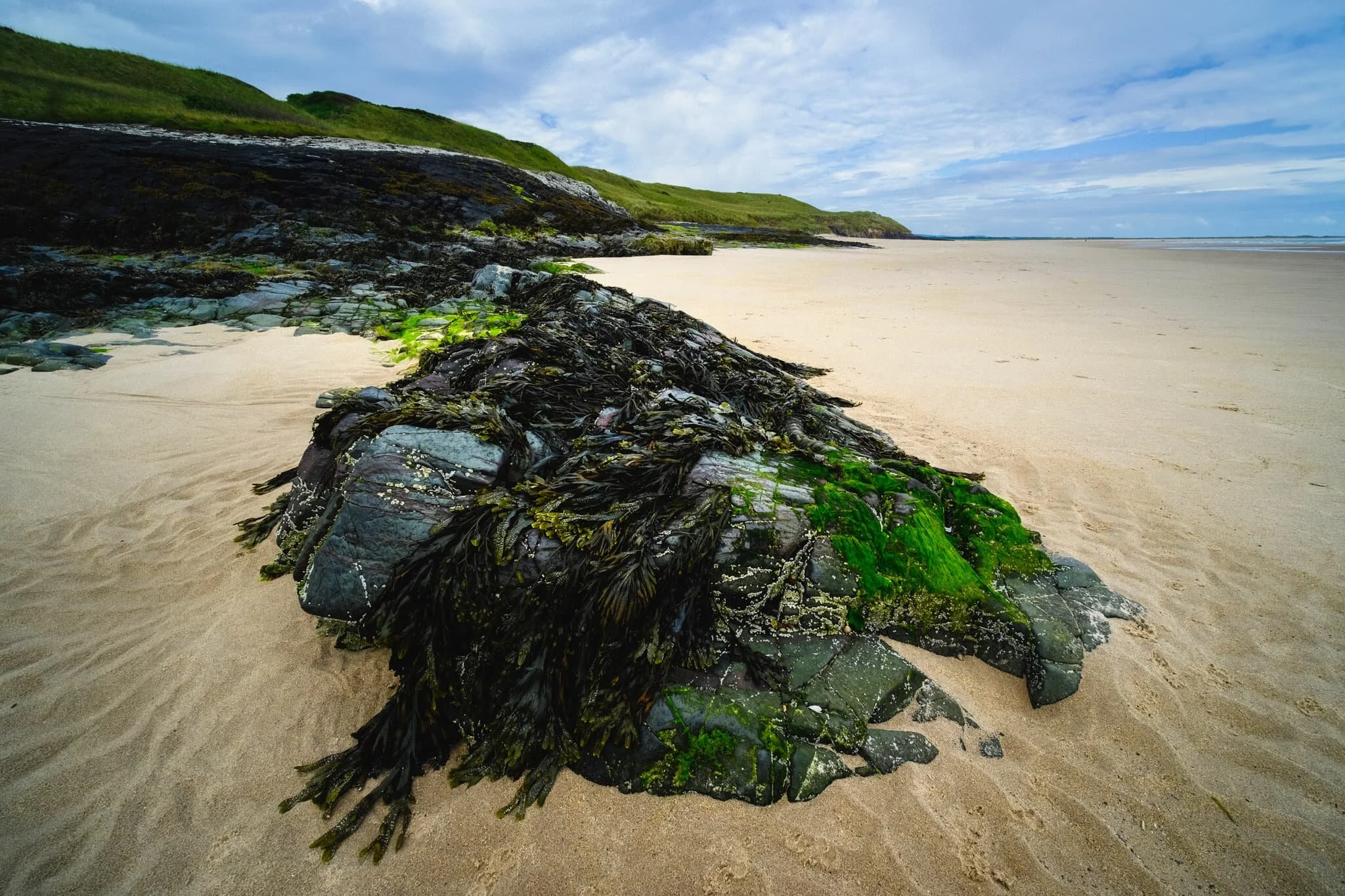
North west of Blackrocks Point and Bamburgh beach, the sands open out into Budle Bay and its vast expanse of golden sand.
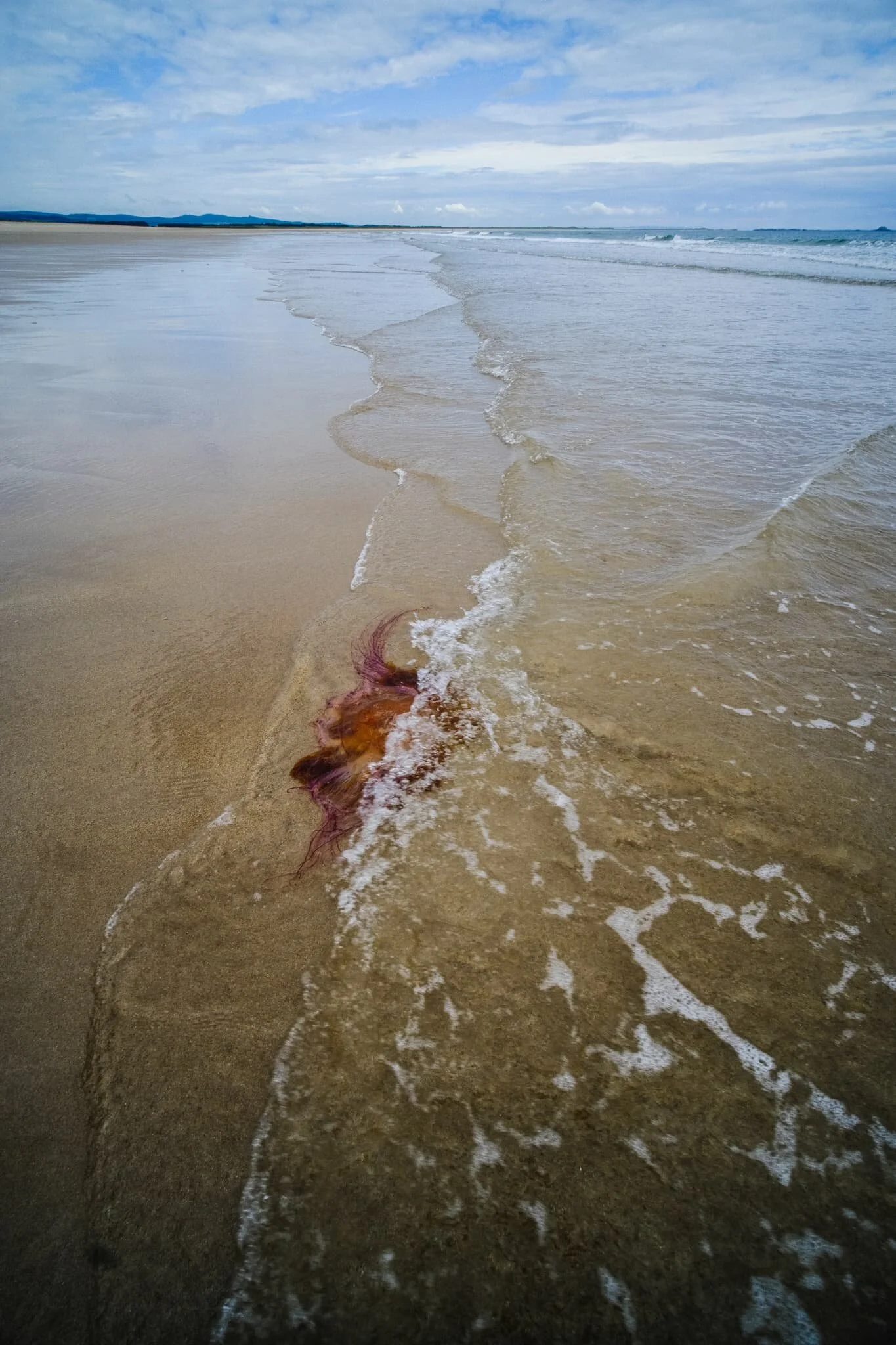
One reason on this day not to venture into the sea for a paddle or a swim: jellyfish. No thanks.
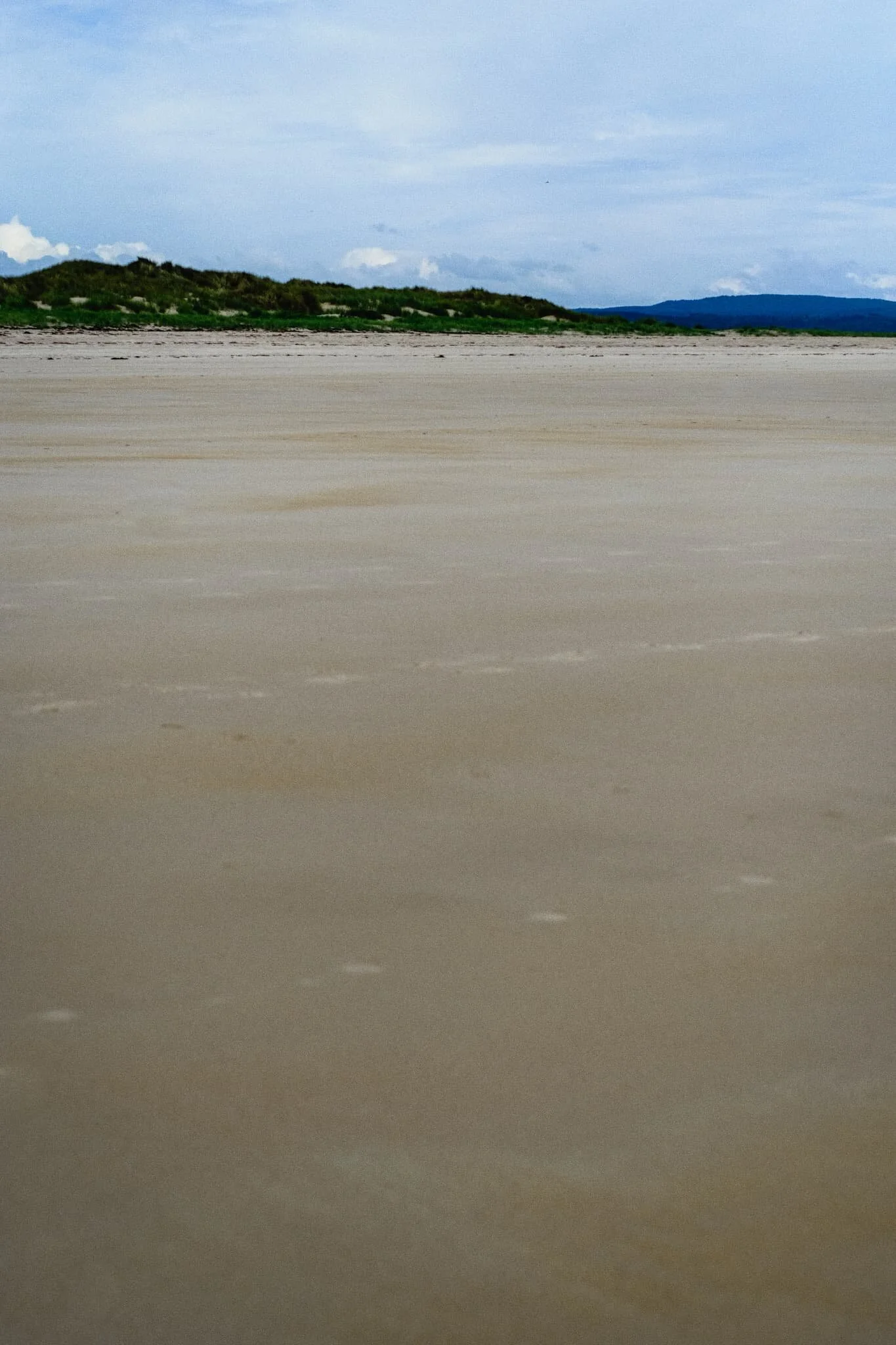
A minimalistic composition involving the vast virgin sands of Budle Bay.
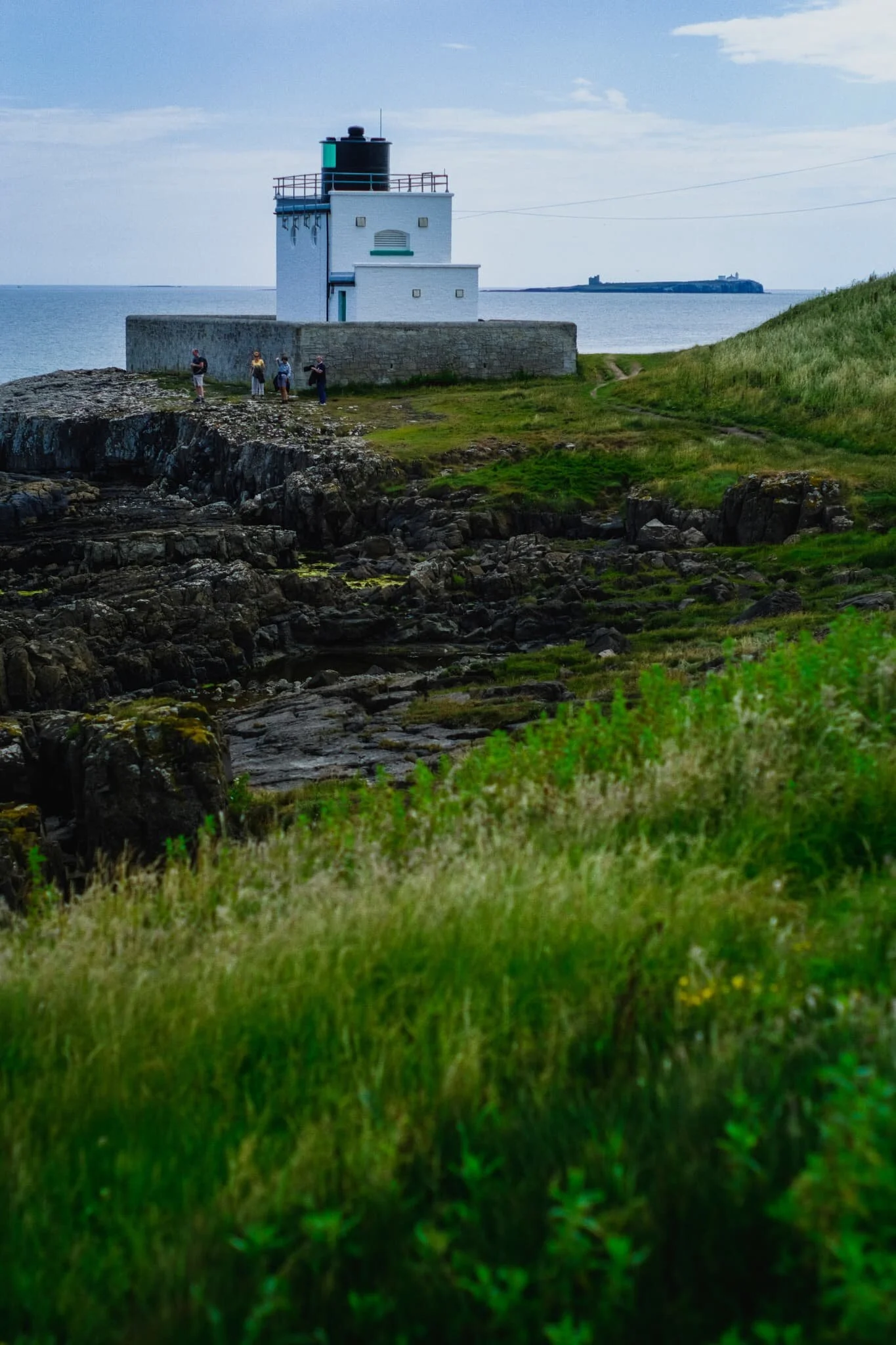
Heading back south towards Bamburgh, the day brightened up and people had arrived to soak up the sun. In the distance, you can make out one of the Farne Islands, an important wildlife habitat.
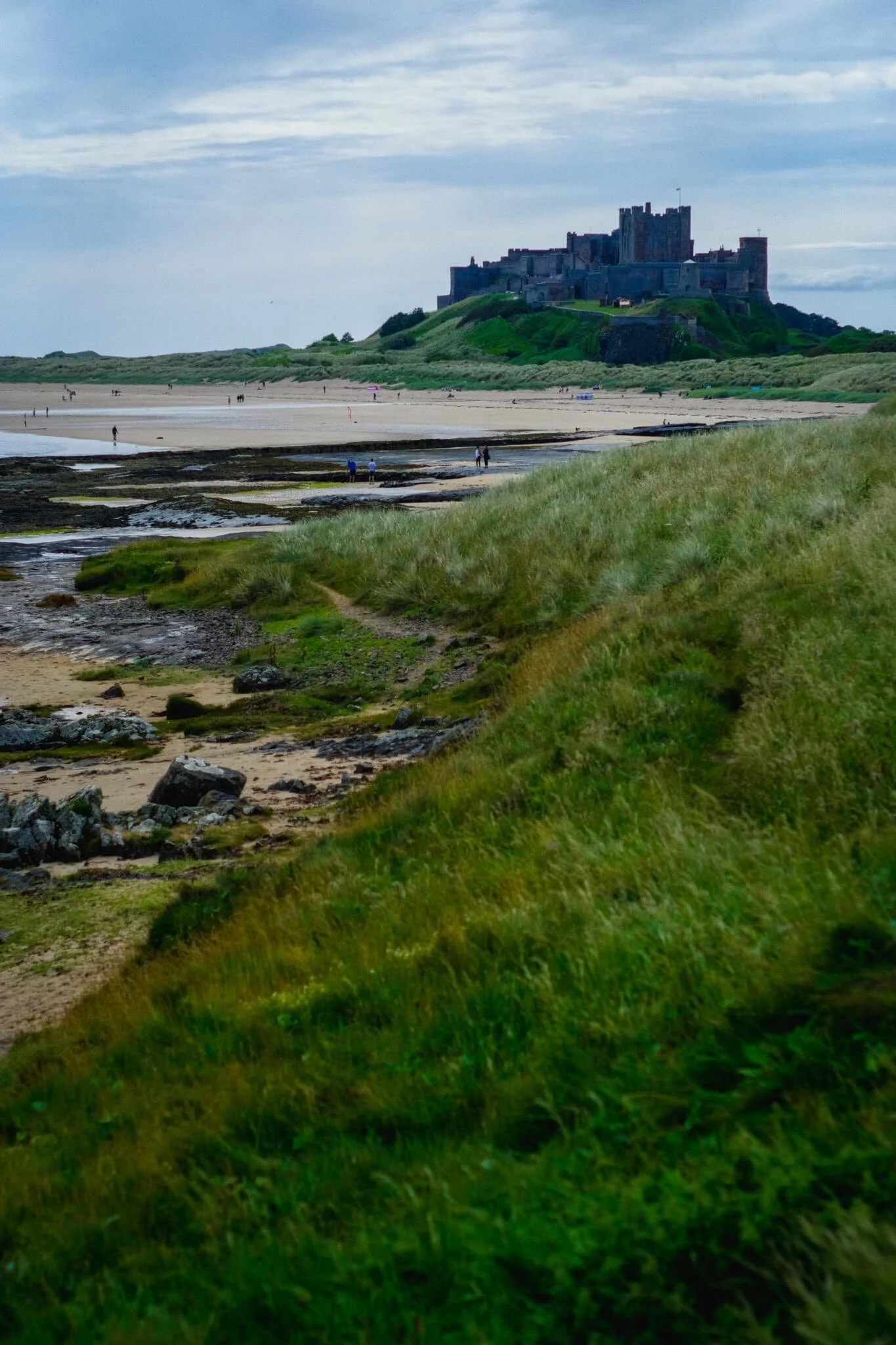
The hulking might of Bamburgh Castle, standing protectively over the coastline and sea.
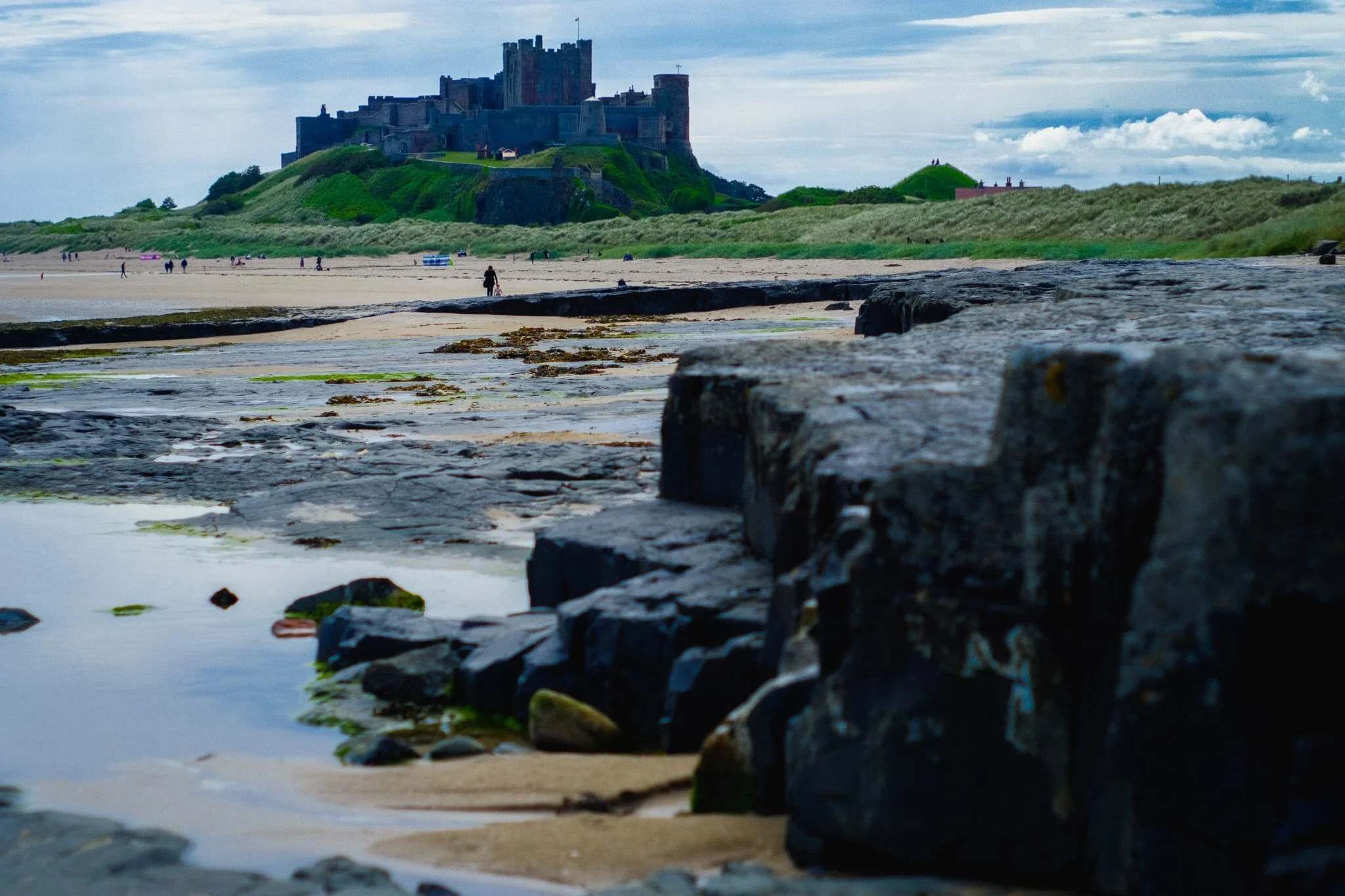
At around midday the beach was quickly filling up with people. I nabbed this quick composition of Bamburgh Castle in the distance with the edge of Harkess Rocks closer to the viewer.
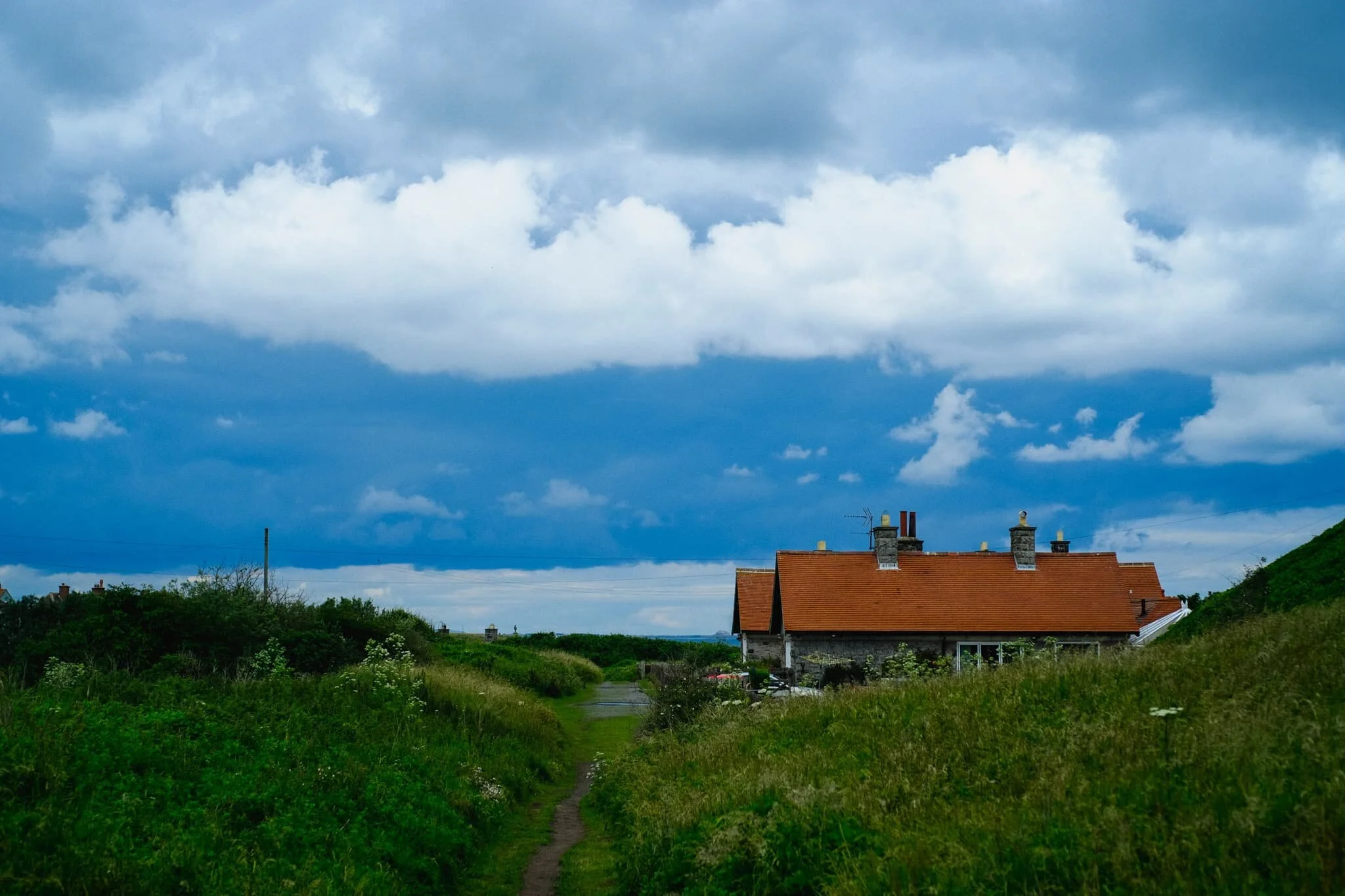
This was where we decided to exit the beach and devise an alternative plan to avoid the approaching storm. Foreboding indeed.
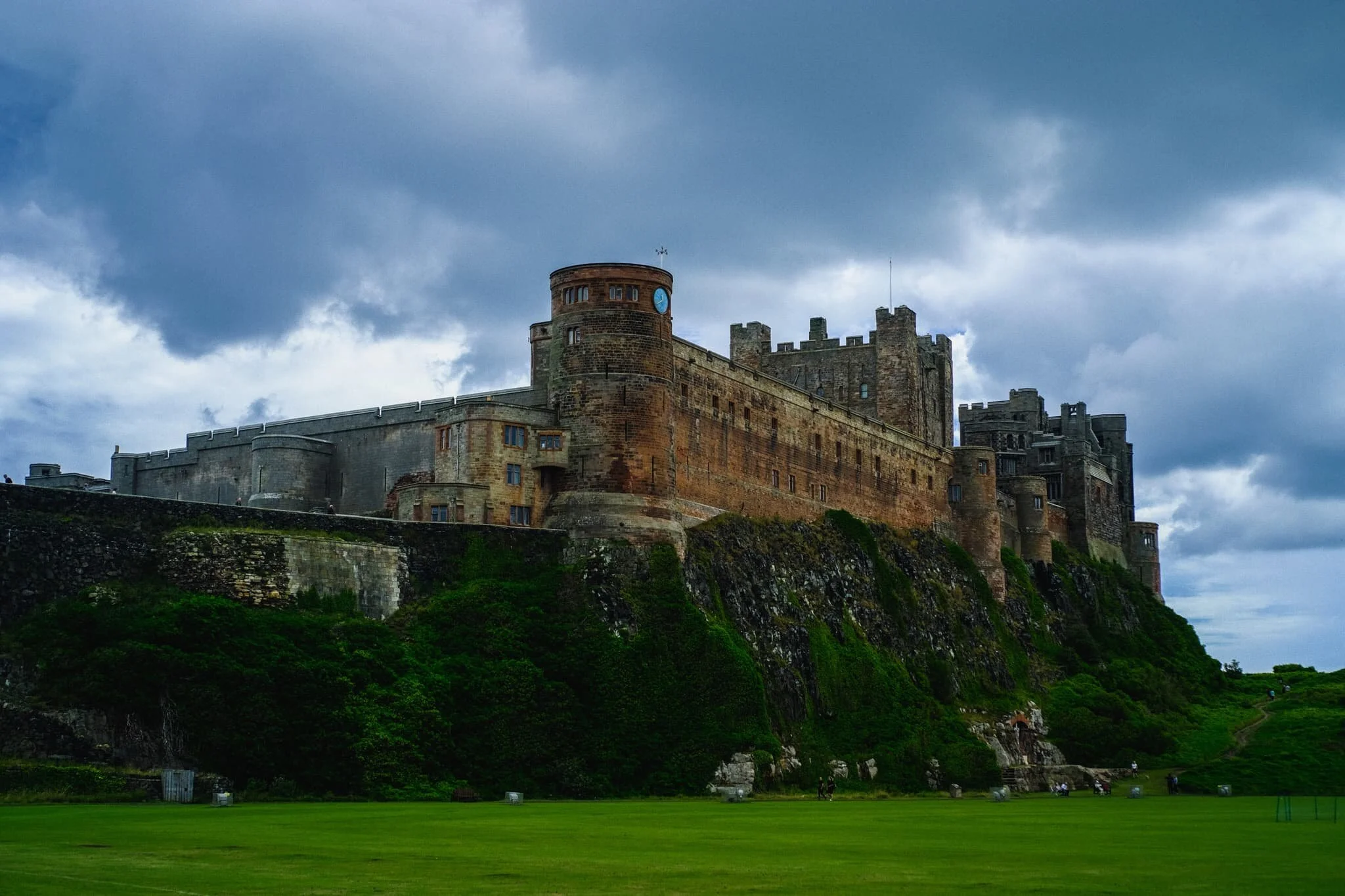
The approaching storm made for some dramatic clouds above Bamburgh Castle, though.
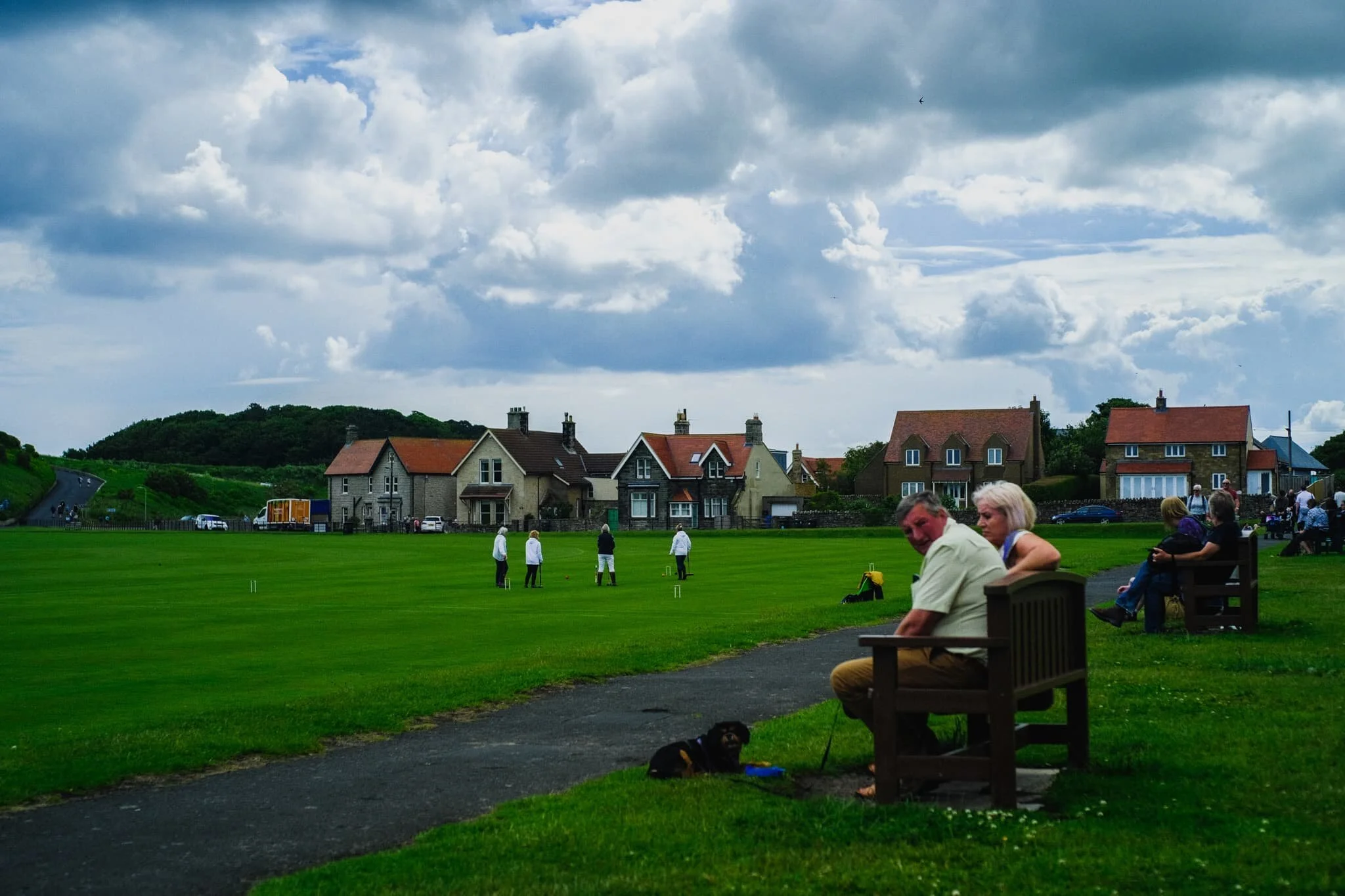
Seemingly oblivious to the approaching storm about to drench them in rain, a group of friends enjoy a game of croquet in the fields next to Bamburgh Castle.
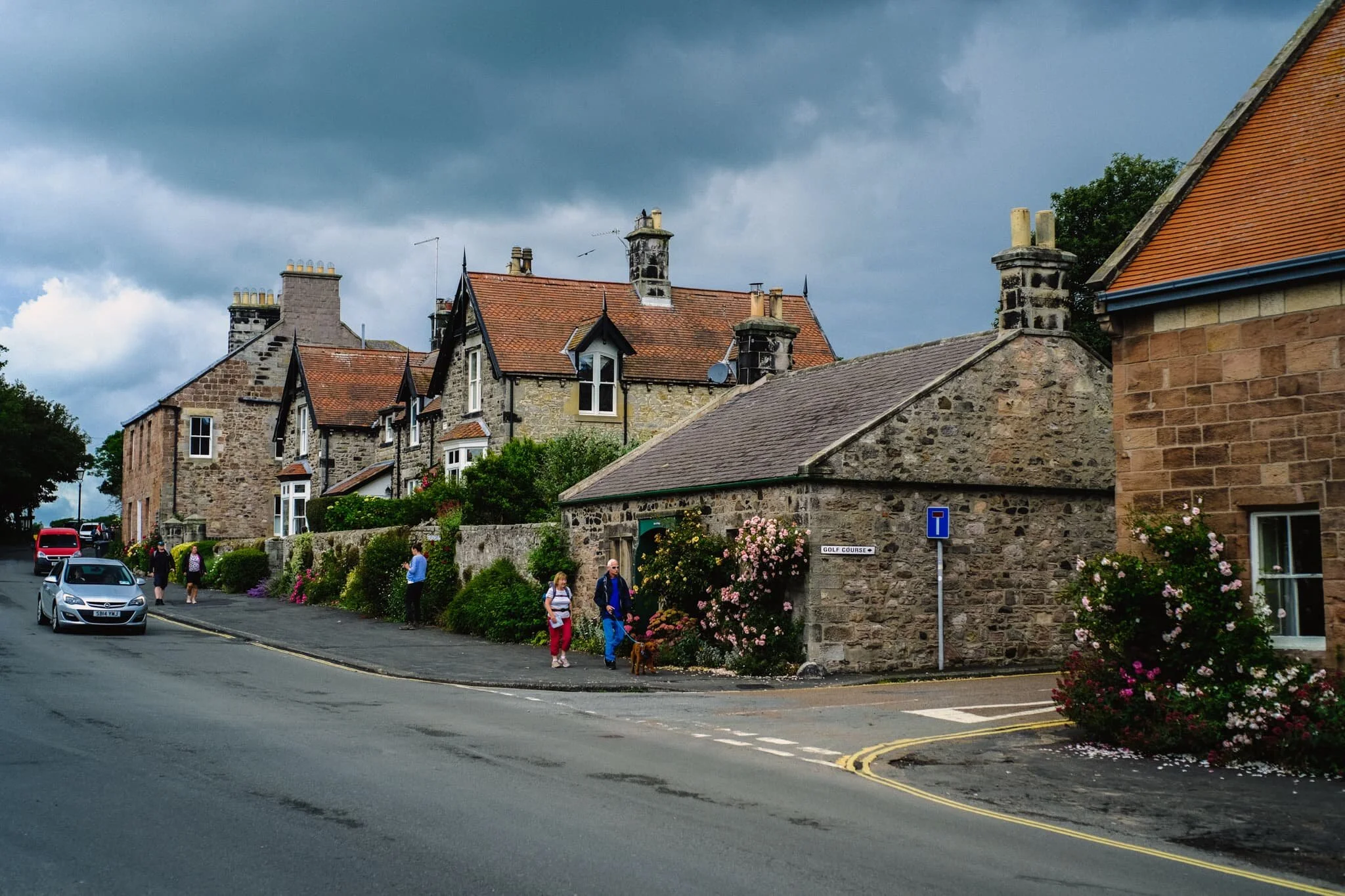
Bamburgh’s a proper bonny village.
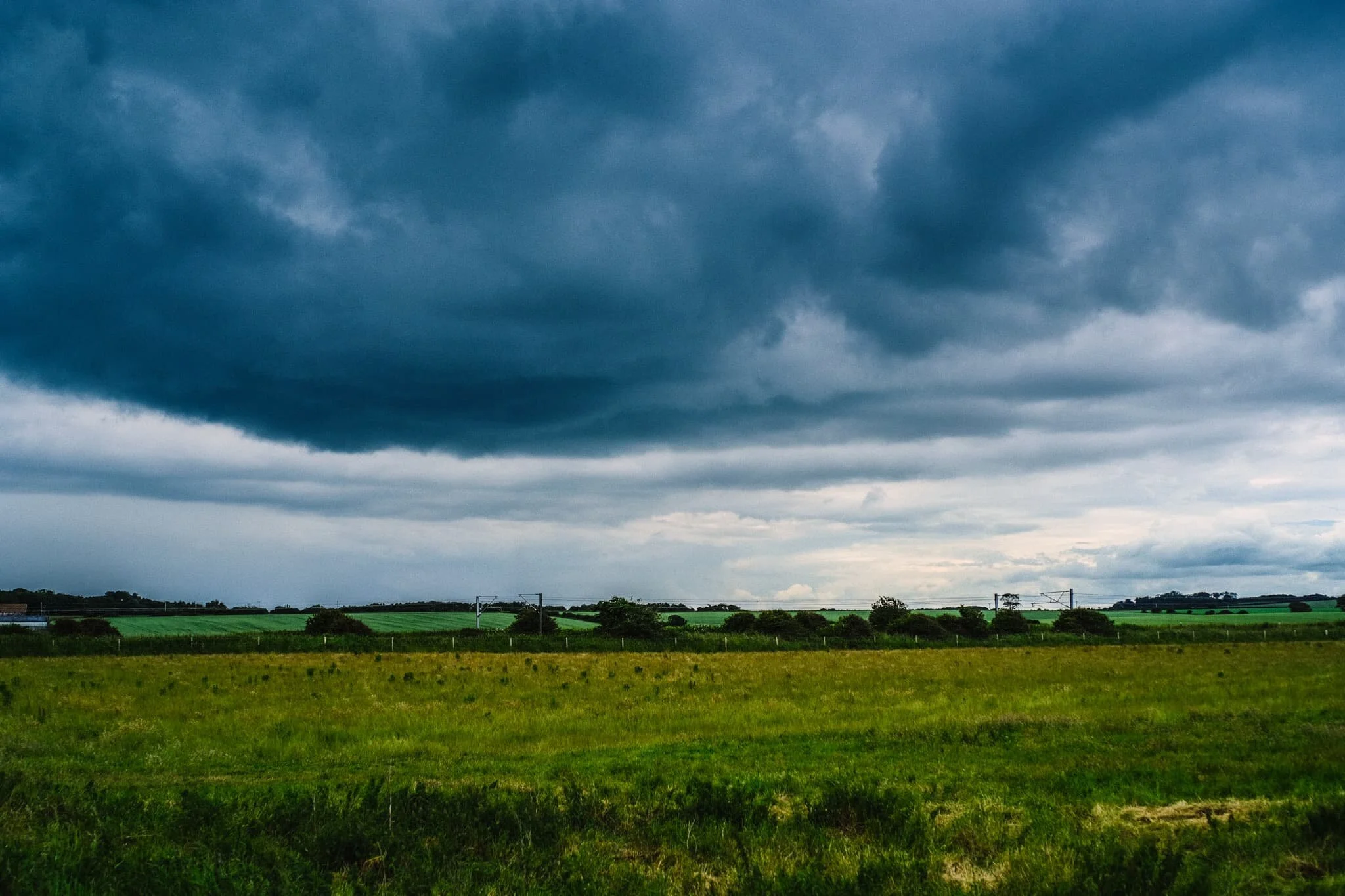
After escaping the rains falling over Bamburgh and inland Northumberland, we drove north to visit a relatively little-known beach called Cheswick Sands. I snapped the rather dramatic skyline from the car park. Good job we weren’t under that.
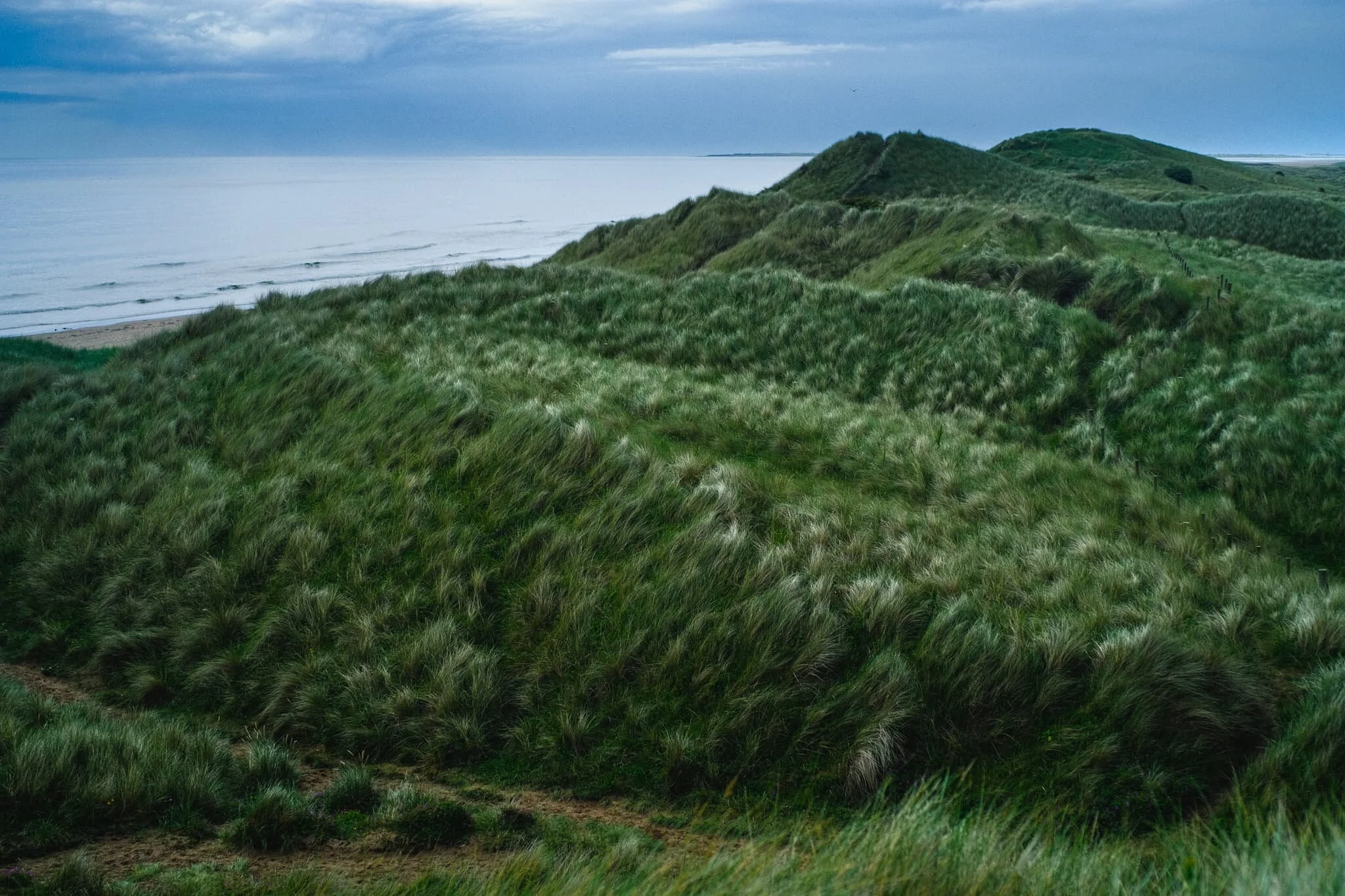
Access to Cheswick Sands involves clambering up and down the soft sands of Cheswick’s dunes. From the top of one, I made this composition of the undulating dunes, the North Sea, and the dark storm in the distance.
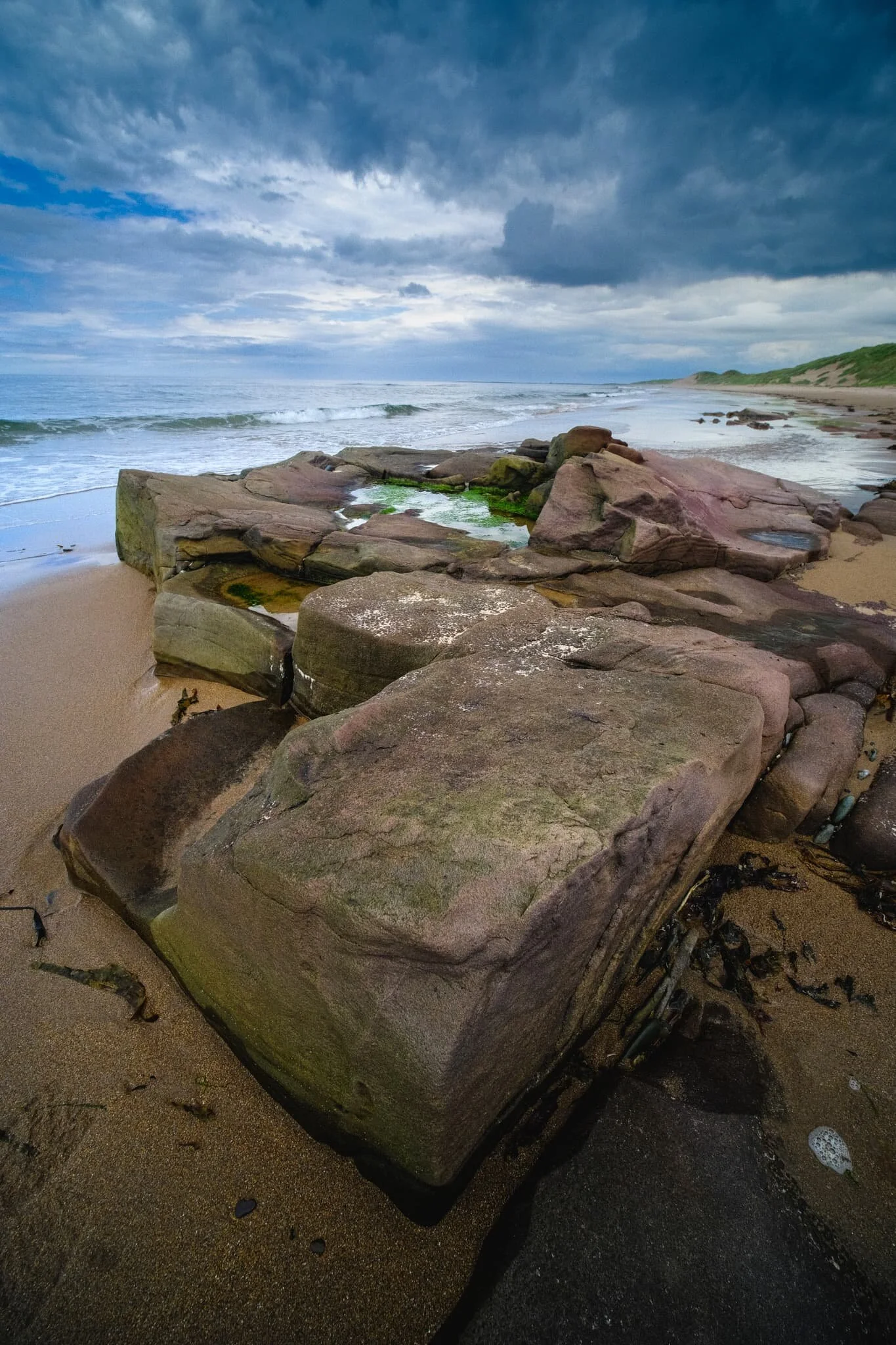
As we gently wandered north along the gloriously empty beach of Cheswick Sands, we came across a band of exposed sandstone known as Cheswick Black Rocks.
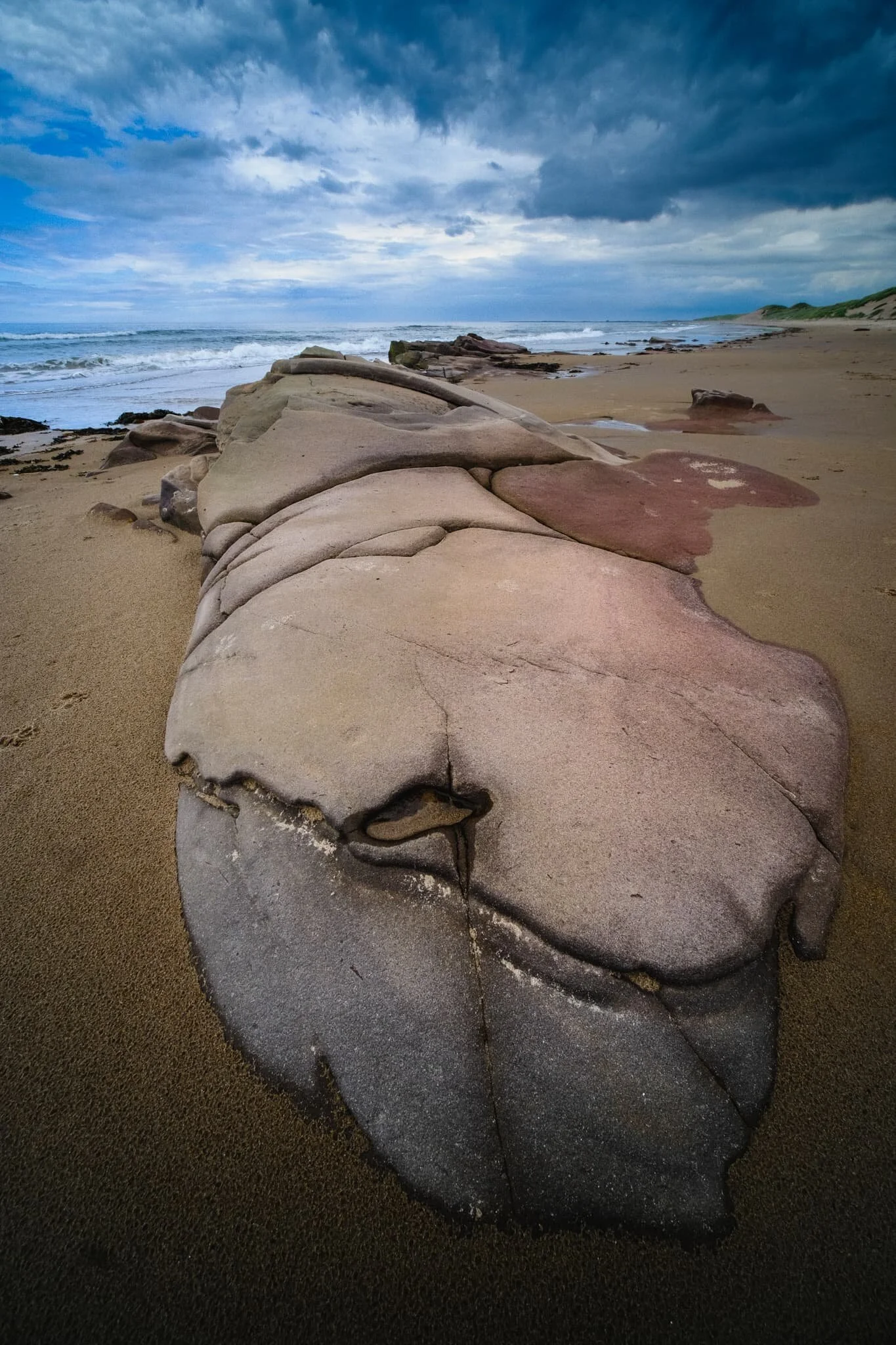
They featured some wonderfully sculptured and bizarre rock formations, shaped over the eons by wind and sea. I had lots of fun making compositions of them.
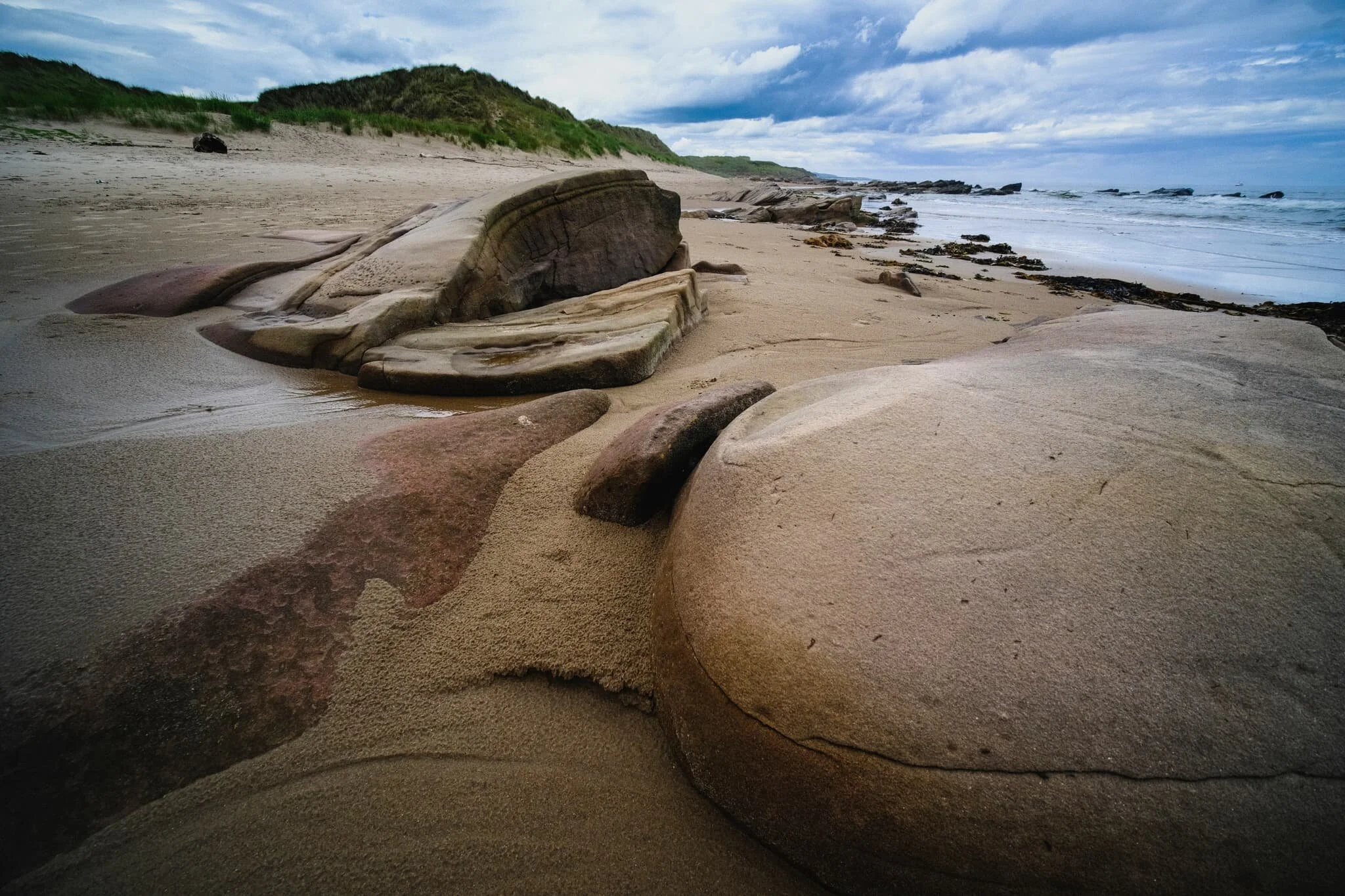
It’s not very often I get to keep my ultra-wide 9mm lens on and play around with strange rock shapes and near-far photographic compositions. Loads of fun!
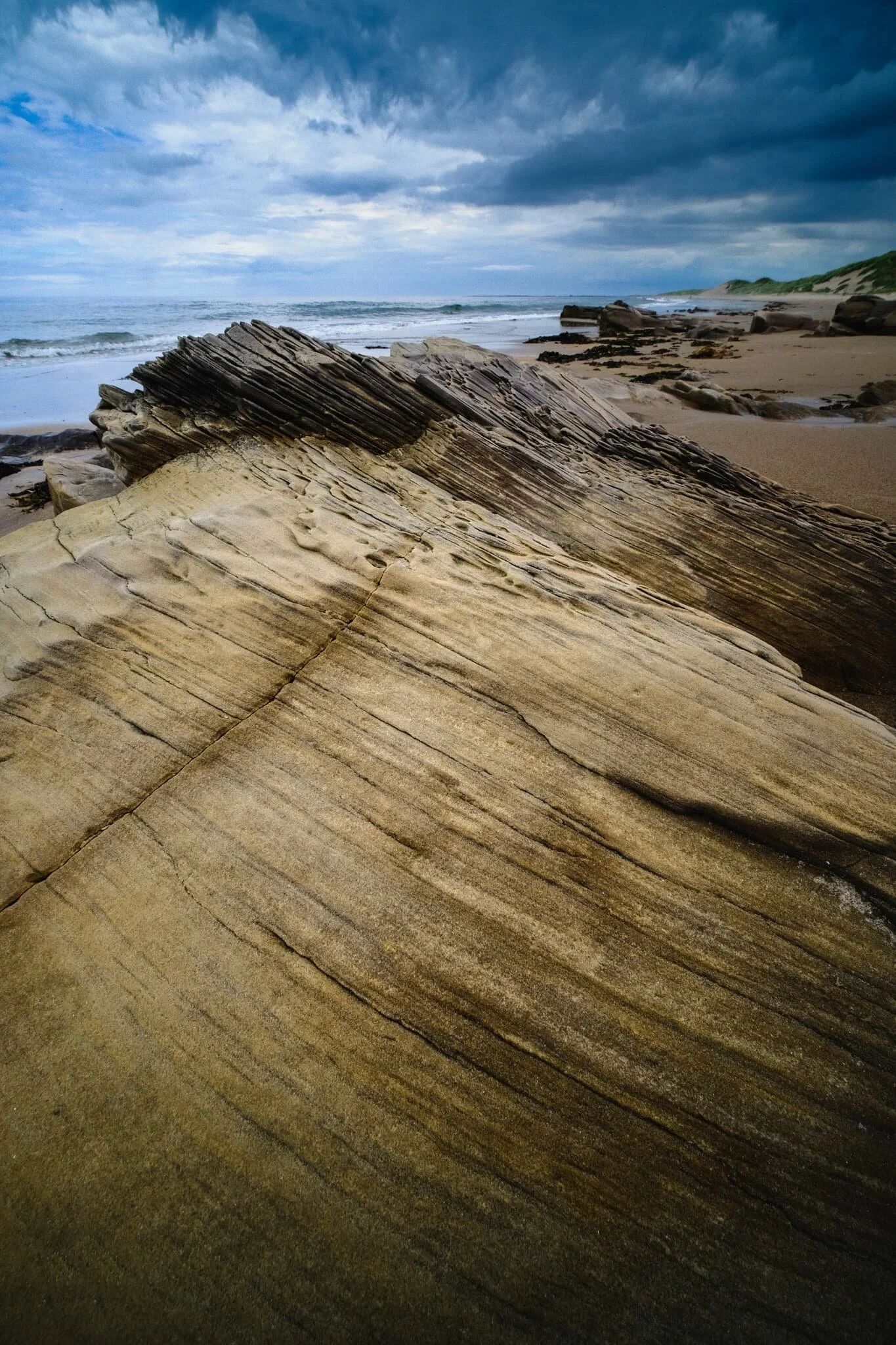
Probably my favourite composition of the whole day.
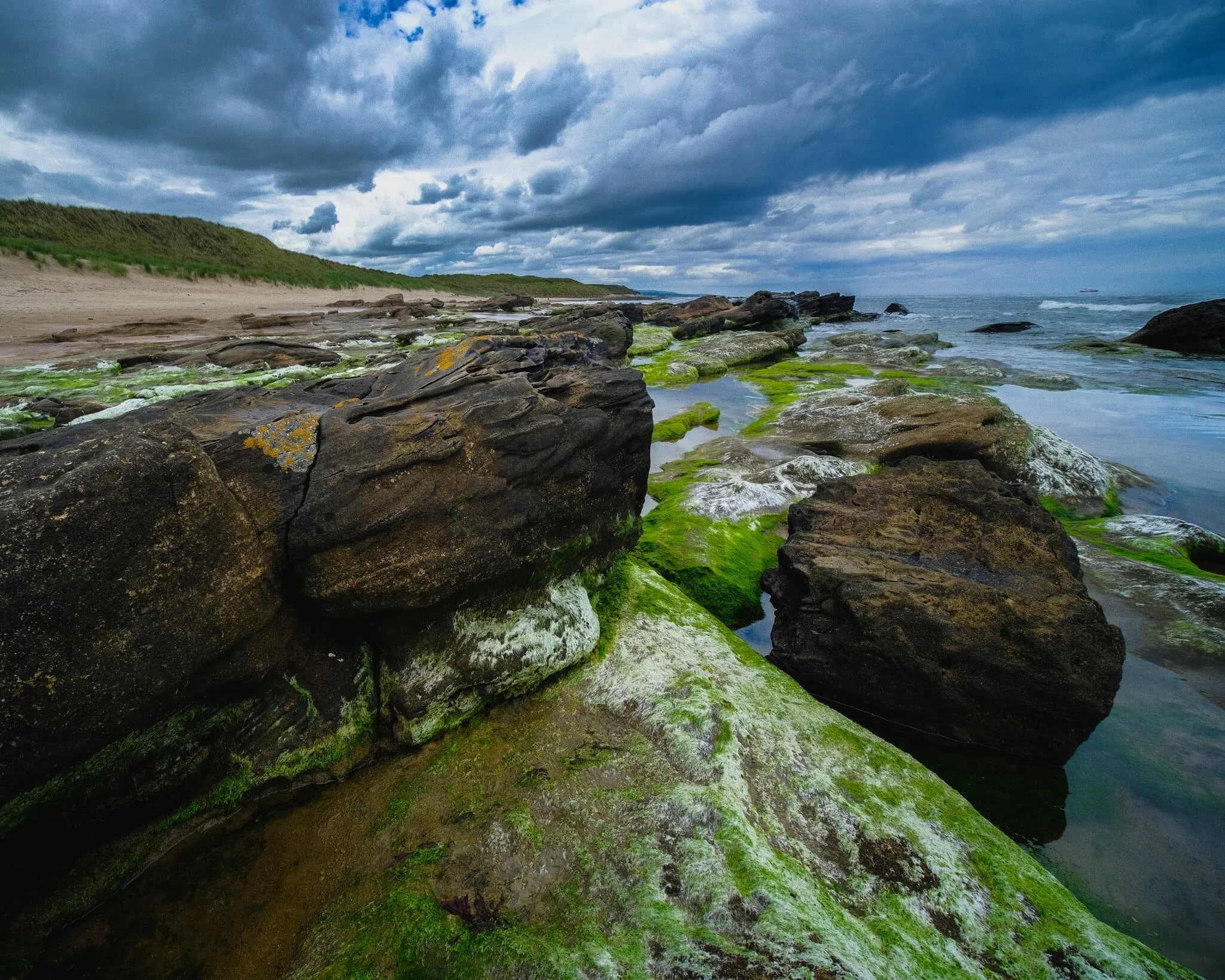
The northernmost parts of Cheswick Black Rocks were still covered in slippery seaweed and moss, which made for great colours.
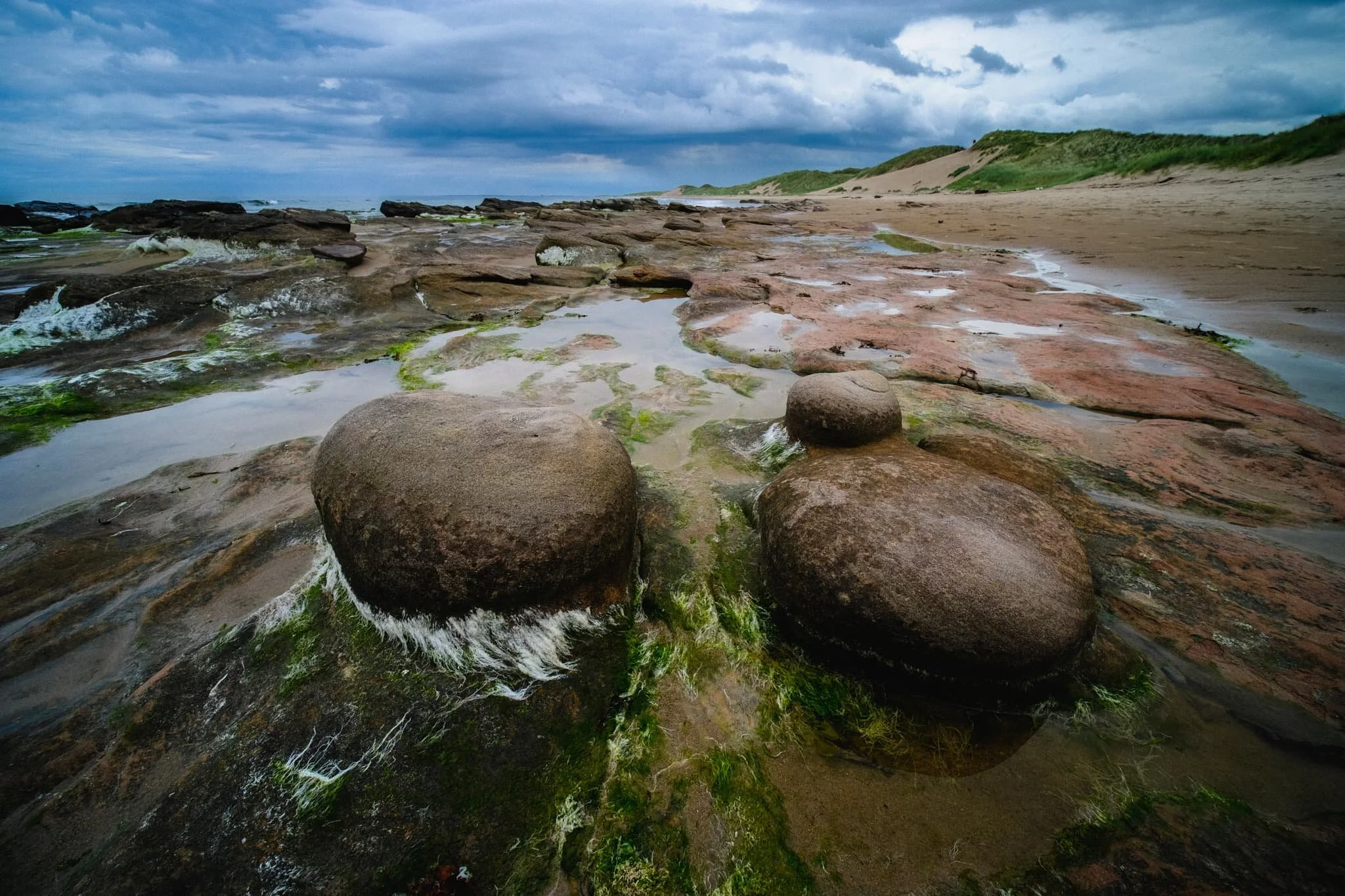
Sculpted rocks, sand dunes, the North Sea, and a stormy sky. Love it.
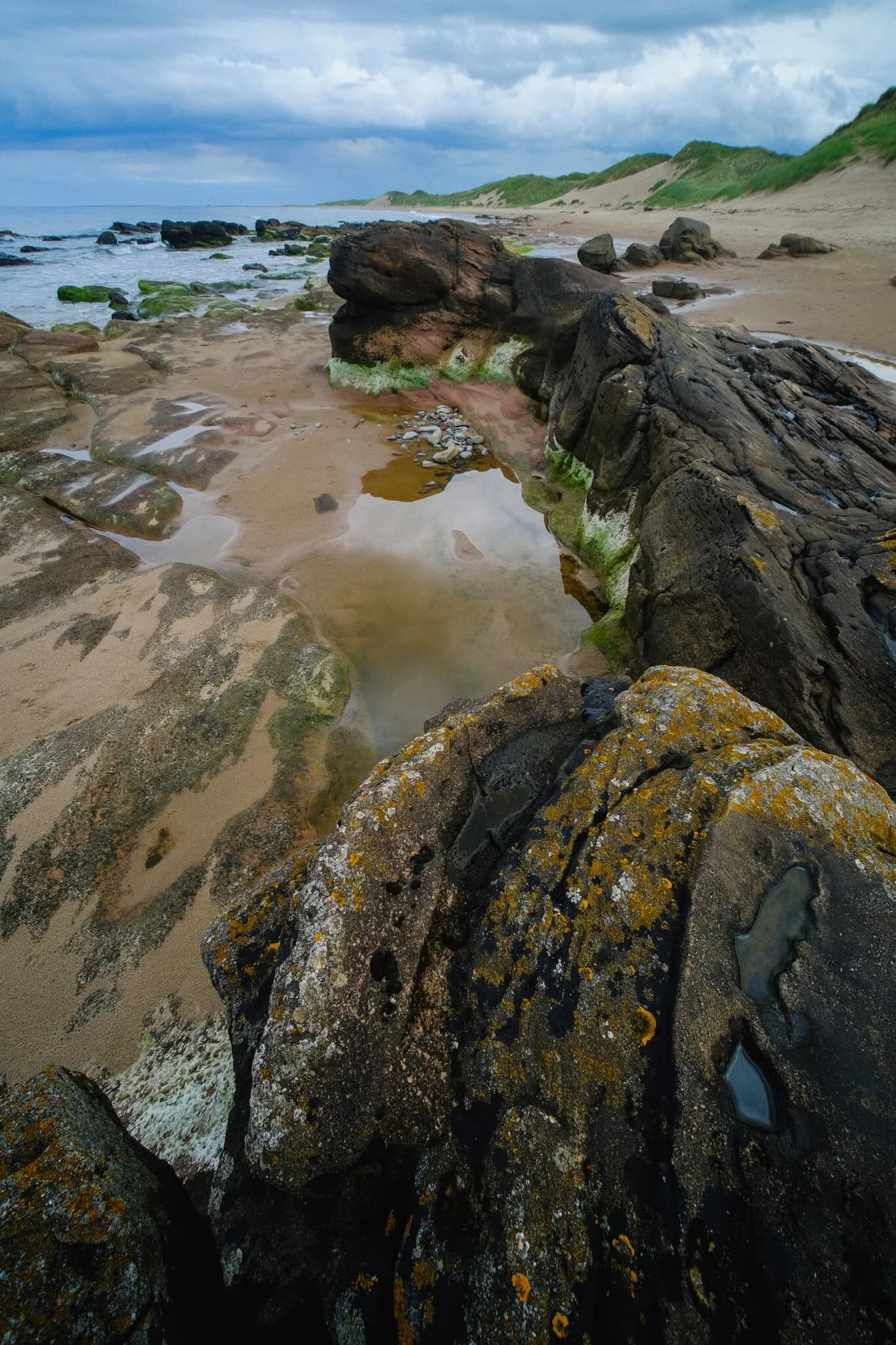
I managed to climb on top of some of the higher rocks to grab this more unusual curving shape, accentuated courtesy of my 9mm lens.
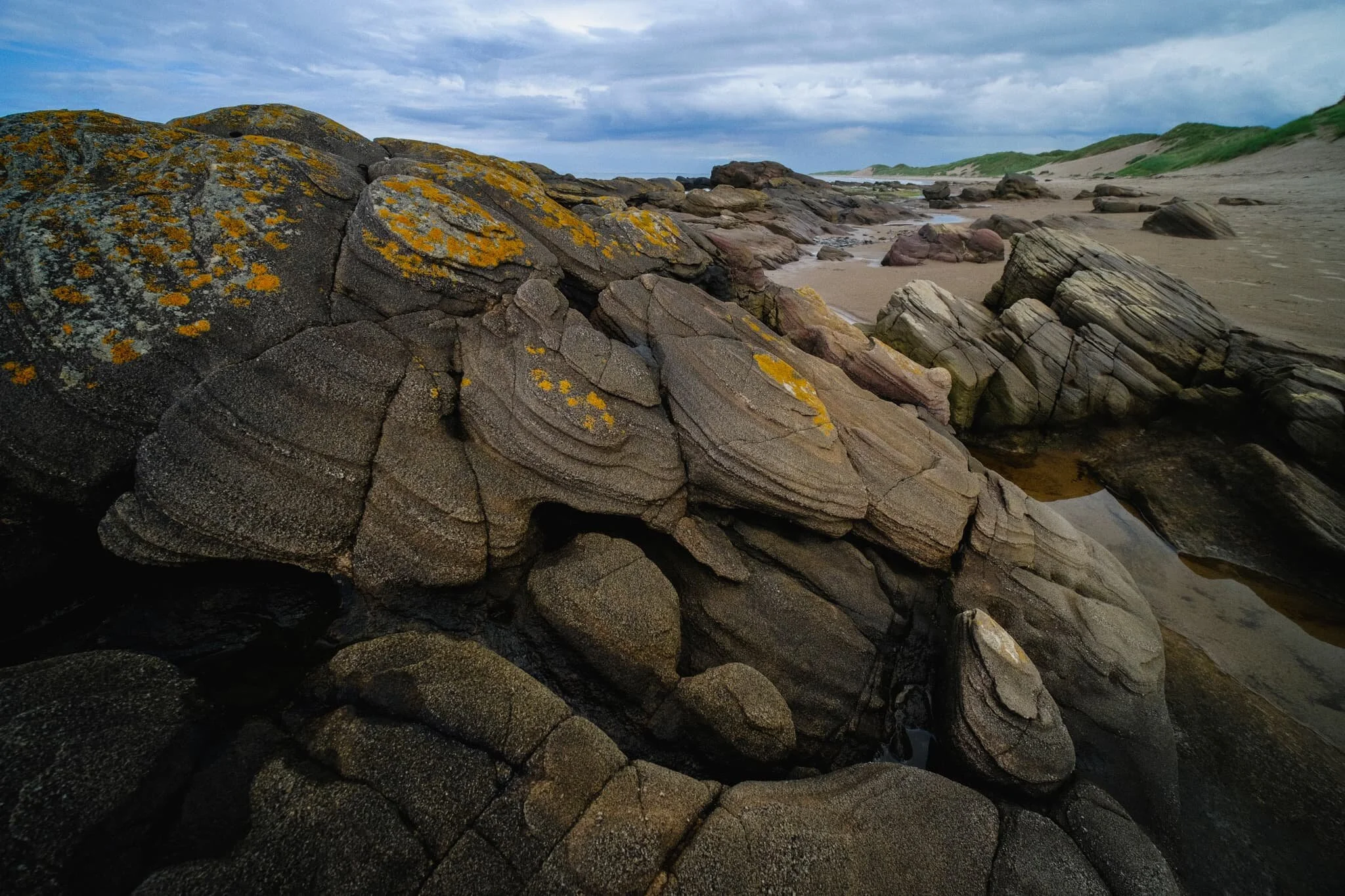
Another fantastical rock formation, seemingly made of “scales” of discs folding over each other.
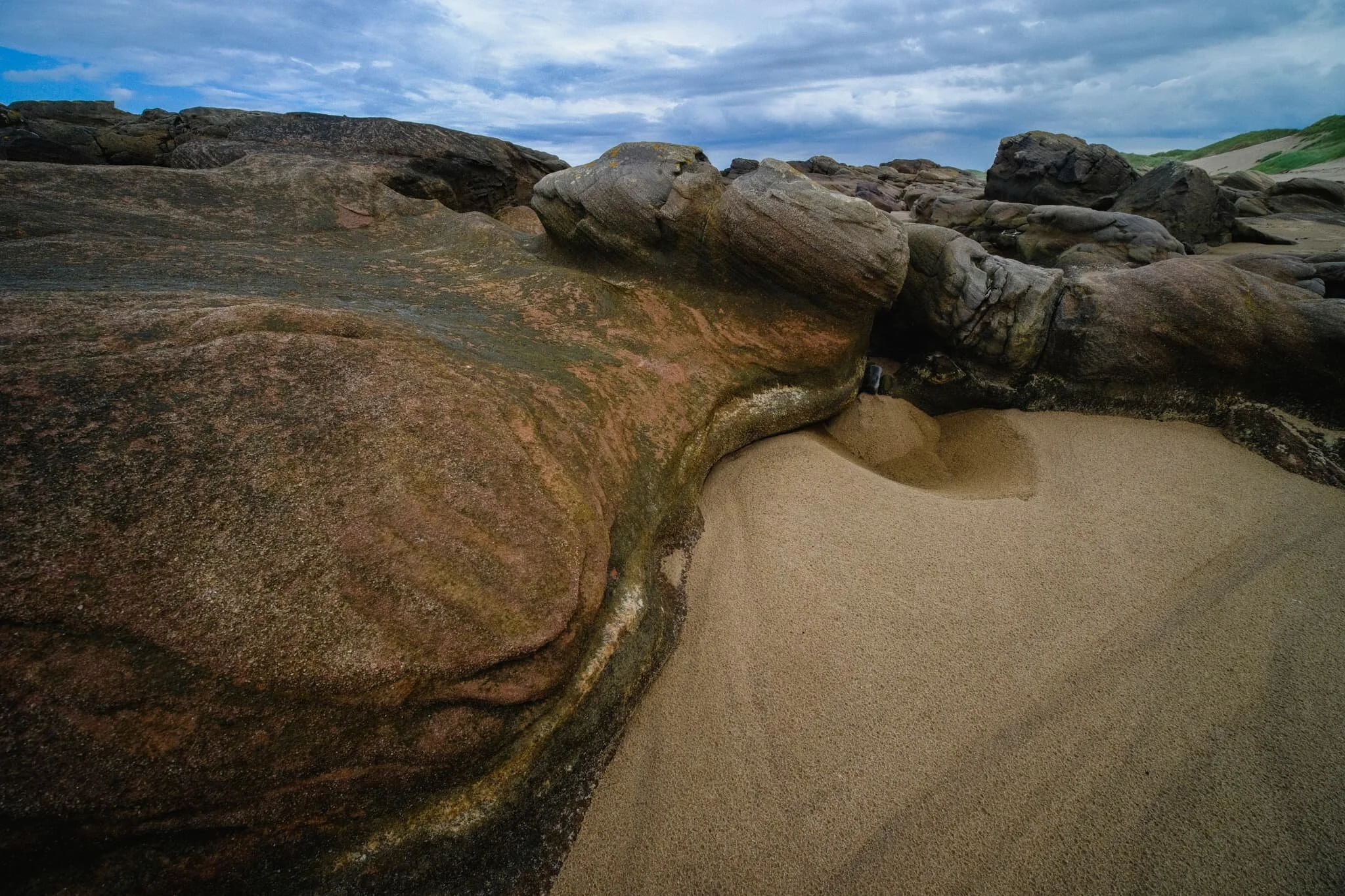
Curving flowing lines and pure untouched sand with a dramatic sky above.
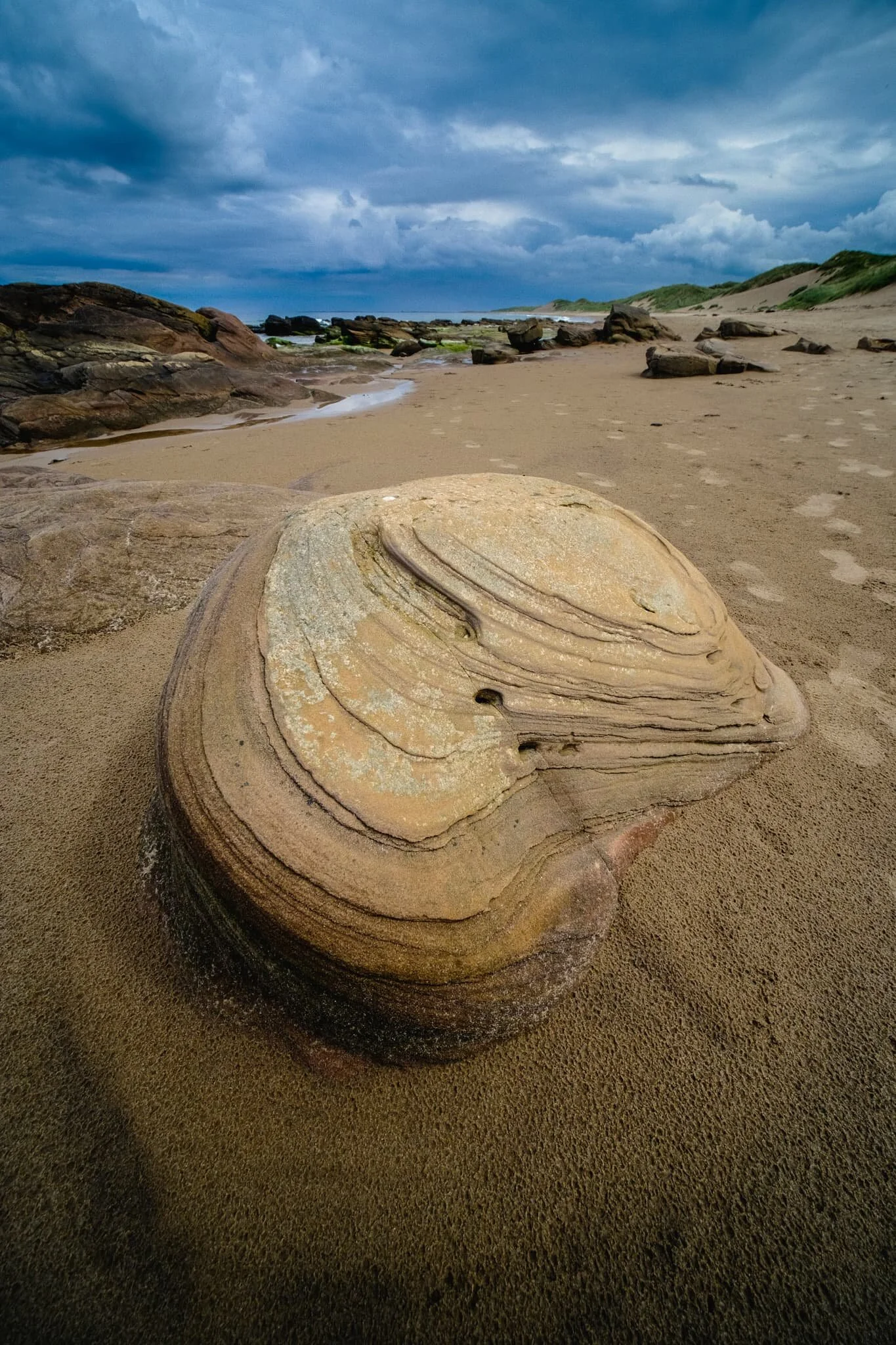
As the sun came out to play a bit more, I found this beautiful boulder that I had to make a composition of before we returned to the car.
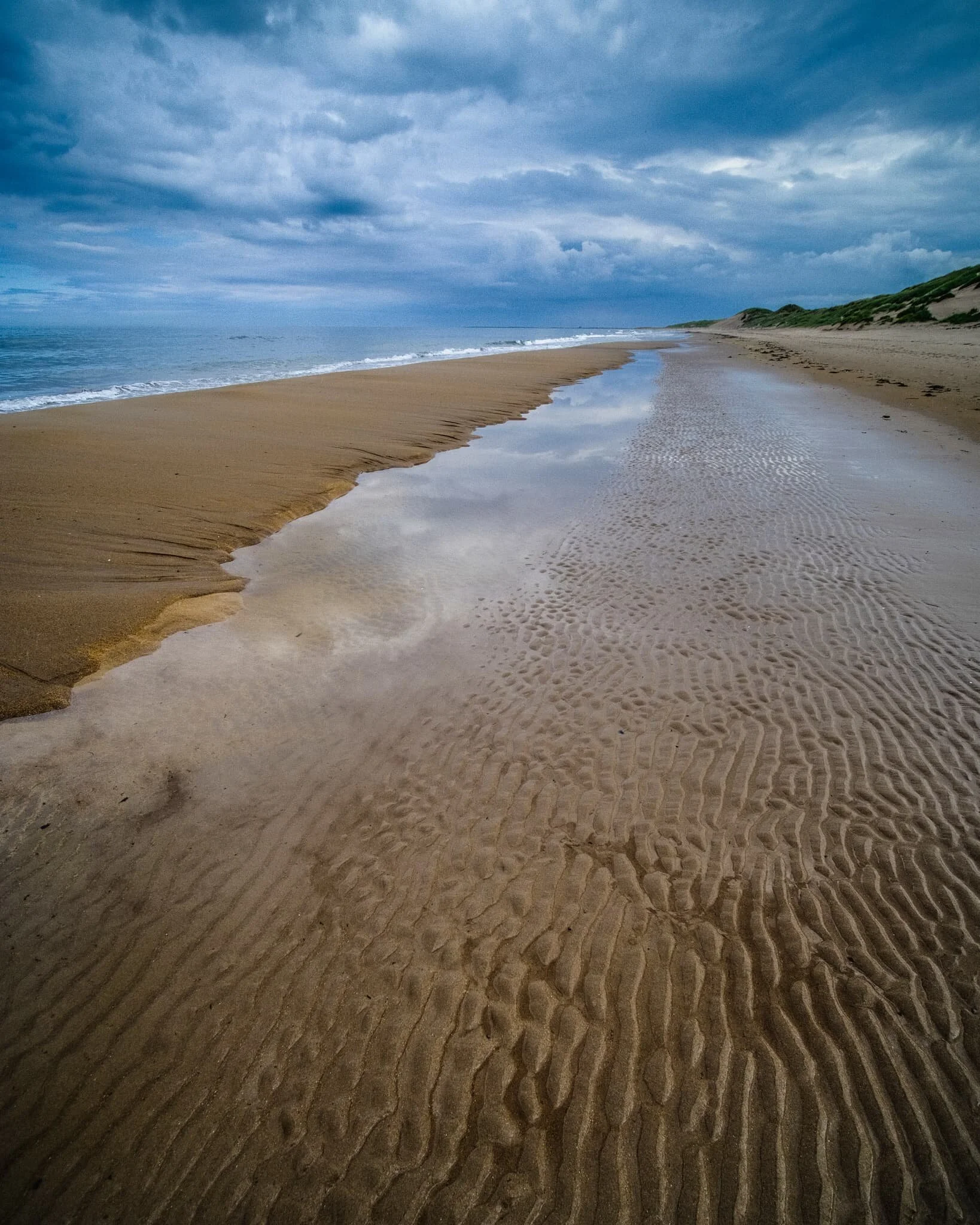
Miles of rippled wet sand and a long pool reflecting the dramatic sky above. What a quality day.
Then support me