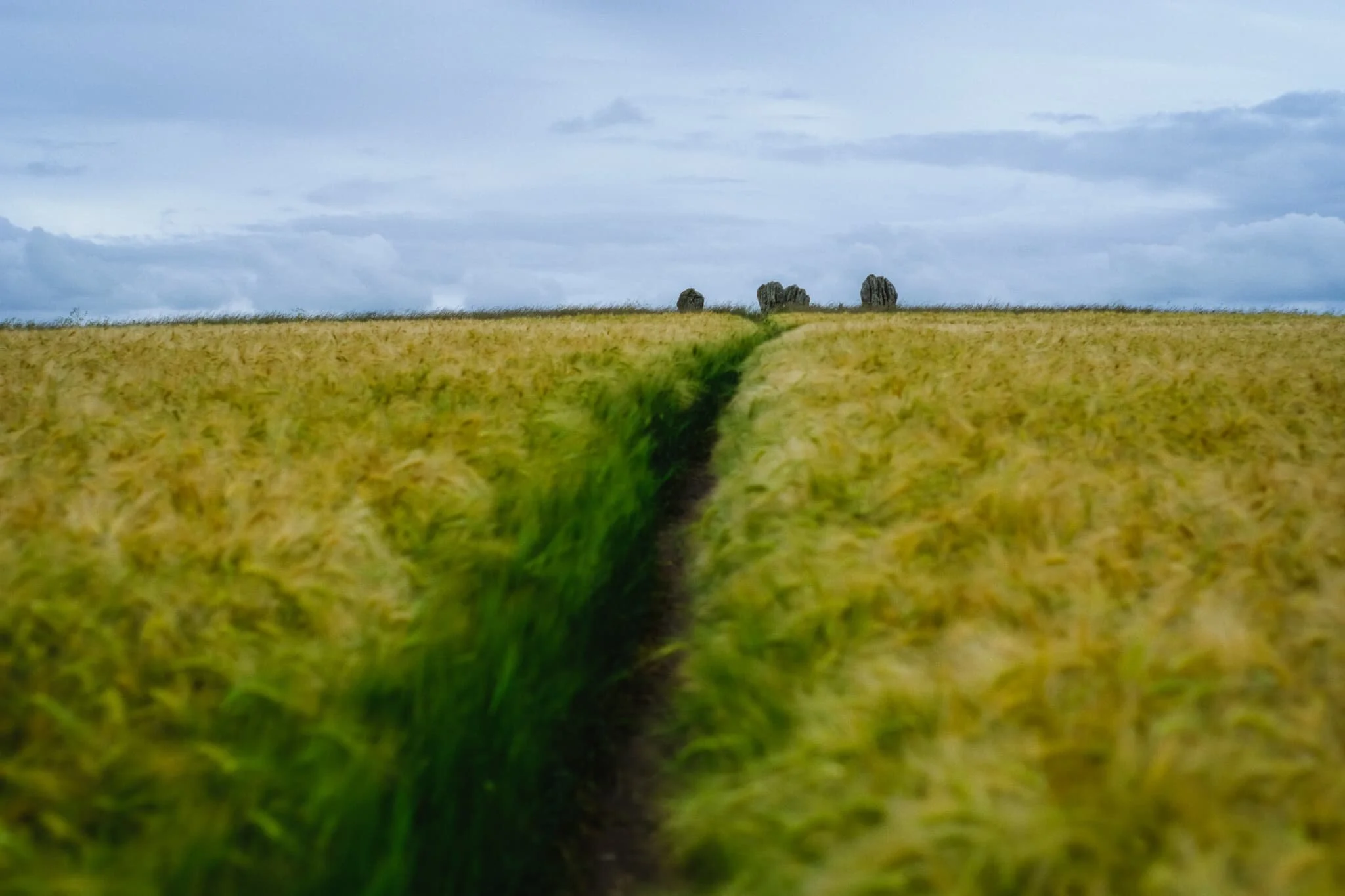
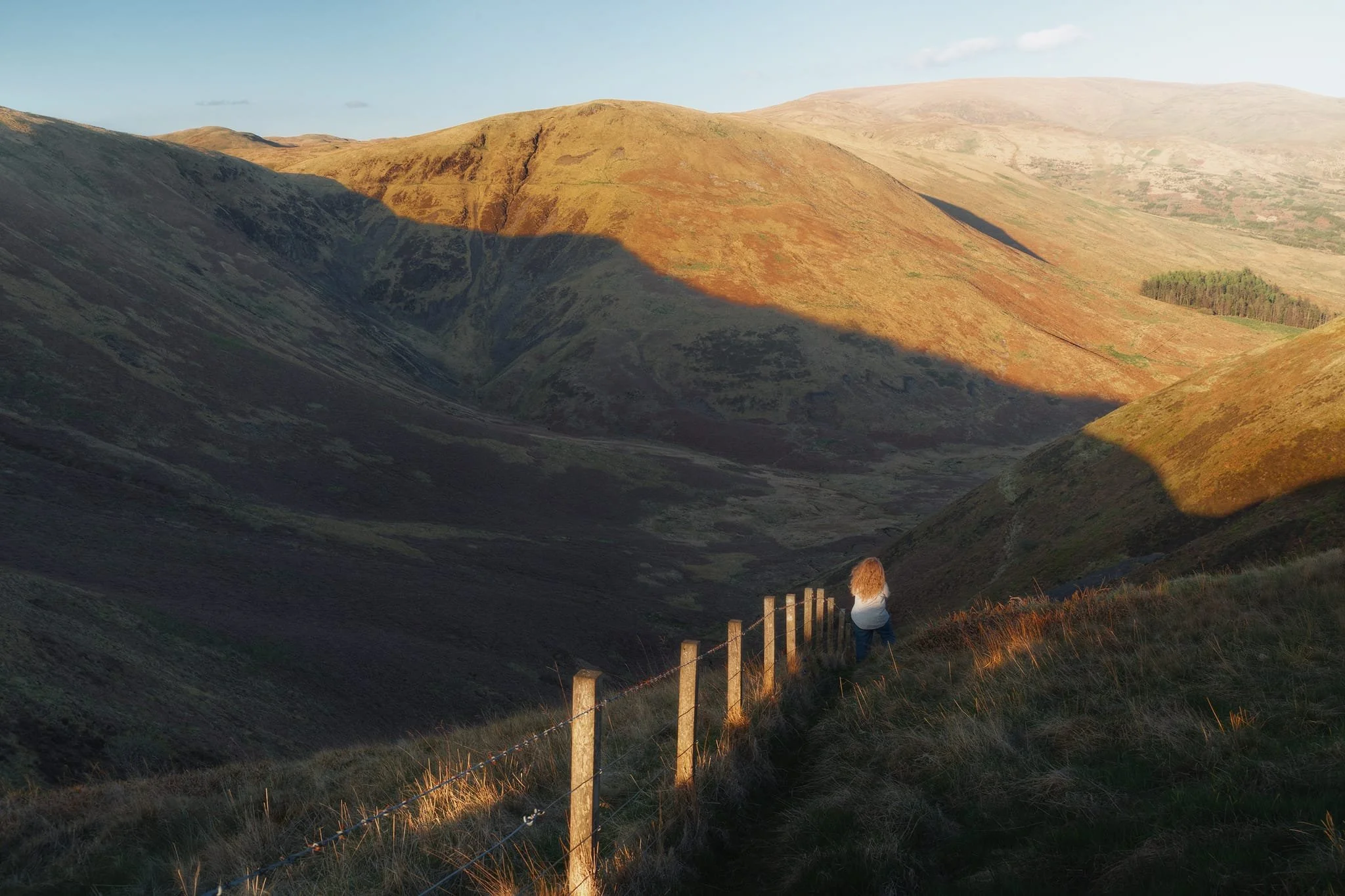
We’ve just come back from a beautiful week in Northumberland.
My wonderful Lisabet turned 50 and what better way to celebrate than by holidaying around the gorgeous coast and countryside of Northumberland?
It turns out our timing was fortuitous; as we enjoyed summer-like conditions, albeit with strong winds, back home Cumbria and North Yorkshire were being flooded.
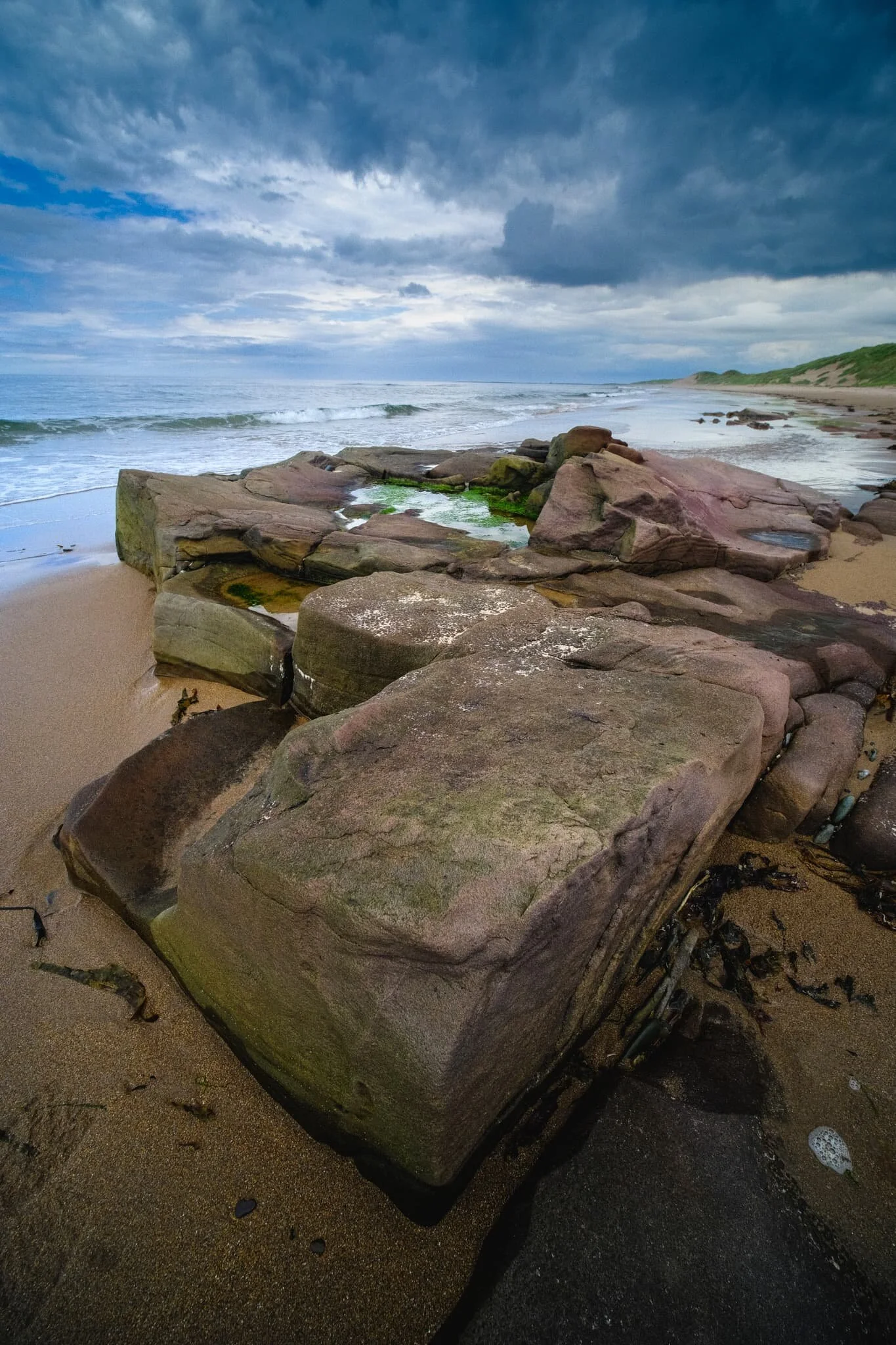
Northumberland has some of the finest coastline in all of the UK; it’s not often you get to see castles perched above long sandy beaches, but these are the kind of vibes Northumberland brings. Amongst many places we hiked, we returned to a relatively obscure stretch of the Northumberland coast at Cheswick Sands.
Here there are no castles, no facilities, and no coffee shops. What there is is miles of soft sandy beaches, tall dunes, birds galore, and incredibly weird and fantastical geology.
A sunny, but windy, day made for quickly changeable conditions, which was nice for me because the light was changing constantly, making for interesting compositions.
All photos taken on my Sony α7ii using my Sony 24-240mm F3.5-6.3 OSS zoom lens. Developed and edited in Lightroom and Photoshop.
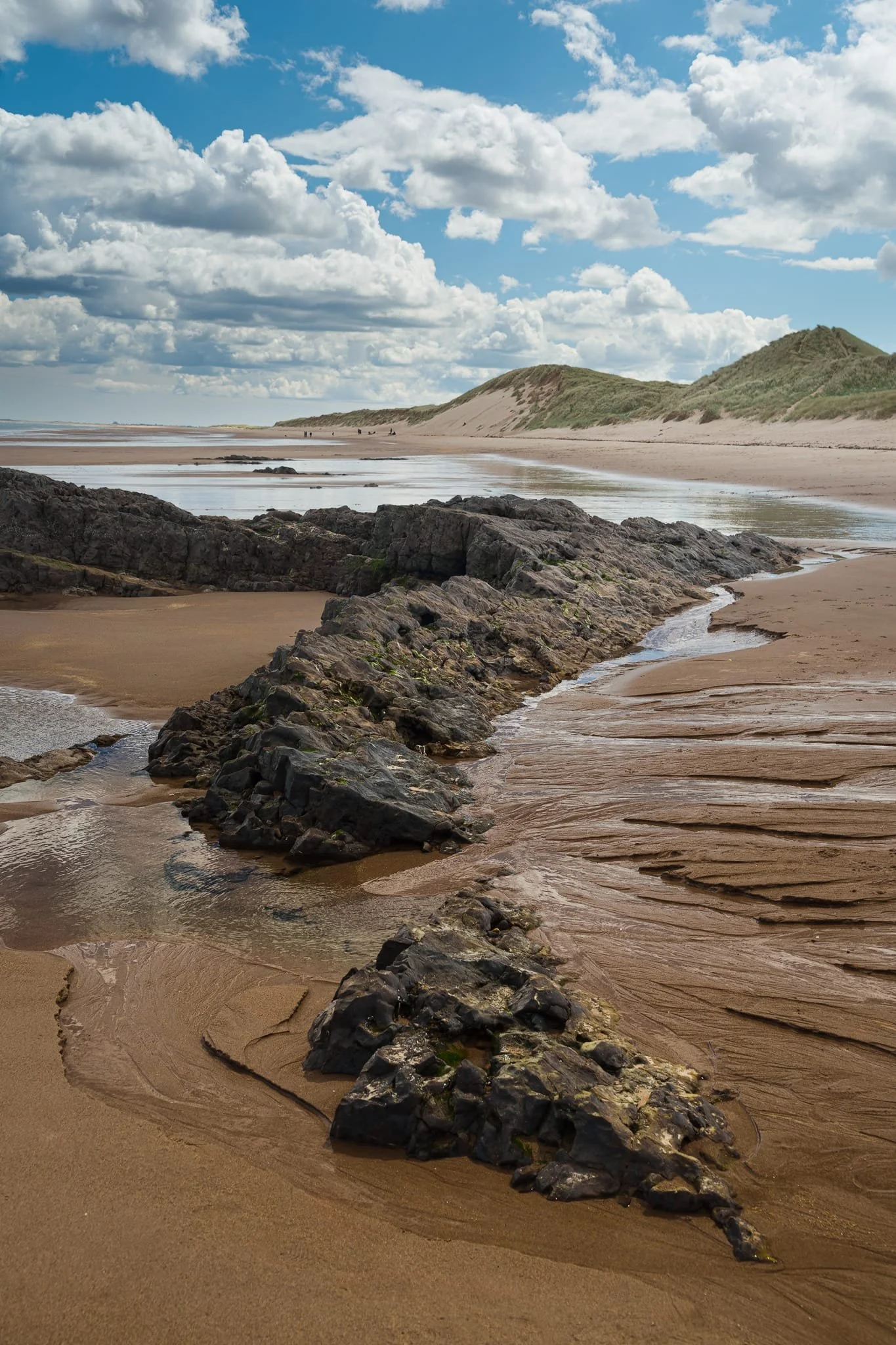
Near the Black Rocks of Cheswick Sands, a snake-like outcrop of rock protrudes from the warm sand, giving me a lovely composition that also involves the tall dunes.
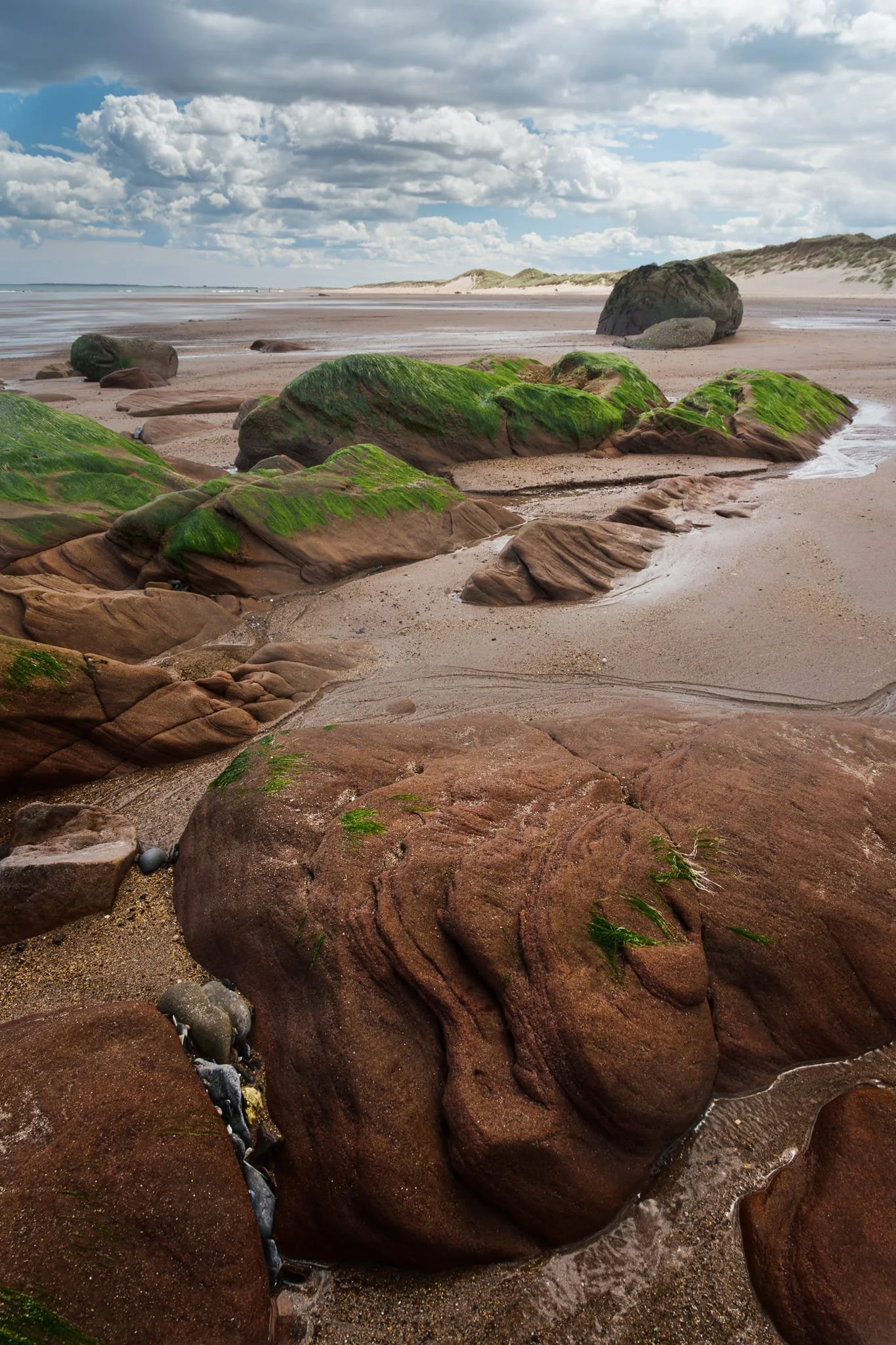
At Cheswick Black Rocks, a large part of the formations here are a pink sandstone, laid down during the middle of the Carboniferous period some 311–326 million years ago. Wave and wind action combined with fine sand grains has carved these beautiful exposed boulders.
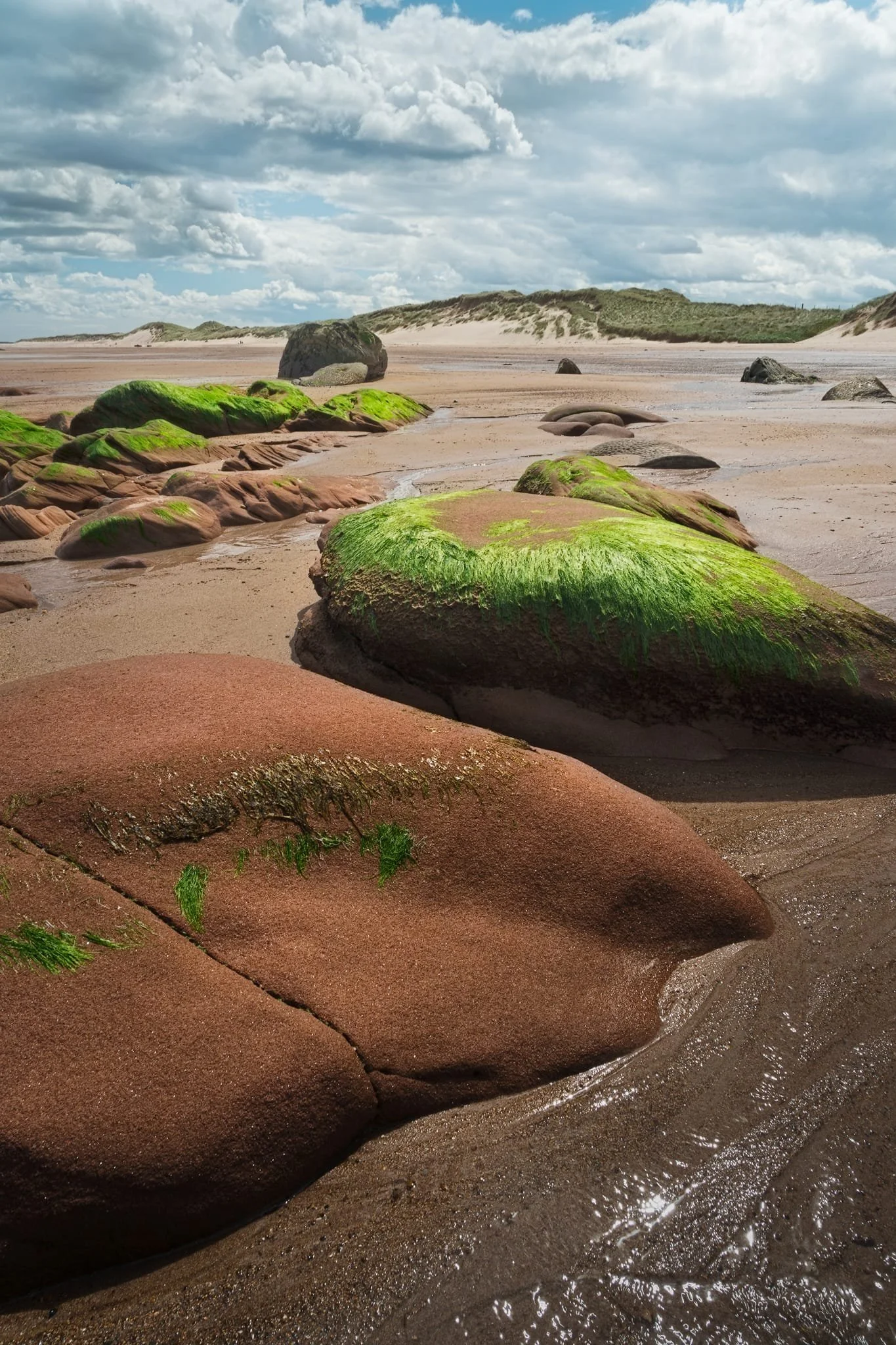
A lot of the sandstone here appears pinkish in colour because of the large proportion of feldspar, a pink mineral. With the vivid green seaweed, this made for beautiful colour contrasts.
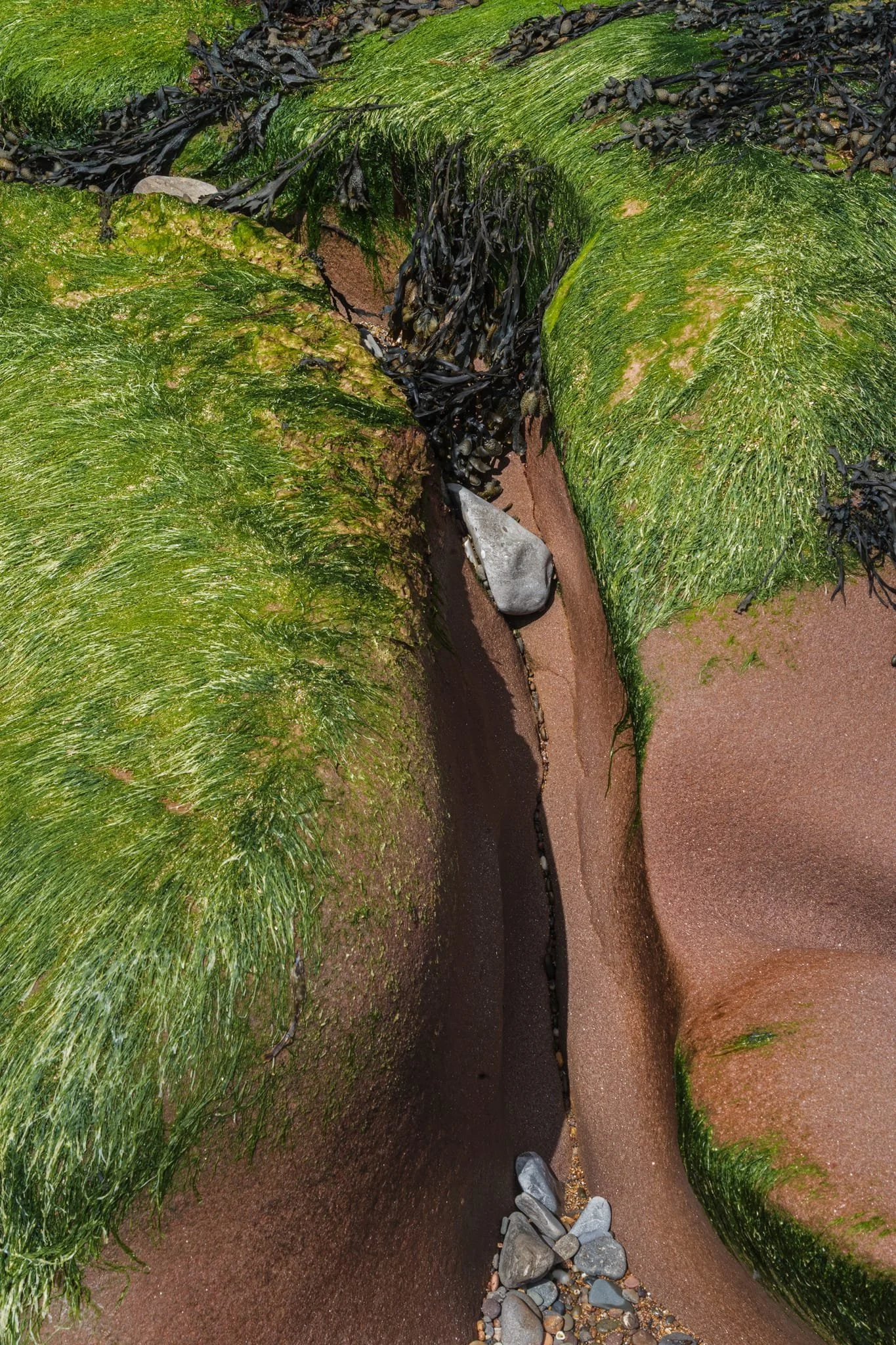
Millions of years of sea erosion carves out hidden little channels like this in the sandstone.
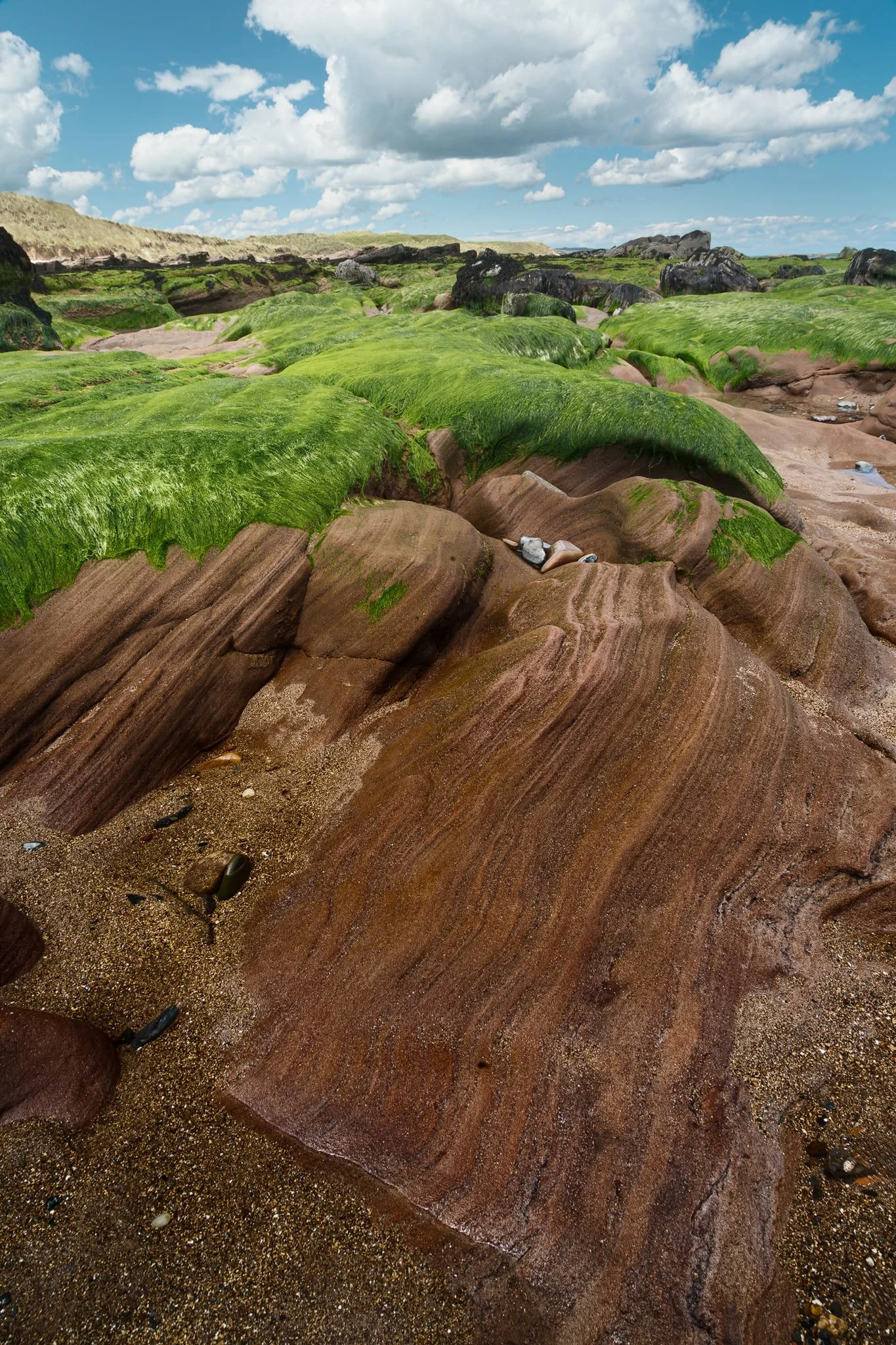
Cross-bedded sandstone, combined with coastal erosion, has created these wonderful formations, like the ancient sea waves have been permanently recorded in the rocks. In parts, the seaweed was almost like a giant expanse of carpet.
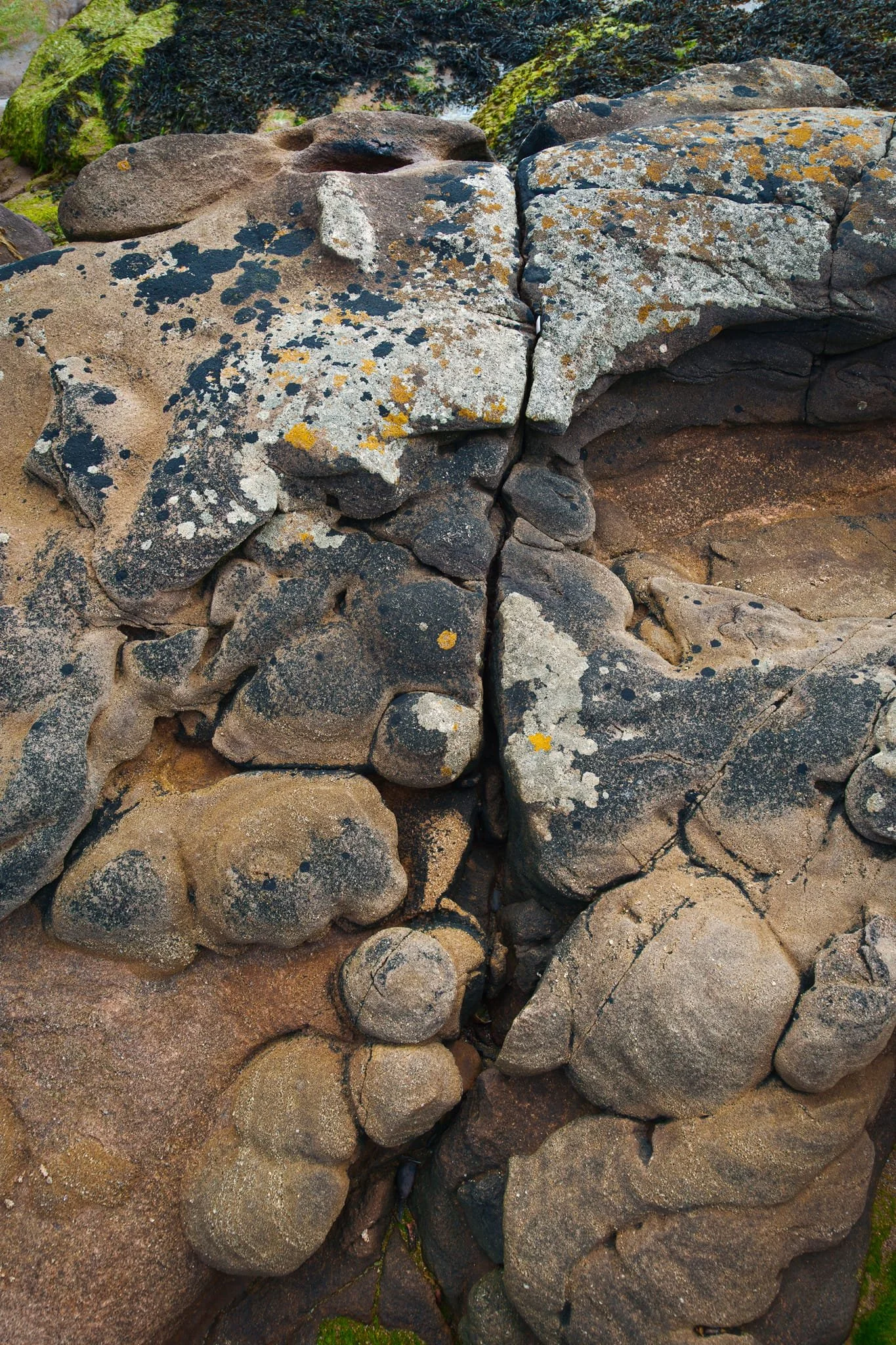
Another unusual feature you’ll find at Cheswick Sands are these “bubbles” or pillows of rock, called concretions . Geologists aren’t sure how concretions form, but it’s thought that mineral-rich water was in excess in the wet sediments and the mineral was able to precipitate within the rock under particular chemical conditions.
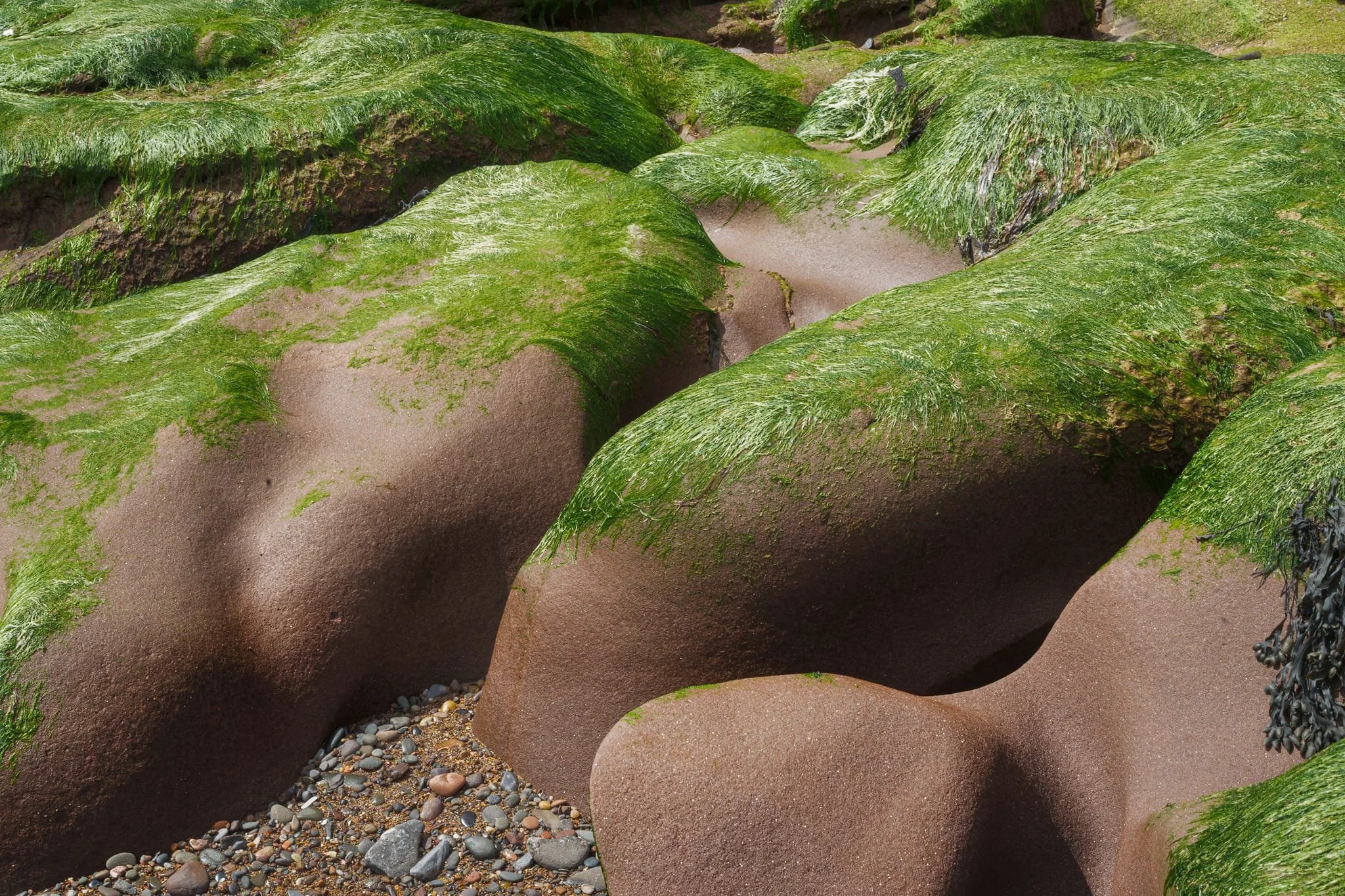
Another beautiful example of the sandstone having been sculptured so smoothly by nature over the course of millions of years.
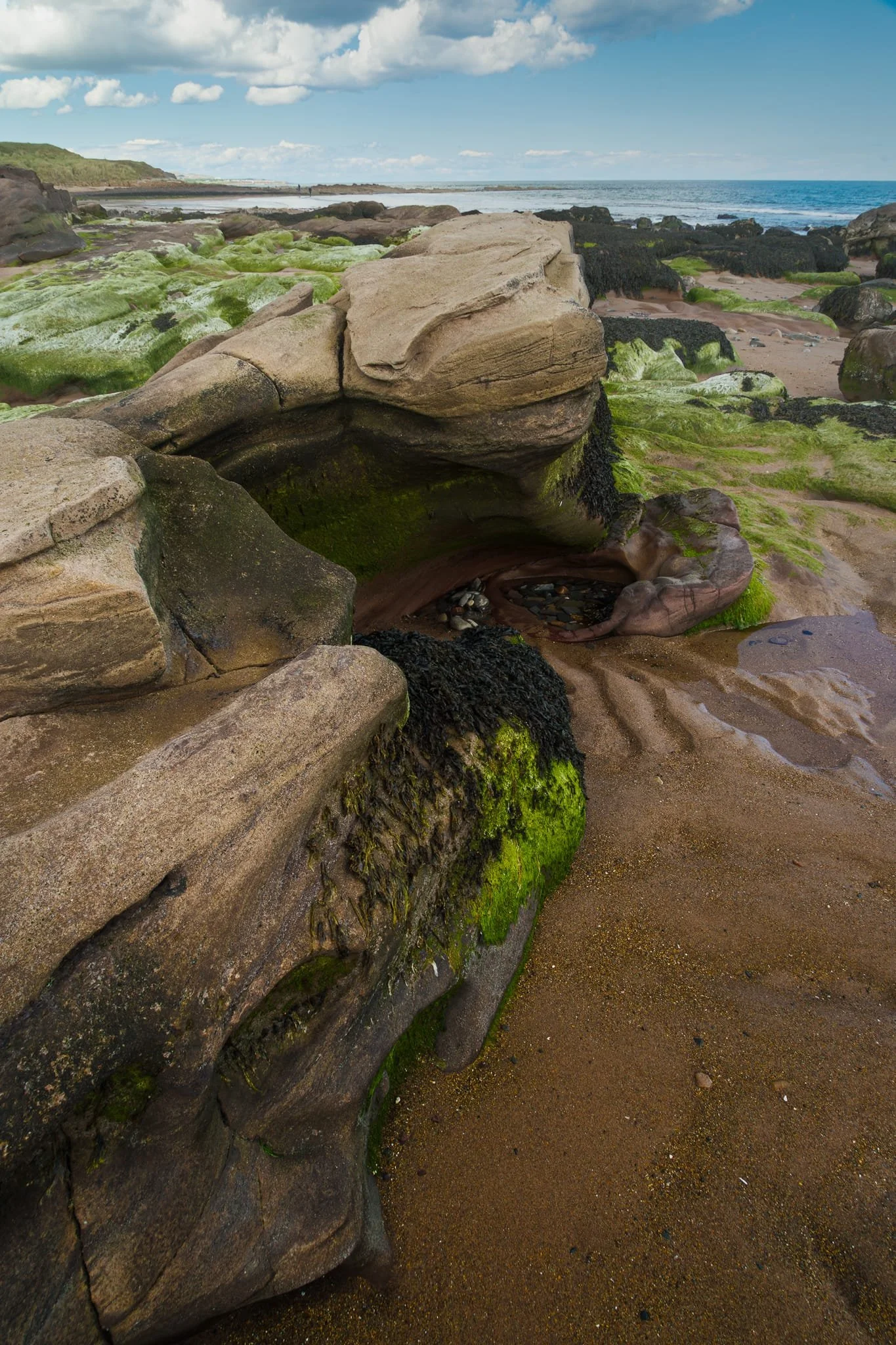
Seeing strange formations like this makes you wonder about how Britain looked millions of years ago.
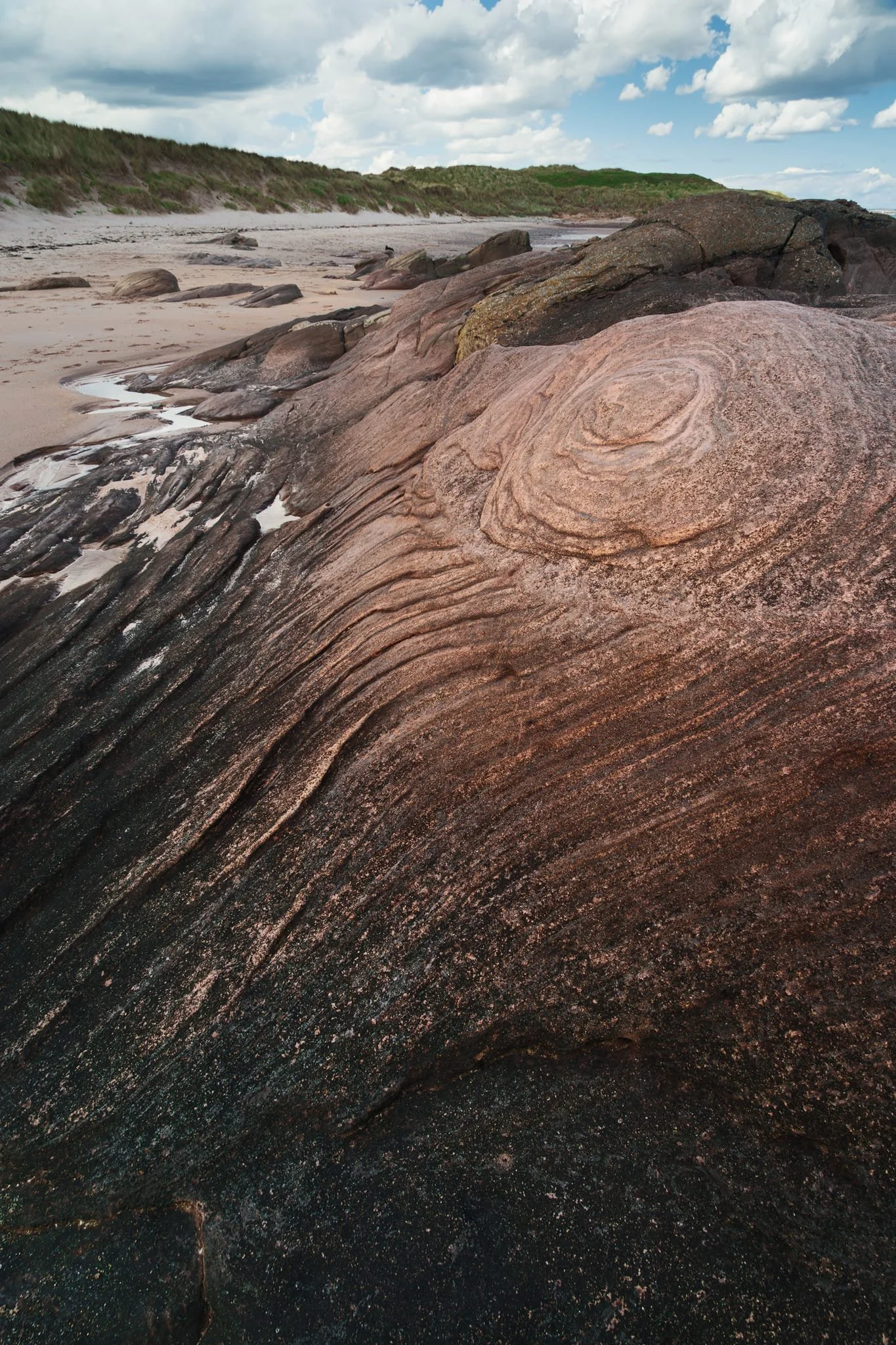
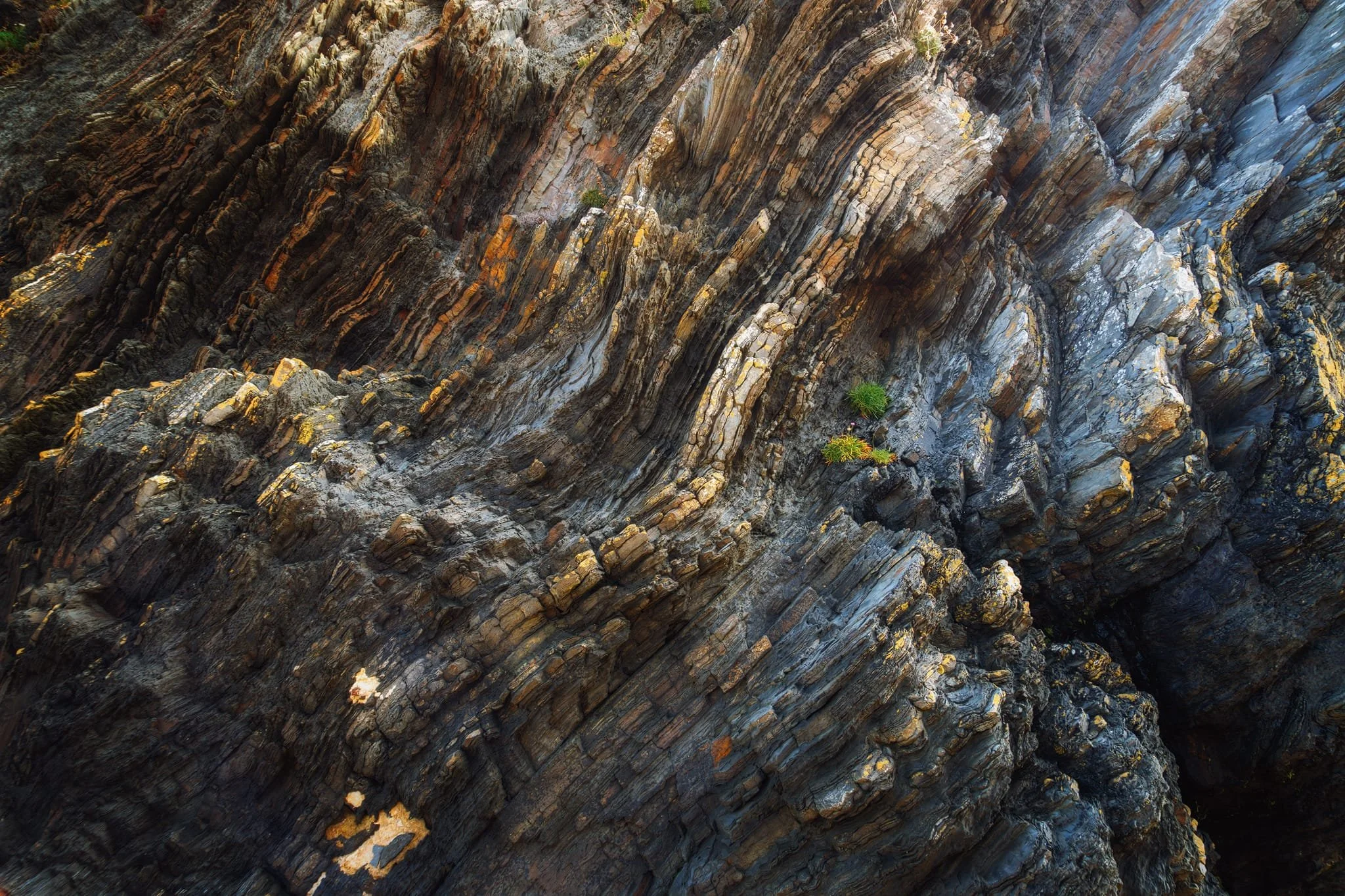
Cross-stratification in sandstones. Each curved layer represents an ancient dune or ripple that migrated across a river channel or shallow sea floor.
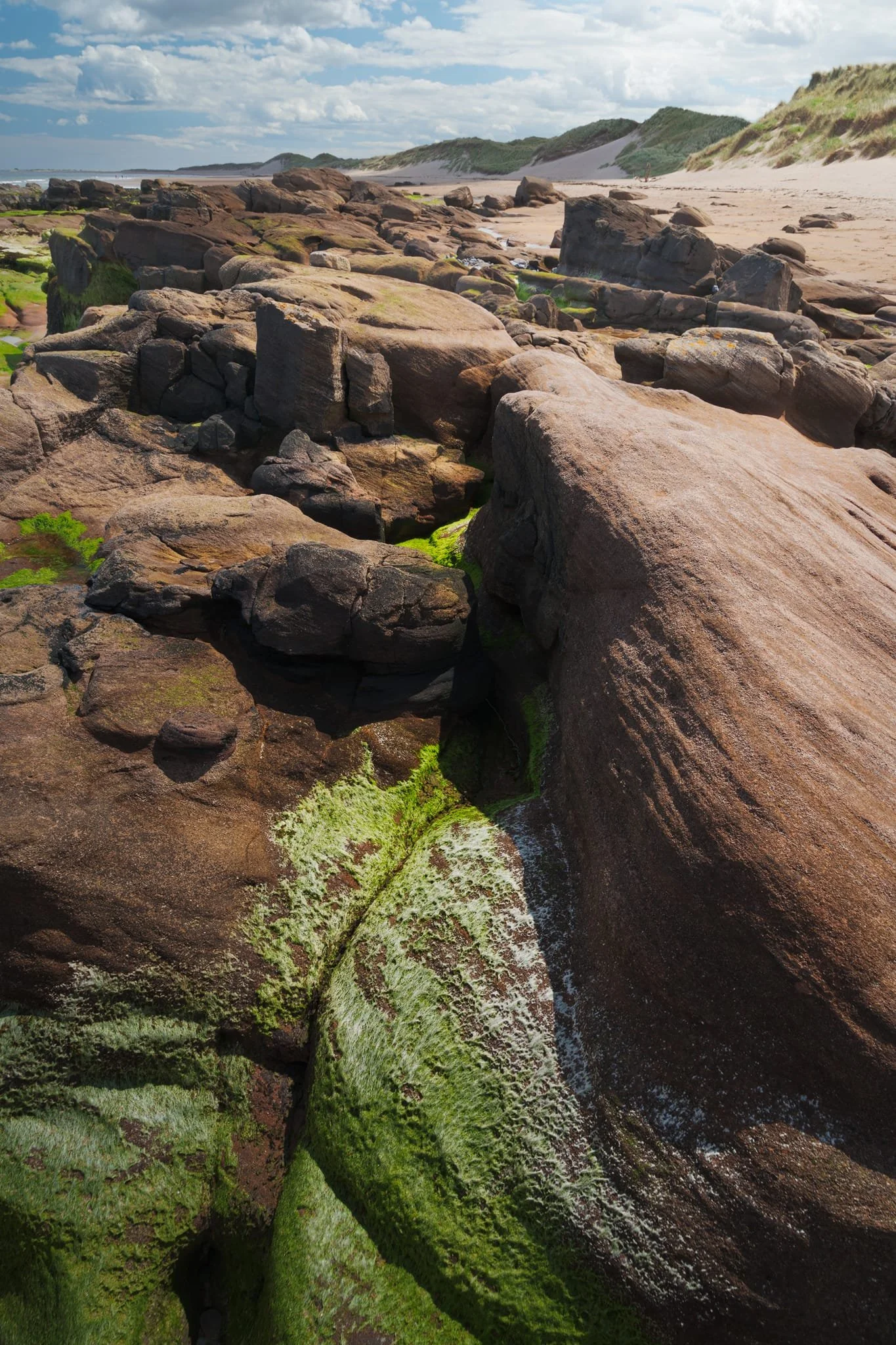
Plotting each placement of my feet carefully here to ensure I don’t snap an ankle whilst seeking out interesting curves, lines, and light for these compositions. Added hazard: slippery seaweed.
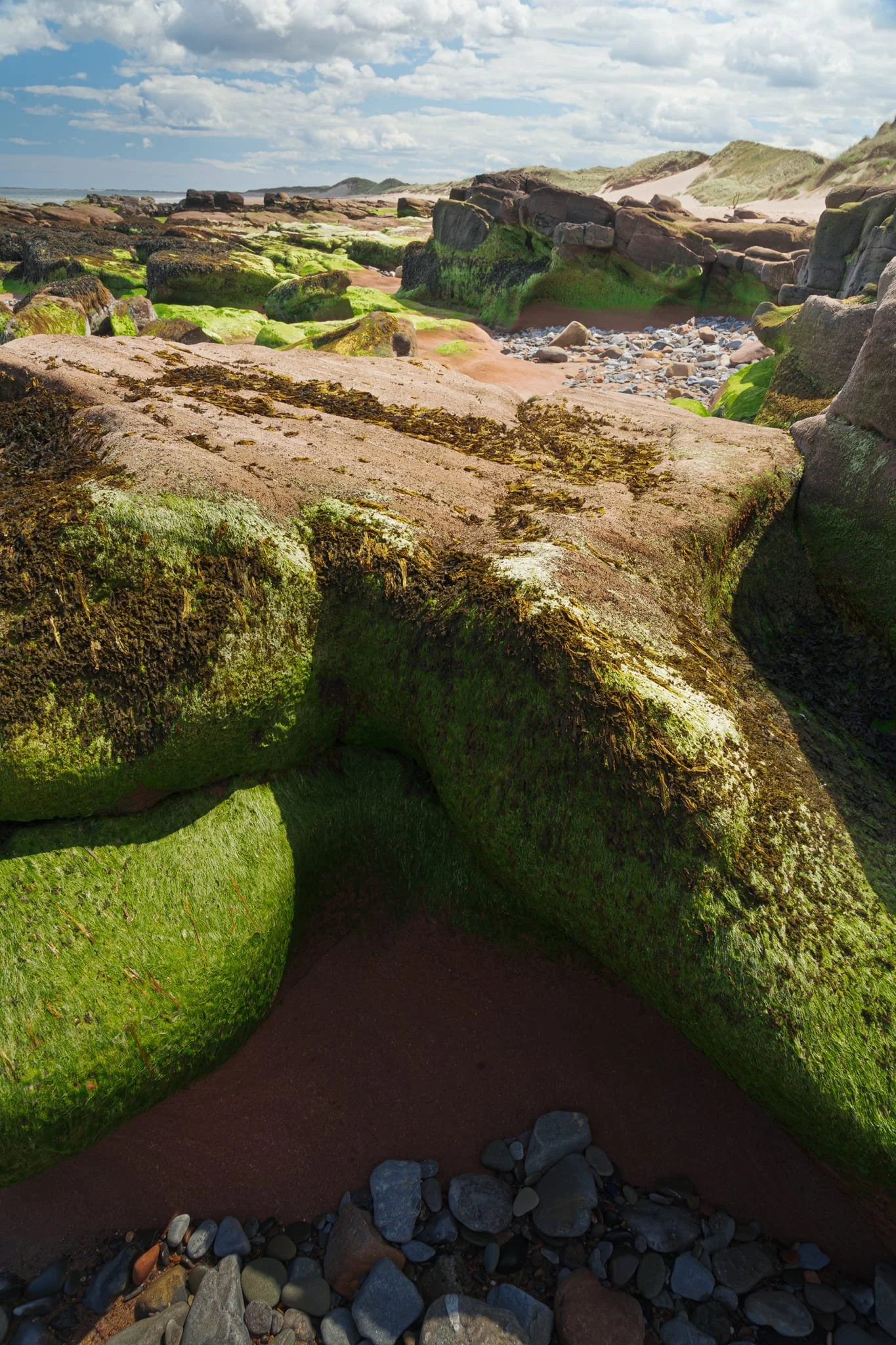
Some of these formations were raised high above the sand, allowing the sea to carve channels beneath their pedestals.
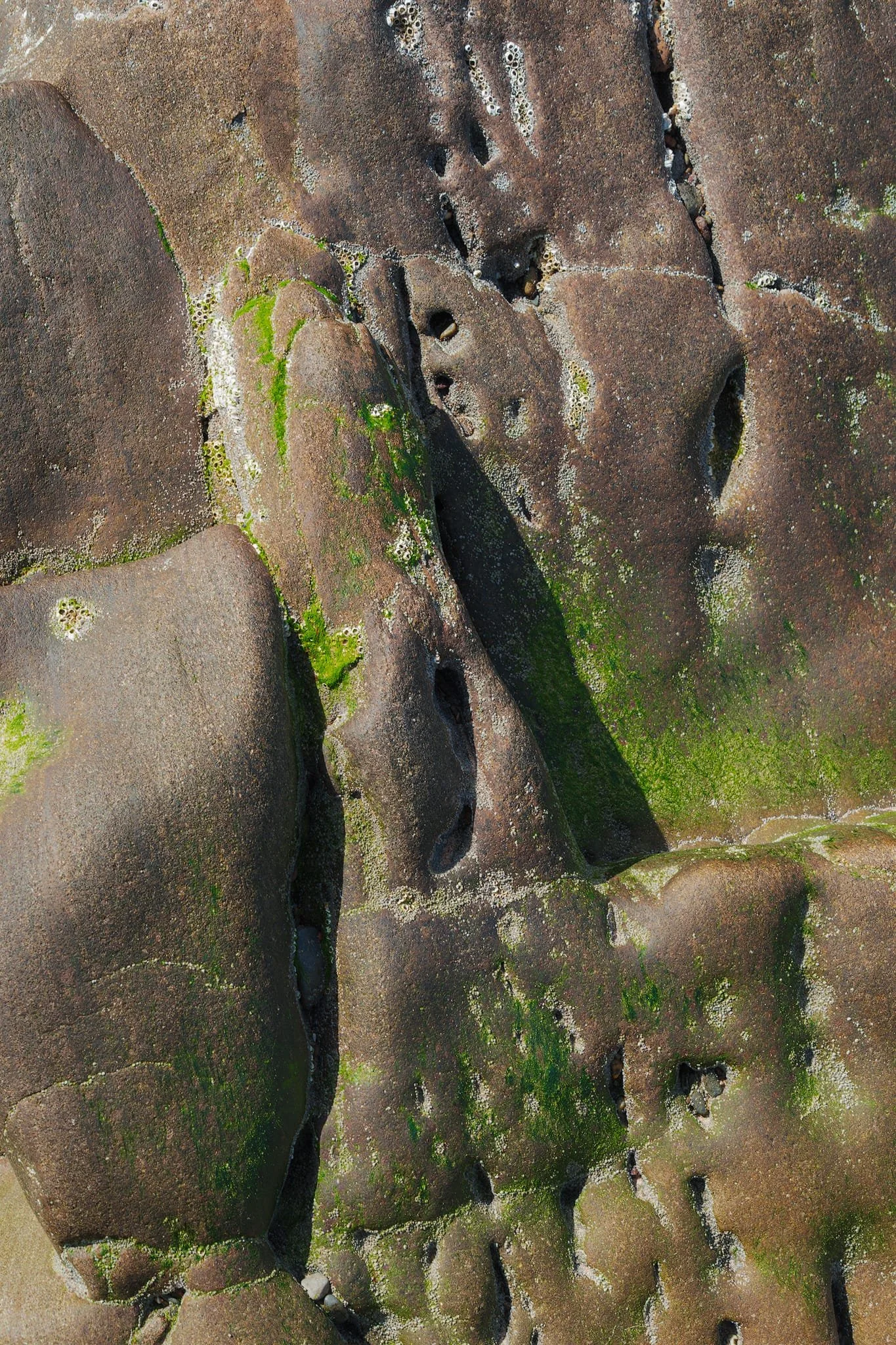
Differential weathering and erosion in this sandstone has created a contrast of smoothed forms with sharp incisions and pockets. Some of the small cavities resemble “tafoni”; honeycomb-like erosional features that develop in coastal environments through a combination of salt weathering, wind erosion, and possibly biochemical processes.