There are a lot of ruined abbeys in the Scottish Borders.
I’ve been to Melrose Abbey before but this time, during our stay in Northumberland for Lisabet’s birthday, we nipped over the border again to St. Boswells, in the Scottish Borders.
After a bit of shopping and lunch in The Mainstreet Trading Company, we made our way north alongside the River Tweed, before crossing it and heading it into Dryburgh to check out the ruins of Dryburgh Abbey.
A proper summer’s day accompanied us, which made the going nicer. We were both still recovering from a nasty summer cold so took our sweet time, enjoying the scenery, the sights and smells of a beautiful summer’s day.
All photos taken on my Sony α7ii using my Sony 24-240mm F3.5-6.3 OSS zoom and Rokinon 14mm f2.8 ED AS IF UMC prime lenses. RAWs developed and edited in Capture One, finalised in Affinity Photo.
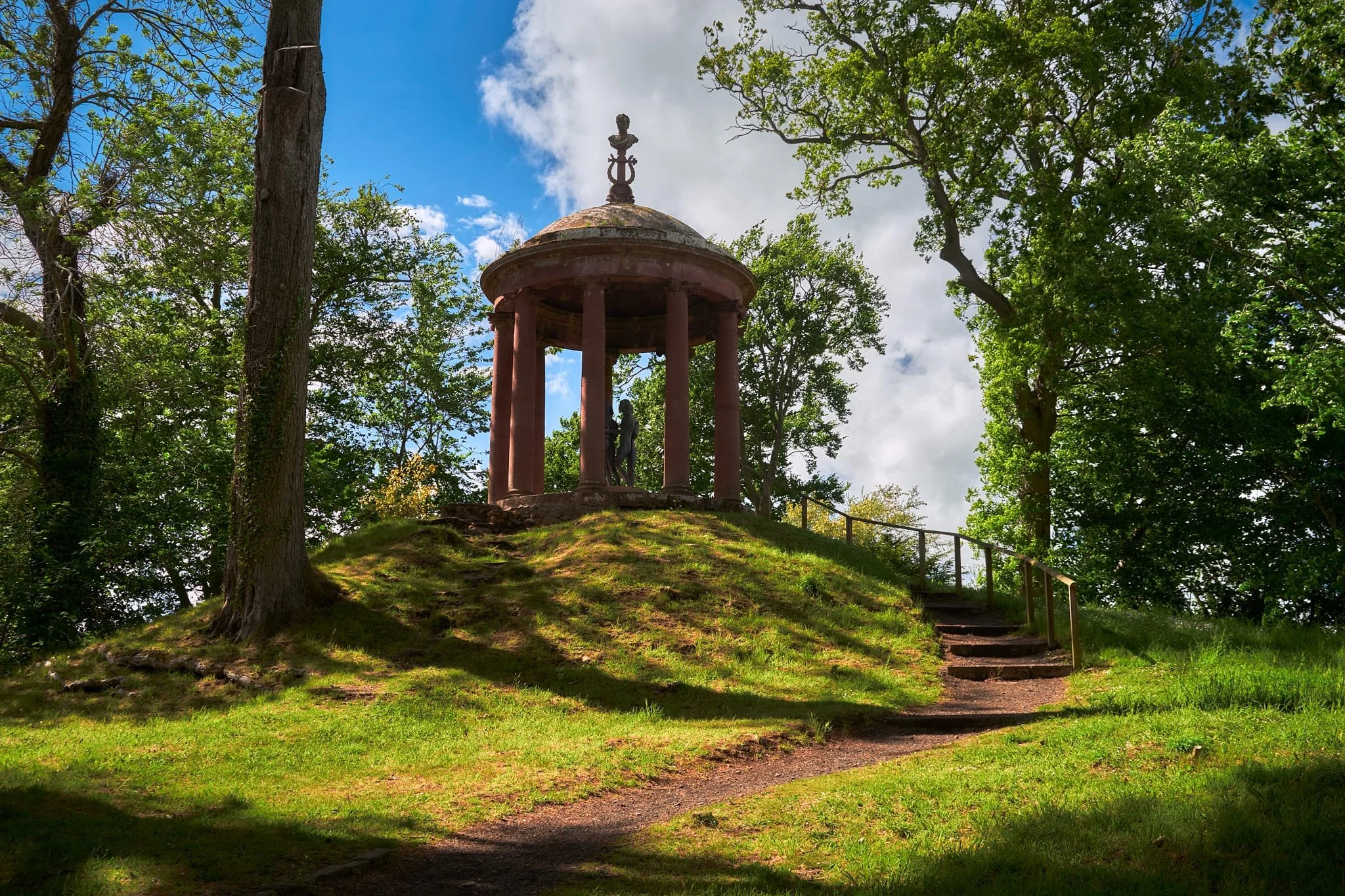
After crossing the Tweed, you’ll quickly find this structure known as the Temple of the Muses. Don’t know who actually built it, but it was commissioned by the then owner of the Dryburgh Estate, David Steuart Erskine, 11th Earl of Buchan. When he purchased the estate in the 1700s, he built a new house, improved the grounds, and created a landscape that featured as its centrepiece the ruins of Dryburgh Abbey.
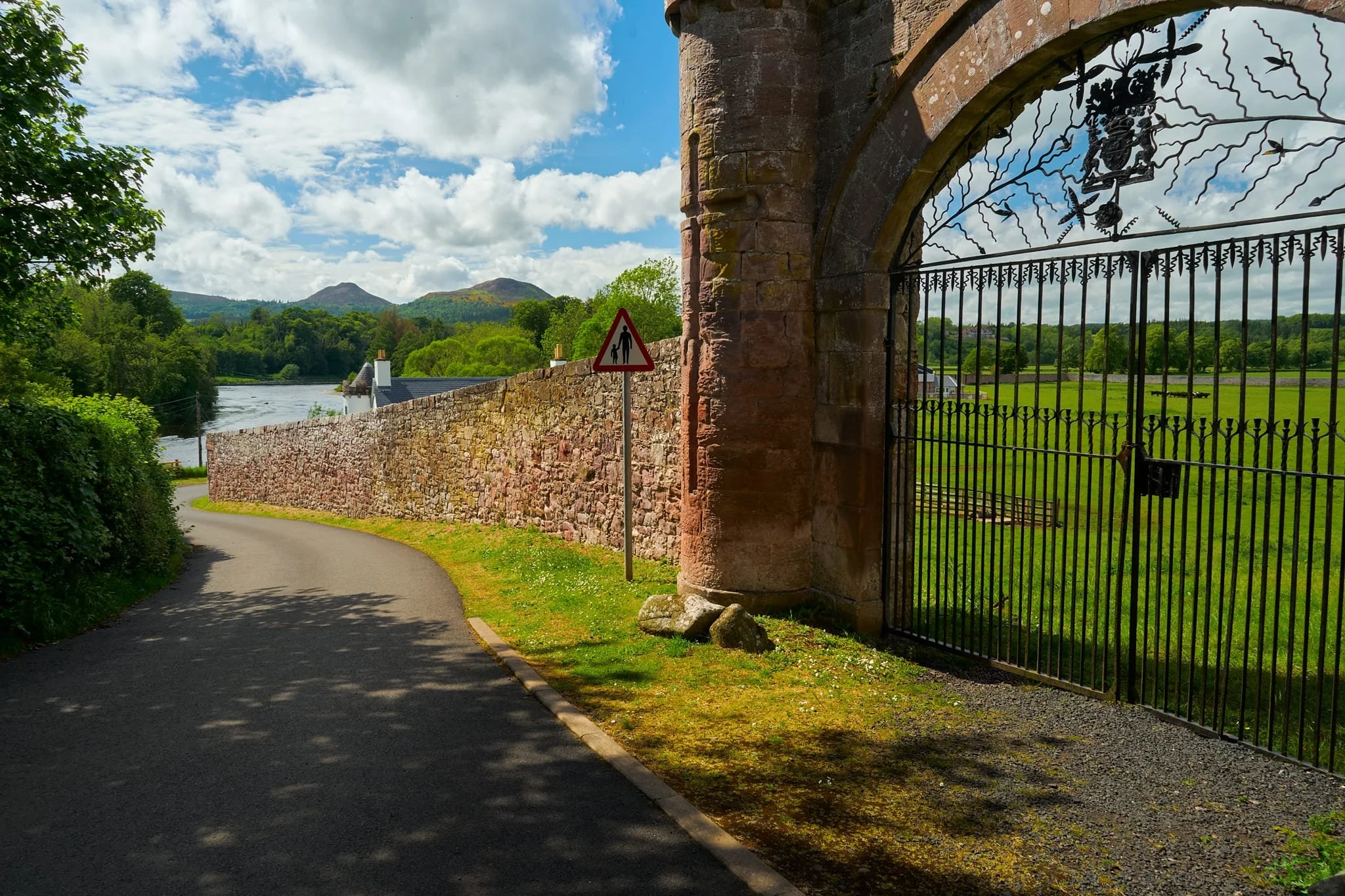
It’s a simple affair to find the abbey after crossing the Tweed; follow the main road. As we did so, we found this rather ornate gate and wall, defining the grounds of the estate. There’s a Latin inscription just out of shot above this gate: HOCPOMARIUM SUA MANUSATUM PARENTIBUS SUIS OPTIMIS SAC.D.S. BUCHANIA COMES. This roughly translates as, “This orchard, planted with his own hand, is dedicated to his most excellent parents by D.S., Earl of Buchan.”
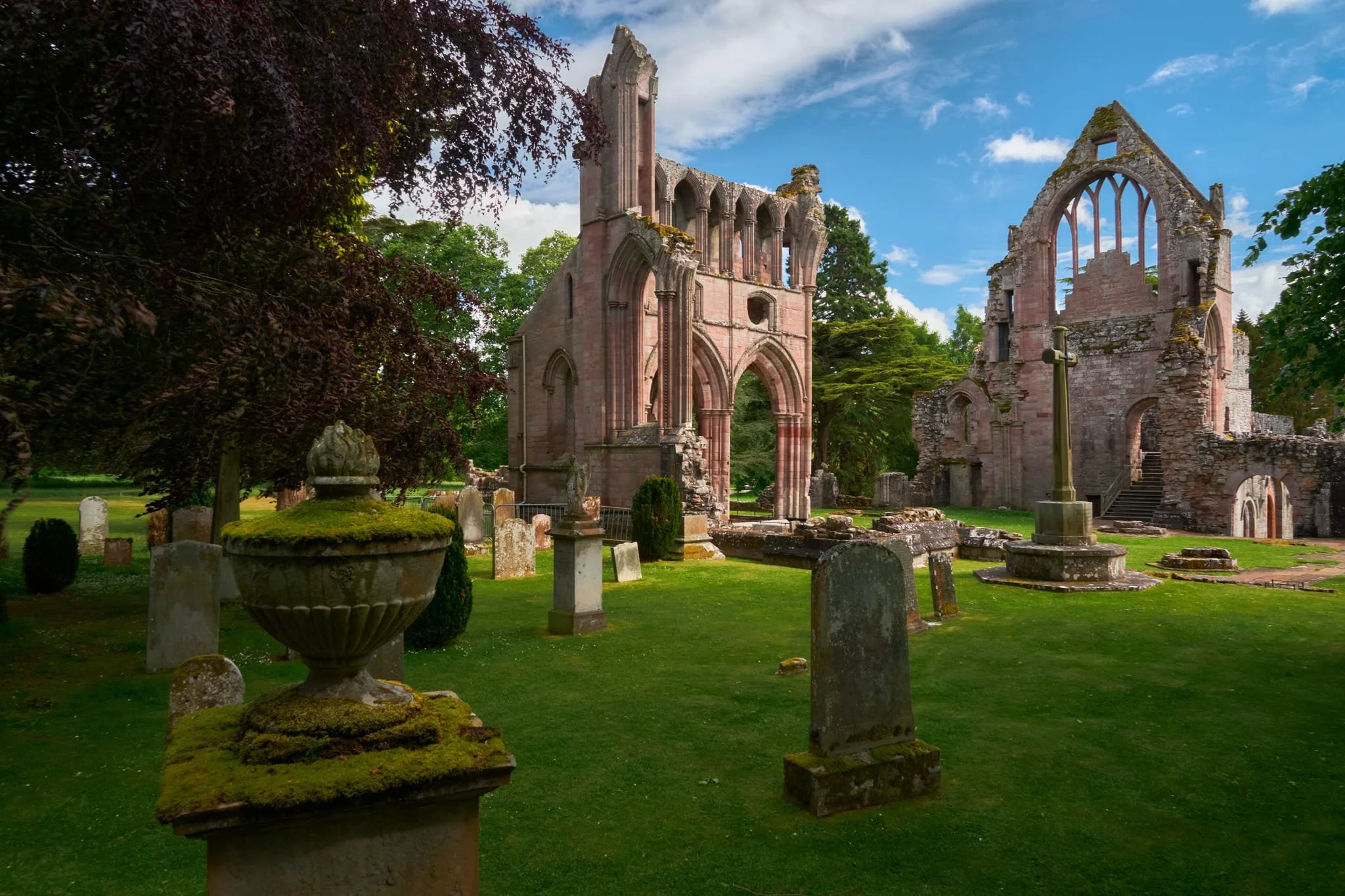
And behold, the ruins of Dryburgh Abbey. It’s red colour comes from being primarily constructed from Devonian sandstone. The tall structure centre is the North Transept, representing the most complete surviving portion of the original abbey church. The structure on the right is the East Range, the remains of the monastic domestic buildings.
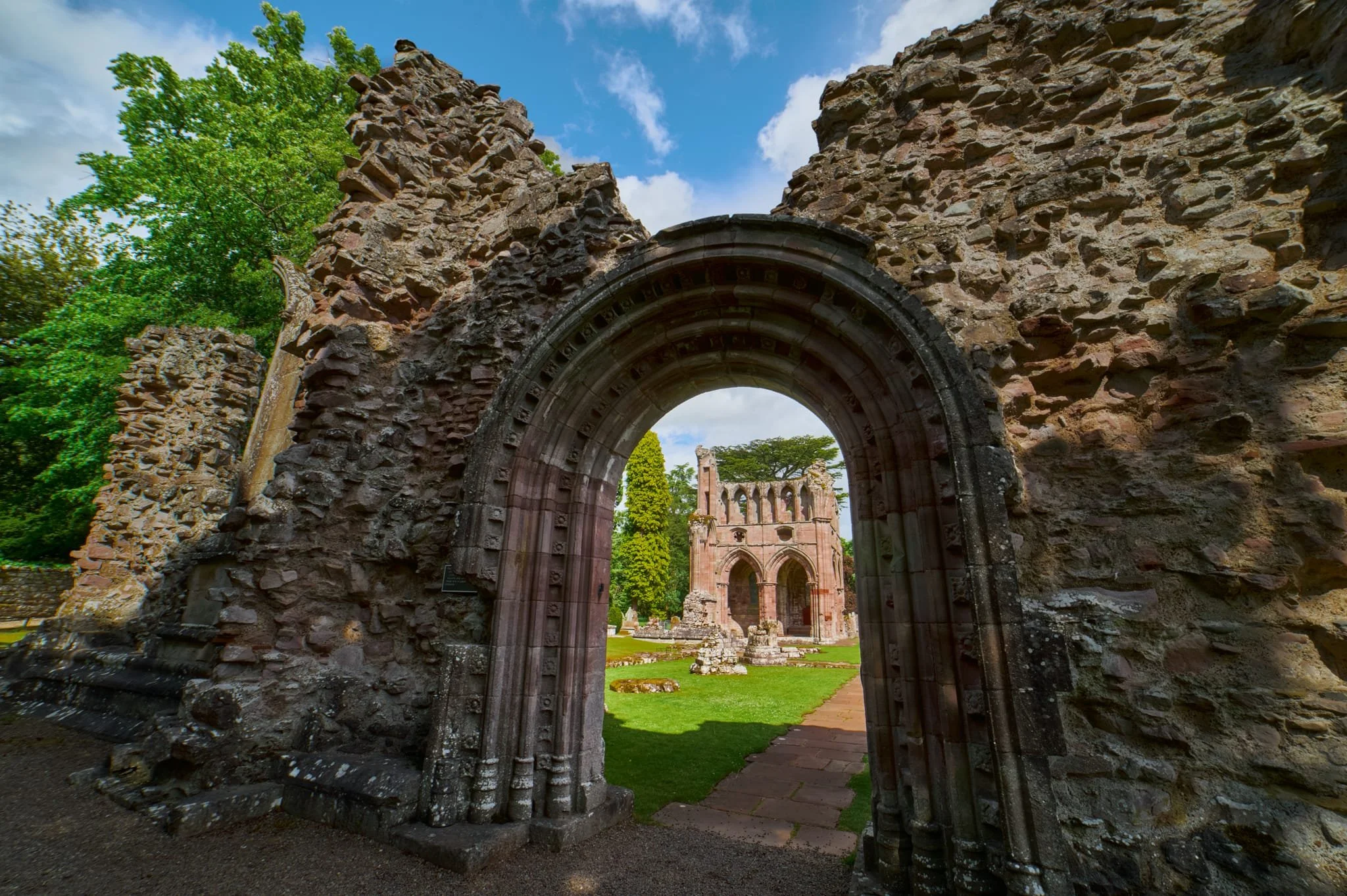
The way to the Cloister Garth, the heart of monastic life. I enjoyed the details and intricacies of the doorways around the ruins, and used this one to frame a composition of the North Transept.
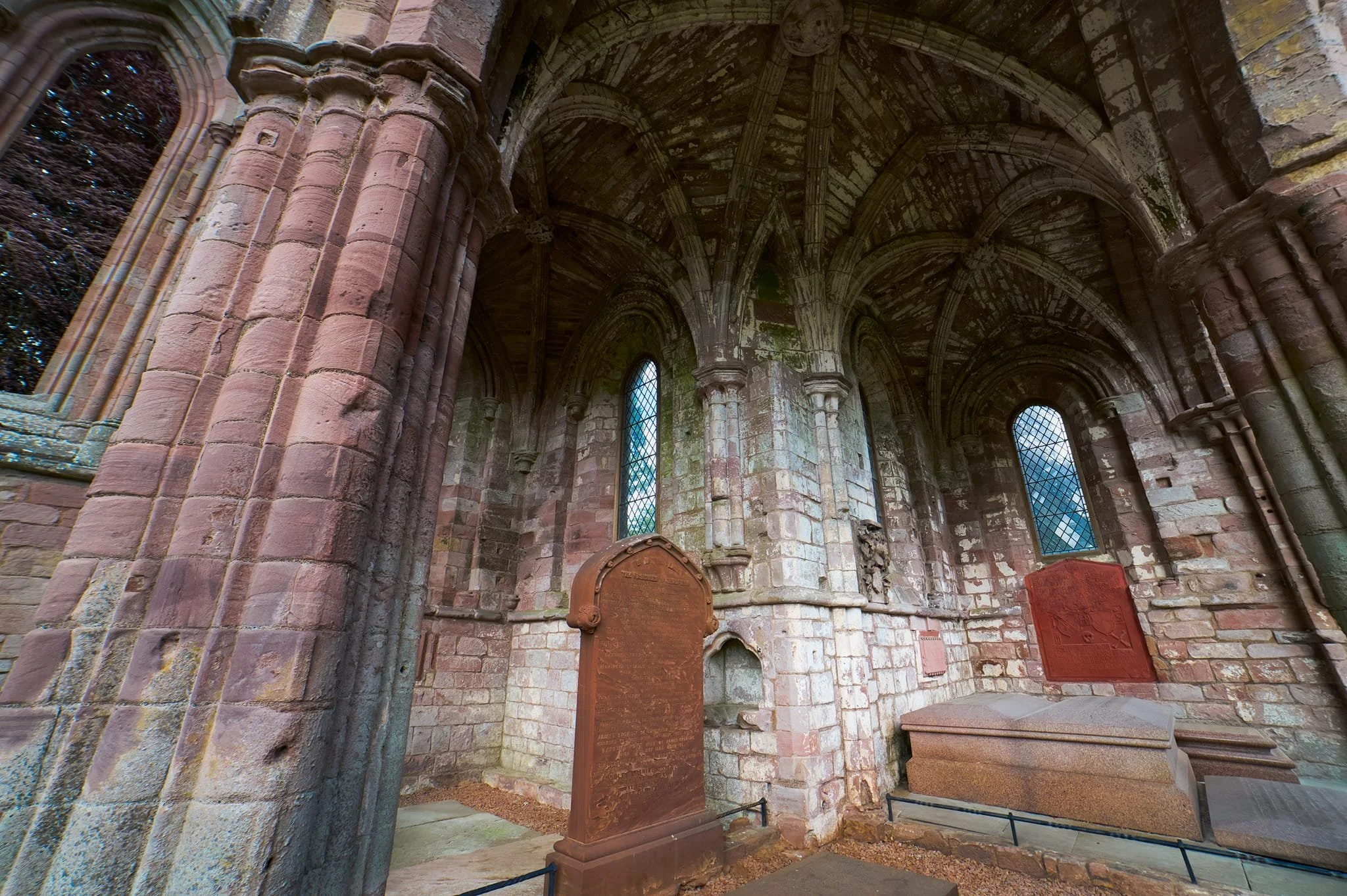
Peeking into the North Transept. It houses the burial sites of Sir Walter Scott (“father” of the historical novel and historical romance) and Field Marshal Earl Haig (famous British Army officer, especially during the First World War).
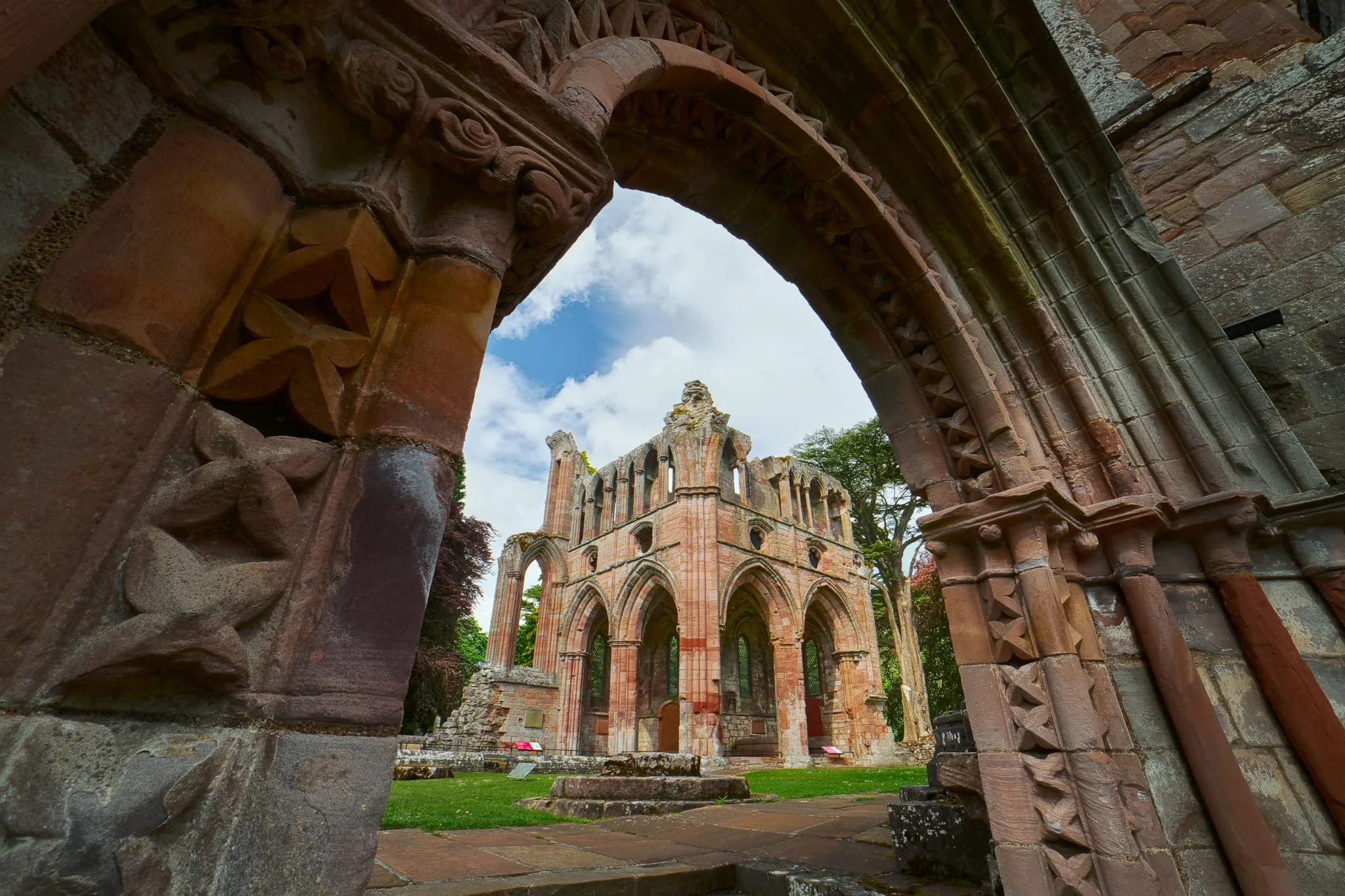
The entrance of Dryburgh Abbey Chapterhouse. Again, beautiful details of the doorway caught my eye and I included it in this ultra-wide composition of the North Transept.
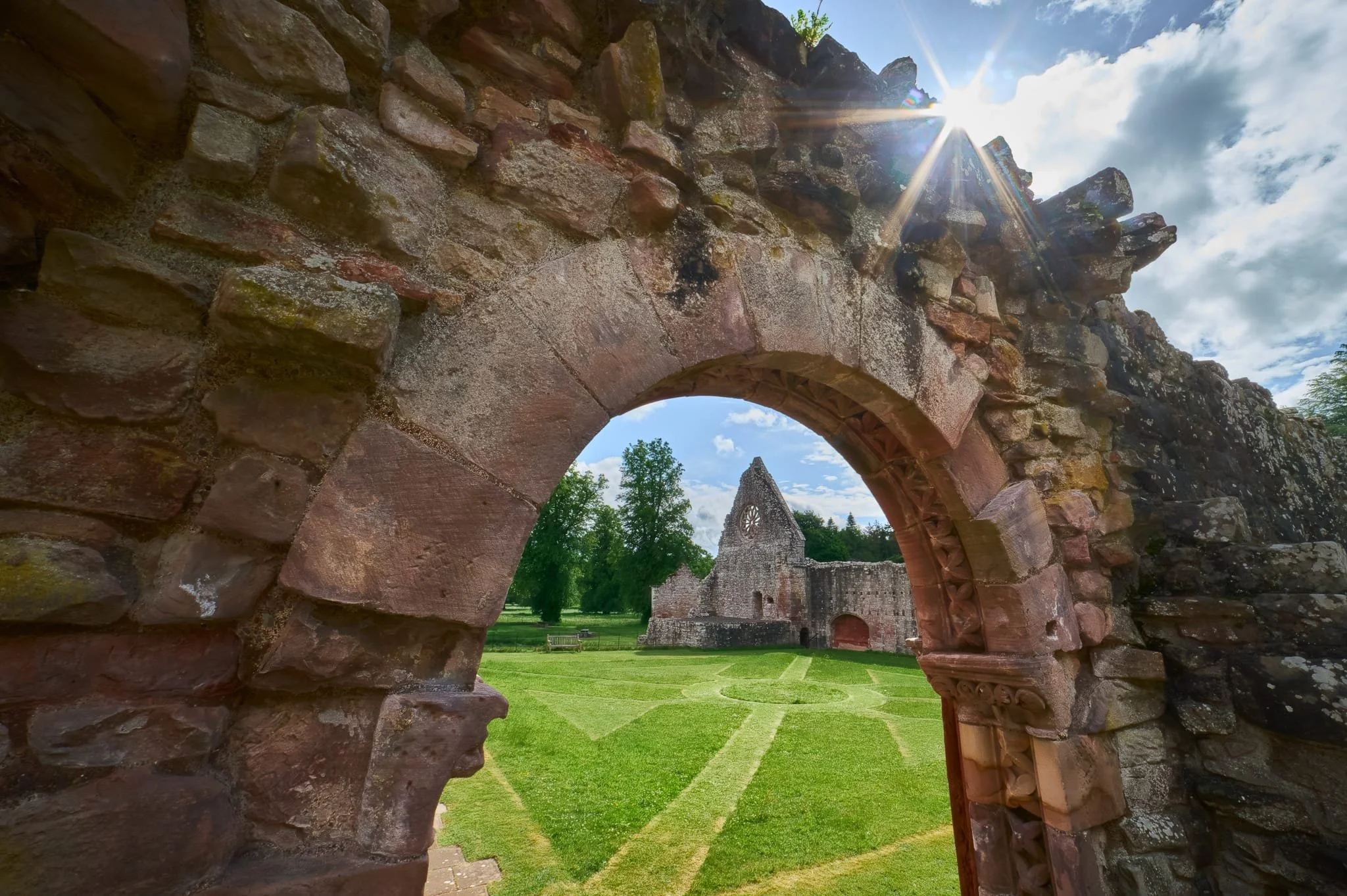
The same entrance, now looking towards the refectory with the beautifully detailing of St Catherine’s wheel window. I enjoyed the beautiful maintained courtyard, and used its lines as a compositional aid.