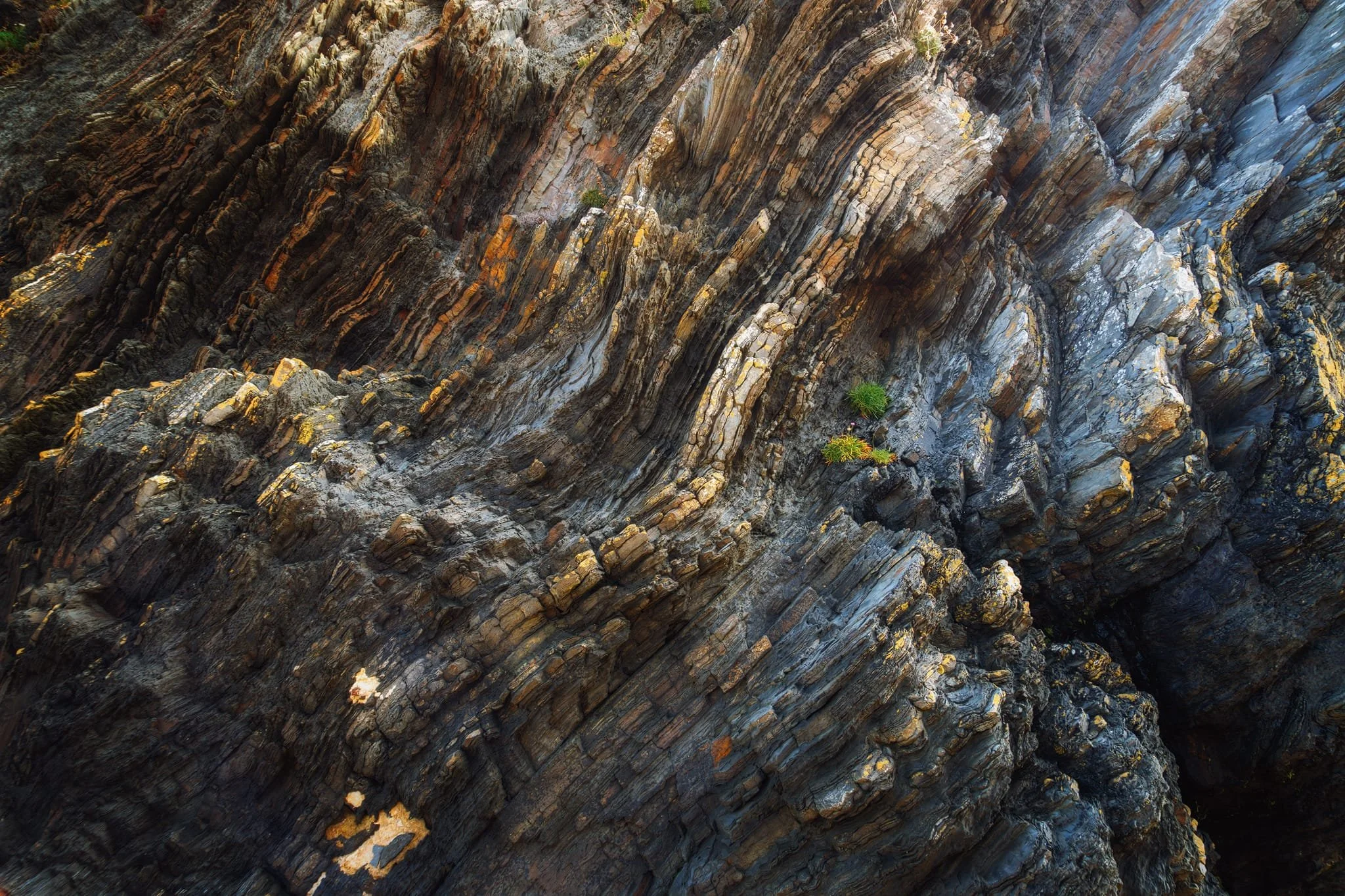
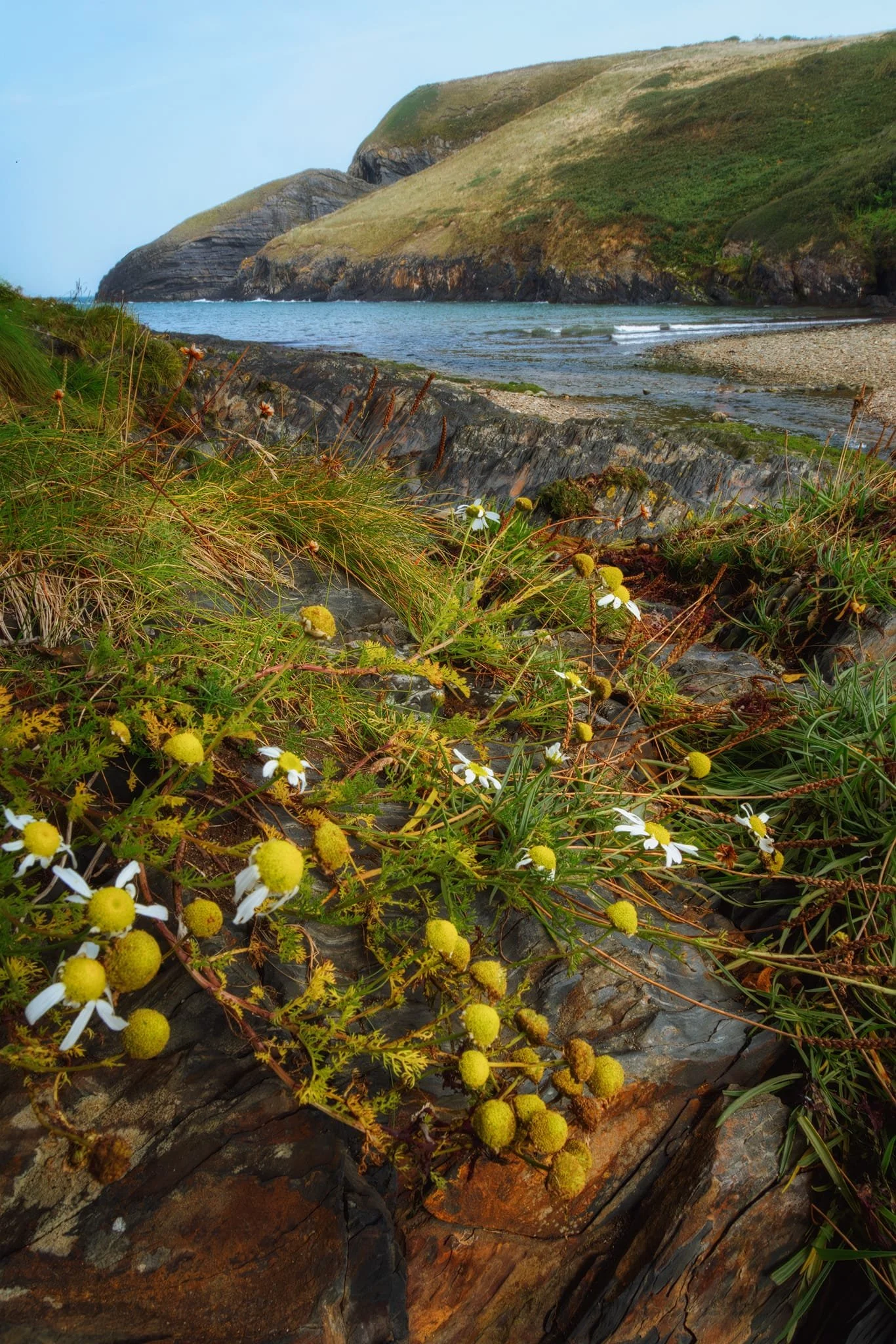
The last lot of photos from our week around the East Neuk of Fife.
And for this hike we decided on the easternmost point of East Neuk, Fife Ness. One the main reasons to explore this area was to check out Constantine’s Cave. It’s a natural sea cave found in the north face of a rocky cliff face at Fife Ness. The cave was first excavated in the early 1900s and found to contain evidence of a long occupation, from the pre-historic period into the 1800s.
Supposedly, the Pictish king Causantín mac Cináeda (otherwise known as Constantine I) was killed here on the beach and placed in the cave.
Fife Ness also enjoys a historical golf course, Balcomie Links, where one can also find a beautiful beach with various clusters of wave-formed rock formations, such as Mary’s Skelly and Englishman’s Skelly. Nearer the automated lighthouse, fantastical formations and pavements at Lochaber Rock offer joyful hours of compositions you can play around with.
All photos taken on my Sony α7ii using my Sony 24-240mm F3.5-6.3 OSS zoom lens. RAWs developed in Lightroom, merged in Photomatix, then edited and finalised in Photoshop.
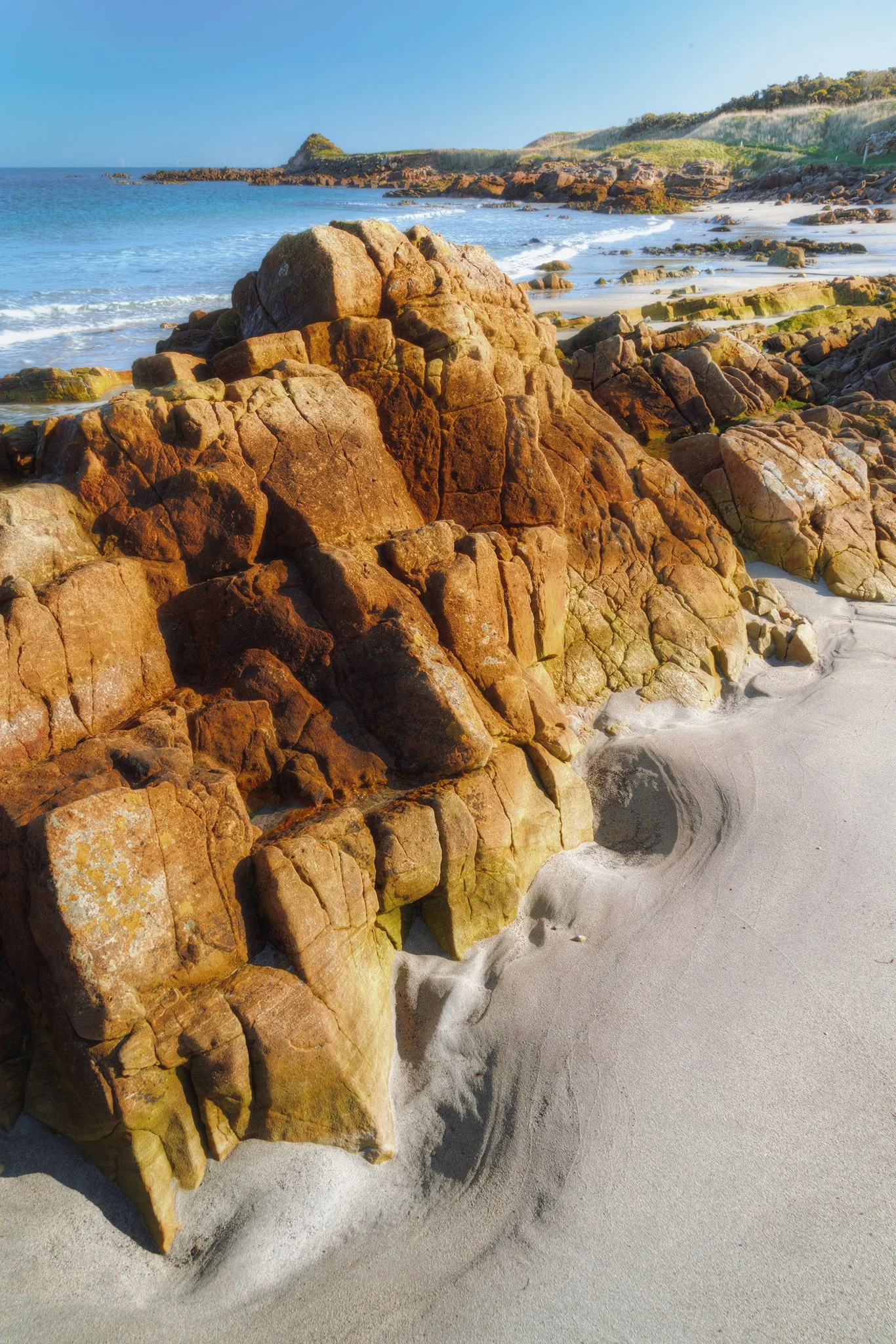
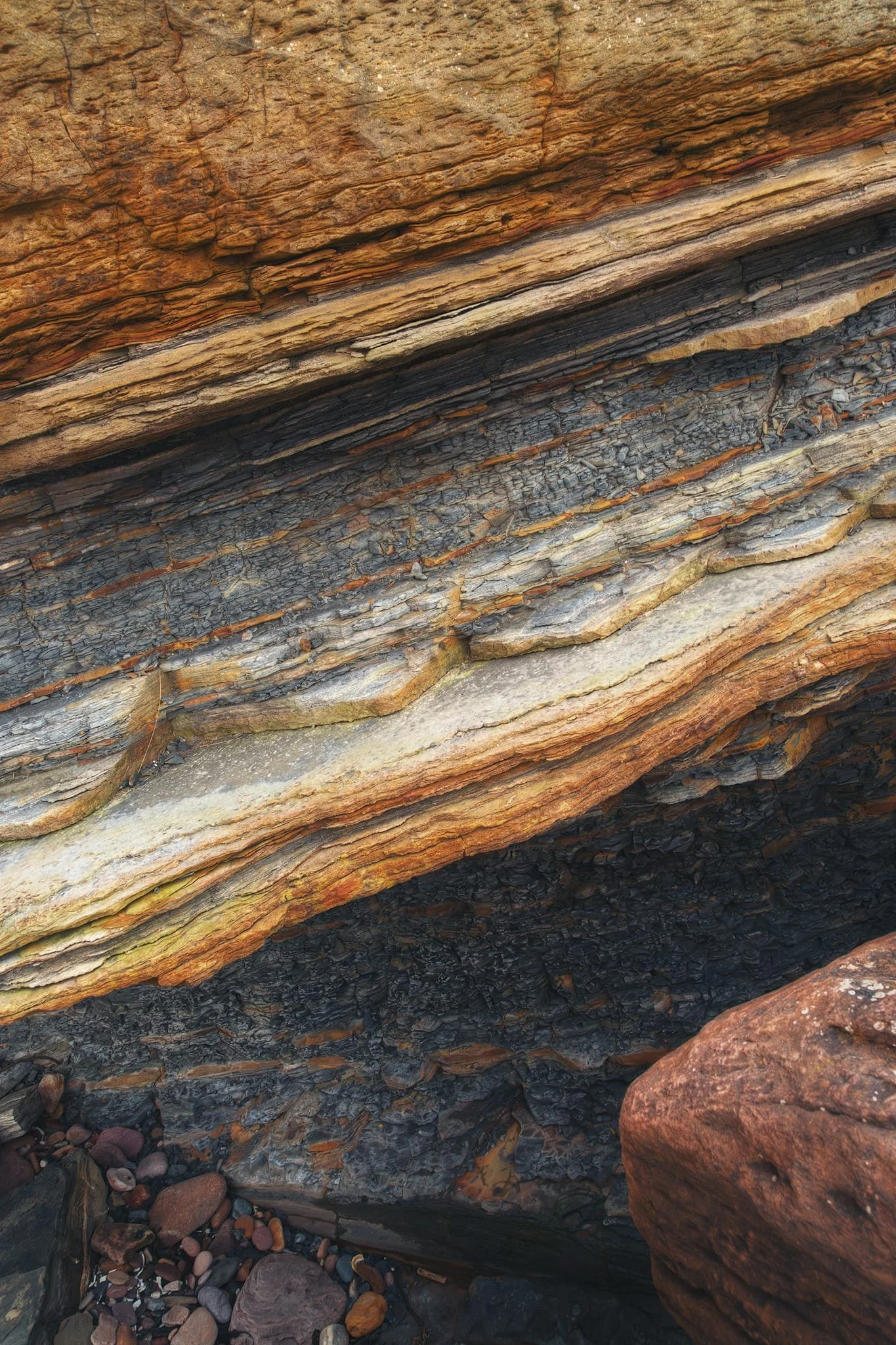
At the beach, weathered sandstone rock formations with distinct layering and fracture patterns has been tilted by tectonic forces. 300+ million years of history.
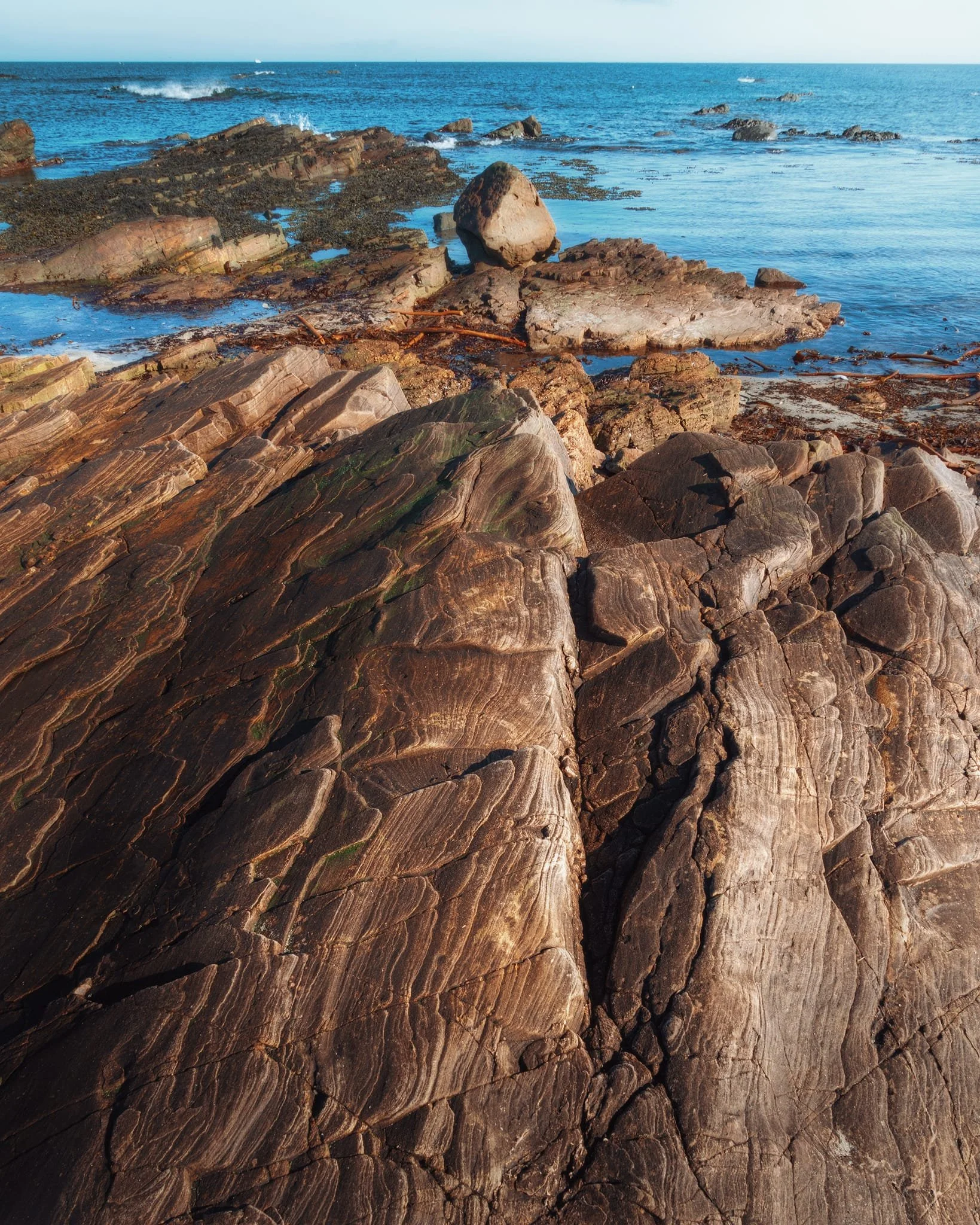
Striking rock formations with wavy patterns and noticeable cracks. Close up you can see twisted layers of metamorphic rock that look like thin layered sheets. These layers show signs of ancient geological activity. The swirling shapes are created by uneven erosion, which points to different minerals in the rocks. Meanwhile, the beautiful blue waters around continue to shape these rocks through their ongoing movement and waves.
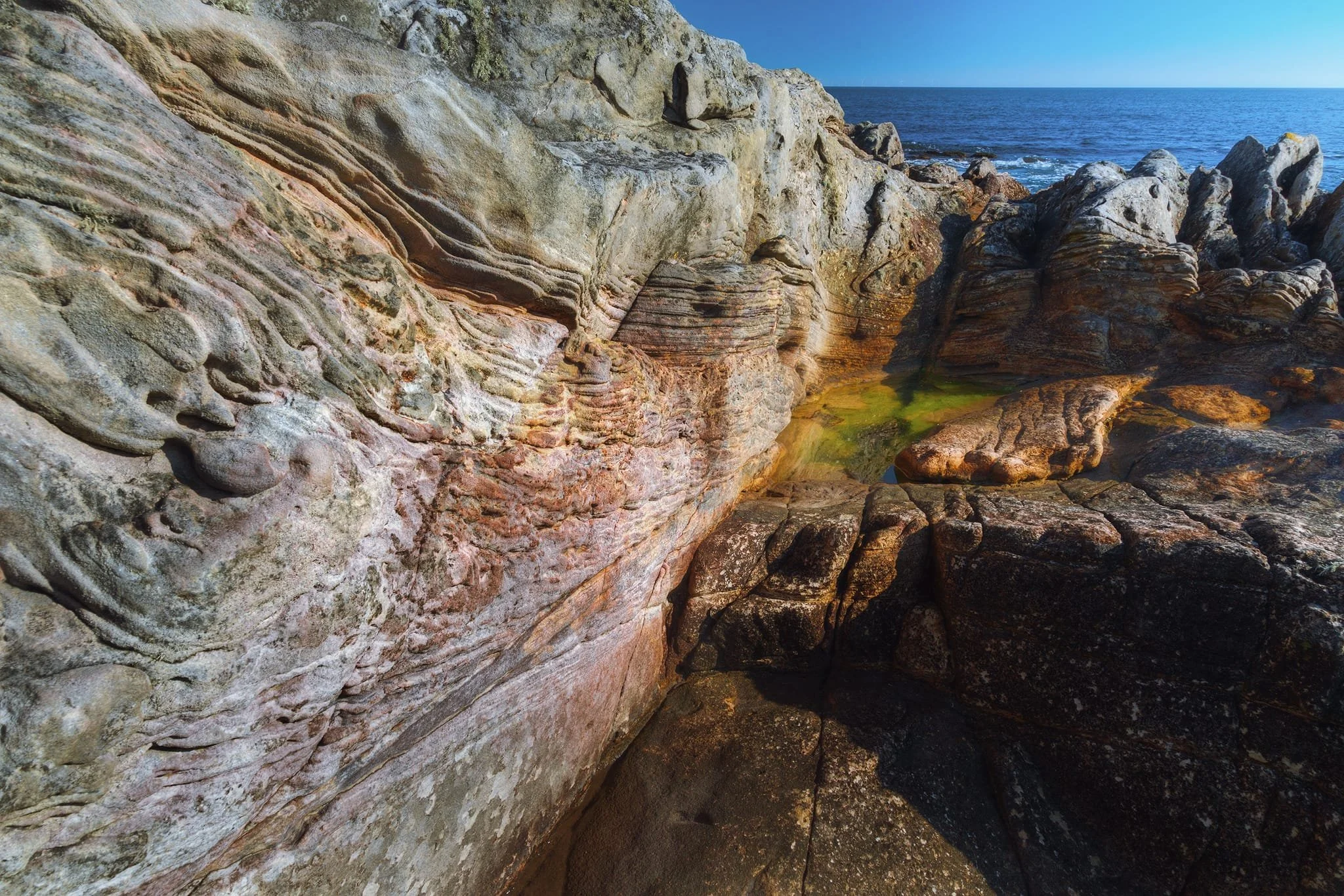
At Lochaber Rock, beautiful layers can be seen in the light-colored sandstone, with reddish-pink stripes. On the left side, you can see honeycomb-like patterns and wavy textures, which look different from the darker, sharp shapes on the right. These differences show how the rocks are made of different materials and react in unique ways to the ocean’s wear.
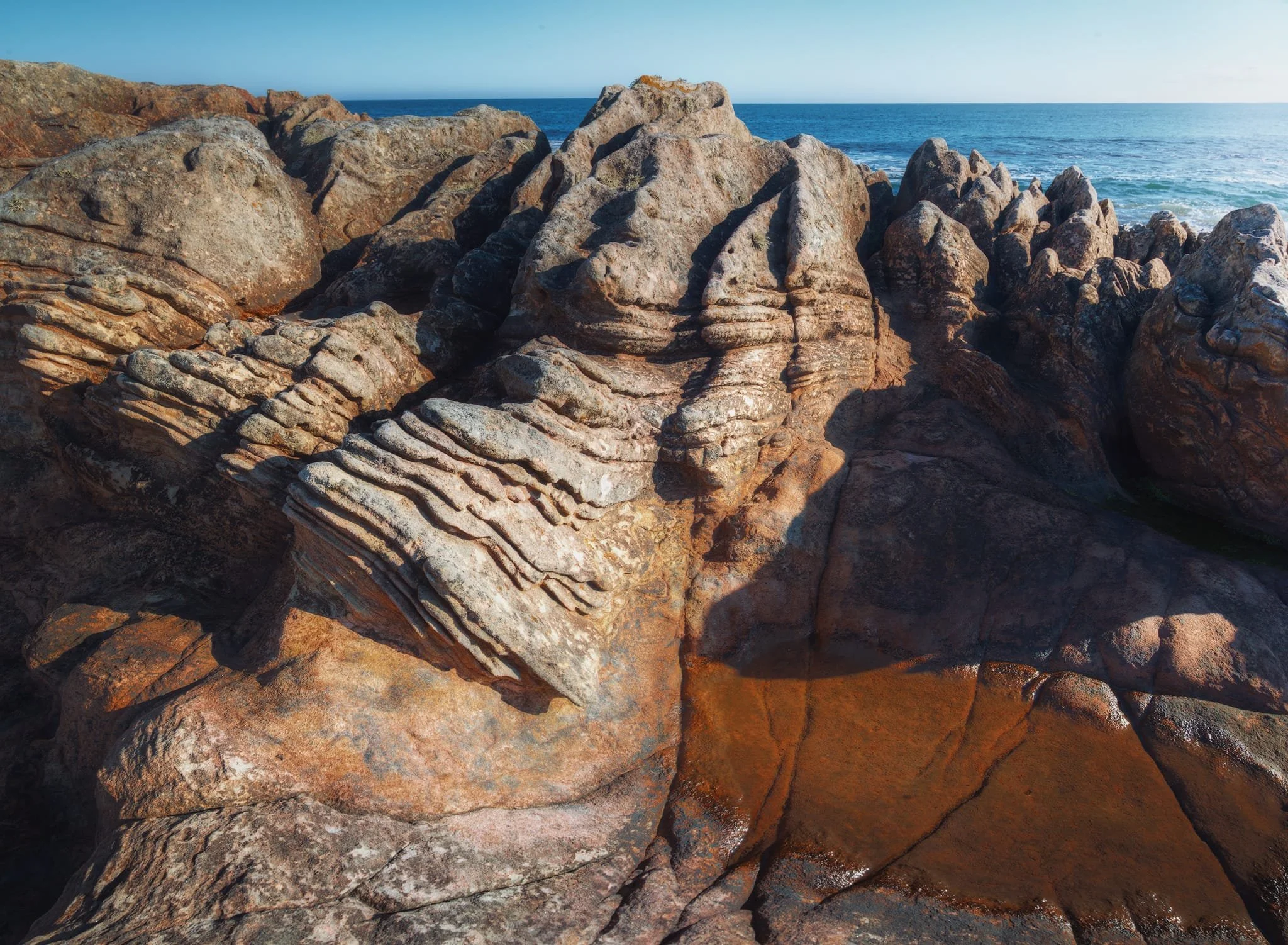
A panorama of five vertical shots, stacked left to right, shows the impressive layers of sedimentary rock made of pinkish-brown sandstone. The layers form ridges that tell the story of how this rock was formed. Some of the rock is tilted as well, having been affected by movements in the Earth’s crust. You can also see different patterns of cracks in the rock, creating angular pieces that have weathered over time into various colors. Nature is an artist.