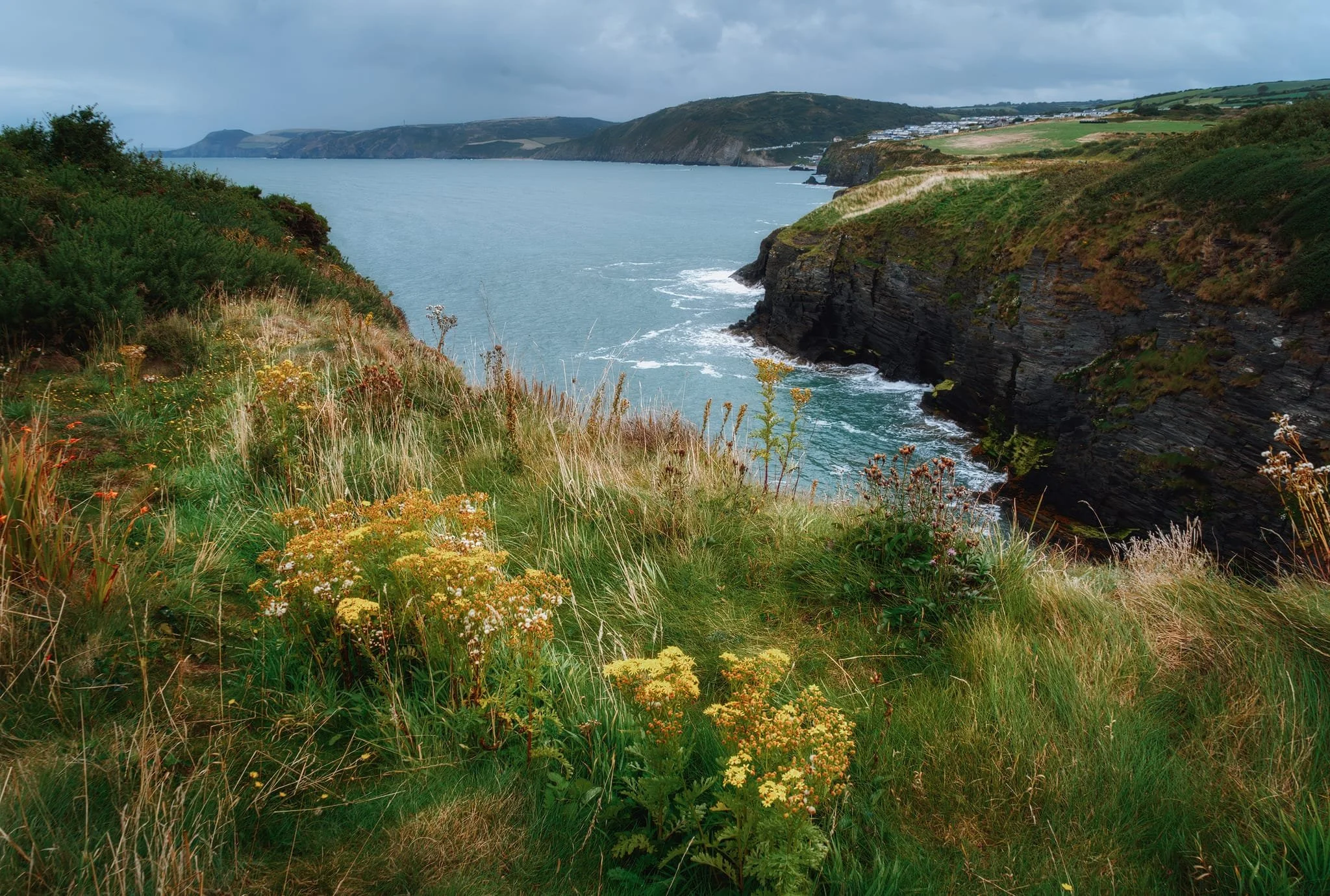
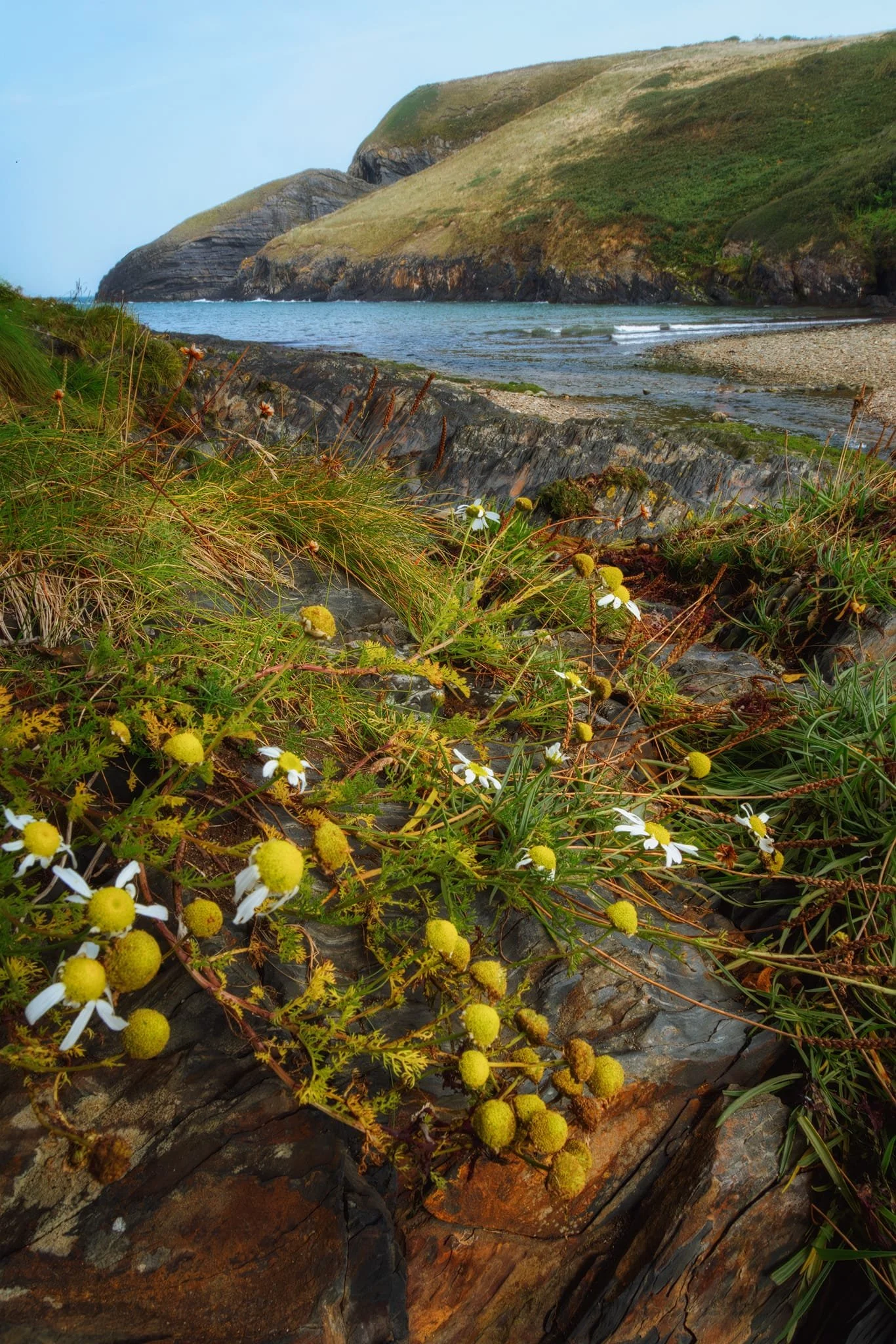
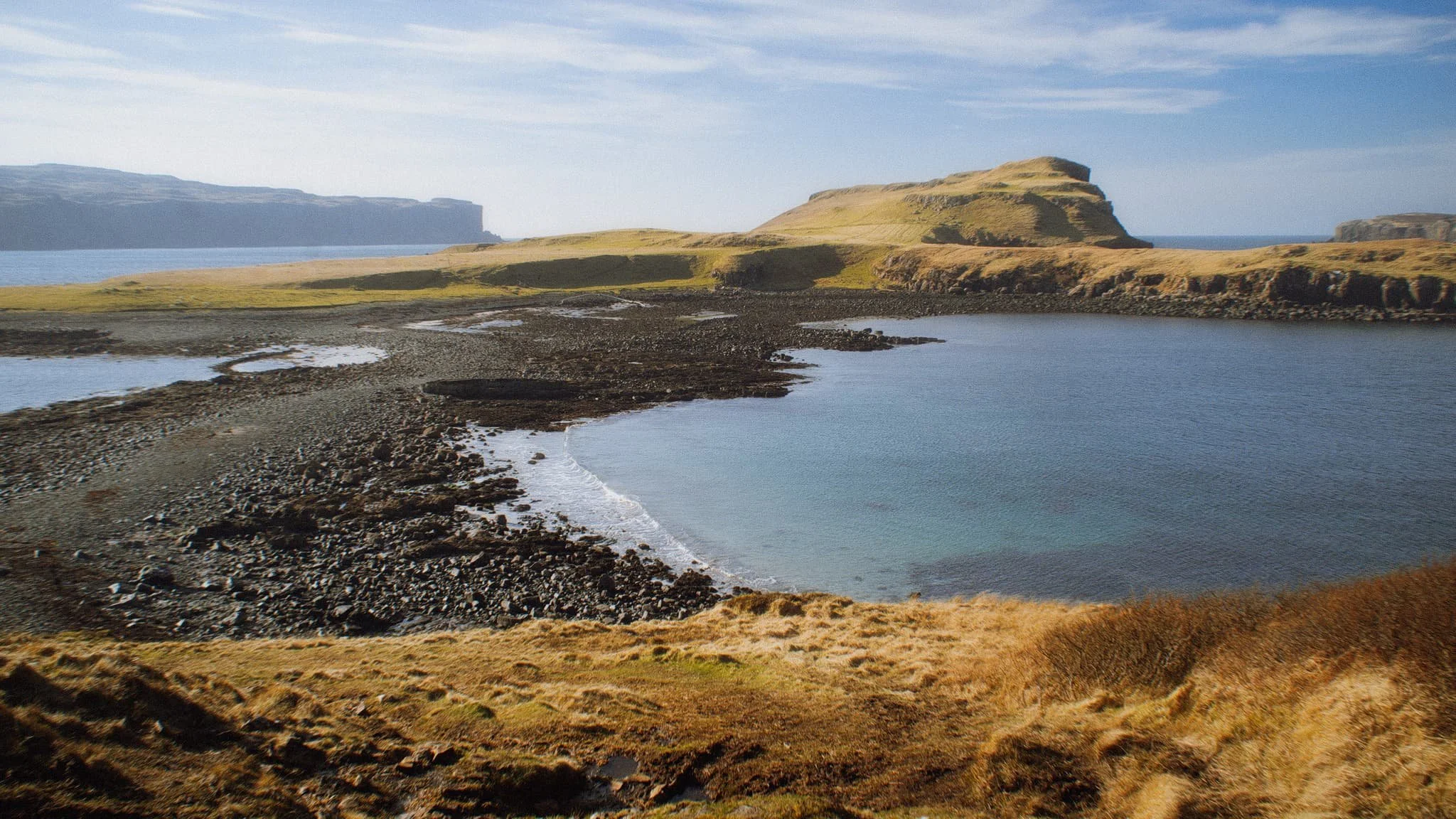
The coast that time forgot.
Towards the end of our week around the Cardigan Bay coastline, we plotted a final clifftop trail. Starting at beautiful Llangrannog, up the coast from Aberporth and Tresaith, we would fuel up then follow the Ceredigion Coast Path northeast up onto the cliff tops and around the perilous shoulder of Pendinaslochdyn. Then we could drop back down to explore the peninsula of Ynys Lochtyn.
A beautiful, sunny, and hazy day greeted us for a crackin’ hike and some of the most epic coastal scenes and geology I’ve ever witnessed.
All photos taken on my Sony α7ii using my Sony 24-240mm F3.5-6.3 OSS zoom and Rokinon 14mm f2.8 ED AS IF UMC prime lenses. RAWs developed in Lightroom, merged in Photomatix, and edited and finalised in Photoshop.
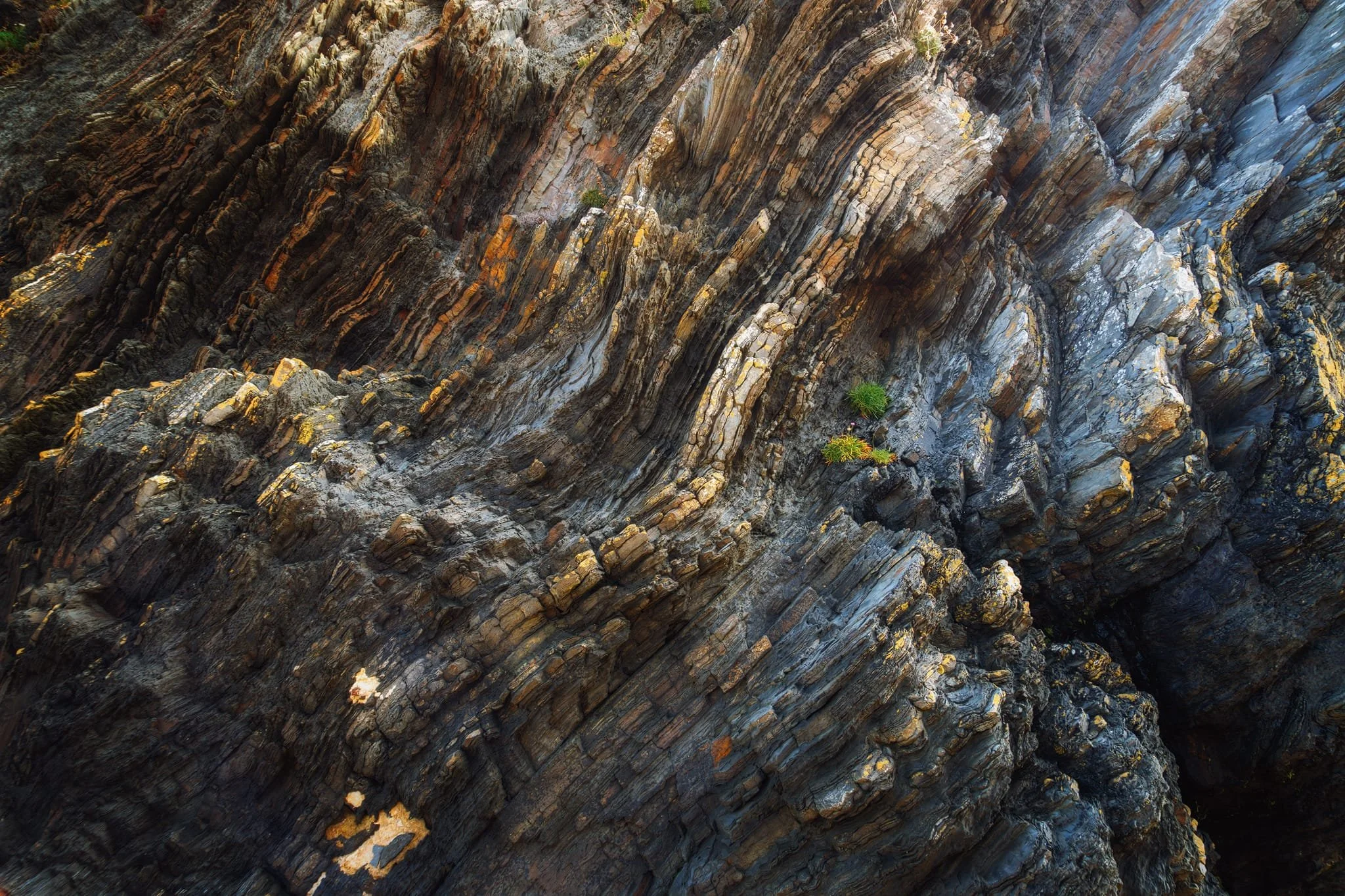
A close-up abstract composition of Llangrannog’s cliffs shows a dramatic geological story. These intensely folded and faulted rocks, likely turbidites deposited in a deep ancient sea, were deformed during the Caledonian Orogeny, the mountain-building event that shaped much of Wales. Each layer and fracture is a testament to millions of years of Earth’s history, continually exposed by the relentless sea.
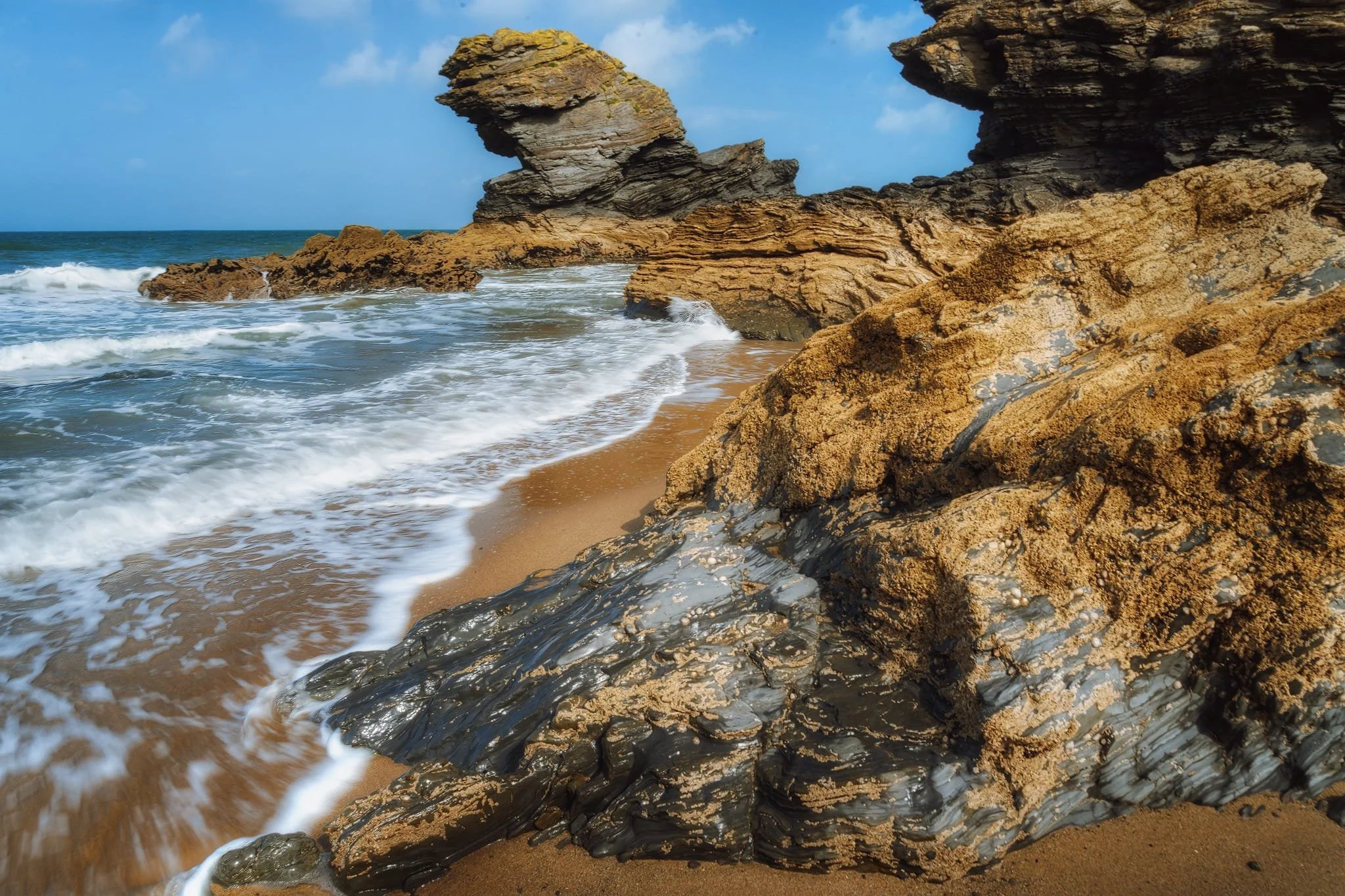
The sea stack is the well-known Carreg Bica , found under the northern cliffs of Llangrannog. A popular story claims Carreg Bica is actually the tooth of a giant named Bica who once resided in the Ceredigion region. The tale suggests Bica suffered from a terrible toothache, ultimately forcing him to spit the offending tooth onto the beach where it remains to this day.
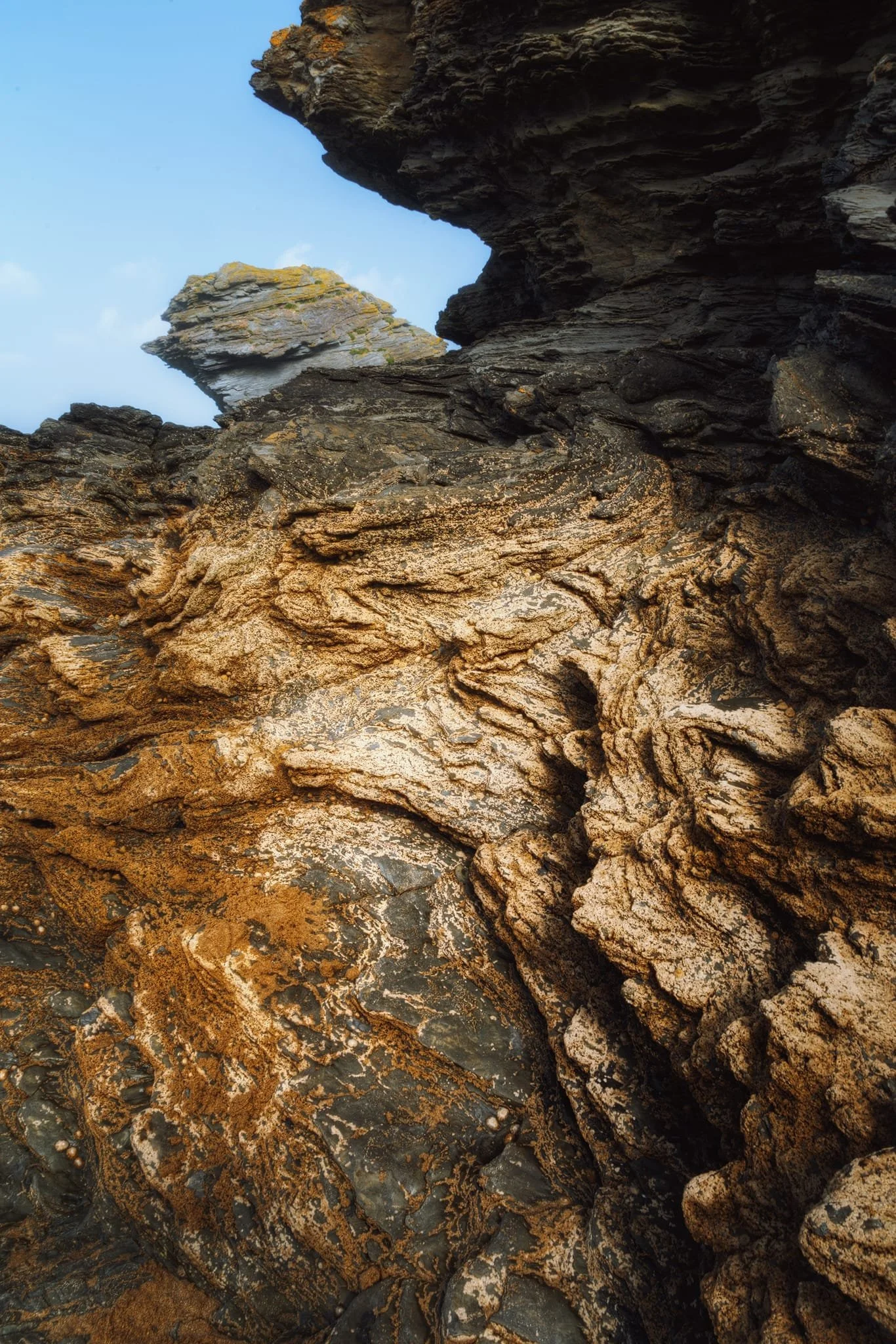
A more abstract composition, highlighting the folded and weathered rocks at Llangrannog. These formations tell a story of ancient deposition, tectonic forces, and the ongoing processes shaping the Cardigan Bay coastline.
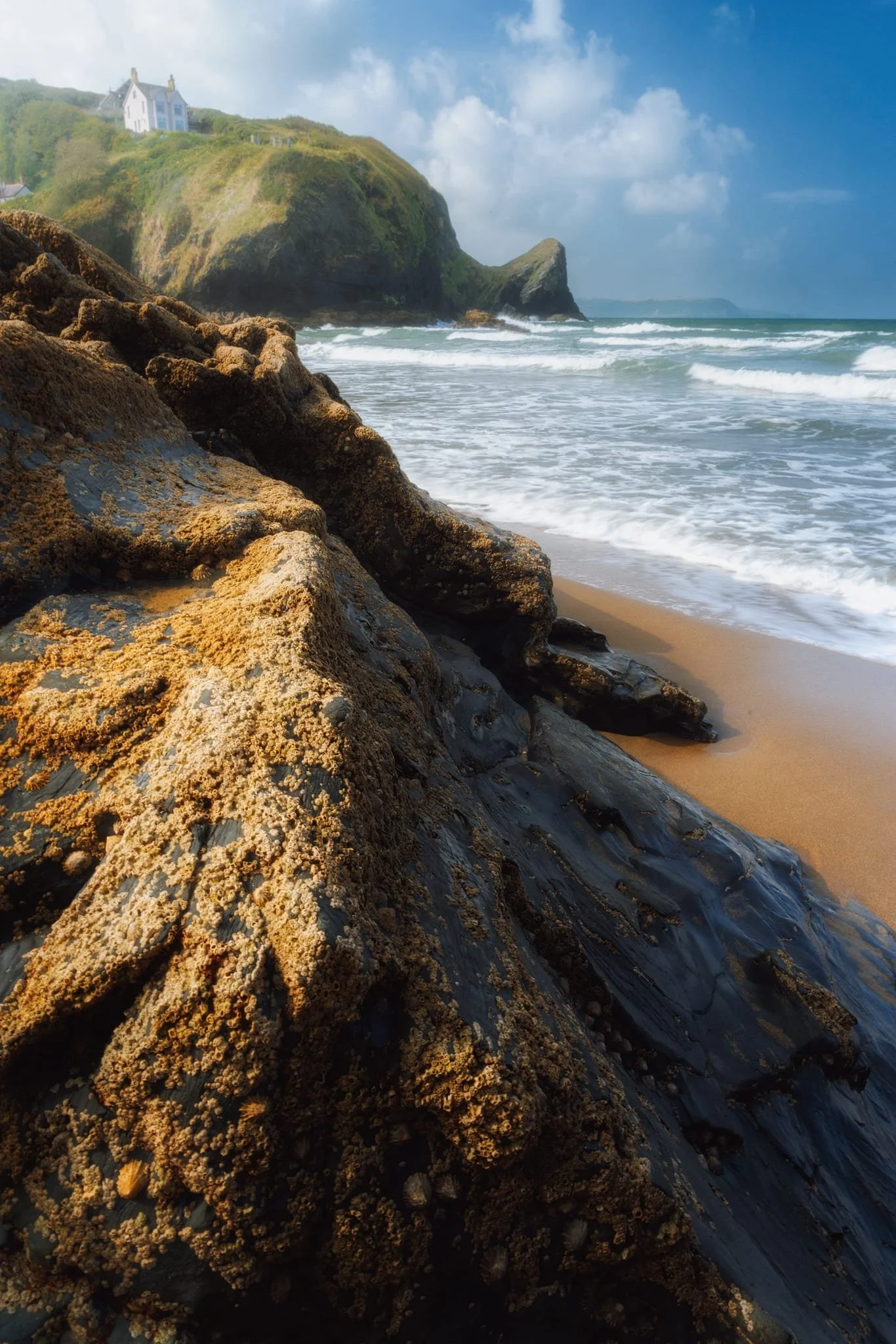
Looking to Llangrannog’s southern cliffs, and the pointy crag of Pen-rhip , I wait for the sun to strike this beach boulder and use the lighting as a leading line into the composition.
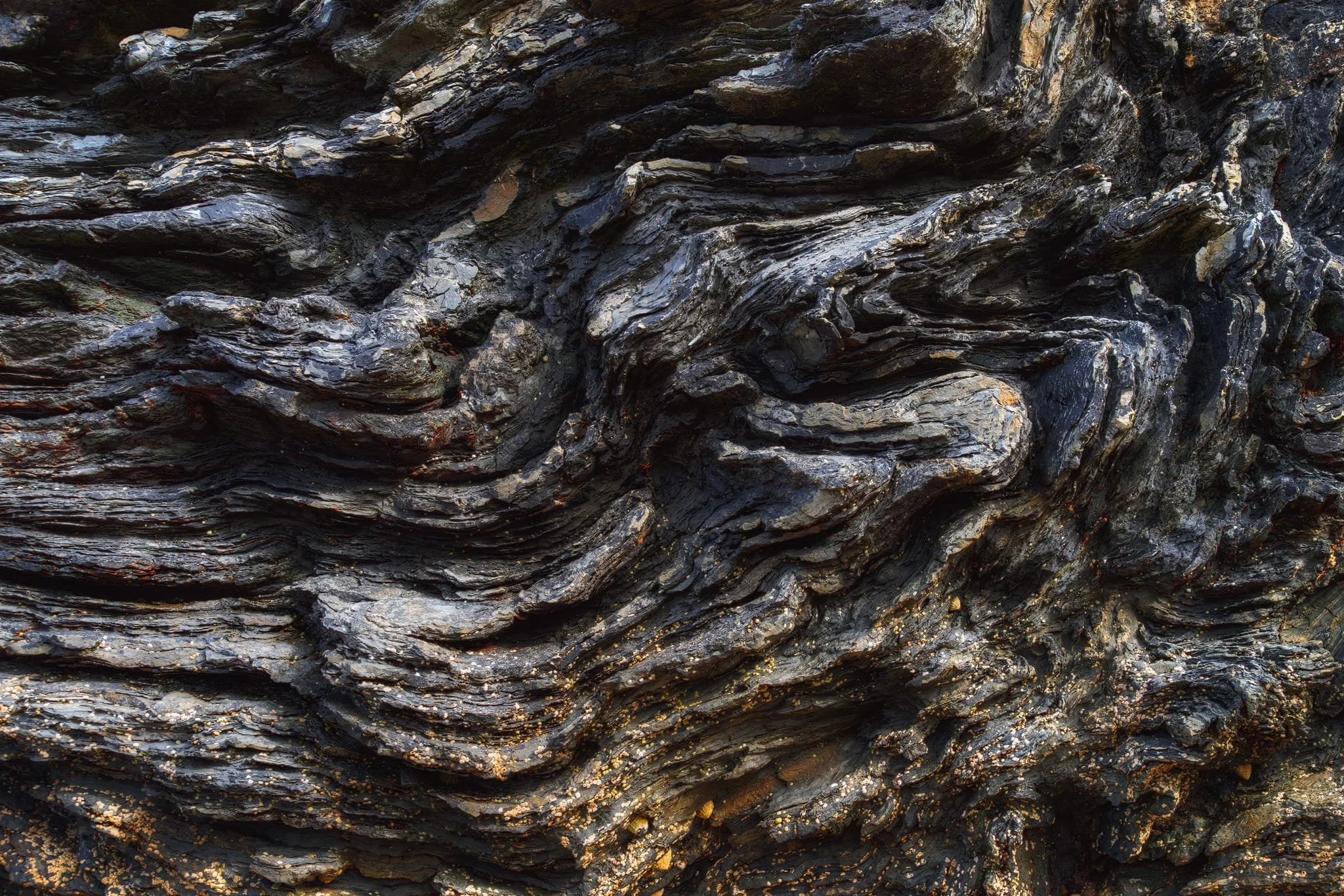
The cliffs around here almost look liquid; absolutely fascinating.
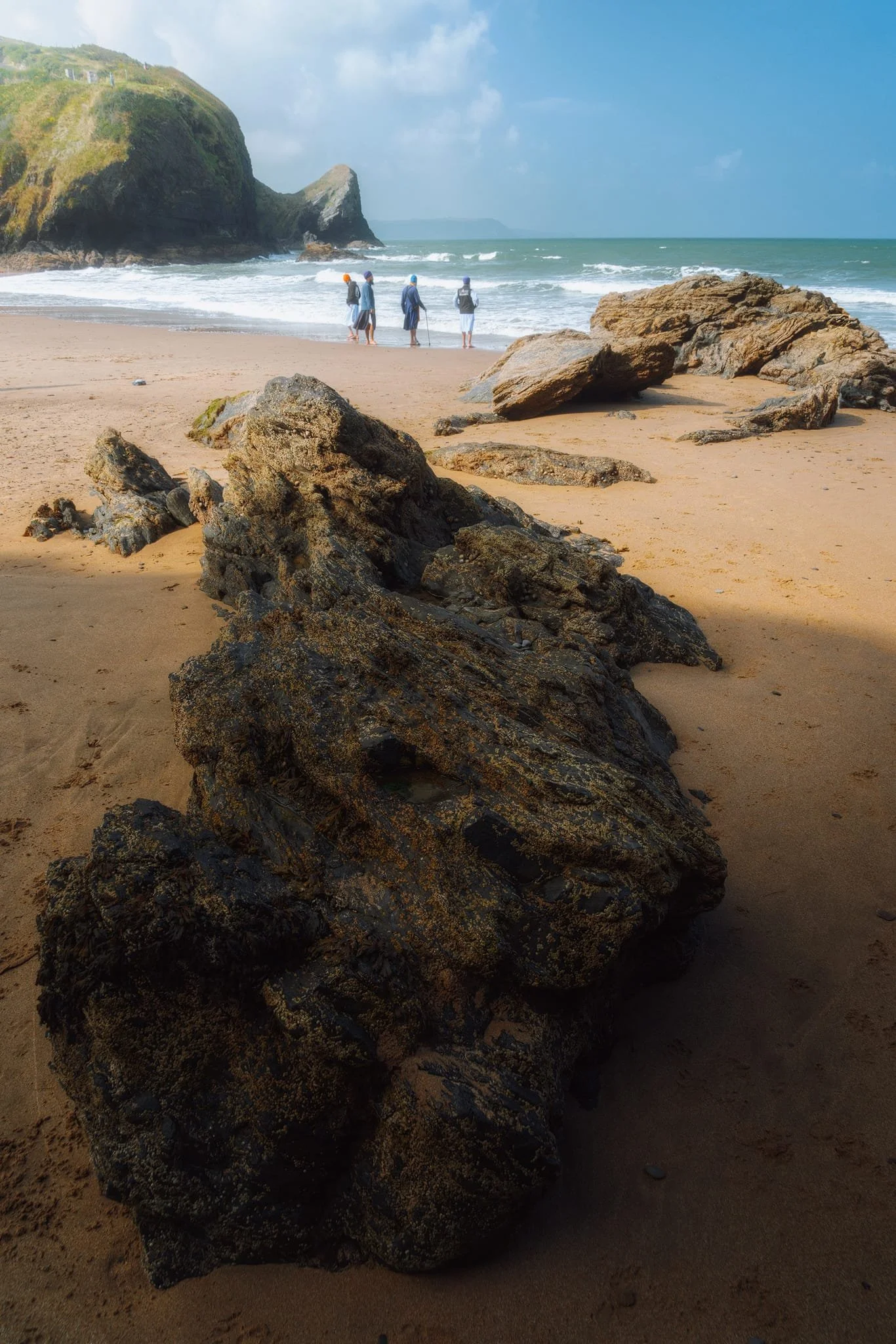
I line up a series of beach boulders and outcrops in this composition towards Pen-rhip again. Also included: A group of Sikh gentlemen enjoying the sea and the scenes.
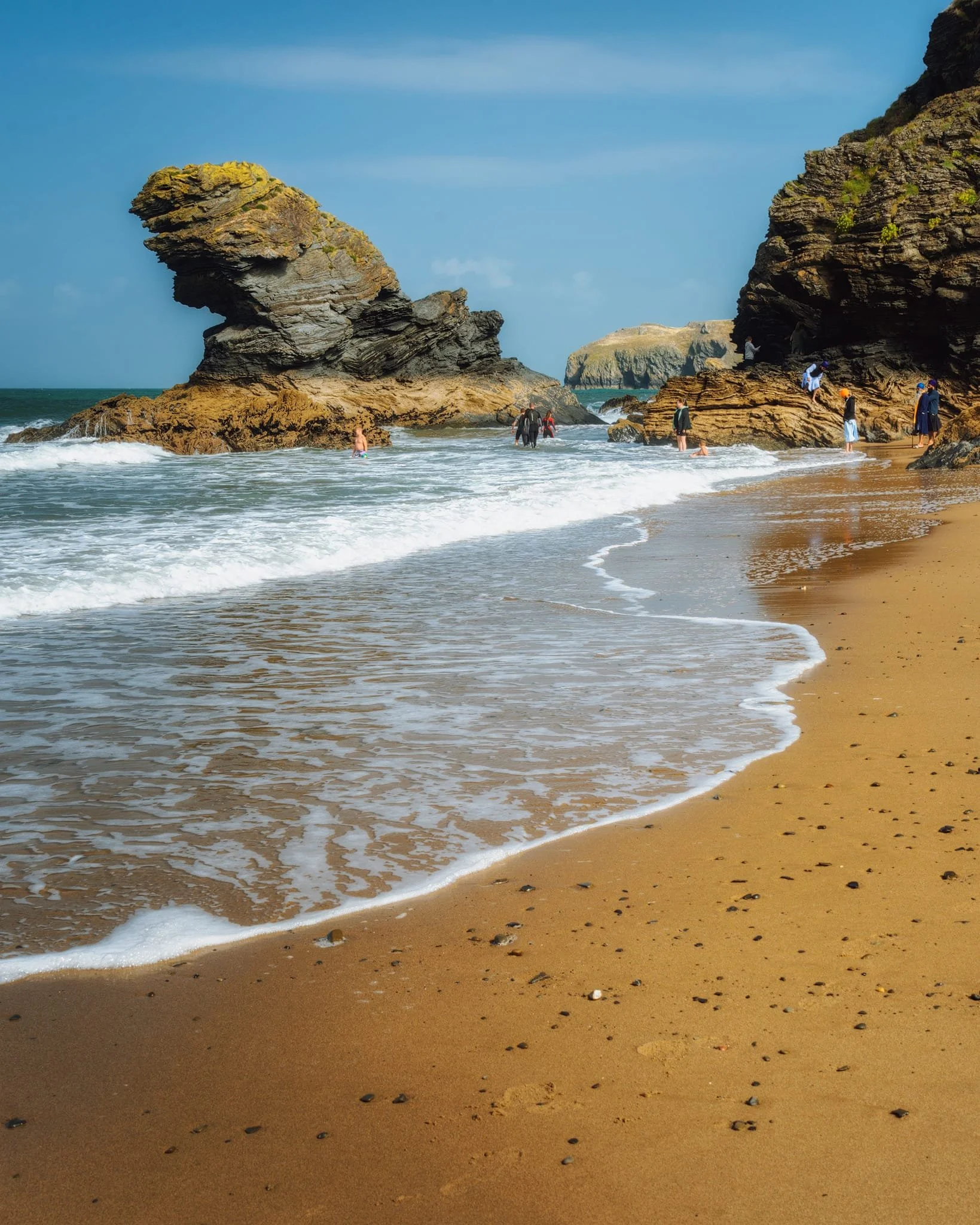
A simpler image of Carreg Bica , with people playing around its base for scale. I waited for the rising tidal waves and shot multiple frames to get the waves in just the right shape and angle.
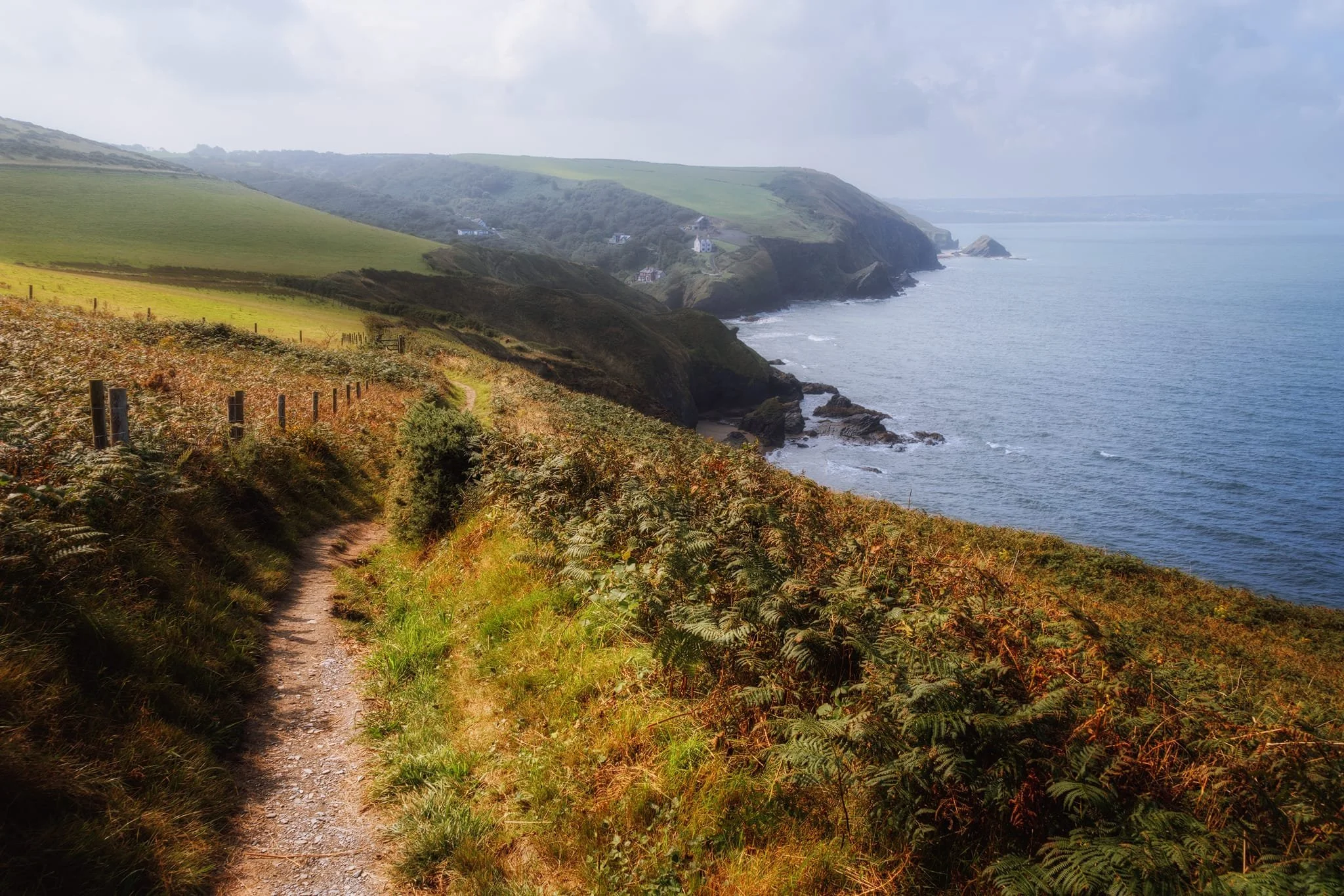
Beyond Llangrannog we took the Ceredigion Coast Trail up onto the clifftops. Looking back gave us this wonderful, if hazy, panorama of the Llangrannog cliffs.
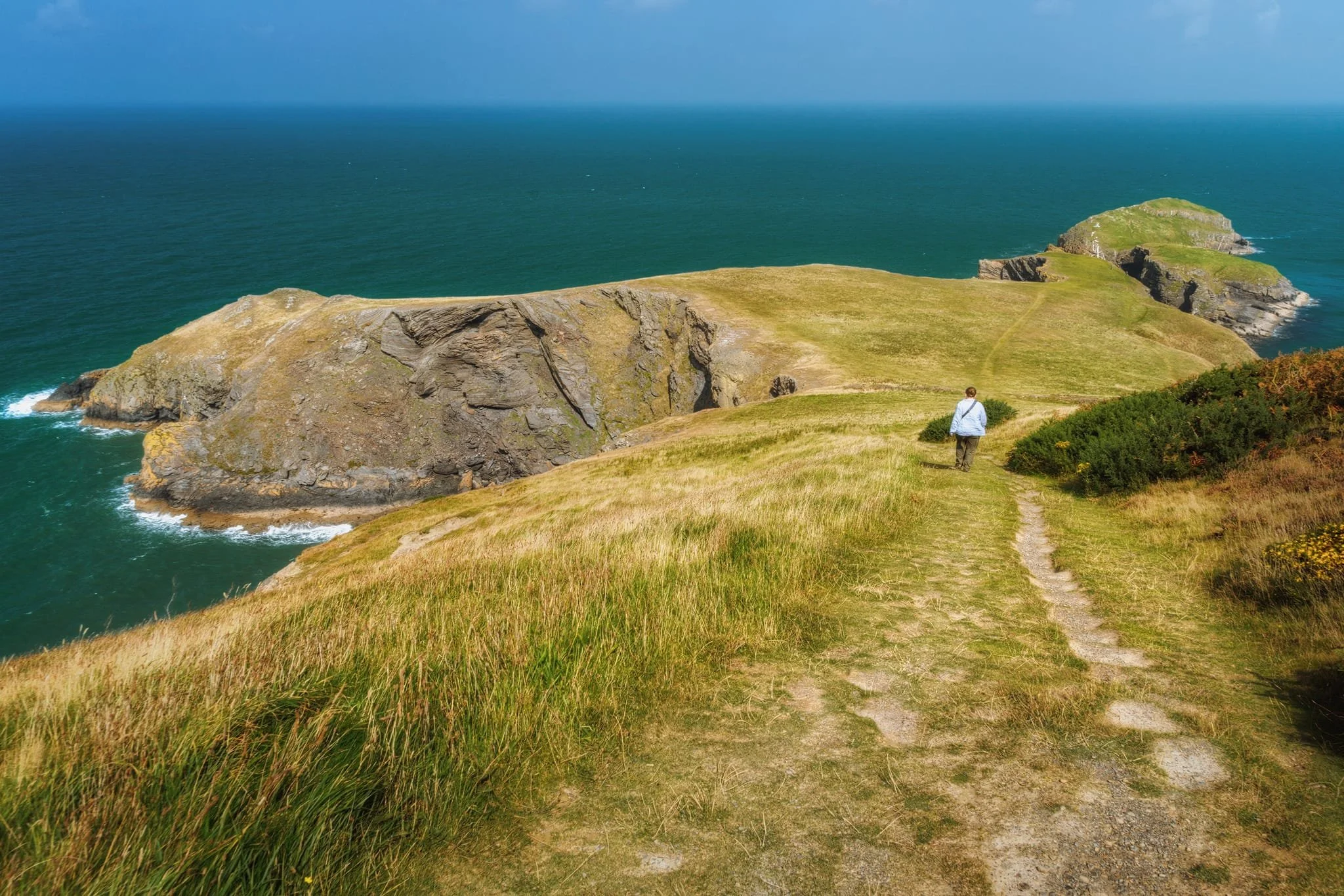
After a rather steep pull up the vertiginous trail, it finally descended down towards the Ynys Lochtyn peninsula. This was what awaited us.
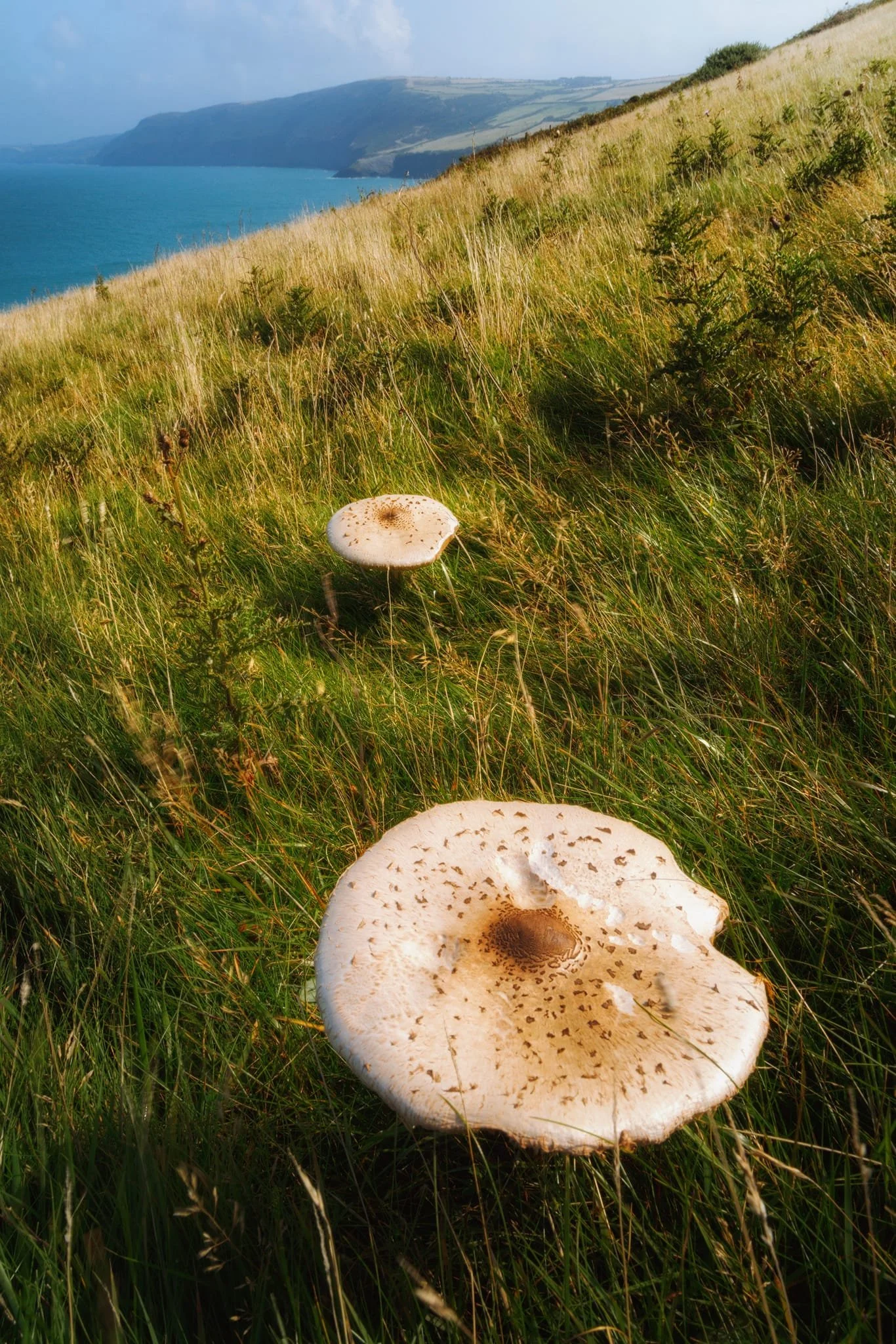
Part way down the steep trail towards the peninsula, Lisabet—ever the keen mushroom hunter—spotted these two sizeable fungi. These look like Macrolepiota procera , or “parasol mushrooms”.
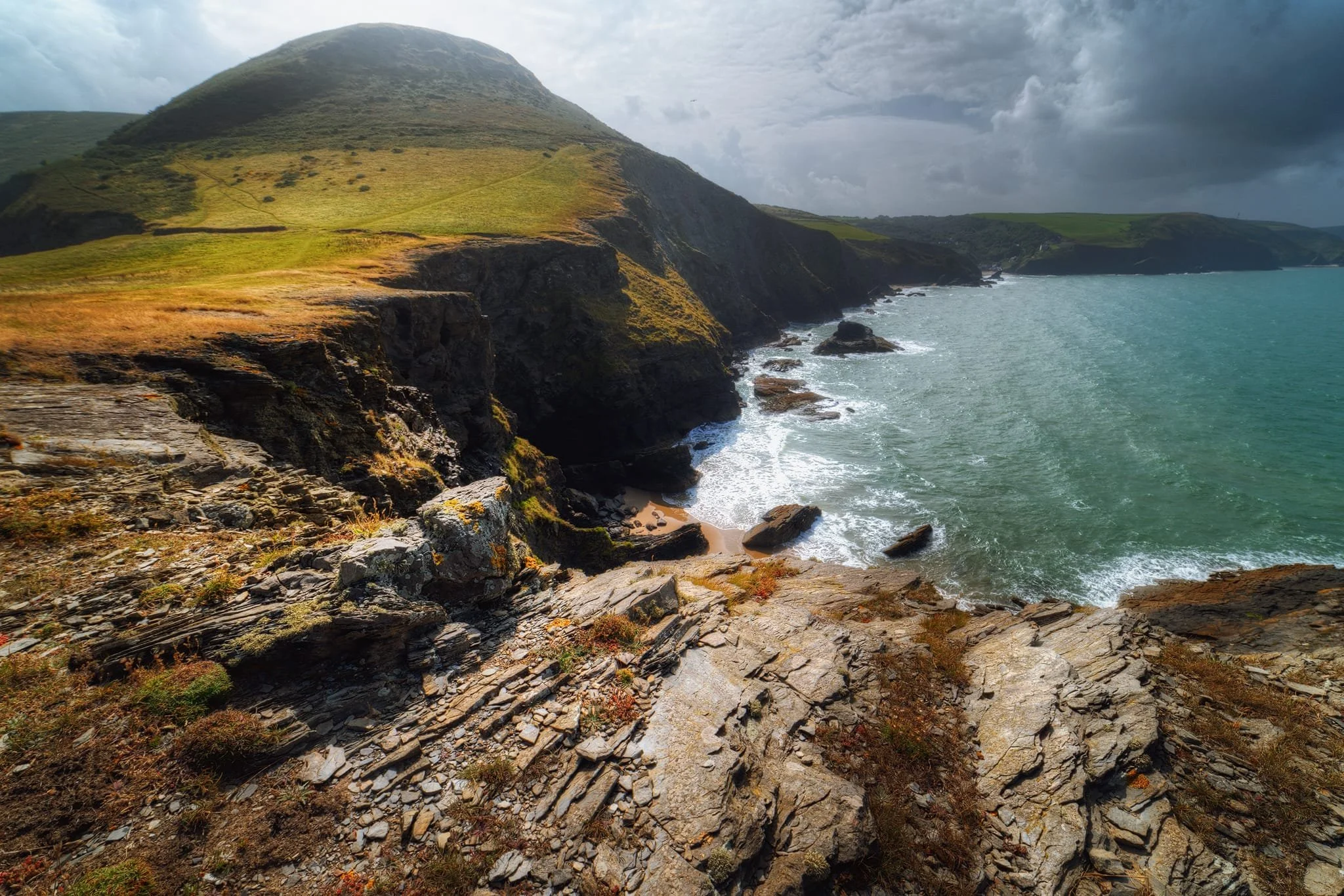
Down onto the peninsula, the cliff edge views were simply awe-inspiring. My first composition here is looking back to Pendinaslochdyn hill, where you can see that part of the hill’s shoulder has now fallen away into the sea. That is also where the trail is. Yikes.
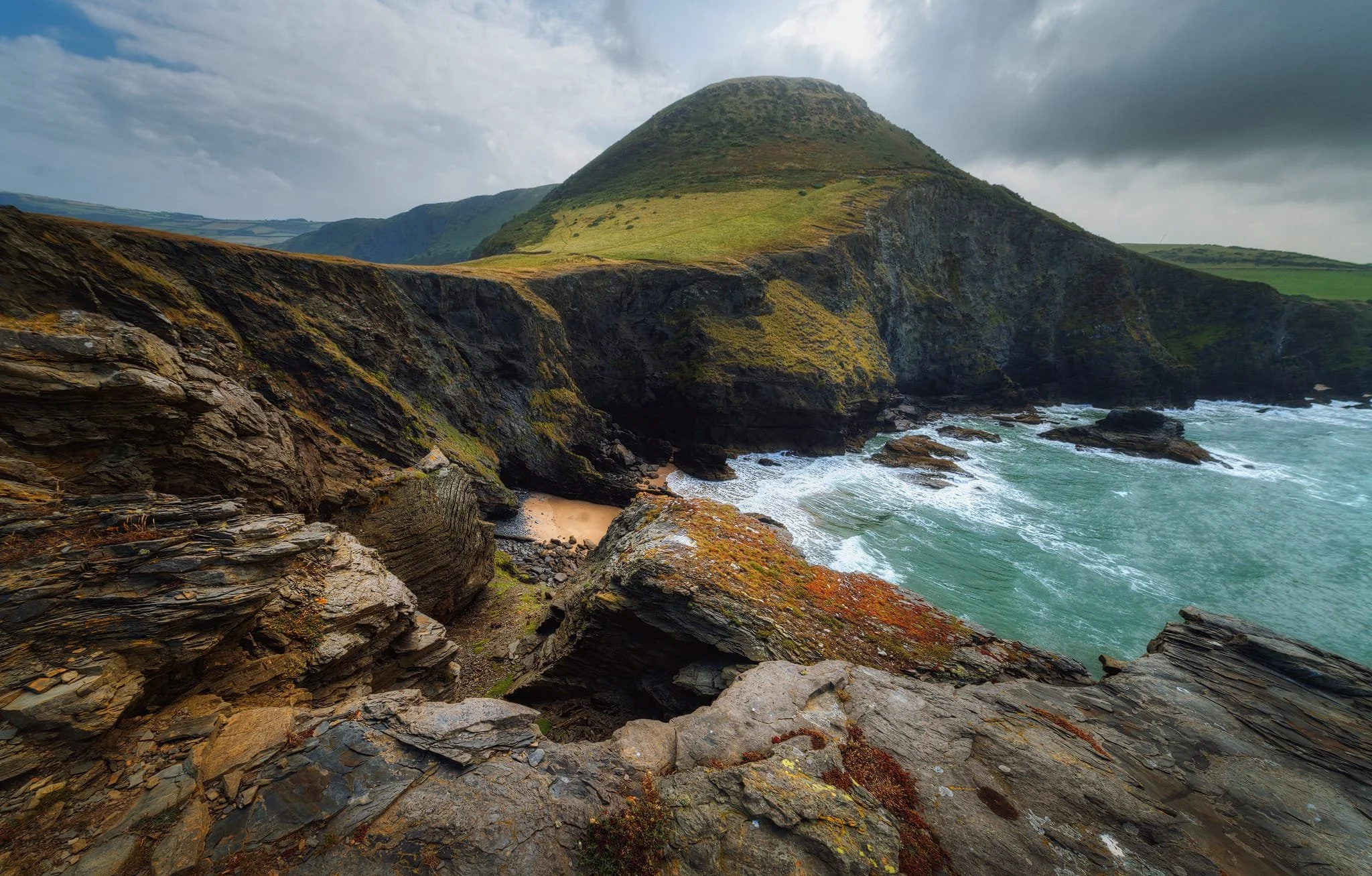
Even with my 14mm ultra-wide angle lens attached, the scenes were so vast that I had to do some stitching for wide views. This composition was made of four 14mm images, stitched together to get all the incredible cliff face geology as well as the sea, hill, and dramatic sky.
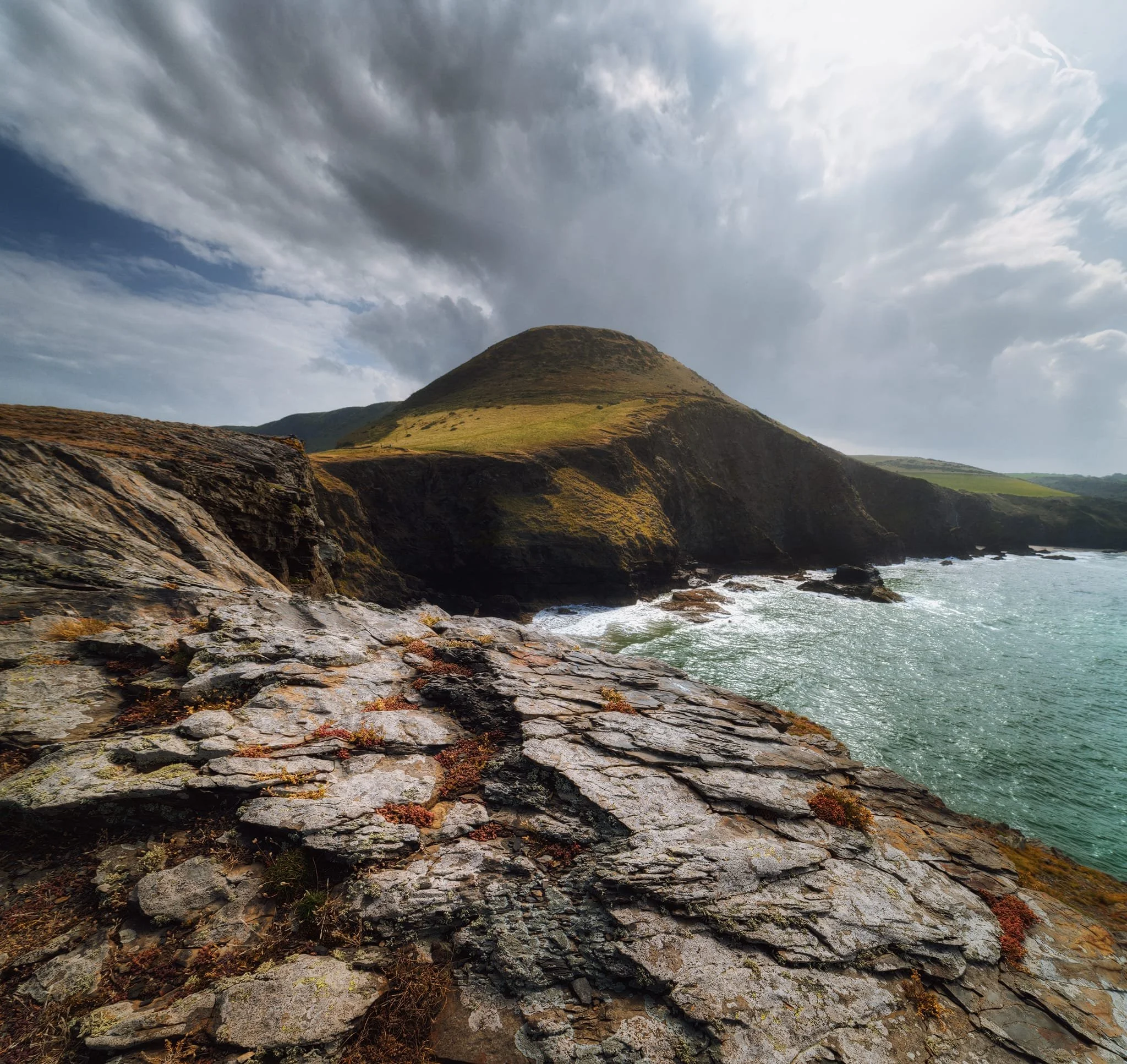
Further along one of the cliff edges of Ynys Lochtyn , I shot two 14mm landscape exposures, stacked on top of each other, so I could later stitch them top-to-bottom for this ultra-expansive composition.
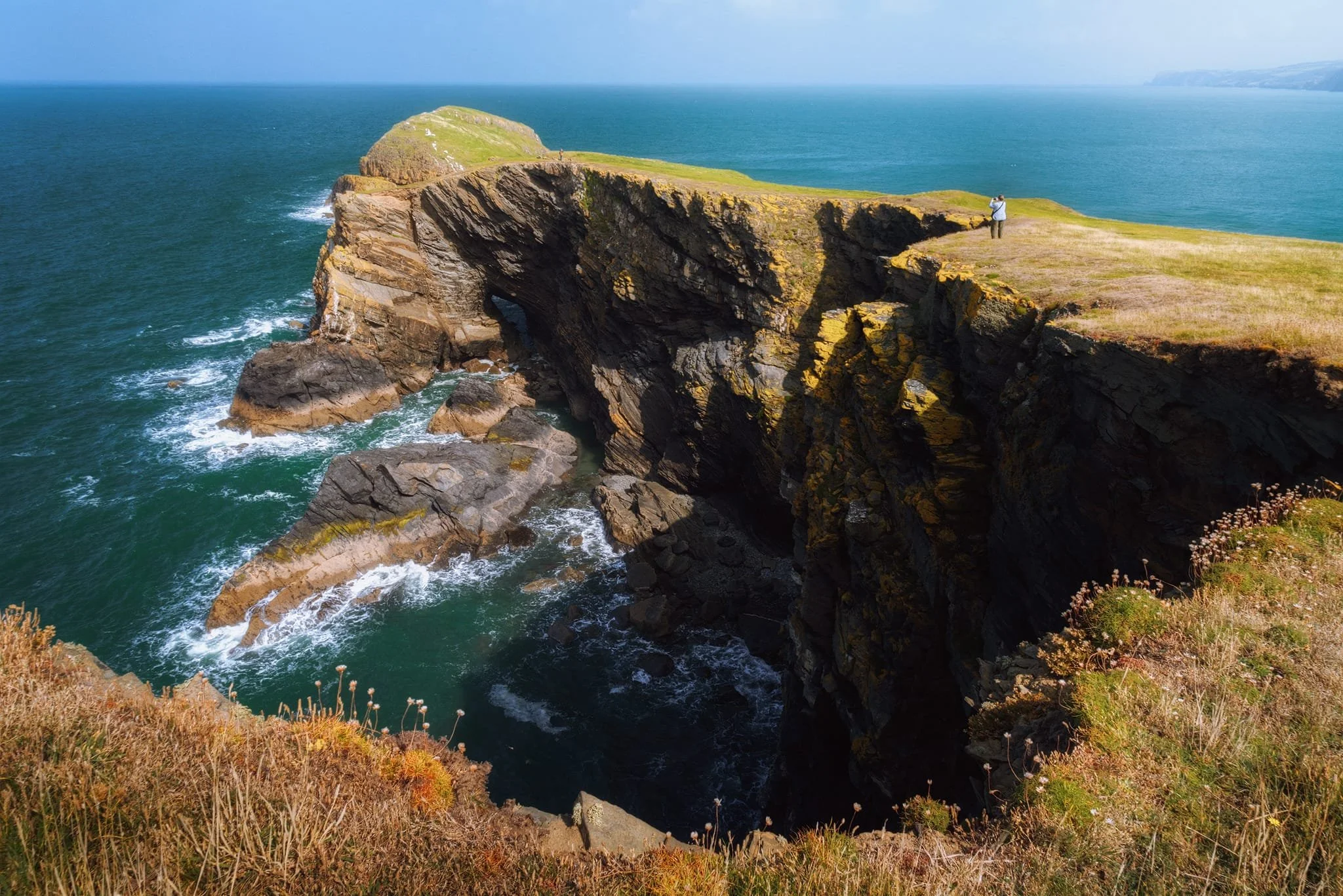
The peninsula was full of otherworldly and unusual geology. Sea caves, folds, synclines and anticlines, sea stacks, the works. My lovely Lisabet in the distance provides scale for the sheer drop of these cliffs into the Irish Sea.
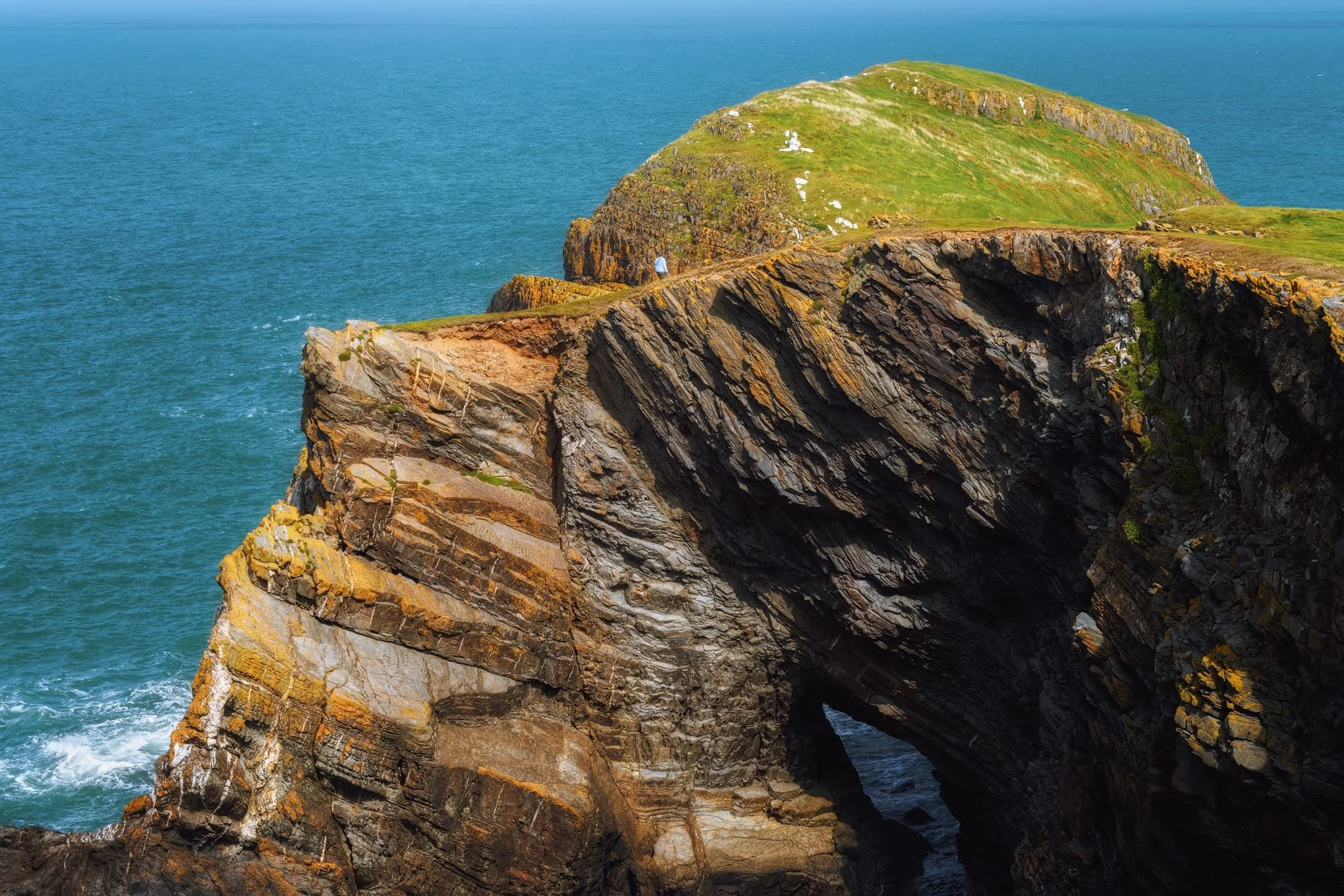
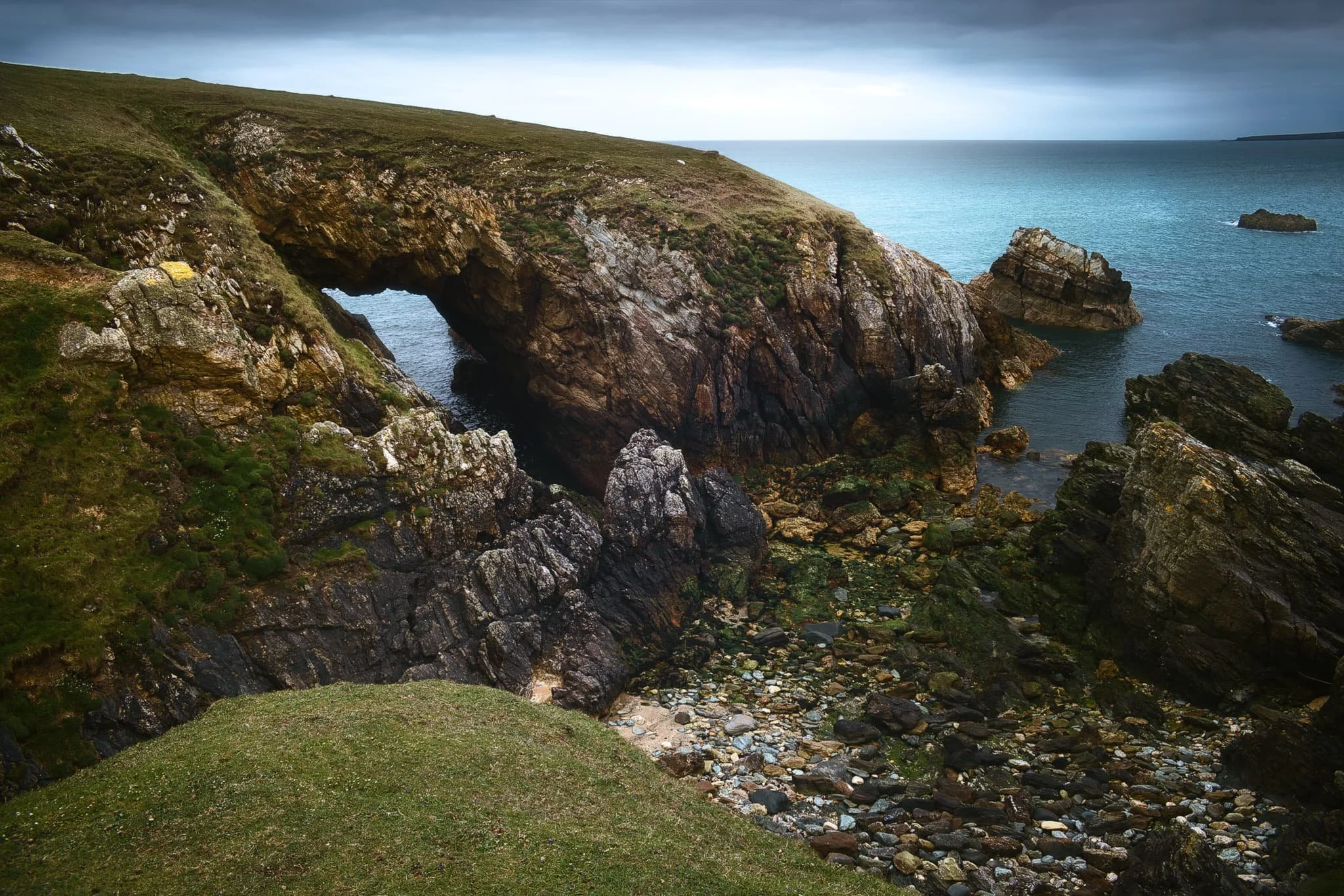
Zooming in long with my 24-240mm allows me to focus on the natural arch and geological unconformities.
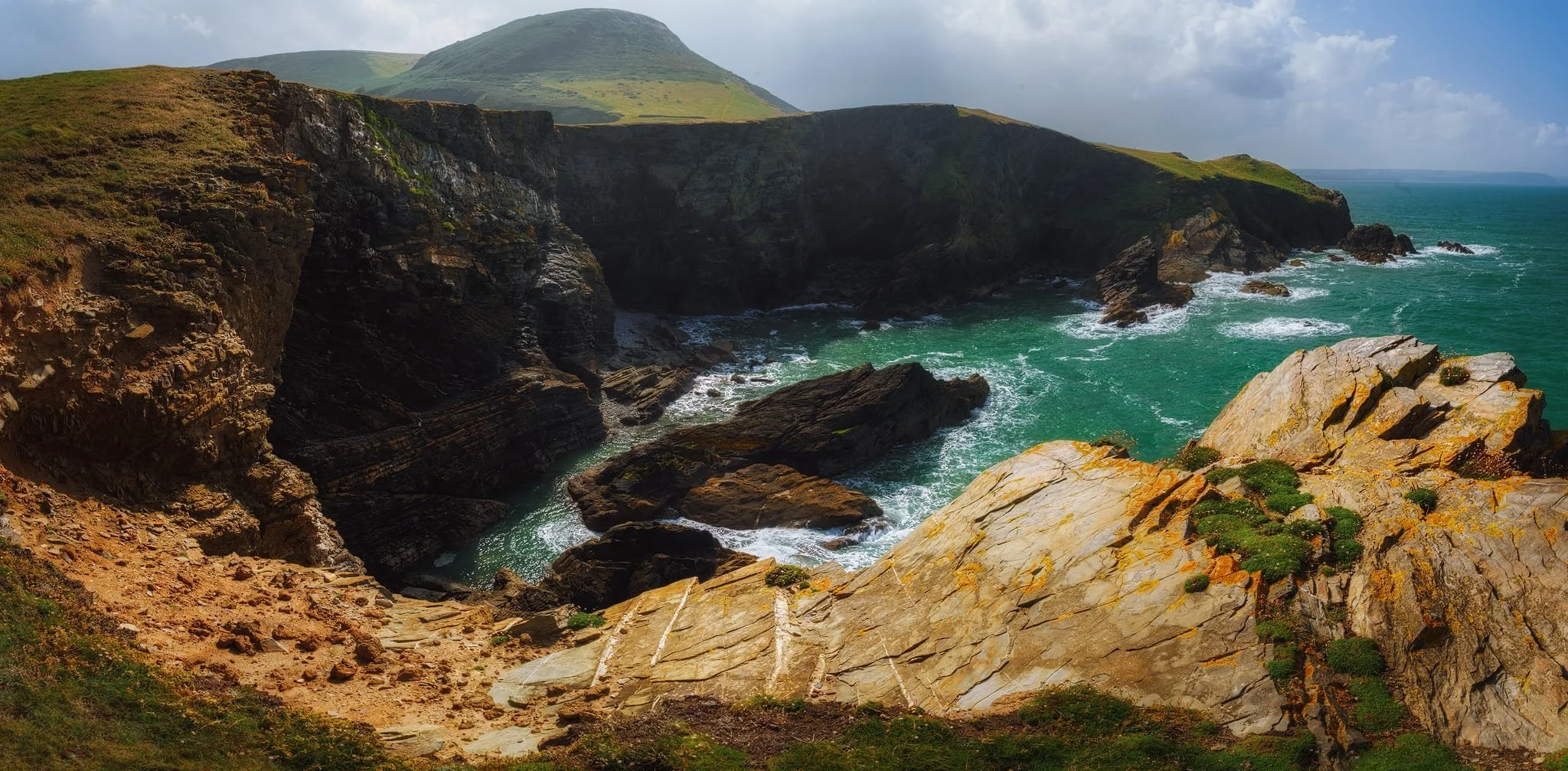
Looking back at Pendinaslochdyn and the cliffs from the northern tip of the peninsula. This is five vertical 14mm exposures, shot left to right, later stitched together into this massive panorama.
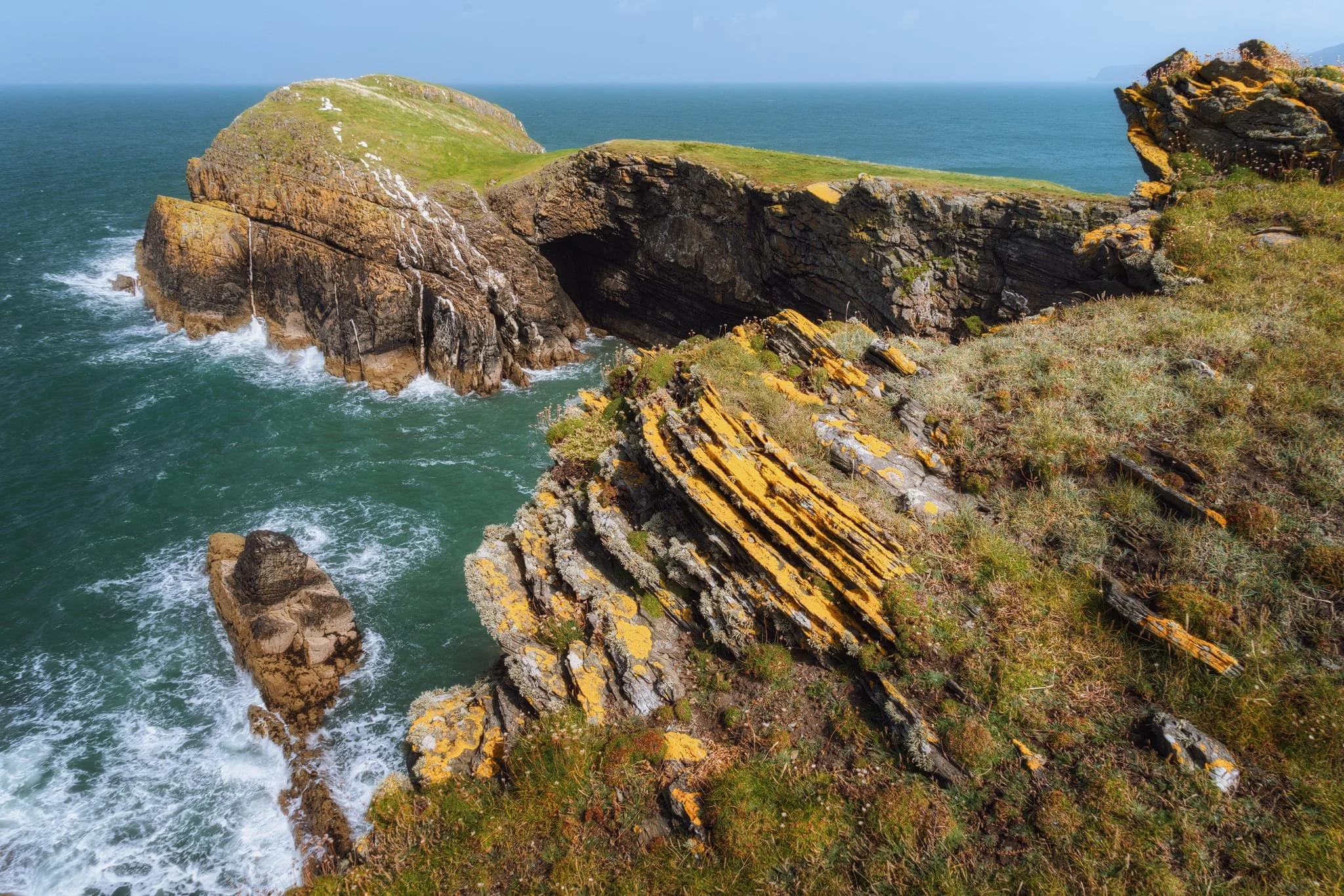
Heading clockwise from the northernmost point of the Ynys Lochtyn peninsula, a full view of the tidal island that gives its name to the peninsula comes into view. Access to this tidal island is possible only at the lowest of tides. I’m still not sure that white streak in the headland is guano or some sort of geological intrusion of a different type of rock.
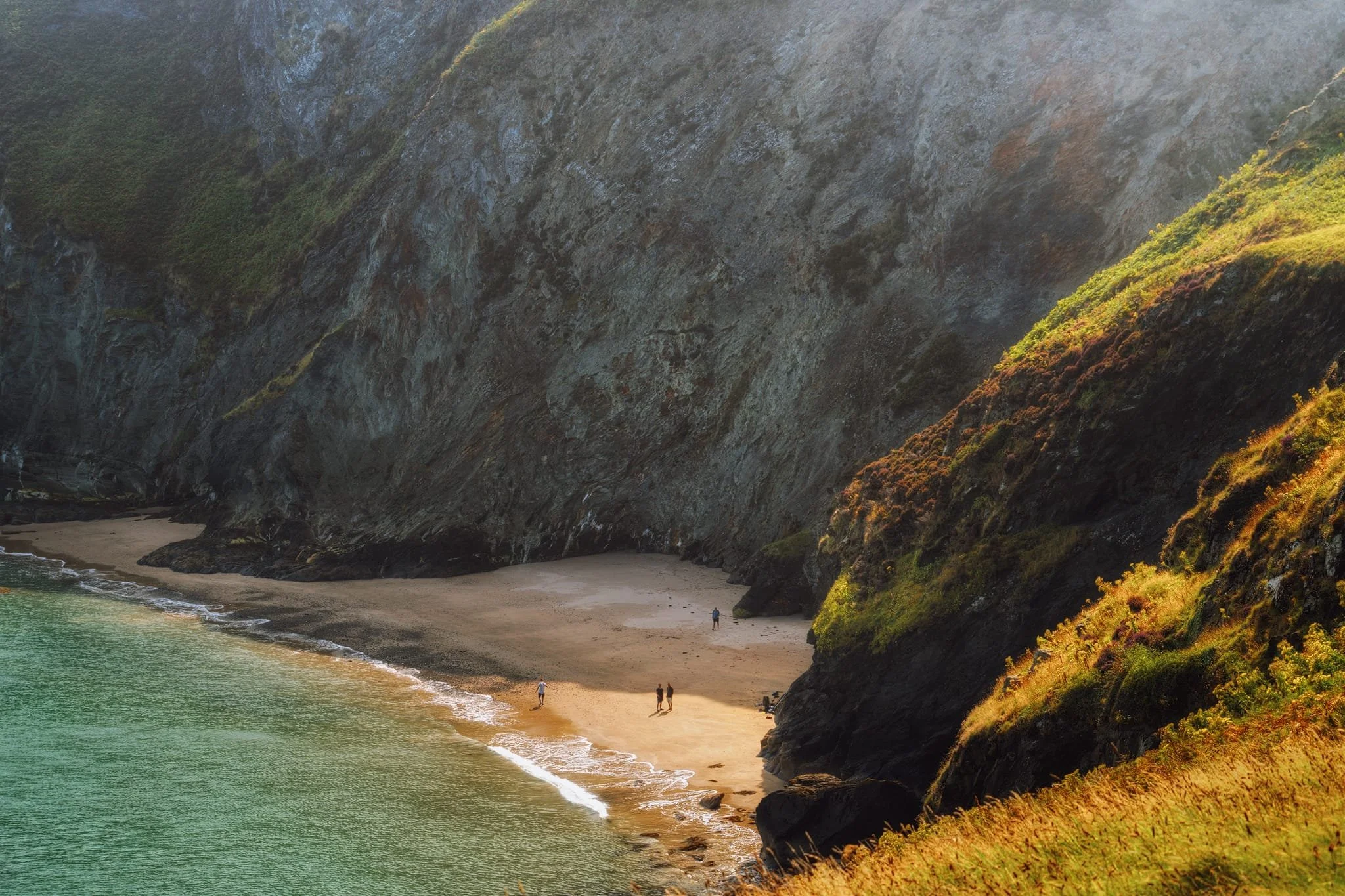
From the eastern cliffs of the peninsula, I zoomed in and down to the beach of Traeth-yr-ynys directly below the sheer cliffs of Pendinaslochdyn . Folk were milling about on the beach; presumably they accessed it via kayak or boat of some nature.
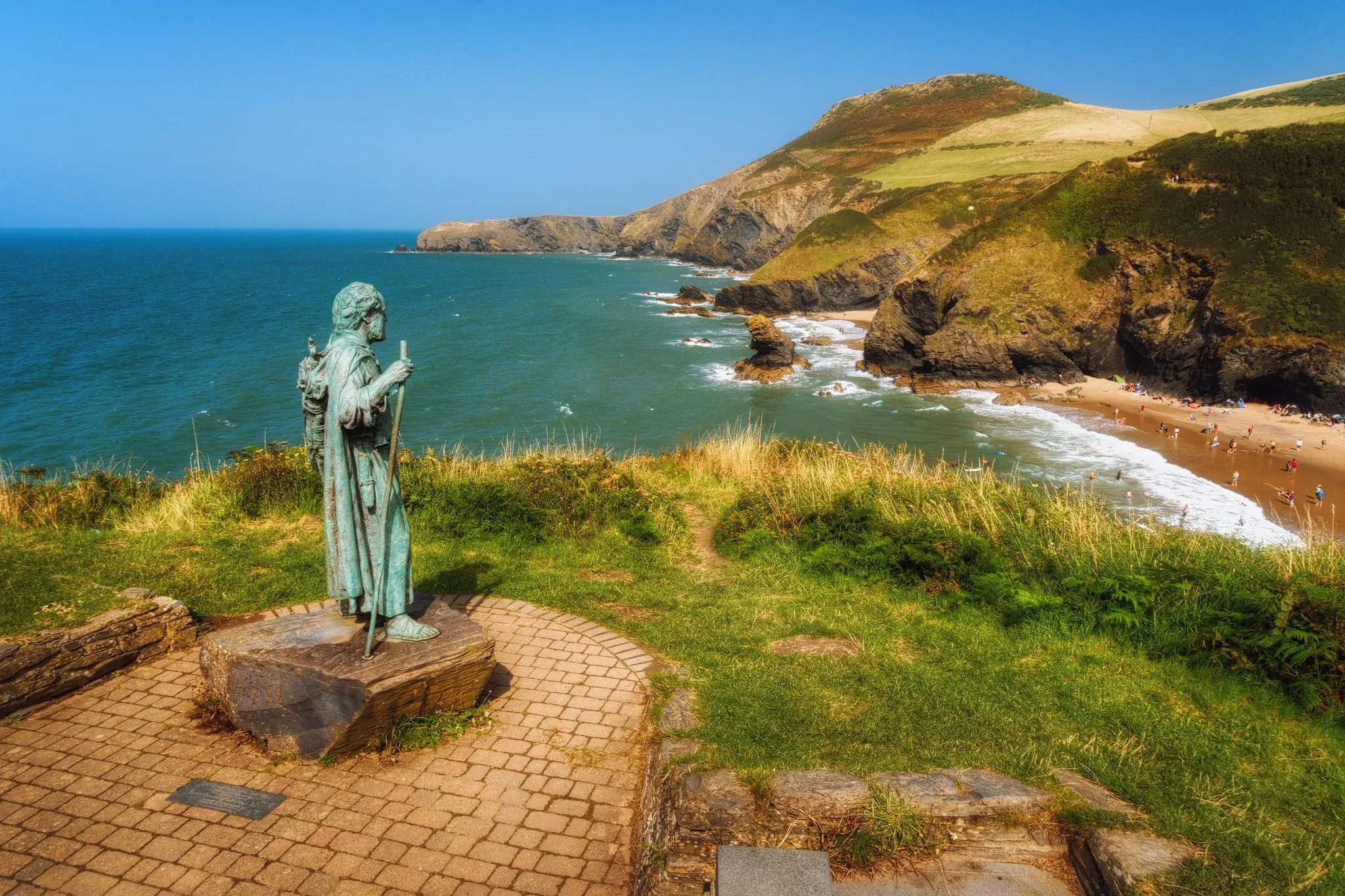
Returning back to Llangrannog, the southern cliffs are home to this statue of Saint Carannog, who gives his name to this place. He is a 6th-century abbot, confessor, and saint in Wales and the West Country. He is credited with founding churches in Wales and Cornwall. There are conflicting stories about his life, but some say he fled to Wales to avoid being king.