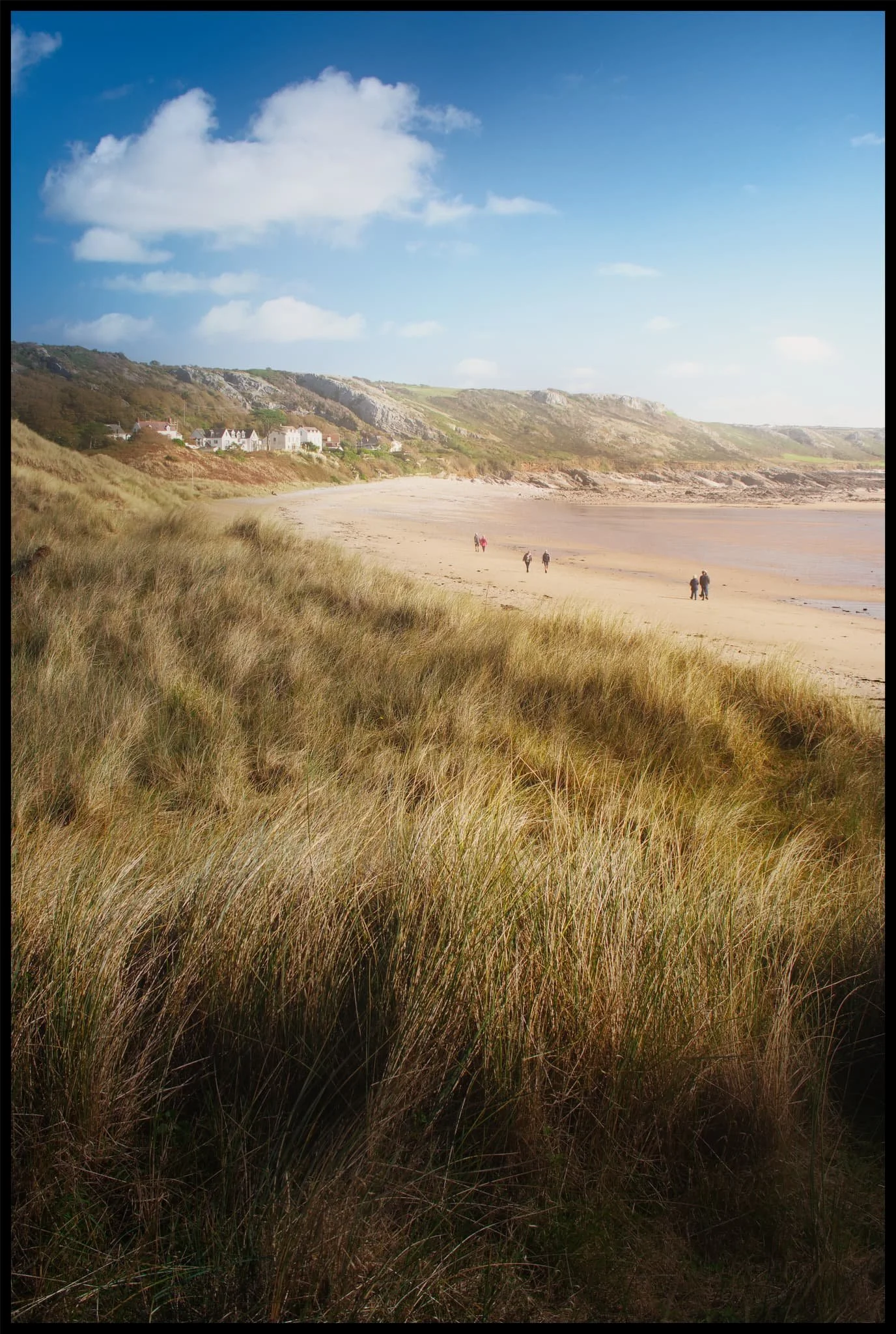
Did you know that Wales is home to the most castles per square mile of any country in Europe?
Certainly during our stay in South Wales we visited our fair share of them, mostly in ruins, such as Dinefwr and Castell Carreg Cennen, and Llandovery castle.
Heading south towards Carmarthen Bay, where the Avon Twyi pours out into the Bristol Channel, one can find the sleepy little village of Llansteffan with yet another magnificent fort perched on a cliff top overlooking the bay. The village’s name means “Llan of St. Stephen”. You’ll find a lot of place names in Wales start with the prefix Llan; it refers to sanctified land occupied by Christian monks or communities, almost always named in honour of a Saint.
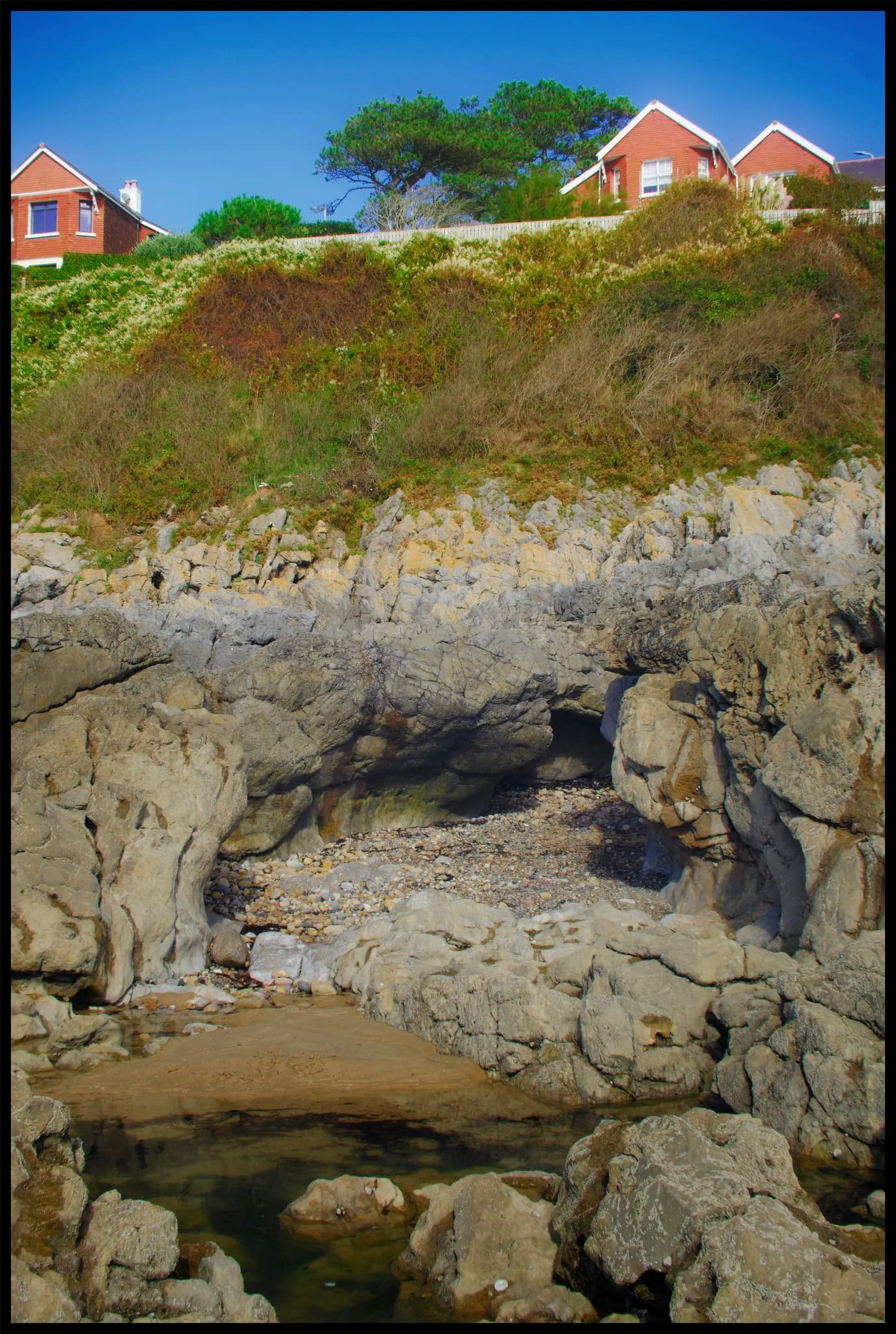
After checking out the ruins of Llansteffan Castle, we ambled along the beach below the castle, where I gawped and photographed the local geology.
All photos shot on my Fujifilm X-T2 using my Vivitar “Series 1” 28–105mm f2.8–3.8 zoom and Laowa 9mm f2.8 prime lenses. RAWs converted in Capture One for iPad, then developed and finalised in Affinity Photo for iPad.
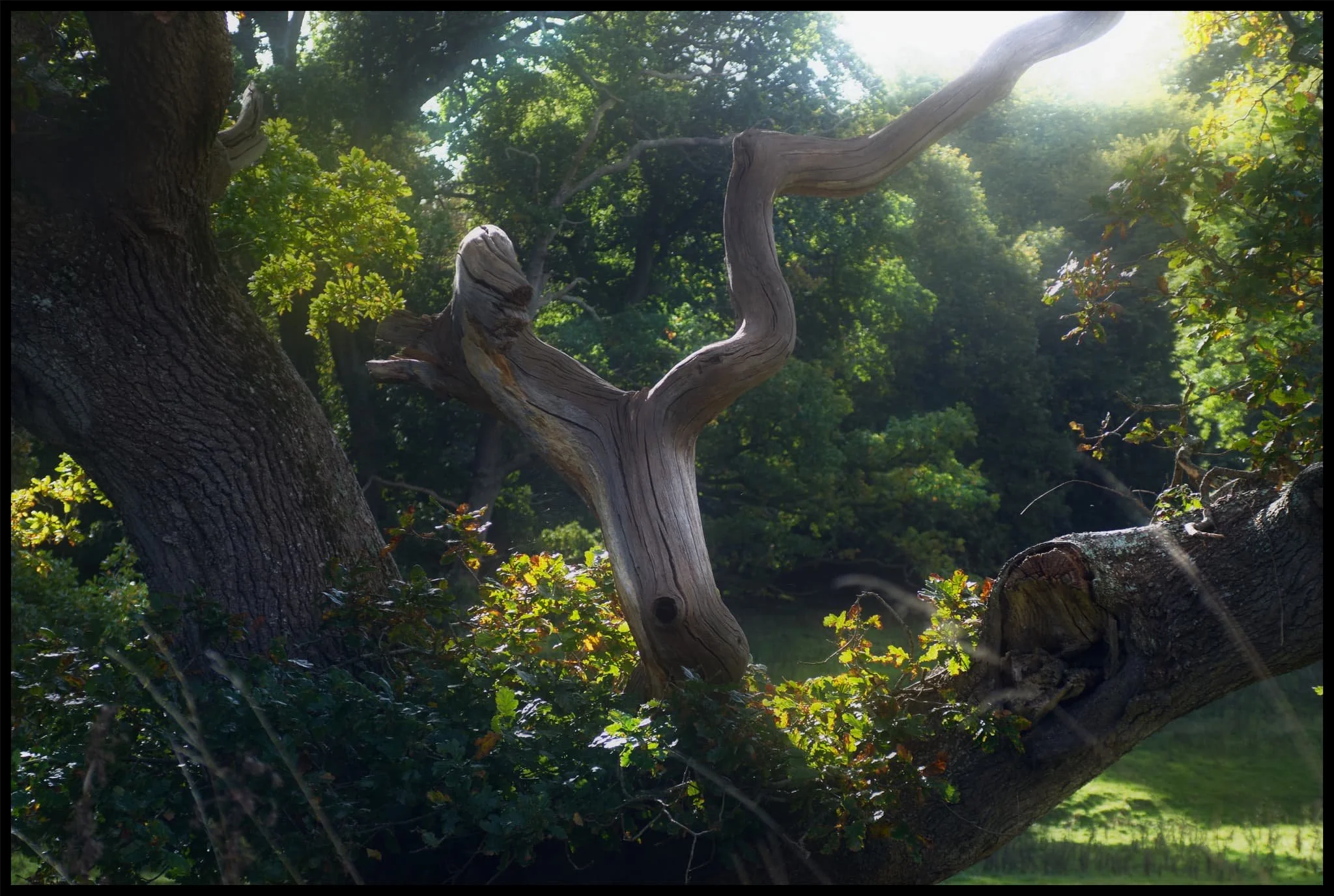
A rather shapely tree that caught my eye on the way up to Llansteffan Castle.
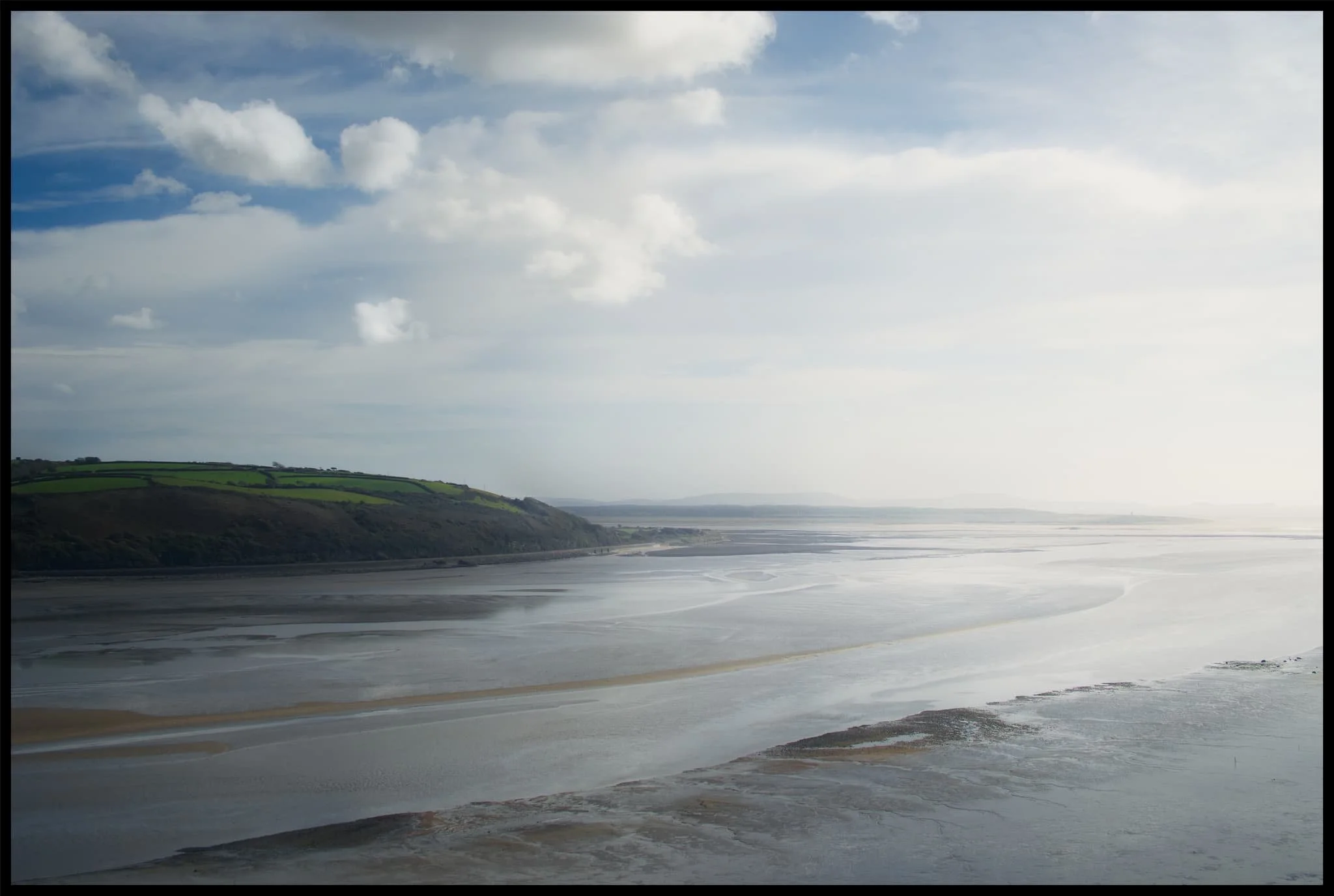
From outside the castle ruins the views overlooking Carmarthen Bay were rather splendid.
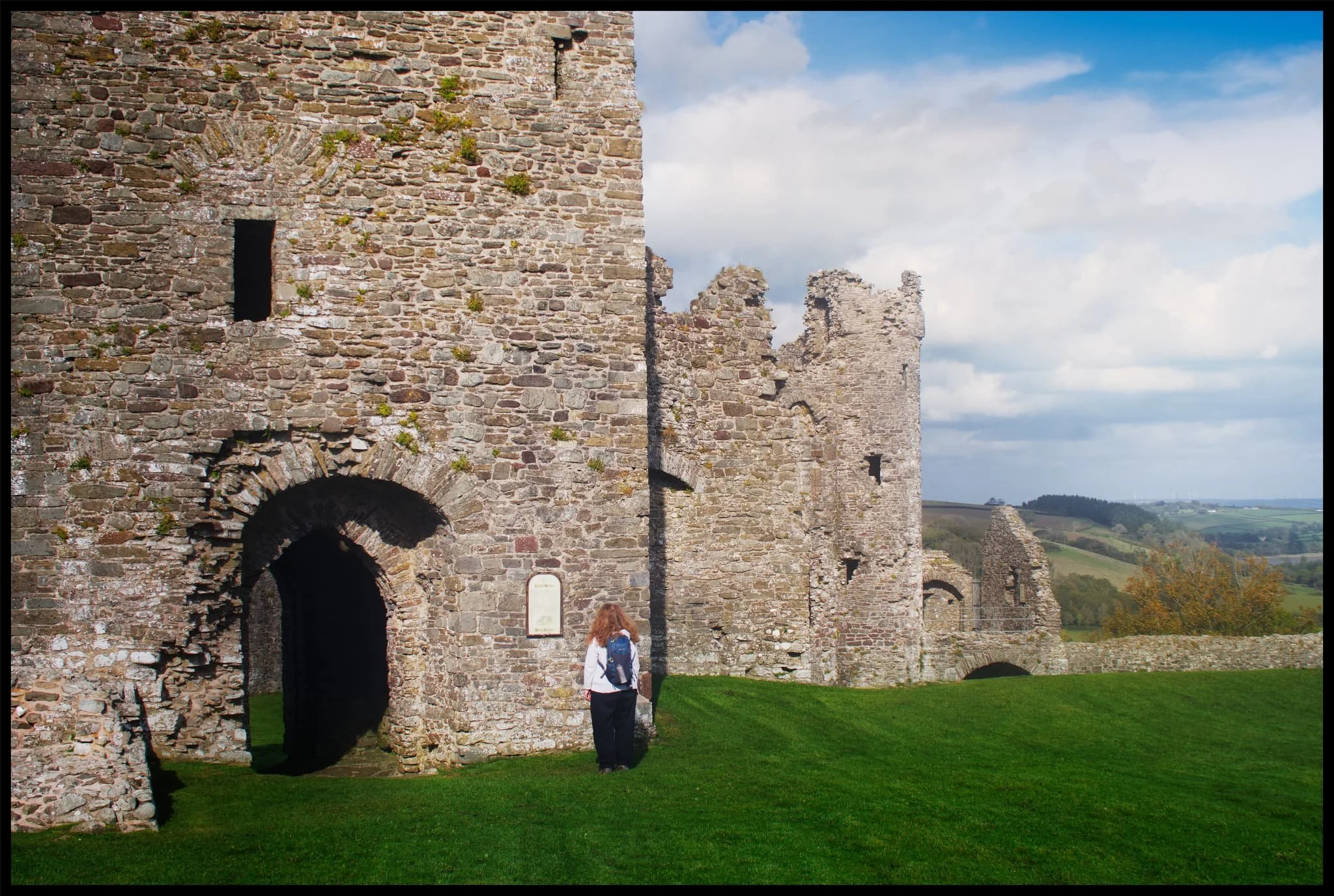
The ruins of Llansteffan Castle. It sits on the site of a much older Iron Age fort, showing that Llansteffan has been inhabited for millennia.
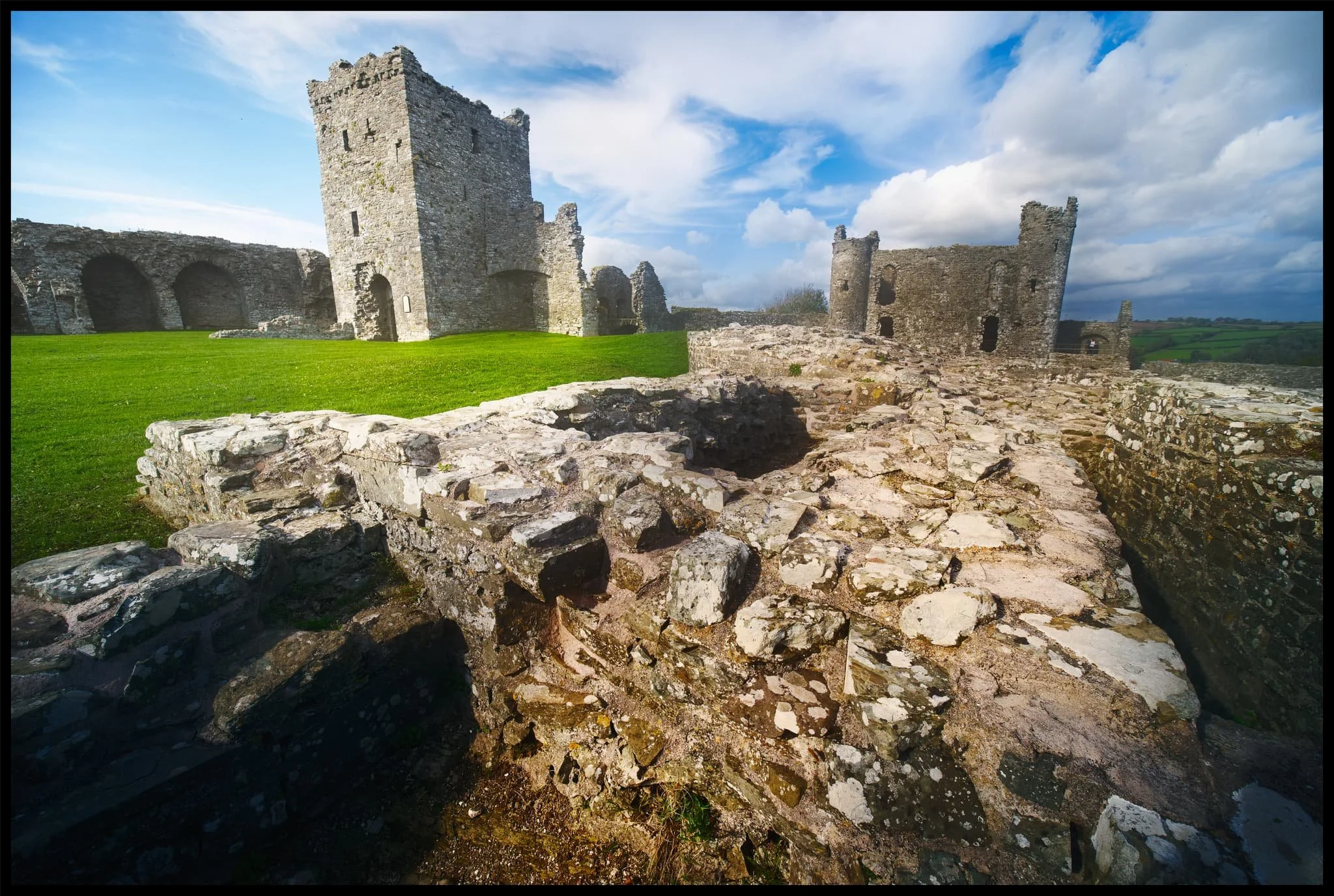
The Normans built a castle here in the 12th century. Like a lot of castles here in South Wales it passed hands often between the Welsh and the English. By the 14th century it was described as being in a poor state.
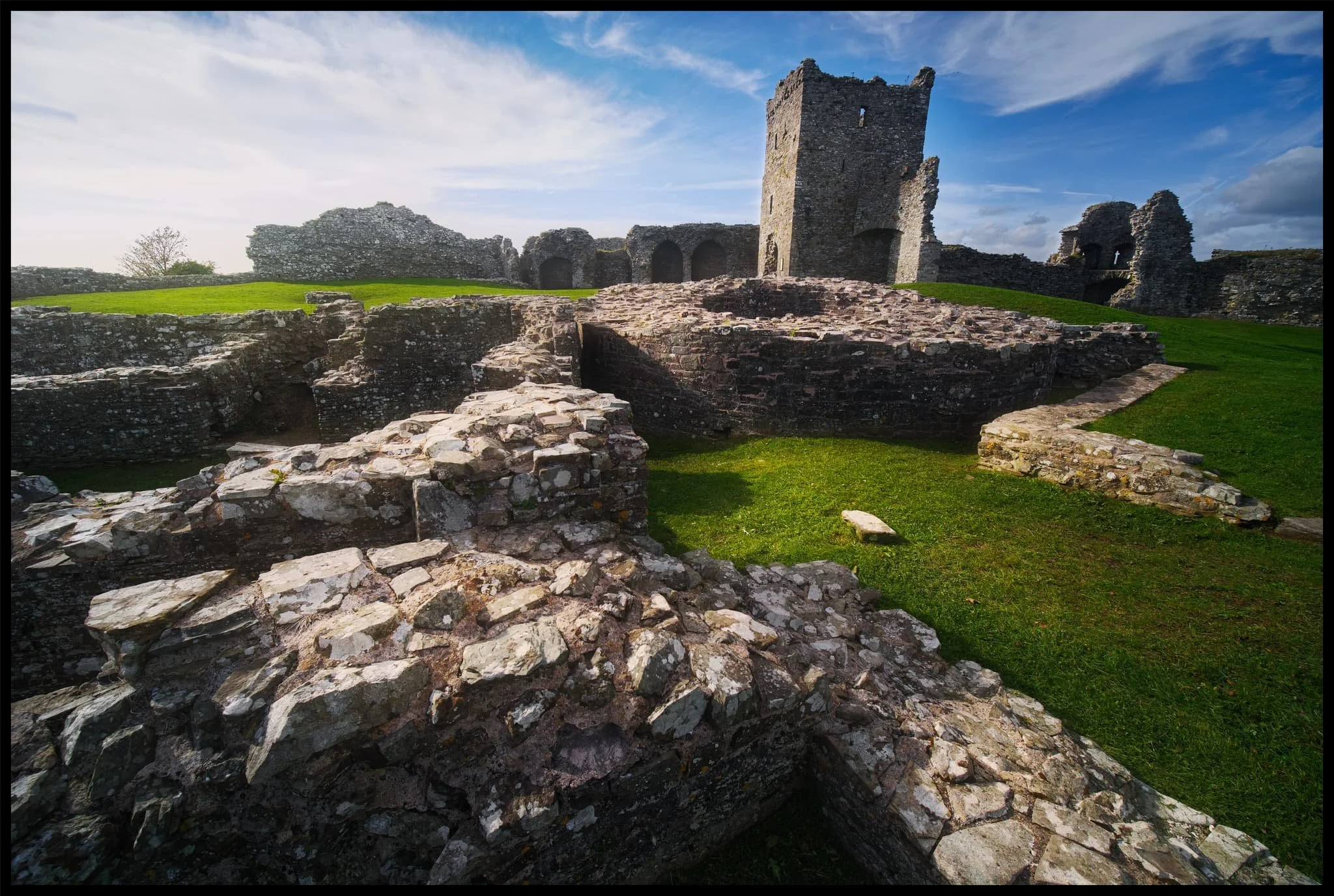
One thing that struck in particular about these ruins were all the wasps. They were everywhere, tucked into various nooks and crannies of the stonework.
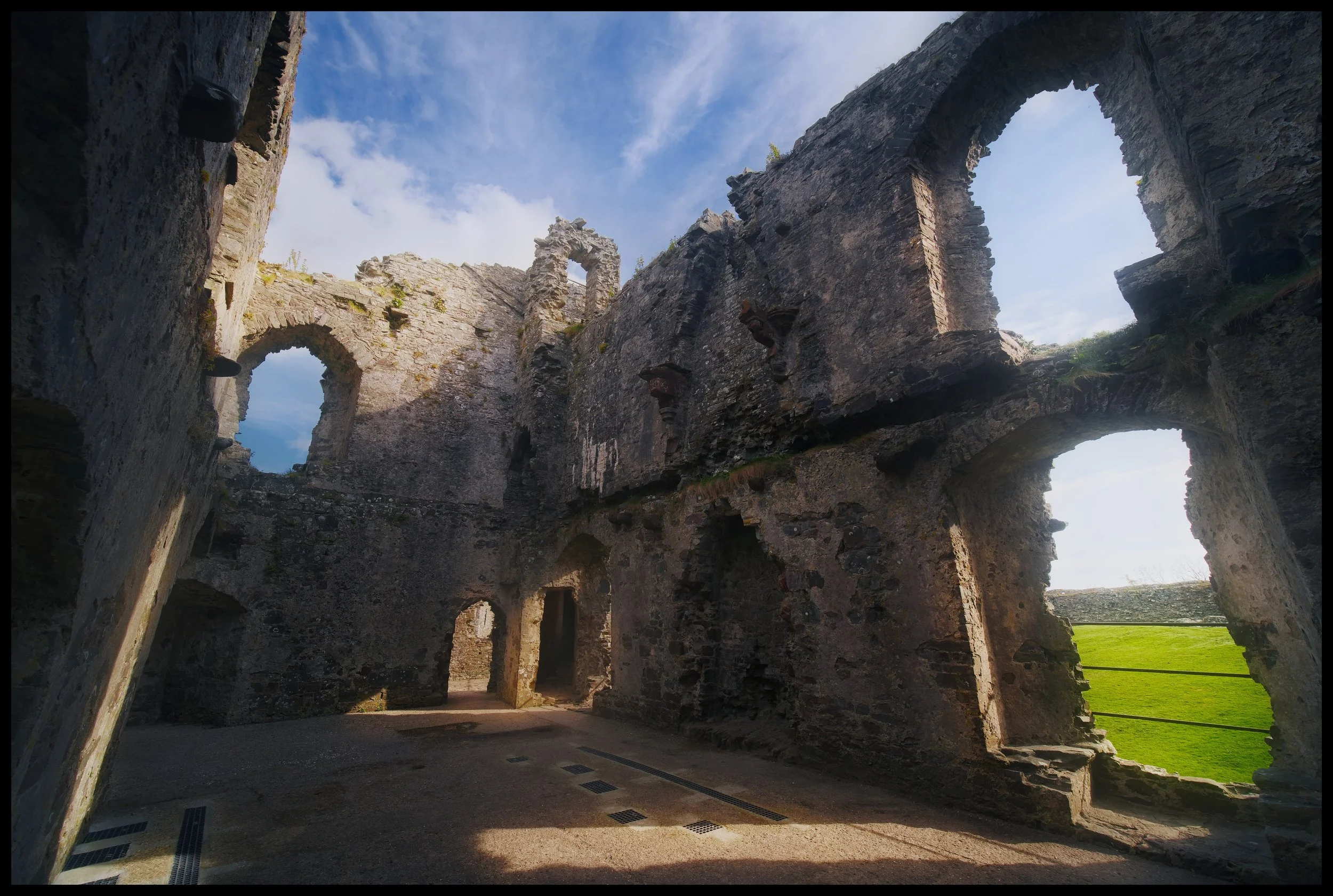
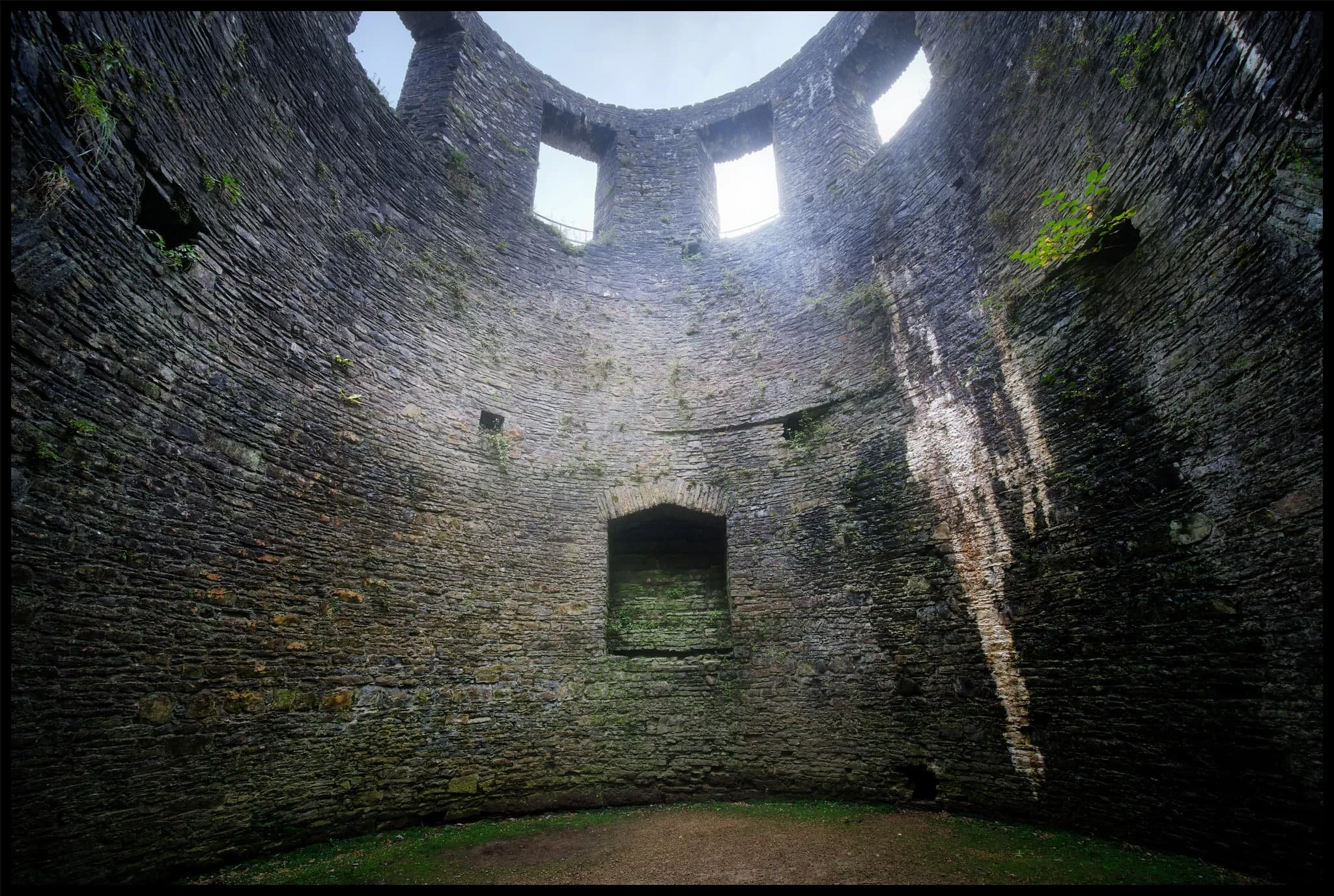
We braved the disconcerting hum of wasps all around us to explore this building for a composition whilst the light was particularly sympathetic.
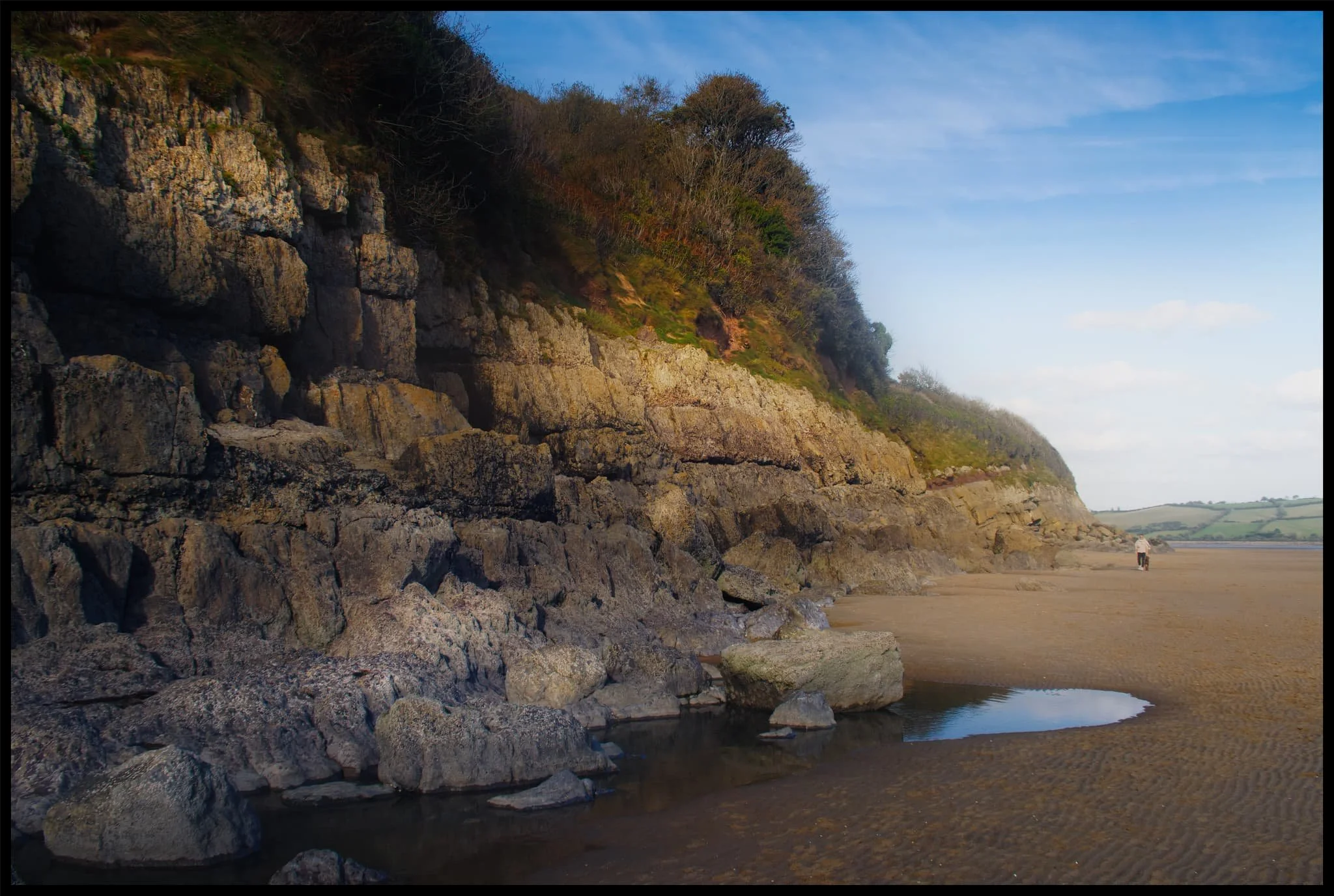
Down on the beach below the castle, things were thankfully a lot more peaceful.
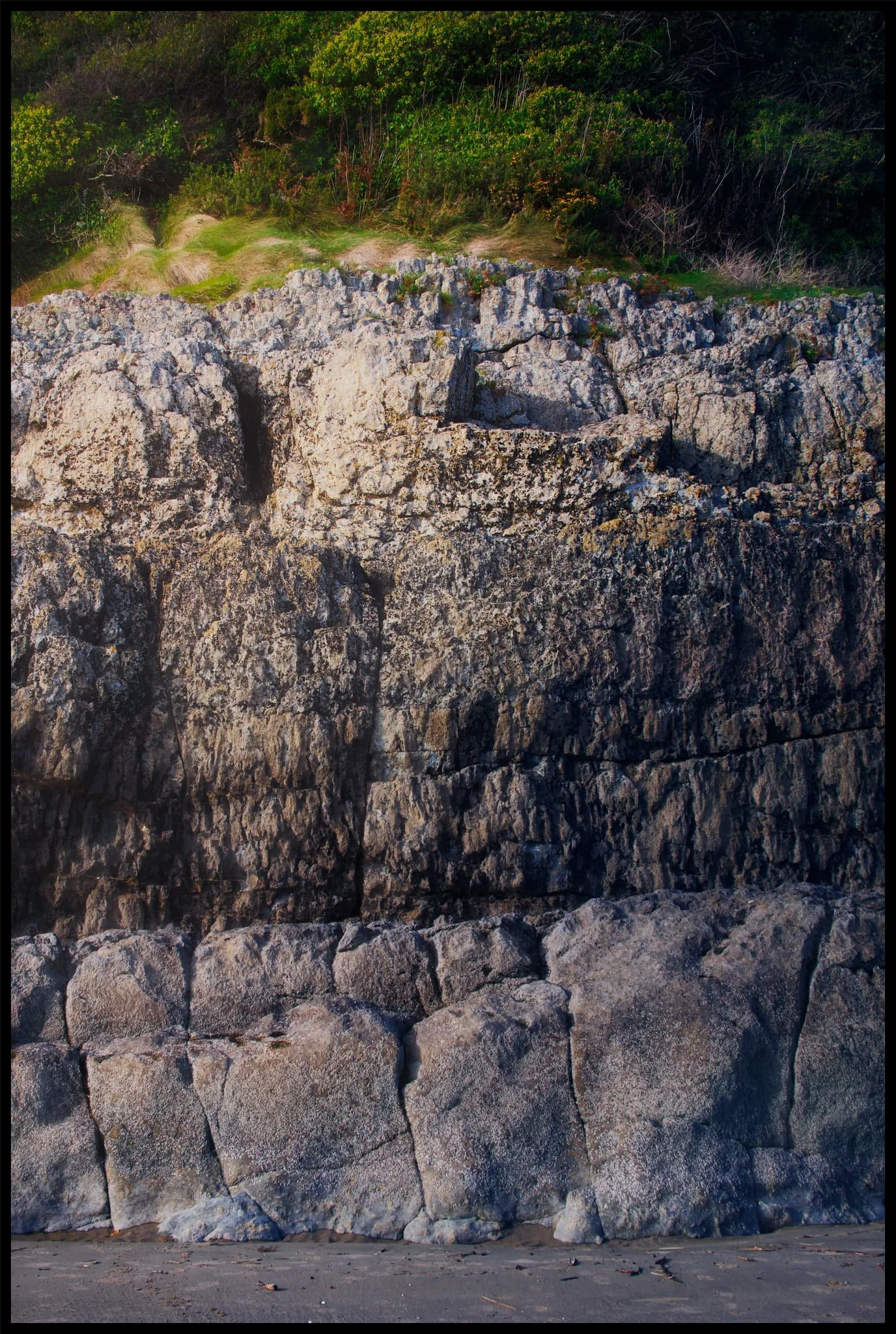
Historical glaciation and millennia of coastal erosion from the sea have exposed millions of years of geology history. Here Llansteffan would’ve been at various times a desert, at the bottom of a sea, and everything in between, with different rocks forming and deposited at various stages. Fascinating.
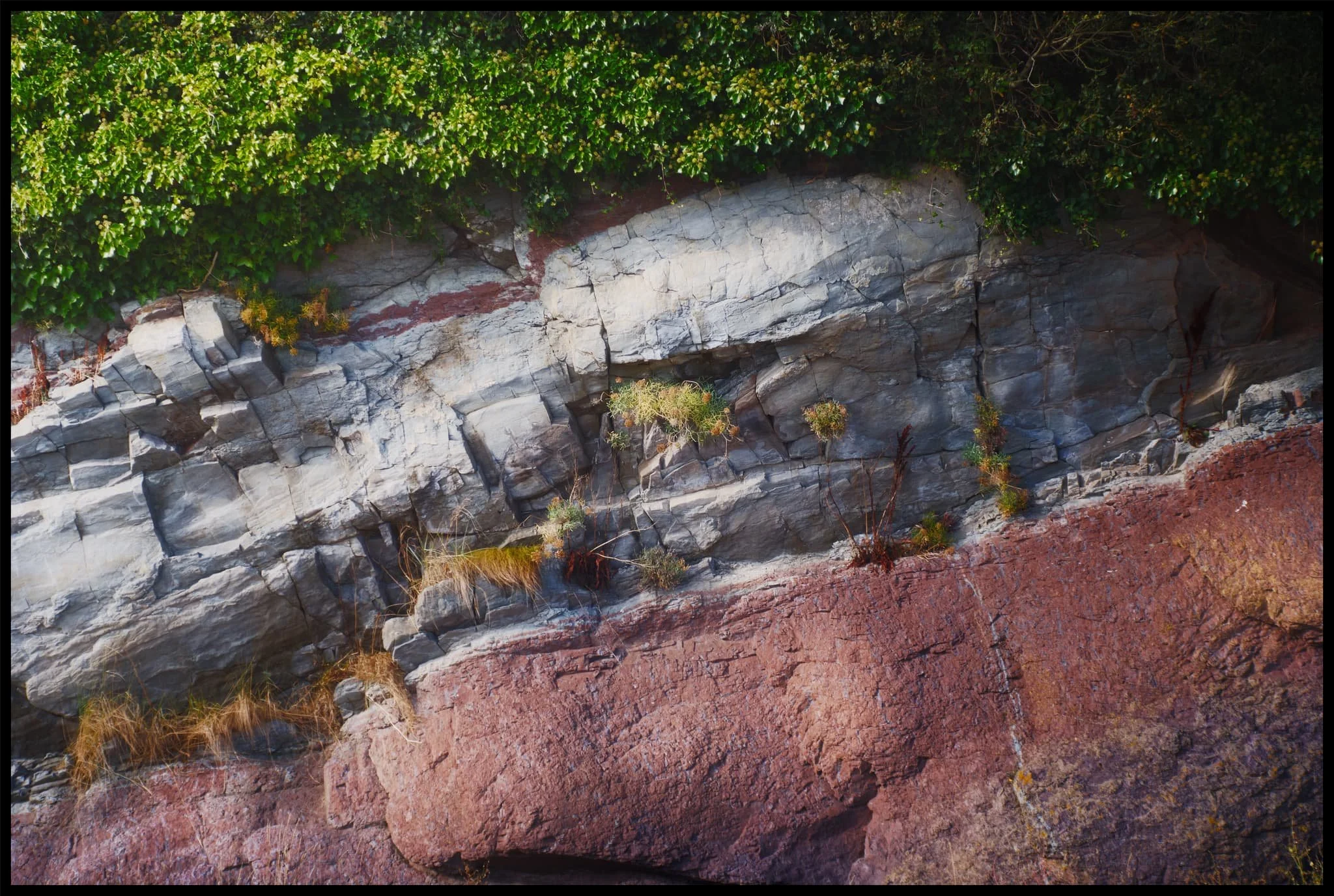
To quote Natural Resources Wales: “The bedrock geology of this area […] is dominated by Devonian Old Red Sandstone characterised by mudstones, siltstones, sandstones and conglomerates which were deposited in fluvial environments, such as meandering channels and floodplains. The rocks around Llansteffan include important exposures of calcrete (which is a fossil soil indicative of an arid or semi-arid environment). Overlying the Old red Sandstone is a classic sequence of Carboniferous rocks including shallow-marine carbonates (Carboniferous Limestone), shallow-marine and fluvio-deltaic deposits (Millstone Grit), and lacustrine, delta plain sediments and coal (Coal Measures).”
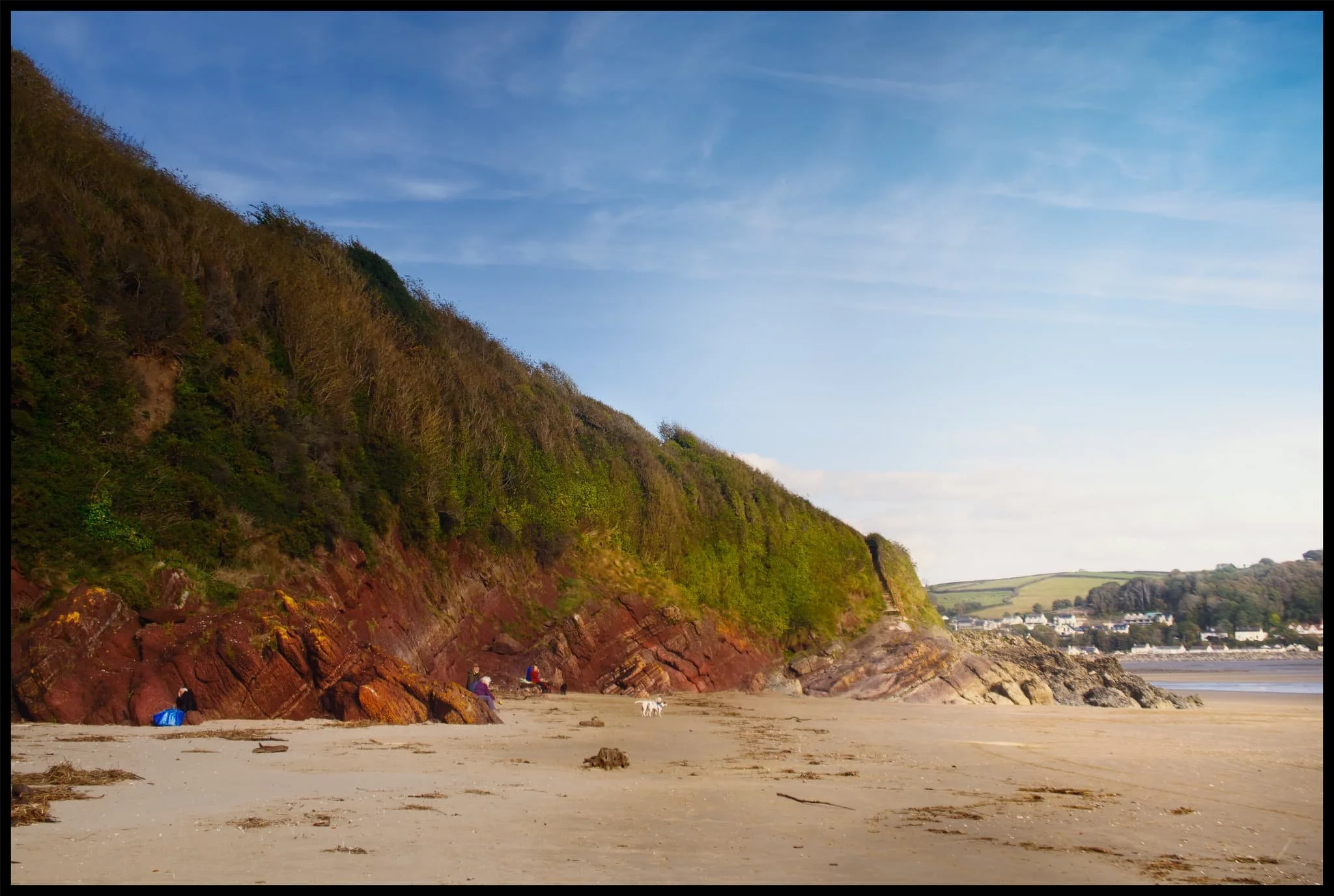
The exposure of Old Red Sandstone is clearer towards Scott’s Bay, where plenty of people were chilling with their pets, nestled into the crags.
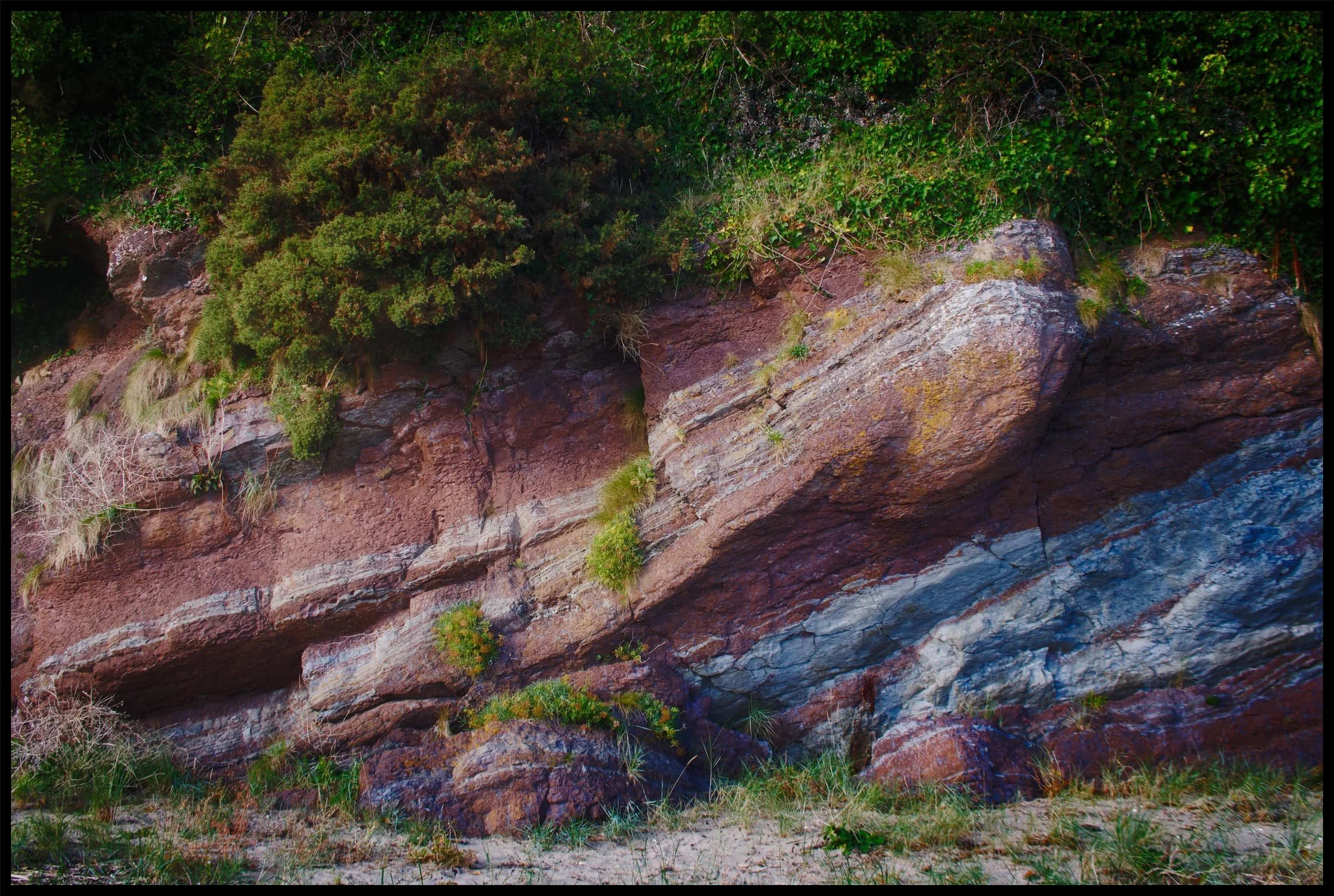
I was beguiled by the shapes, forms and colours of the cliff rocks. Imagining the millions of years of this land, and how different the local landscape would’ve looked, makes my head spin!
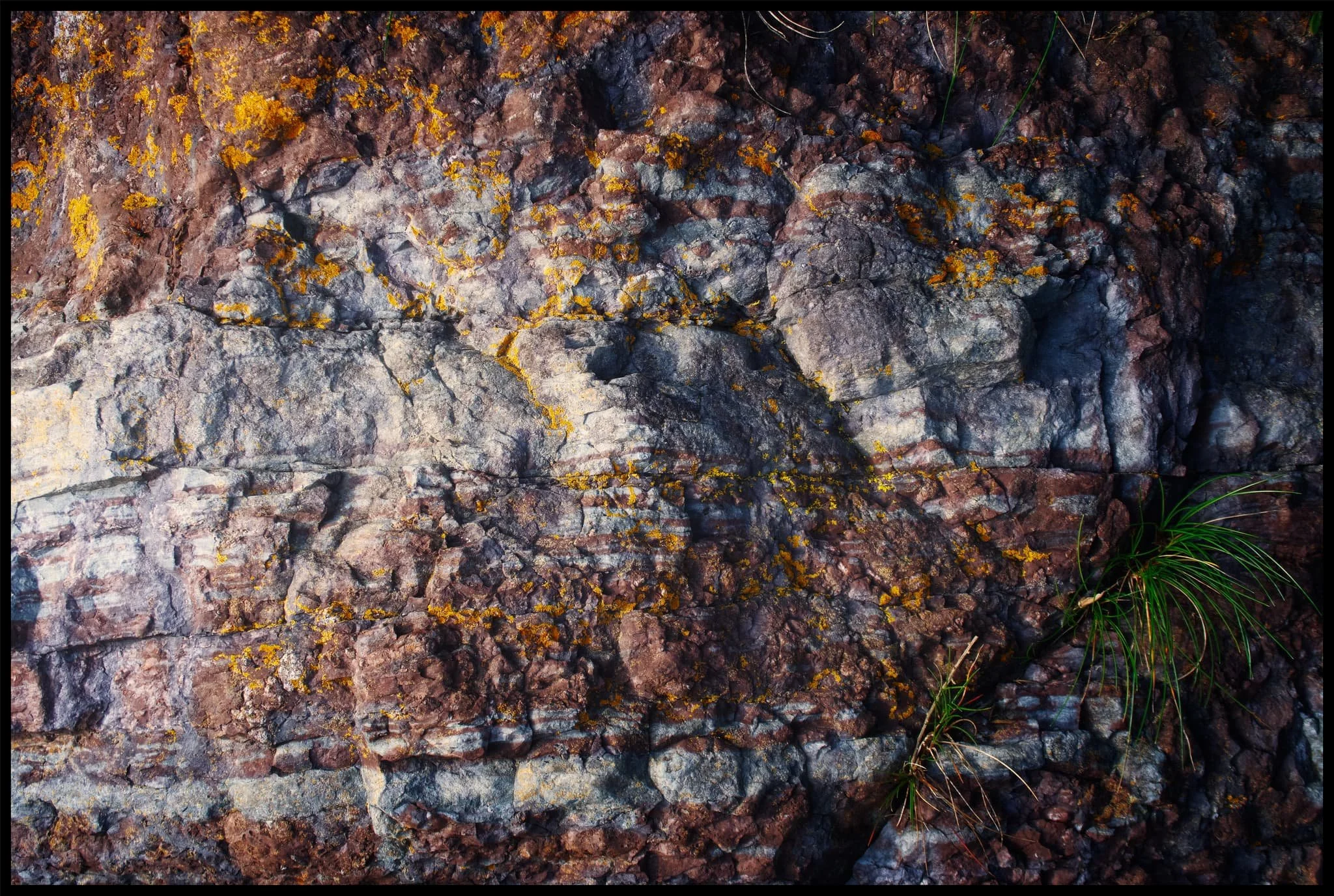
A tighter composition reveals the joins and seems of various types of rocks as beautiful late afternoon light highlights the textures.
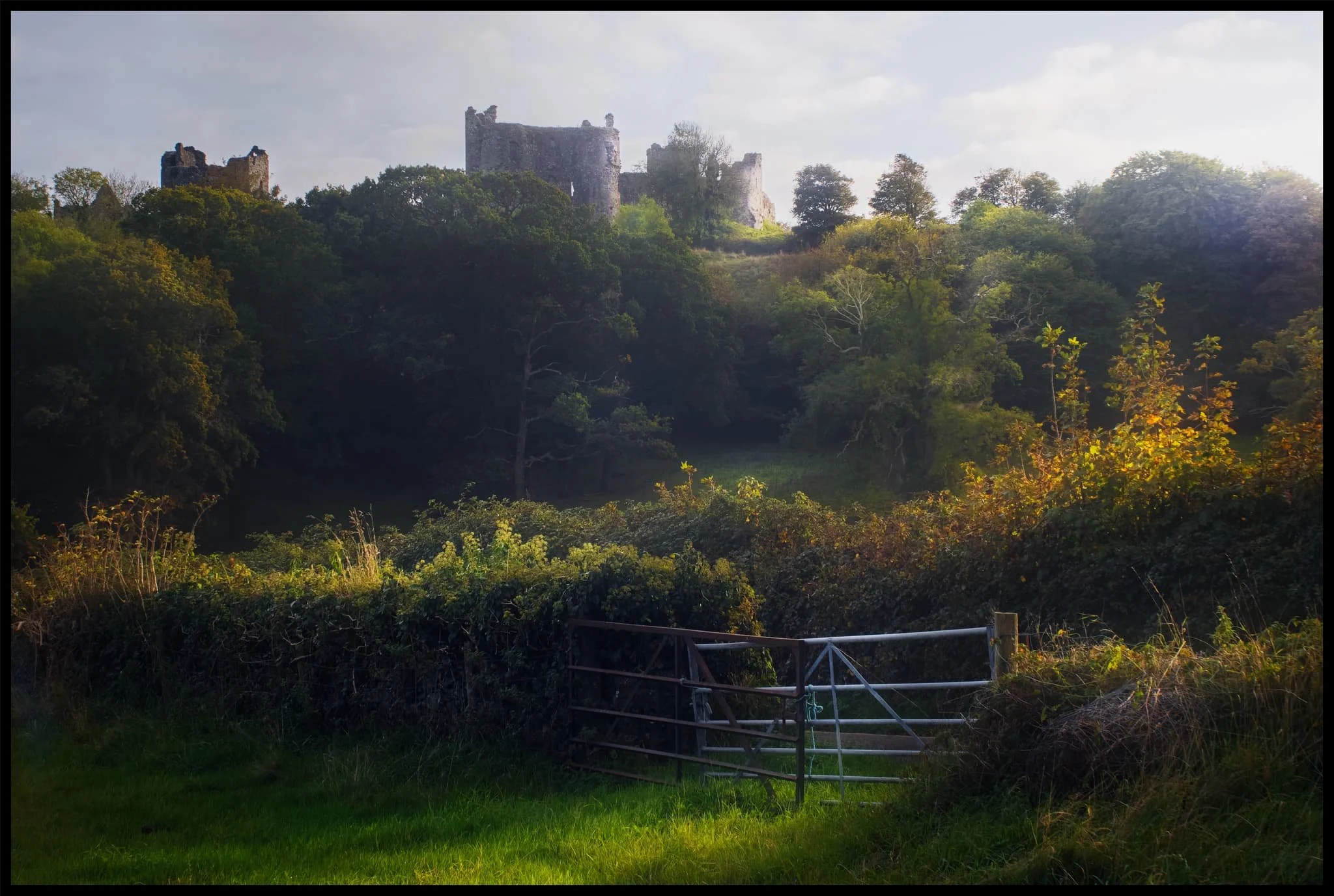
Llansteffan Castle and its dominating position above the village and the surrounding farmland.