The pull of Glencoe is impossible to resist.
Even though we were staying much further southwest of Glencoe, the allure of its epic mountains is too much.
But this time, we wanted to try things a little different. Most folk head to Glencoe from the south, and pass through the vast boggy expanse of Rannoch Moor. There is, however, much to commend of Rannoch Moor; in particular two loch systems: Lochan na h-Achlaise, and Loch Bà. Both are tricky to explore and navigate, due to the boggy conditions underfoot, but we nevertheless made an attempt of it, having more success with Loch Bà than Lochan na h-Achlaise.
Beyond Rannoch Moor we stopped off the for the usual yomp around the falls of the River Coupall and its epic views towards Buachaille Etive Mòr. We also poked around parts of upper Glencoe we’d never properly looked at as well.
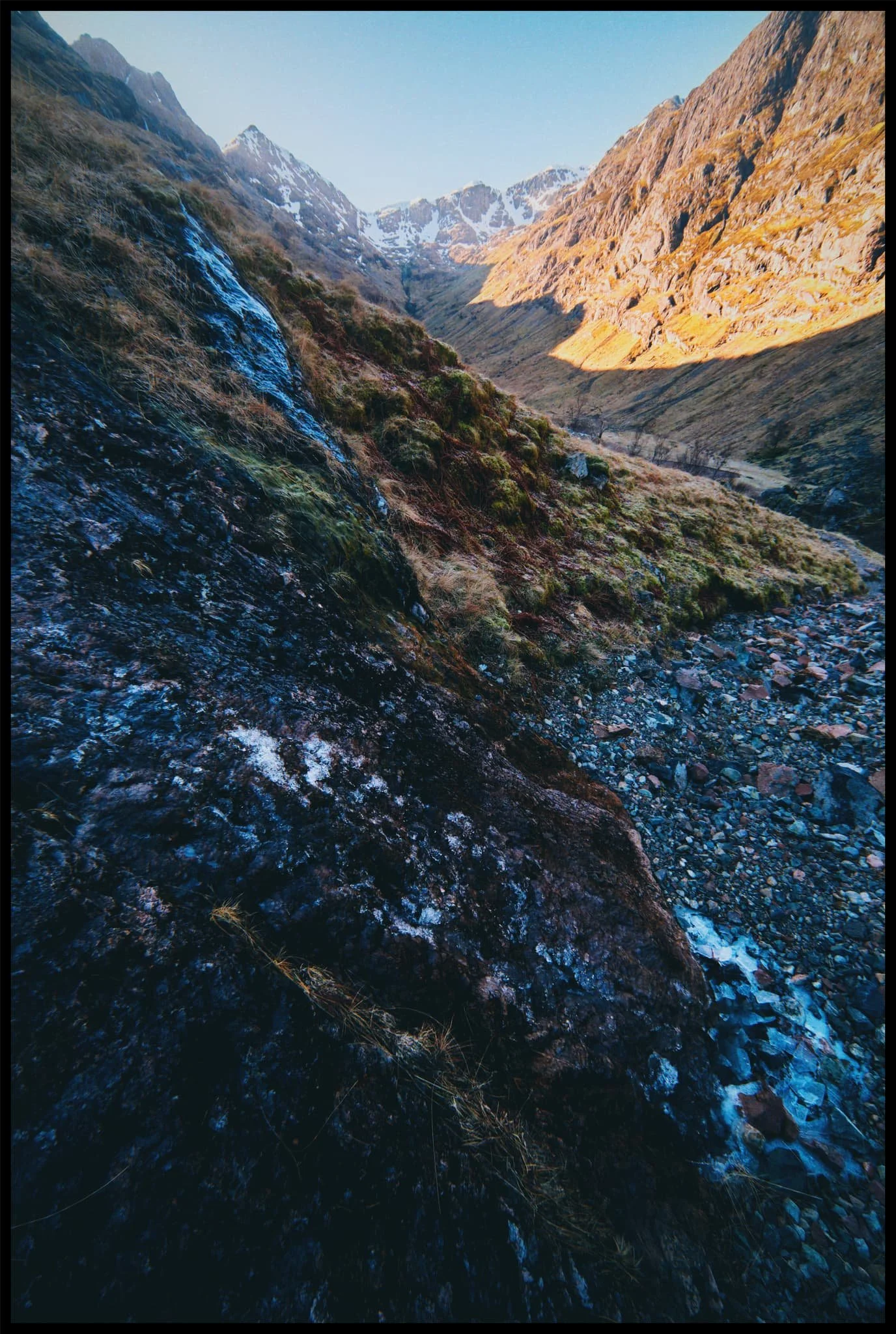
As is usually the case, scenes around Glencoe were epic and thankfully the light was blessing us with wonderful conditions.
All photos taken on my Google Pixel 9 Pro XL, edited and finalised in Photoshop.
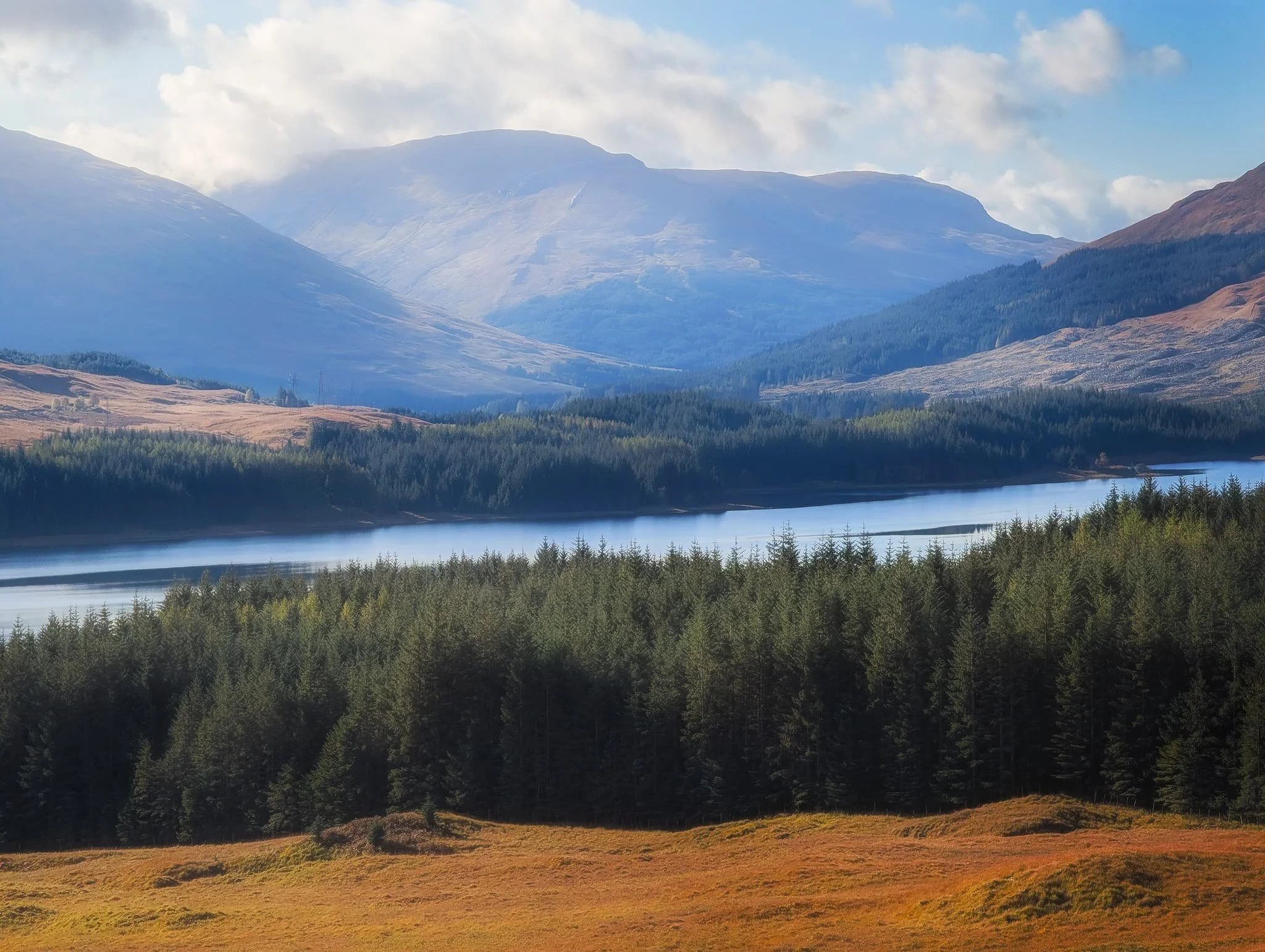
Before climbing up to Rannoch Moor on the A82, there’s another loch that we’d never visited before: Loch Tulla . From the viewpoint above, one can capture cracking views towards the likes of Beinn Udlaidh (840 m/2,760 ft).
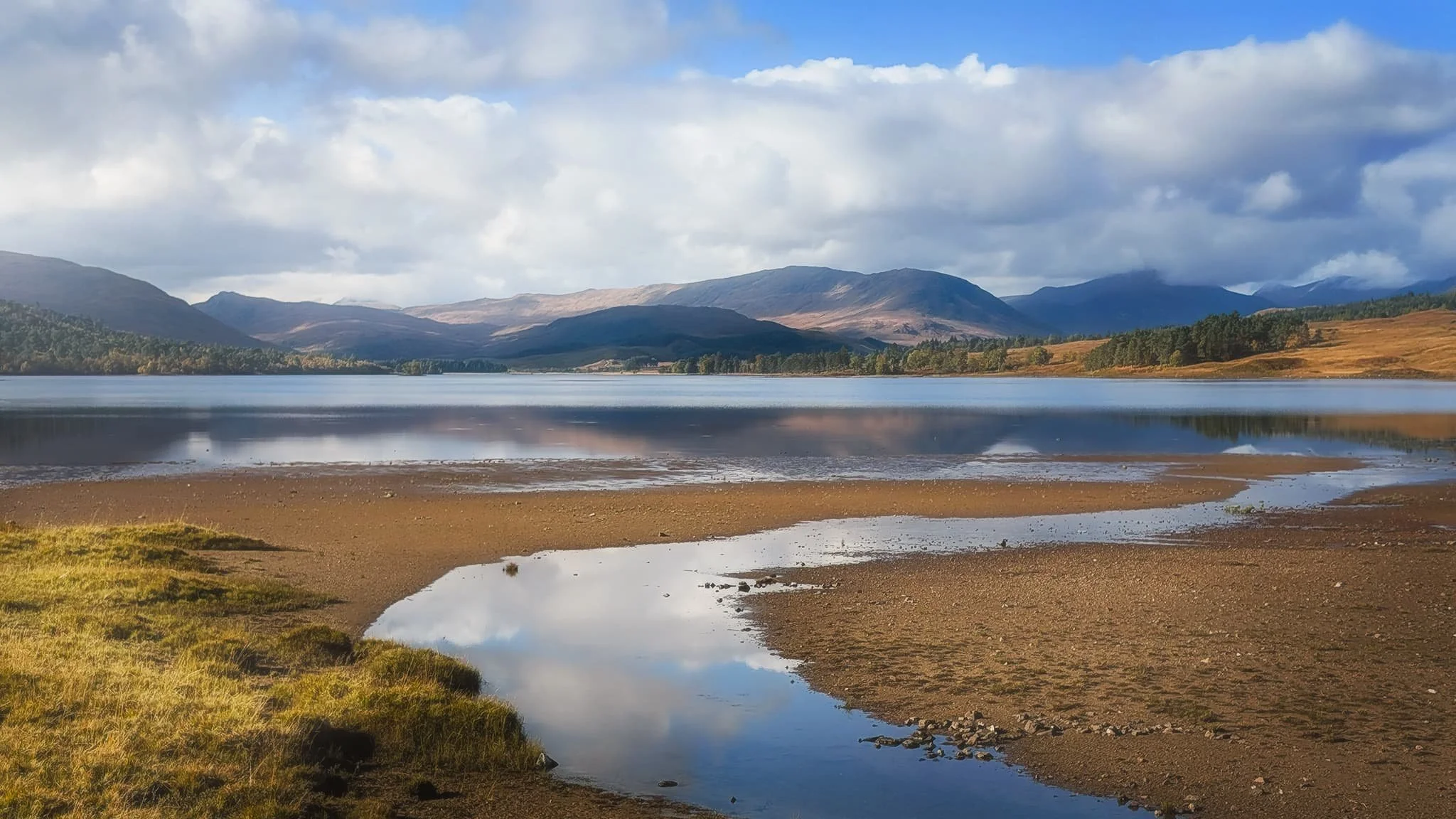
It turns out that getting to the loch shore of Loch Tulla is difficult. The road runs right alongside its north-eastern point, and is raised above the loch. You can’t clamber down the verge towards the shore because of barbed fencing. So, this shot from the roadside of Tulla and towards the Black Mount range was as best as I could manage.
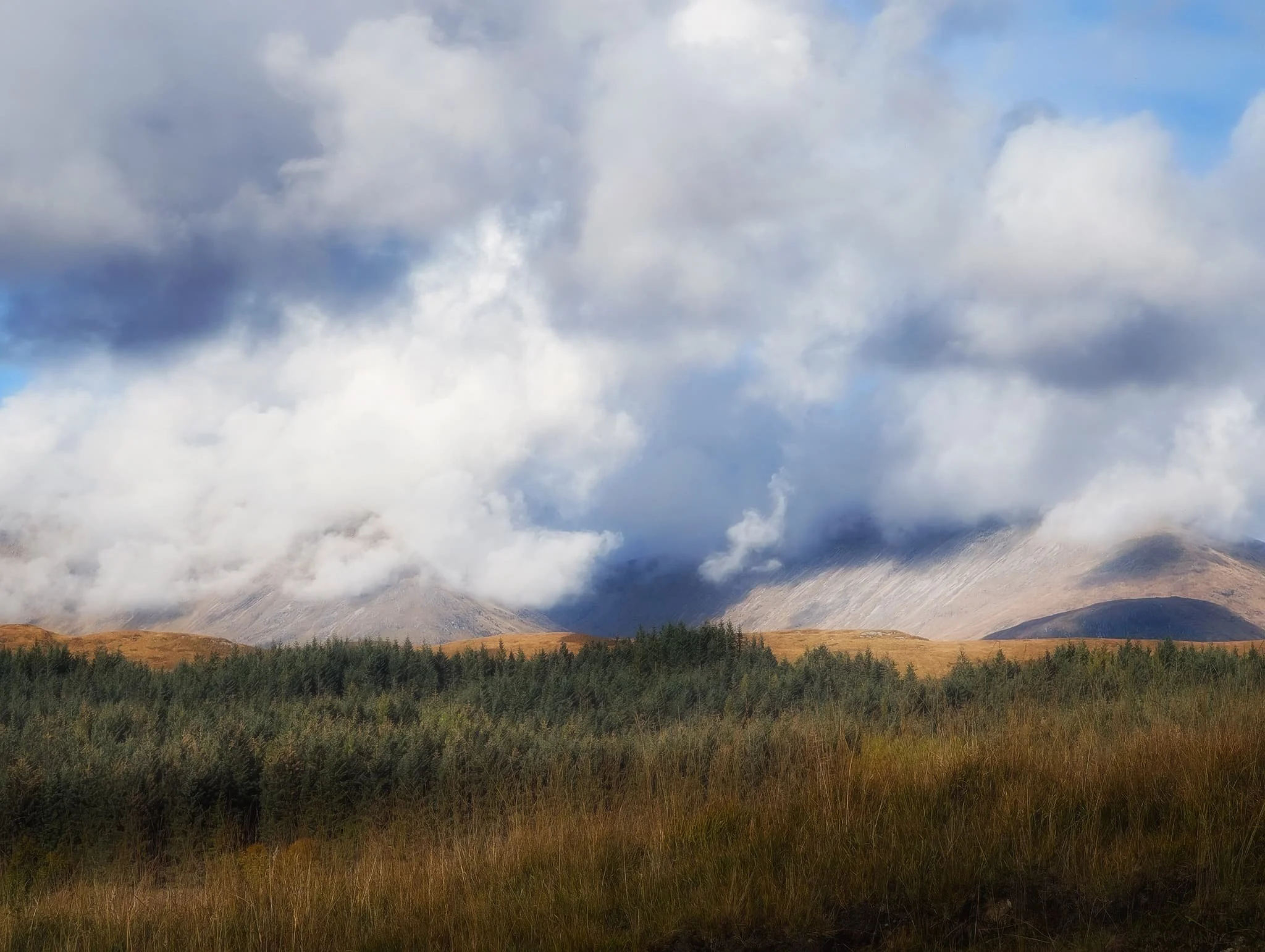
From the viewpoint above Loch Tulla , the eastern peaks of the Black Mount range were wrestling with the clouds, a scene I just had to try and capture.
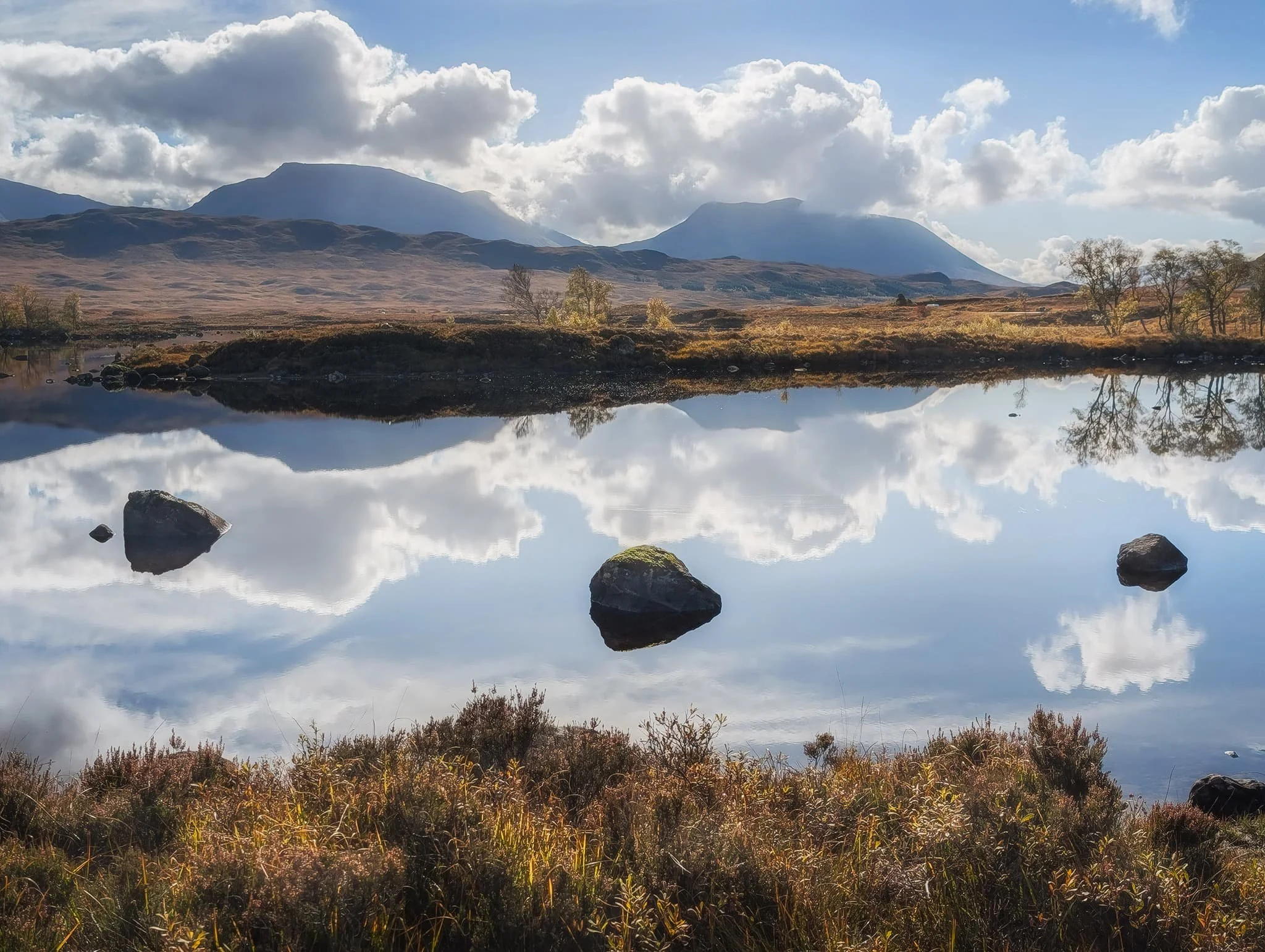
The western point of Loch Bà is easier to access. There’s a small car park and a layby, where you can then clamber up a small mound to get expansive views of the loch and the moor. We continued beyond the mound to get as close to the loch shore as possible. Armed with waterproof boots and socks, we squelched tactically across the moorland to reach the loch shore, greeted by these incredible reflections. The two peaks here, left to right, are Beinn a’ Chreachain (1,081 m/3,547 ft) and Beinn Achaladair (1,038 m/3,406 ft).
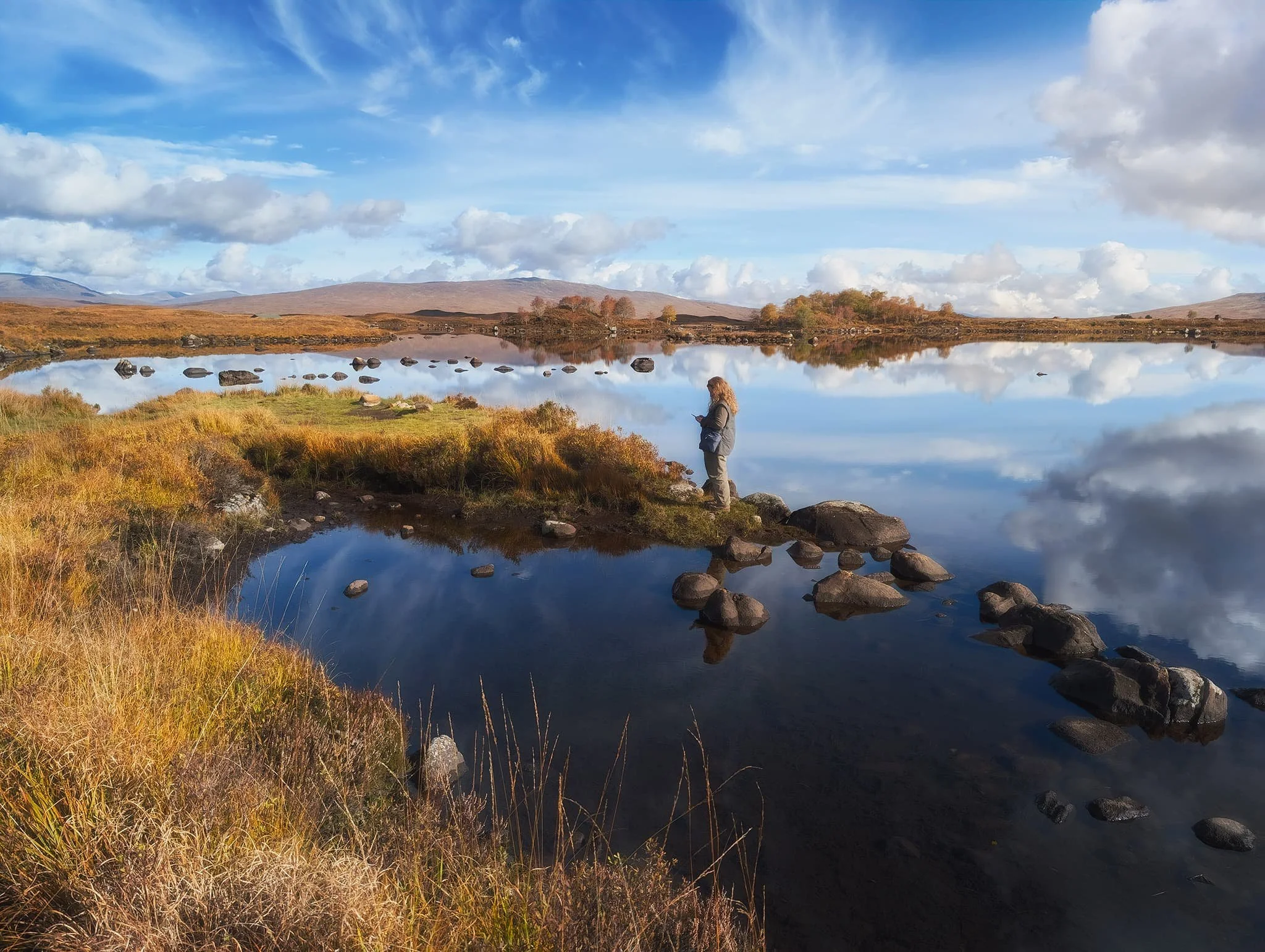
Looking northeast across the loch, I line up this composition with the loch’s glassy reflections, the distant hills, and my Lisabet ensuring she’s captured what she wanted.
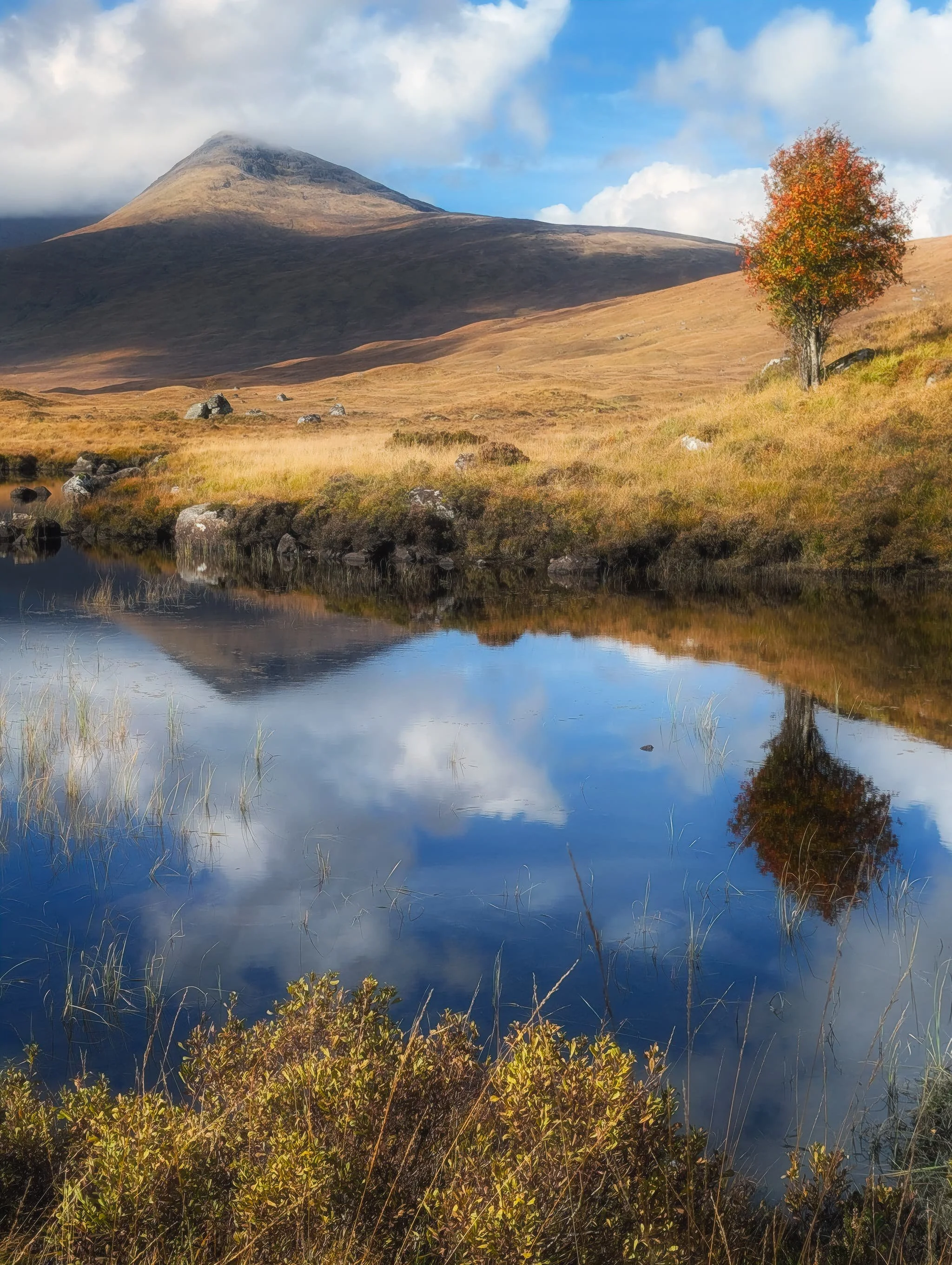
On the other side of the road from Loch Bà is another, smaller, loch system: Loch na Stainge . We followed the vague trail/desire line around the loch shore, seeking compositions. I managed to nab this one of a solitary rowan tree with Meall a’ Bhùiridh (1,108 m/3,635 ft) in the distance, both reflected in the loch.
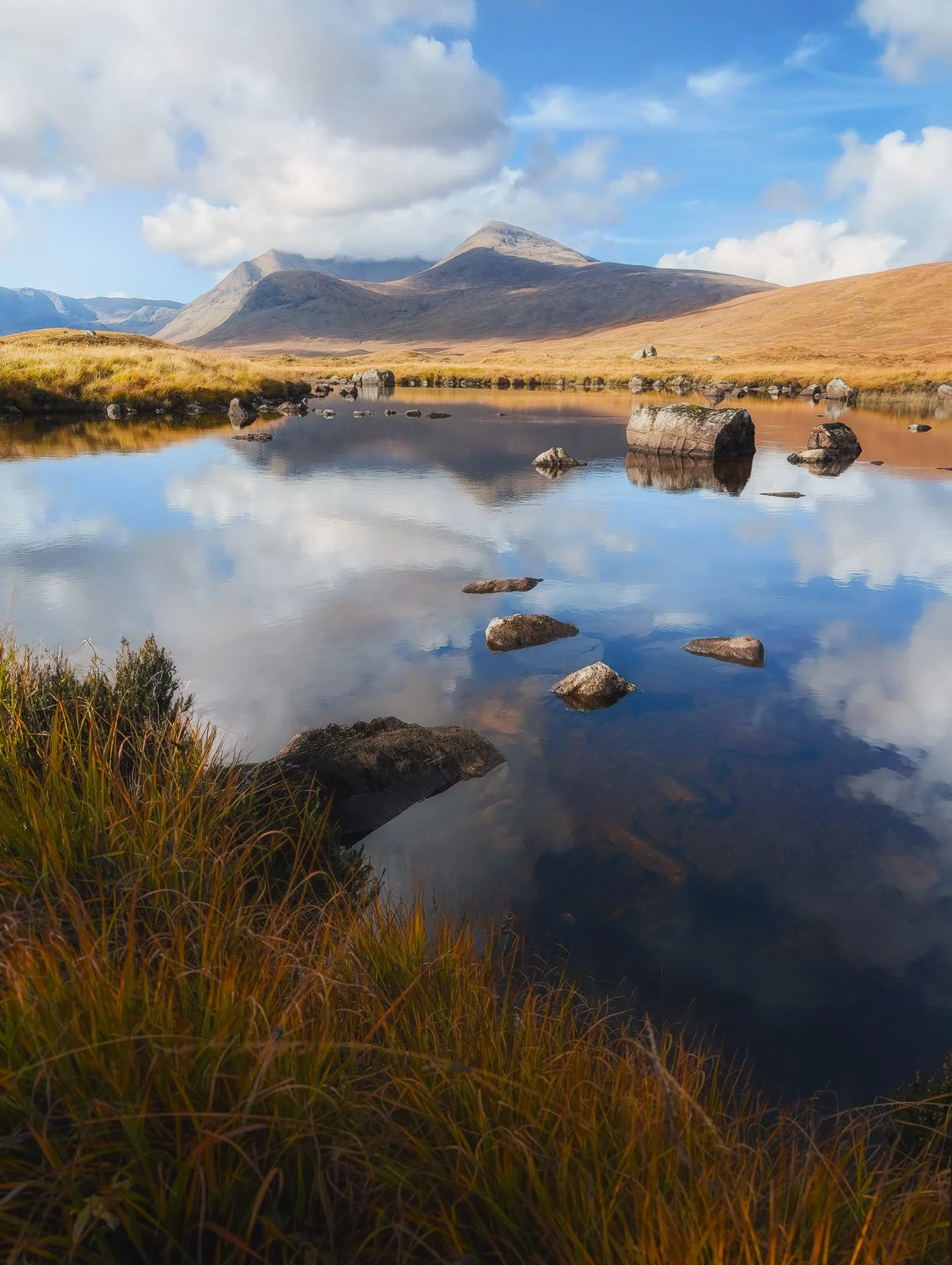
Further along the shore, a small series of rocks and boulders created a nice leading line into the composition towards Meall a’ Bhùiridh on the right and Clach Leathad (1,099m/3,605 ft) on the left.
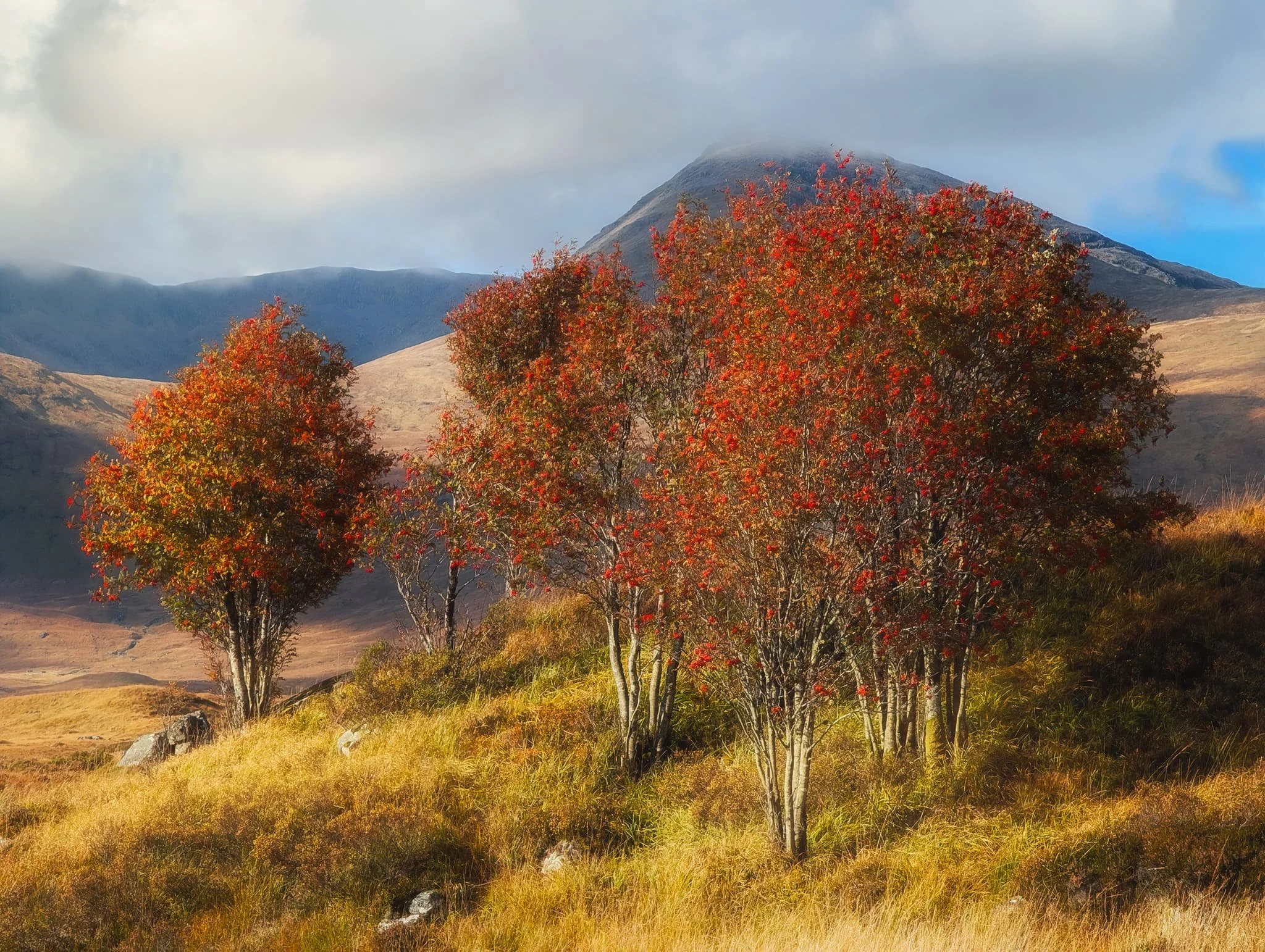
Using the 5x lens on my Google Pixel 9 Pro XL, I crop in on a beautiful copse of rowan trees, laden with their vivid red berries, with the Black Mount mountains behind.
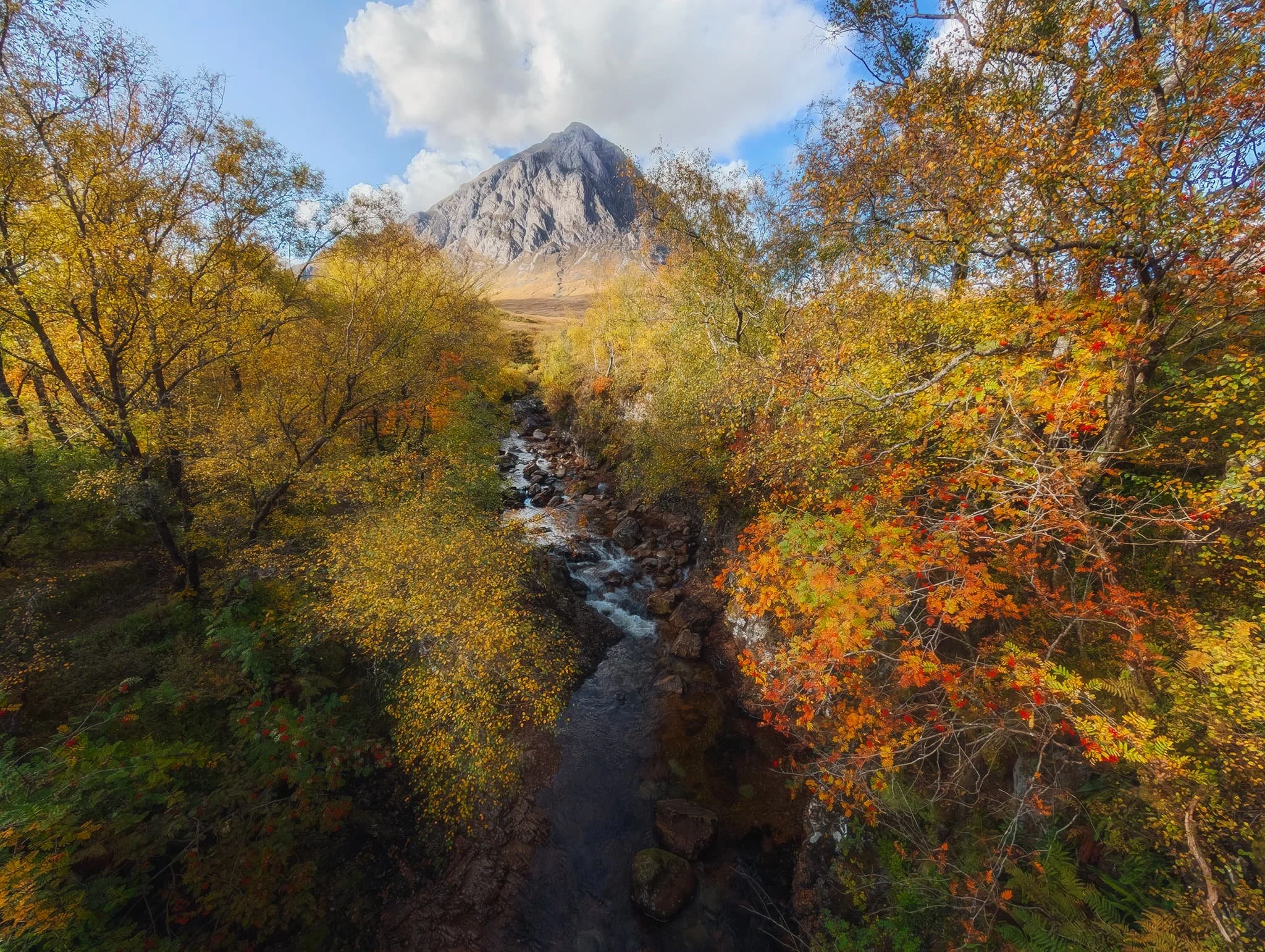
Beyond Rannoch Moor and the myriad of lochs, we stopped at an unmissable place on the way towards Glencoe. This is the River Coupall, which has gouged out a gorge lined with incredible autumn foliage. In the distance is the impossibly perfect peak of Buachaille Etive Mòr (1,021.4 m/3,351 ft).
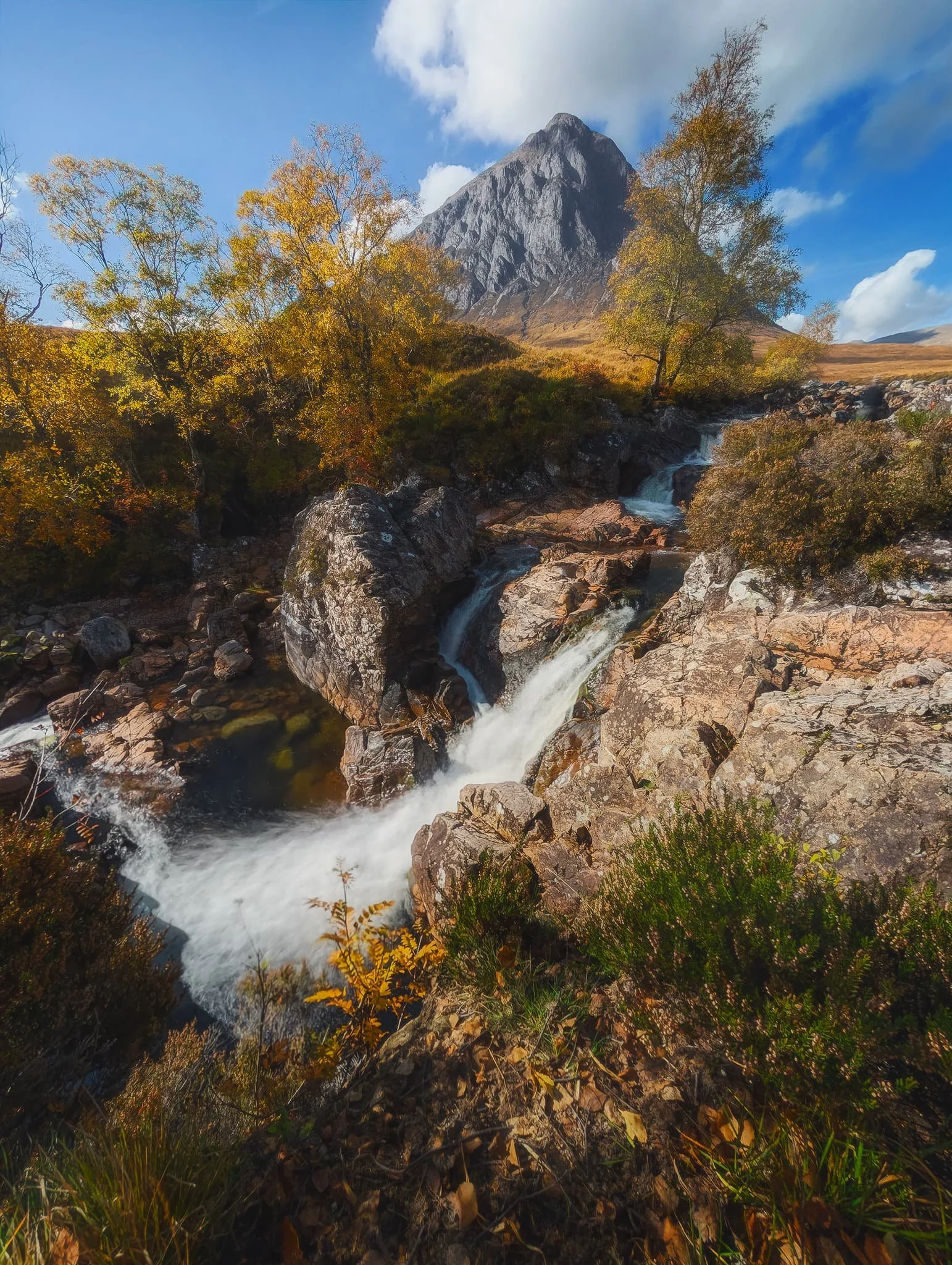
Perhaps one of the most photographed Scottish mountains, and one of the most photographed compositions of it. Still, I couldn’t resist. Who could?
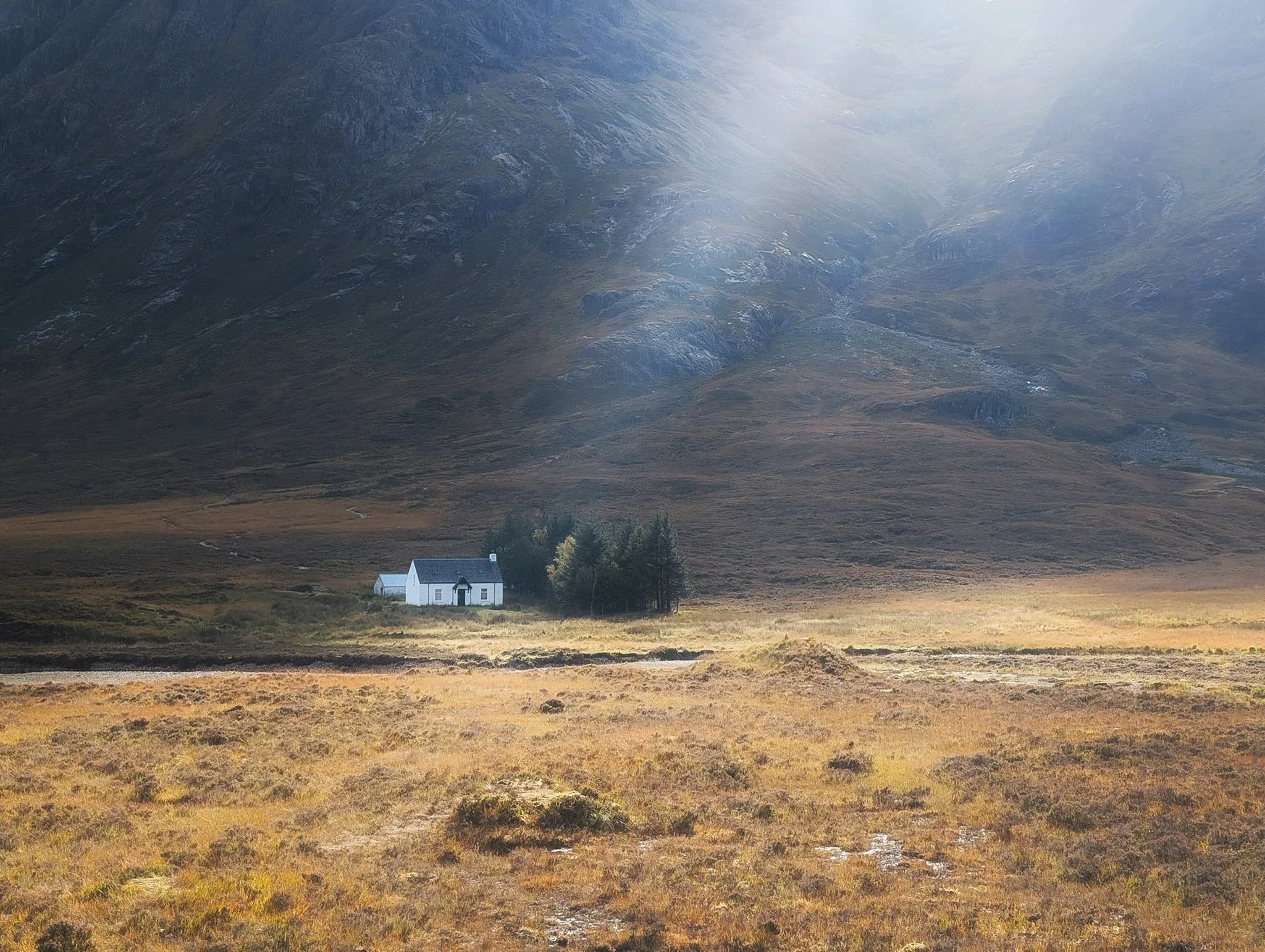
As we moved further into Glencoe, we stopped at an area we’ve often just driven by, at Altnafeadh. Here, underneath the massive wall of rock that is Stob Dearg , is a delightful little white cottage, all on its own. This is Lagangarbh Hut. Formerly a crofting house, it was bought by the National Trust for Scotland in 1935, and the Scottish Mountaineering Club have been looking after it since 1946.
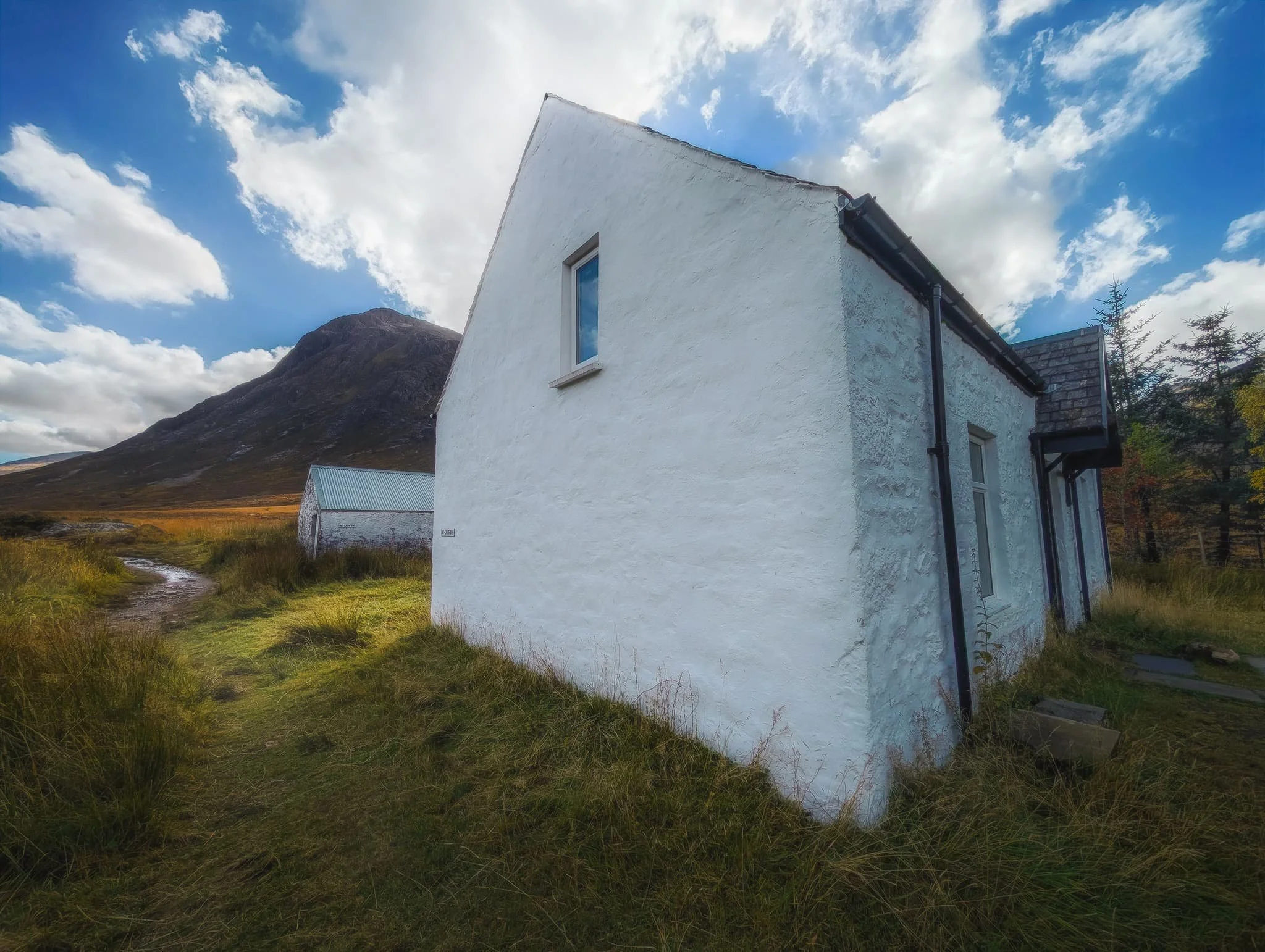
These days the cottage is a bunkhouse for use by members of mountaineering clubs, hillwalking clubs, and individual members of the SMC and the BMC.
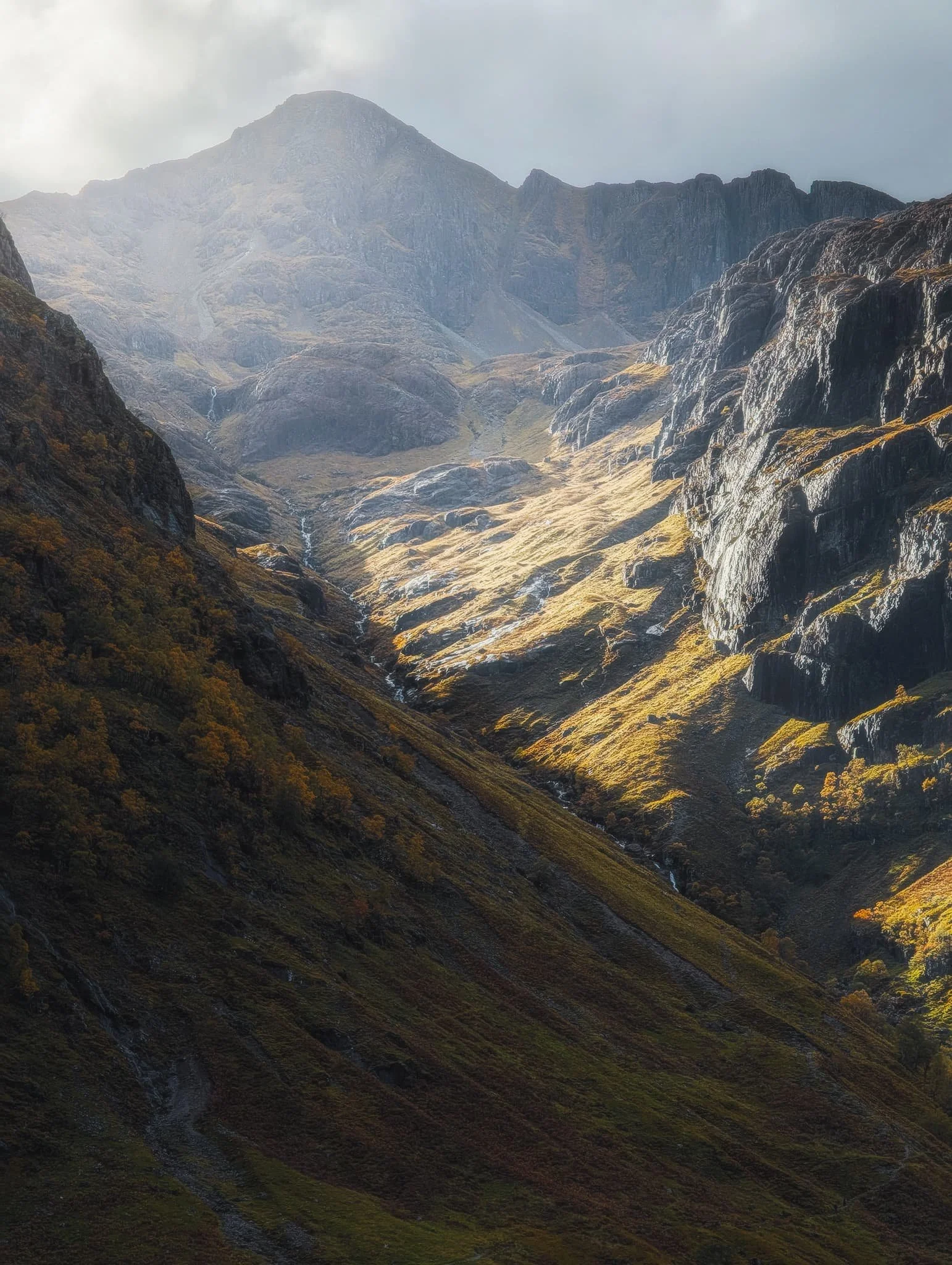
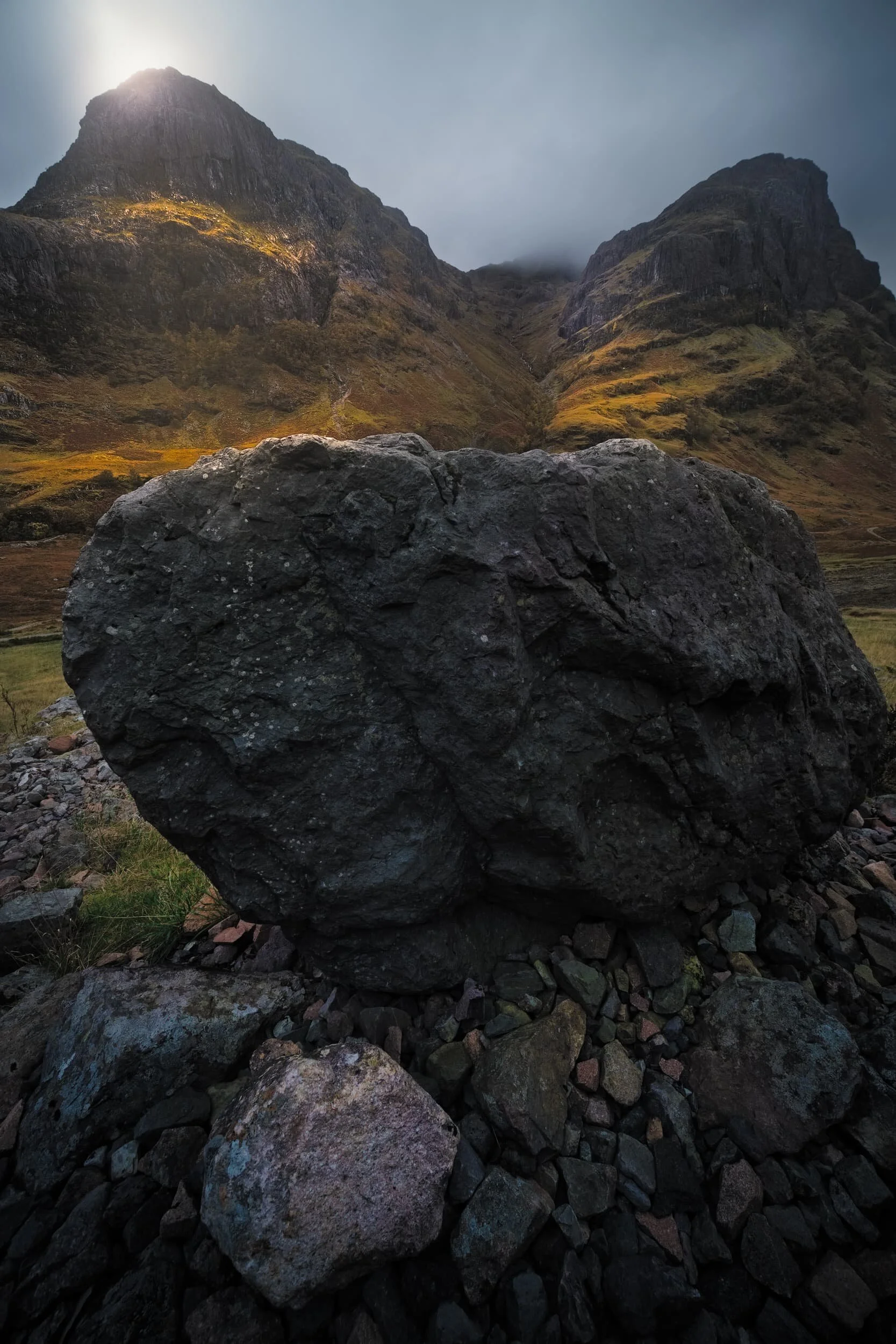
In the heart of Glencoe we stopped at the main car park and quickly located the trail east towards the head of the valley. Looming above us were the Three Sisters of Glencoe. With light piercing through the clouds above, I captured this 5x photo of Corrie nan Lochan’s crags getting drenched in light with Stob Corrie nan Lochan (1,115 m/3,658 ft) rising above.
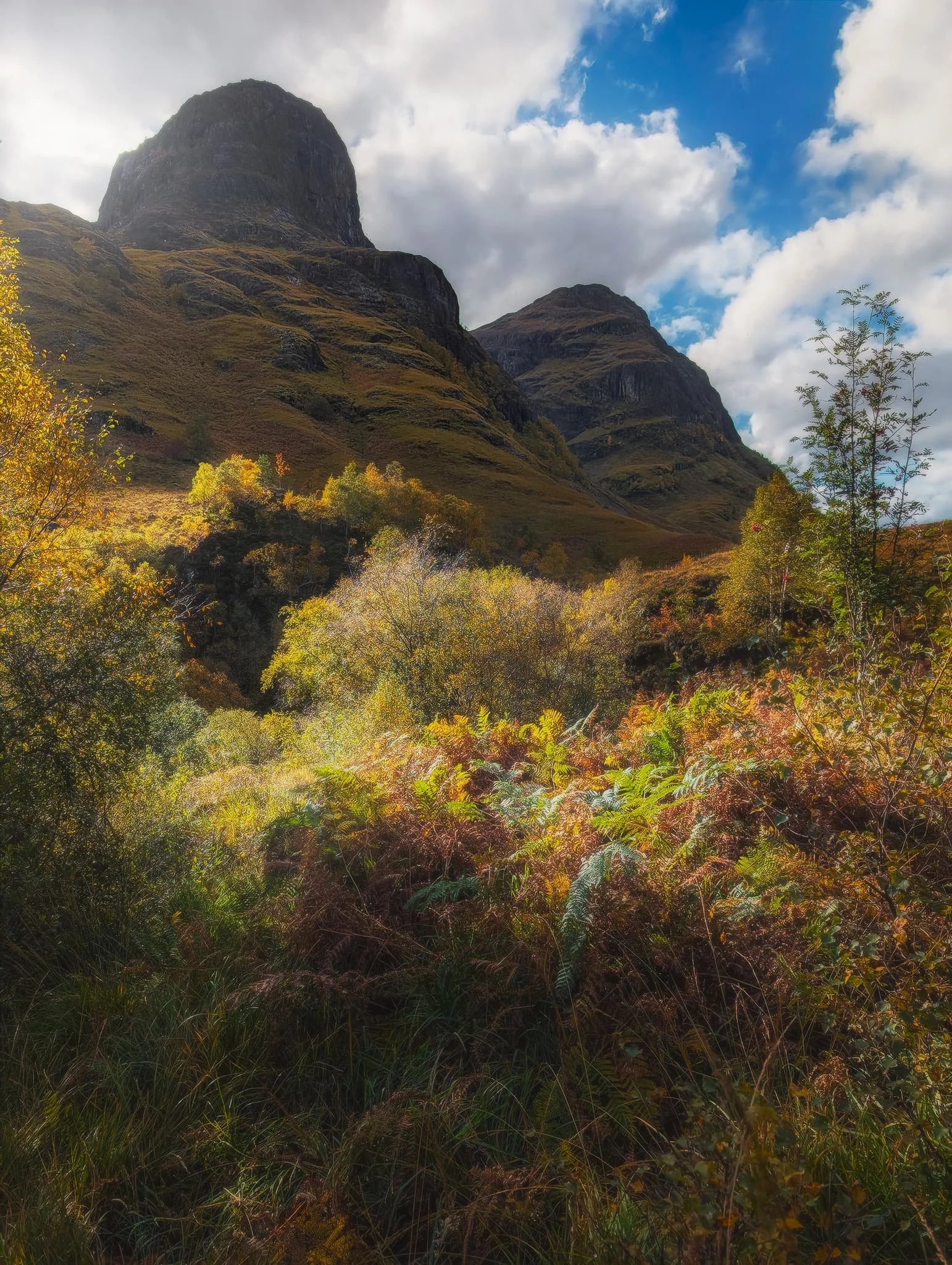
Further down the valley two of the three sisters punch the sky like knuckly fists, looming above the autumnal ferns. On the left is Geàrr Aonach (692 m/2,270 ft) and on the right is Aonach Dubh (892 m/2,926 ft).
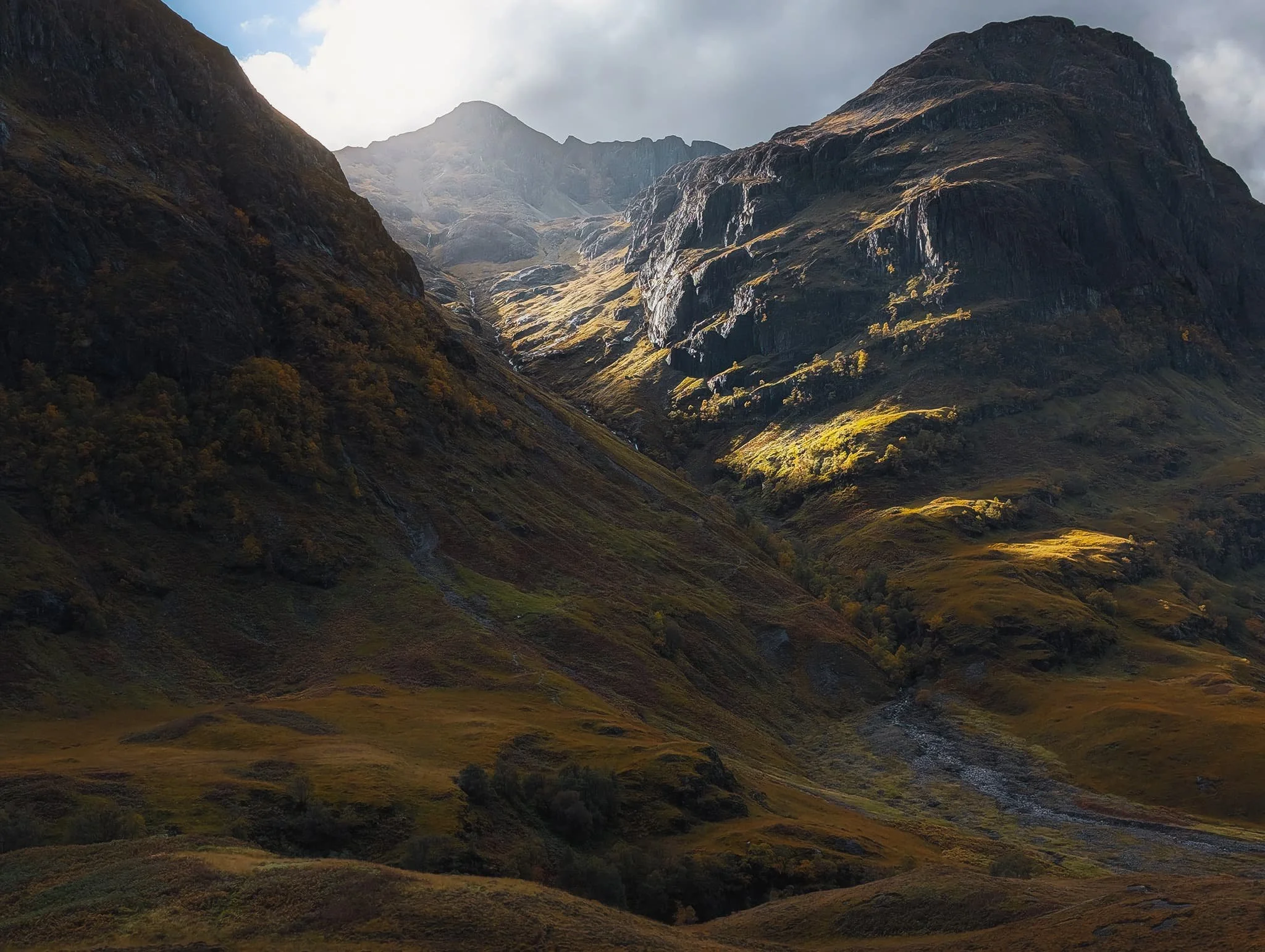
Autumnal light piercing between Geàrr Aonach and Aonach Dubh , illuminating the crags of Corrie nan Lochan . A perfect moment.