This was probably the find of the week.
There’s plenty of the Northumberland coast we’ve explored before in various conditions, but one area we hadn’t been to was a relatively overlooked section of the coast near Howick.
And we were blown away with what we found.
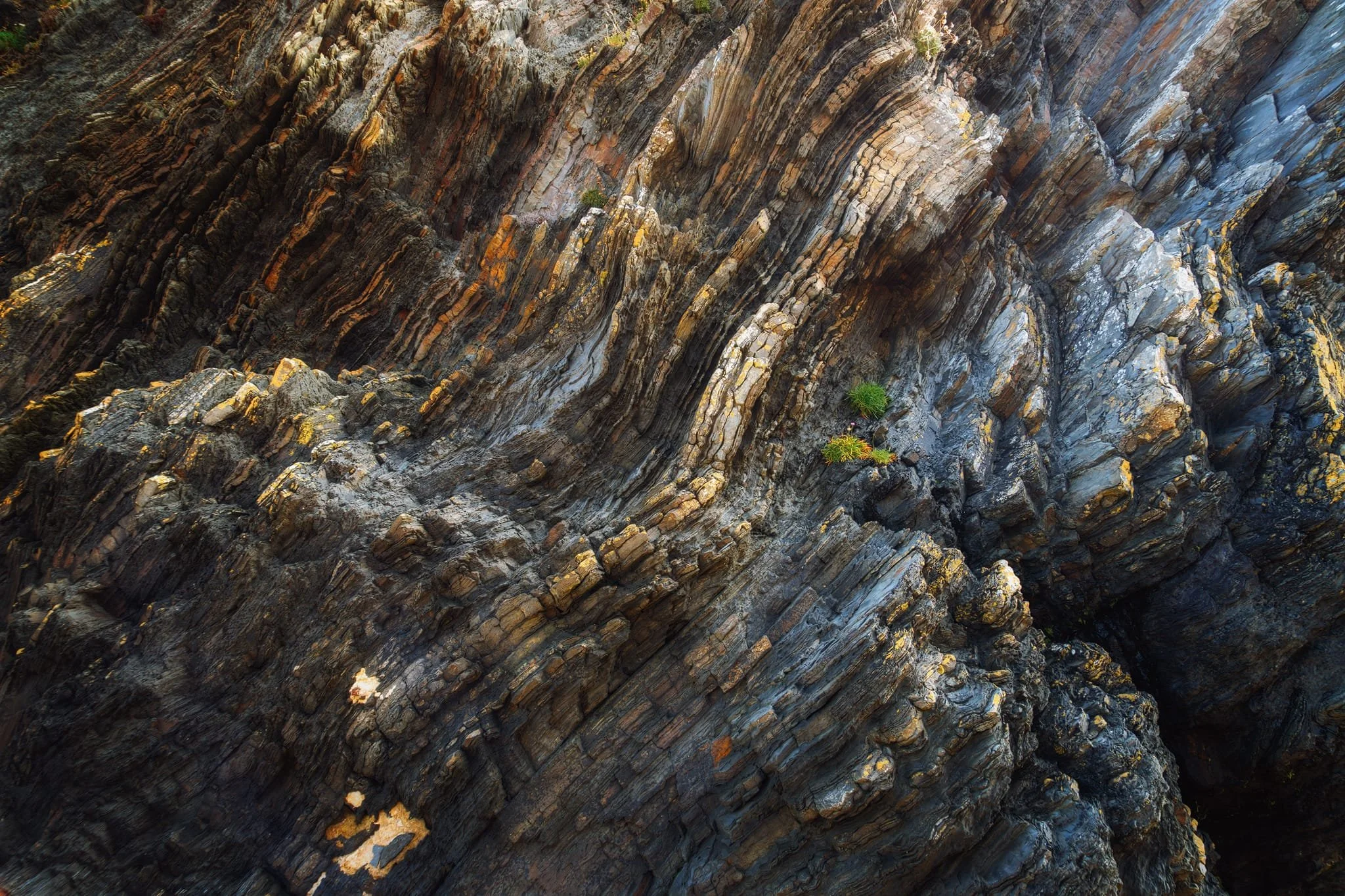
This is an area known as Rumbling Kern, named after a hole in the rocks that rumbles loudly when the waves crash through it during high tide. The geology around here is crazy, all different types smashed together in disjointed fractures and joints, giving the place a discombobulating, otherworldly affect.
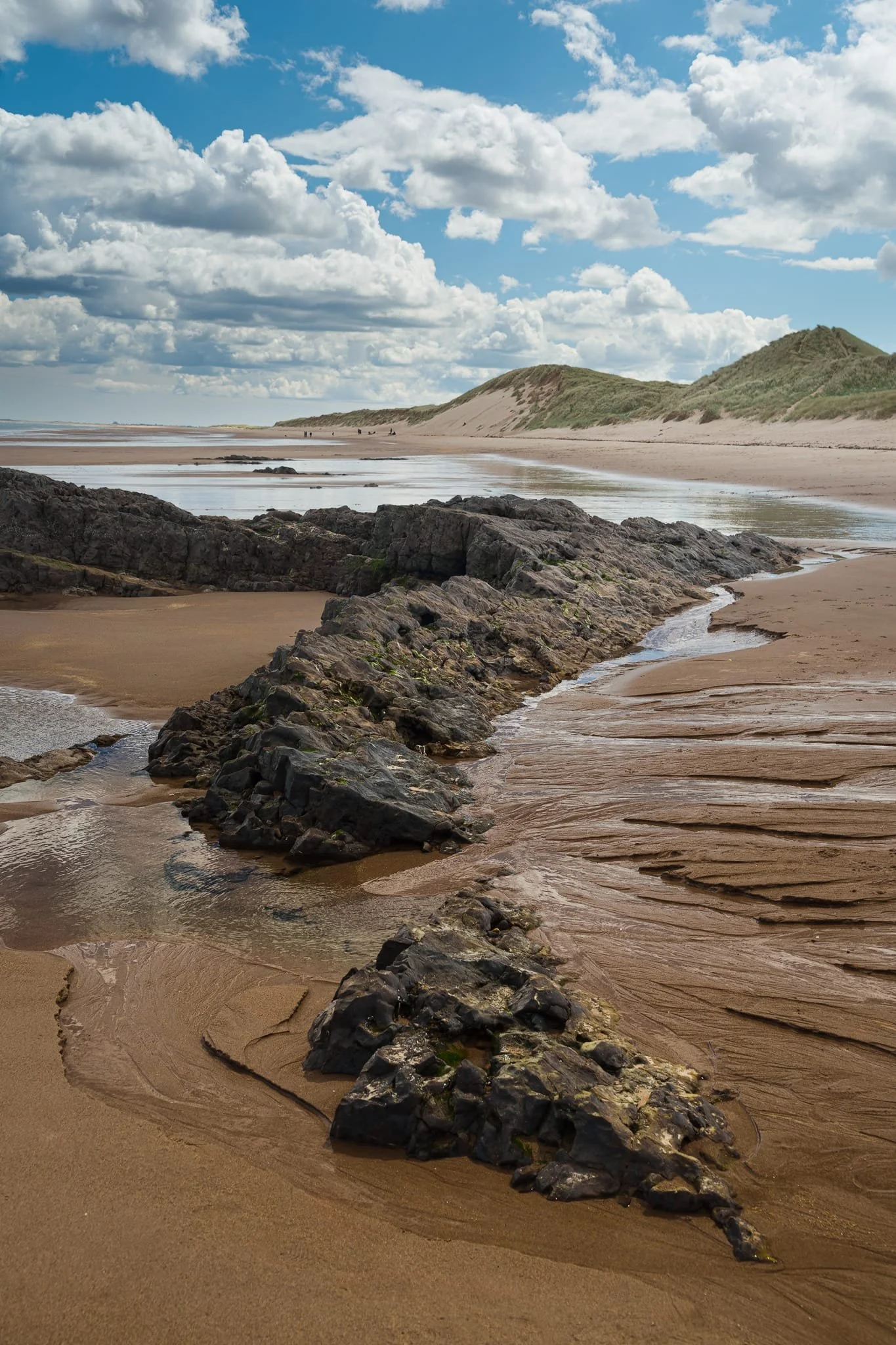
A lot of the Northumberland coast consists of long beaches and sand dunes; it seems all the cliffs and were saved just for here.
All photos taken on my Sony α7ii using my Sony 24-240mm F3.5-6.3 OSS zoom lens. RAWs developed and editing in Lightroom and Photoshop.
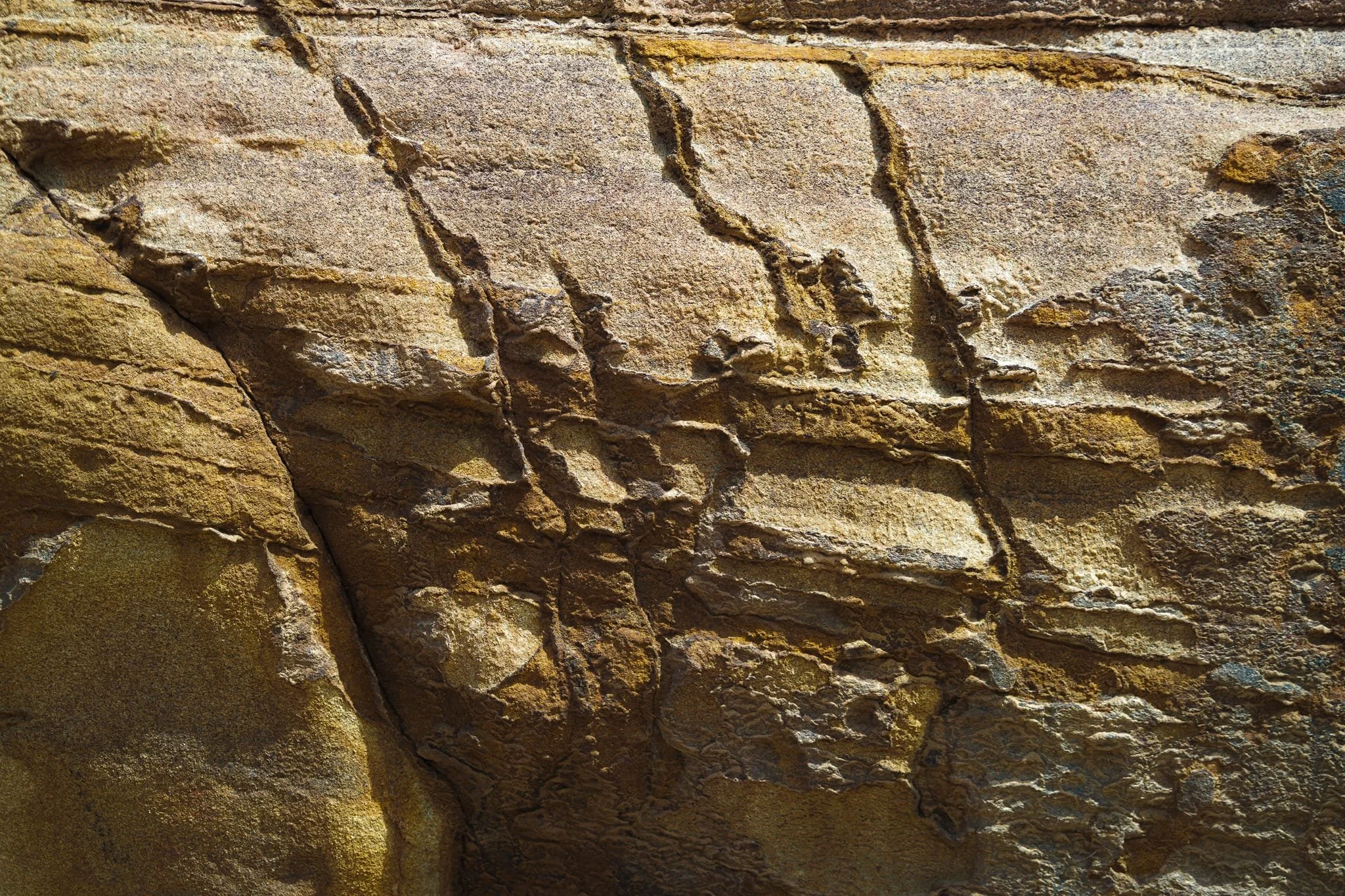
You’re looking at Carboniferous braided-river sand dunes—iron-stained, cross-bedded sandstone—resting atop a drowned limestone sea-floor and later undercut by Pleistocene meltwater. A stone time-capsule of shifting swamp, sea and river environments.
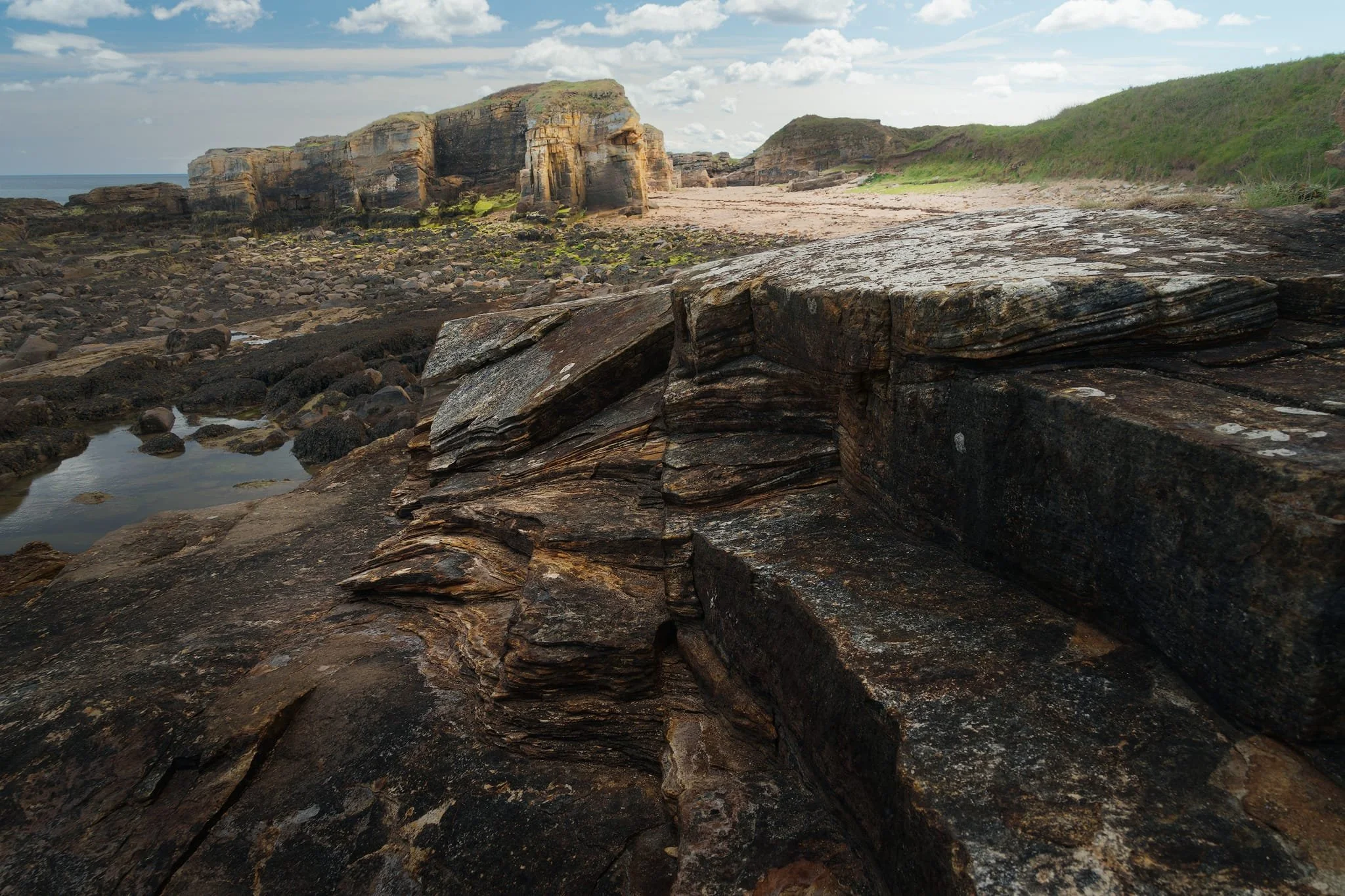
We did not expect to see what we found when we decided to have a nosey around the Rumbling Kerns of Howick. Wow . The geology around here is crazy. The dark, thin layers in the foreground are old floodplain muds and silts, deposited when the river overflowed its banks and settled out fine particles. The chunky, blocky sandstones you see further back are the main river channels (the Rumbling Kern) where fast water dumped coarser sand. Over time, ice-age floods and tides have smoothed and sculpted both.
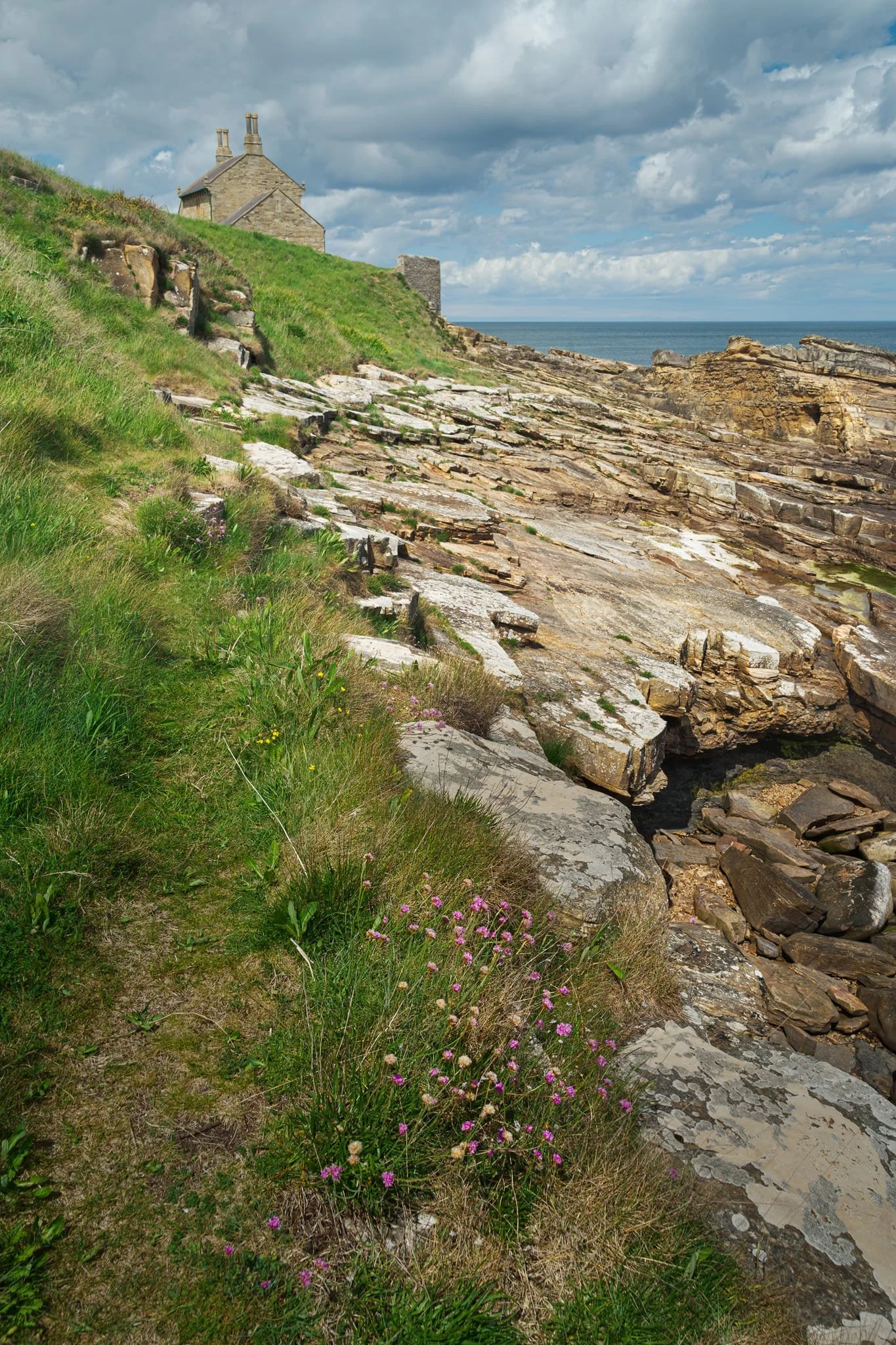
Looking north from above the beach is the old Bathing House, built by Charles 2nd Earl Grey for his children to sea bathe from. It’s also been known as Jenny Patterson’s Cottage , Miss Henderson’s Cottage and Christie’s House . Nowadays it serves as in-demand holiday accommodation.
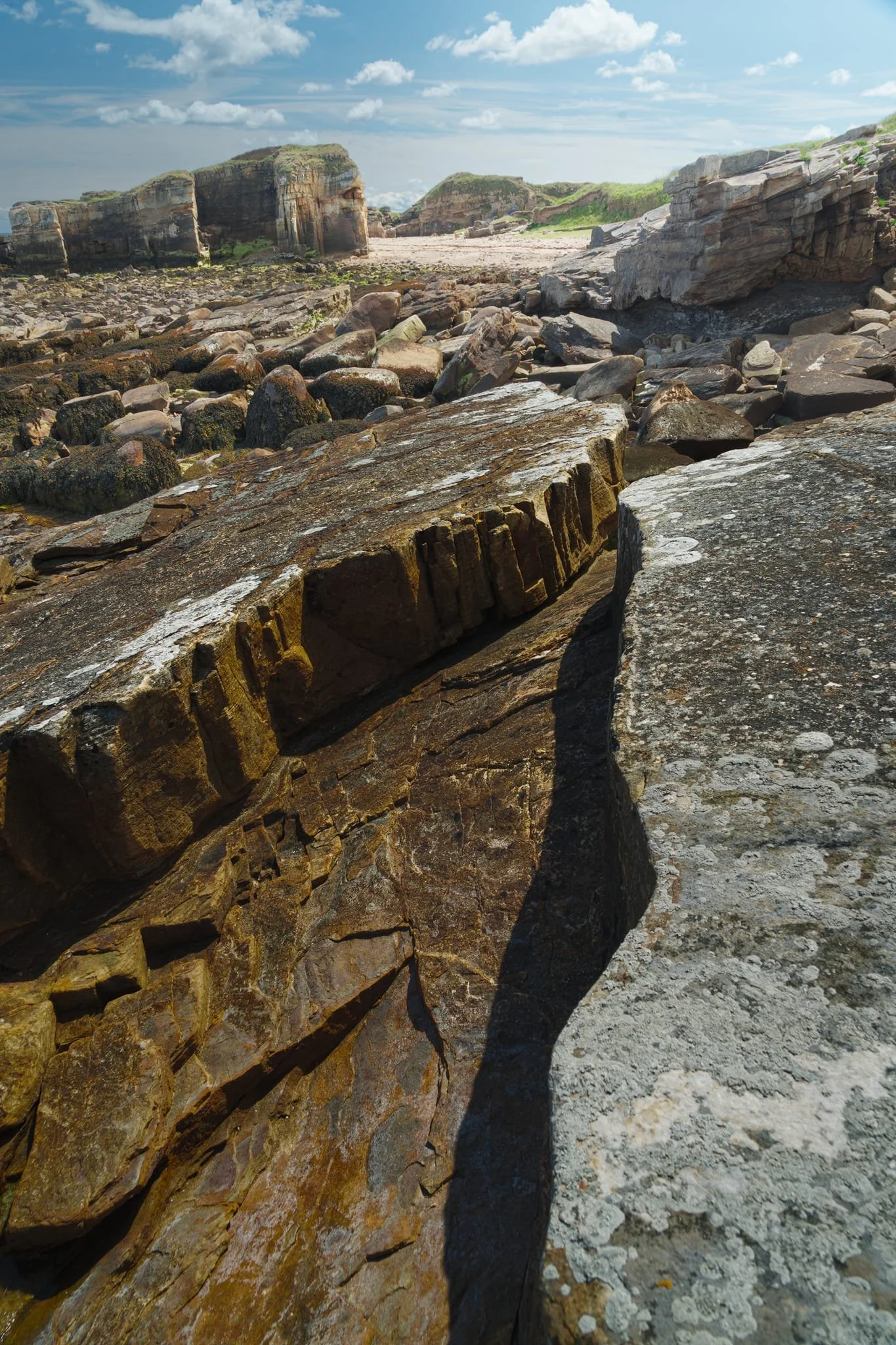
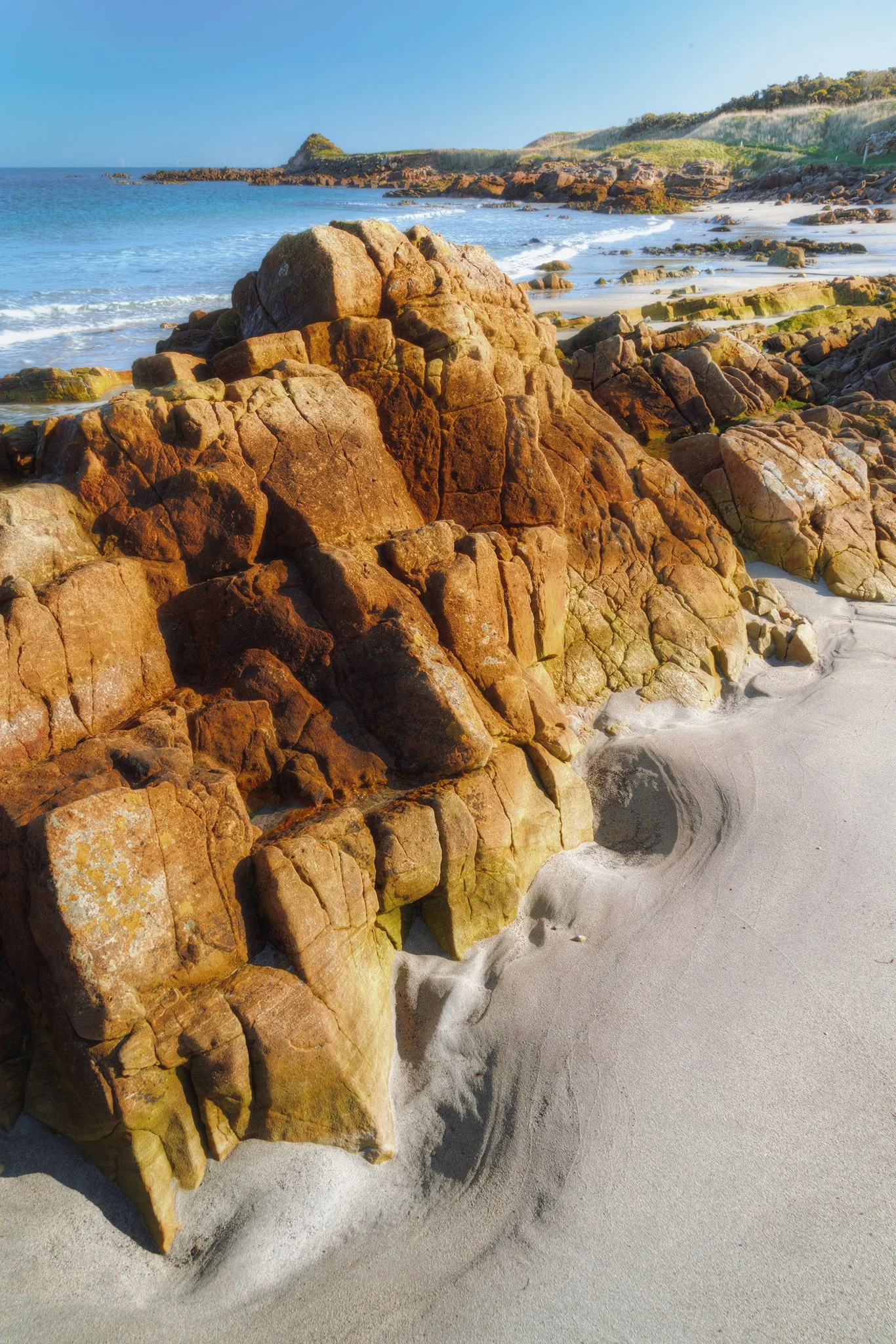
Rumbling Kern channel sandstone in “Lego-block” mode. Here vertical joints and horizontal bedding planes have sliced the rock into big blocks. Pleistocene-era meltwater and modern-day tides have prised out those blocks, rounded the edges and smoothed the faces.
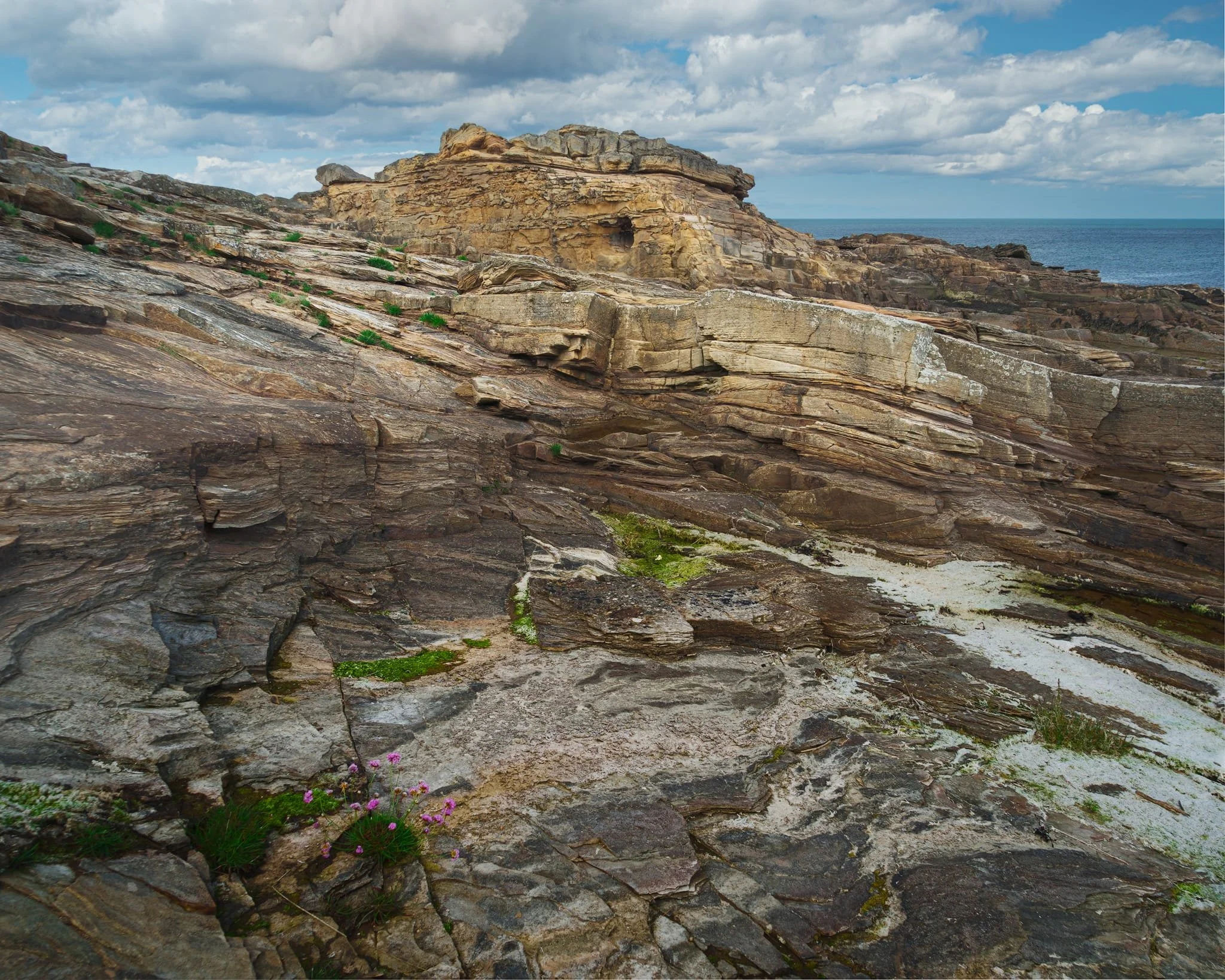
A fantastical mish-mash of geology here. In the foreground, smooth, low-angle siltstones/mudstones formed from old overbank (floodplain) mud settling out when the river crept over its banks. Modern tides, salt spray and lichens have bleached and smoothed those laminations, making them look chalky. The subtle, sharp break (you can just make it out sloping away) marks where a later channel scoured into those muds. The big yellow-buff blocks are the Rumbling Kern channel sandstones: coarse, cross-bedded braid-plain sand dumped by fast currents.
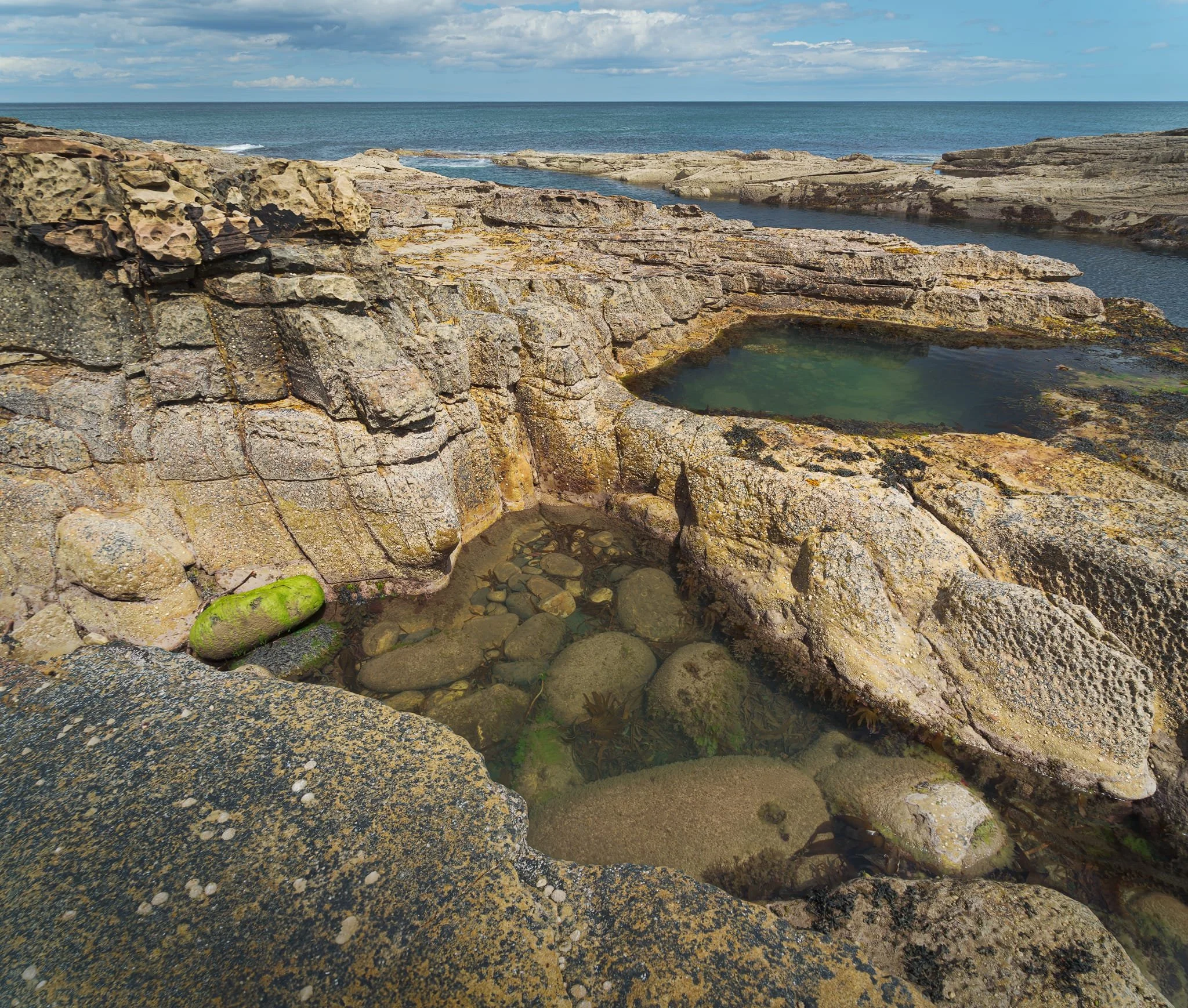
This shot was made from three landscape images at 24mm, stacked top to bottom. Small, circular depressions have been drilled into the sandstone by countless swirls of sand-and-pebble slurry at low tide. The lacy, pitted “bee-nest” pattern on the block tops comes from salt-crystal growth and repeated wet-dry cycles; tiny pockets where salt expands and flakes the rock. Vertical fractures and bedding planes guided where water could exploit weaknesses, prising blocks apart and focusing erosion at those joints and corners.
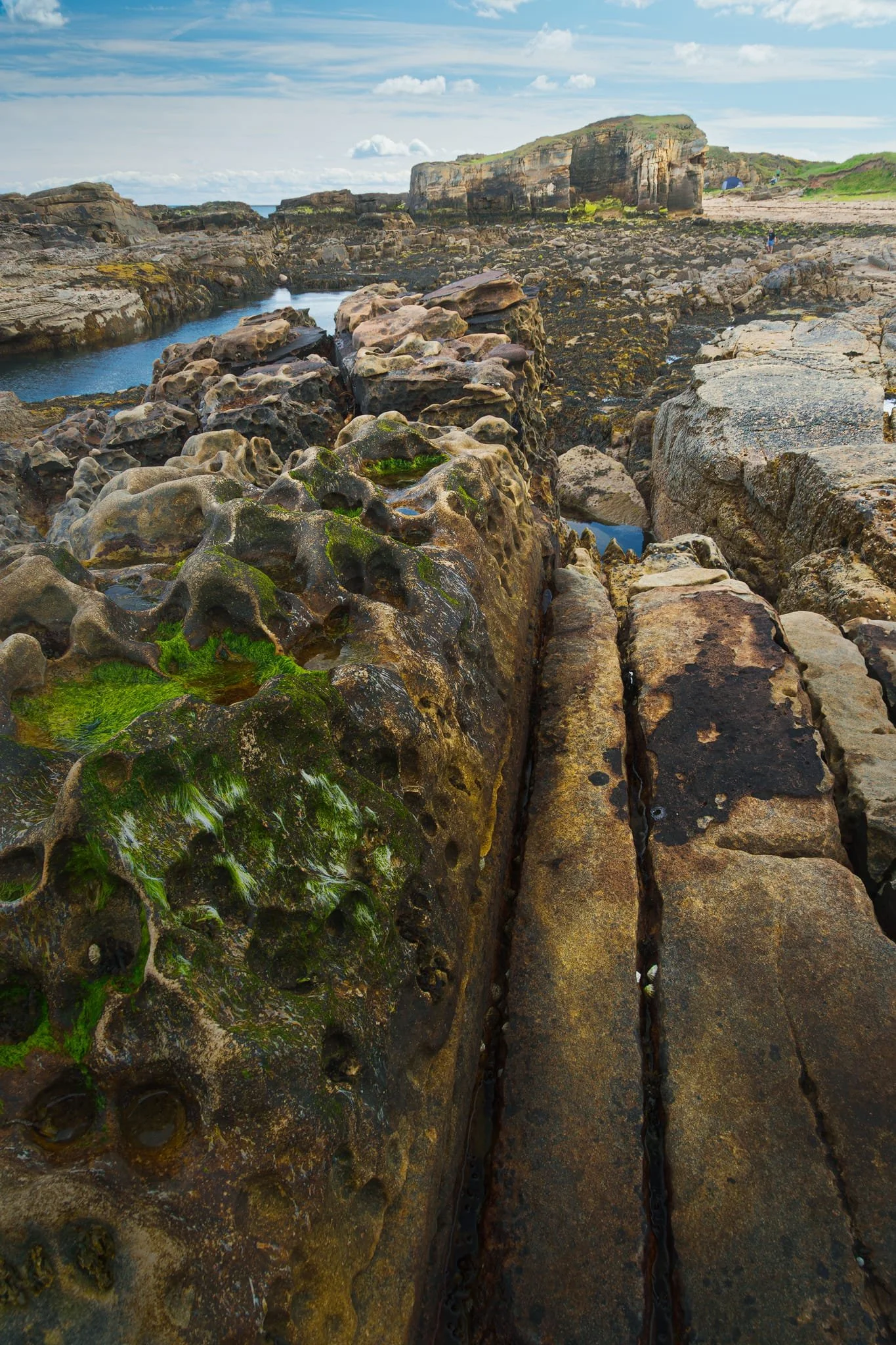
Those deep, rounded pits are caused by salt crystal growth and wet-dry cycling attacking the iron-cemented sandstone, gradually flaking it into a bee-nest pattern. Isn’t that fascinating? Amazing what nature can do, slowly, given enough time. The long, narrow trench running down the middle follows a vertical fracture; waves and sand-grit slurry have prised that joint open, deepening it into today’s little channel.
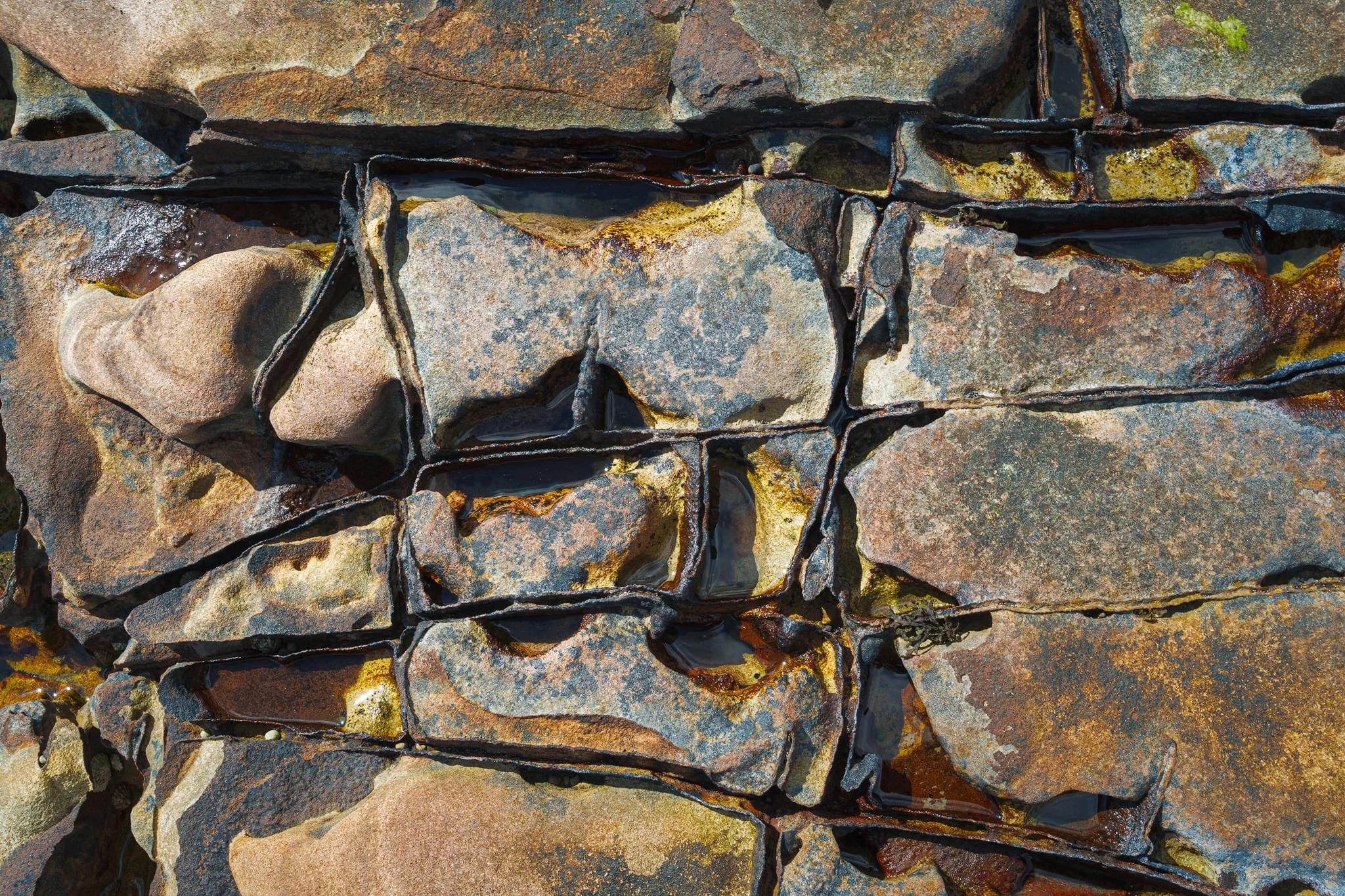
Man-made? Not in the slightest. Here, the rock has two dominant fracture directions, roughly at right-angles. Where they cross you get those neat little rectangles. Salt-crystal growth, freeze-thaw and wave-driven pebbles have prised those cracks open over millennia, filling them with water and iron-rich films. That’s why the joints look so crisp and dark compared to the orange-buff block faces. Every tide, sand-and-pebble slurry scours along the weakest joints, deepening the grid pattern and leaving small pools in the intersections.
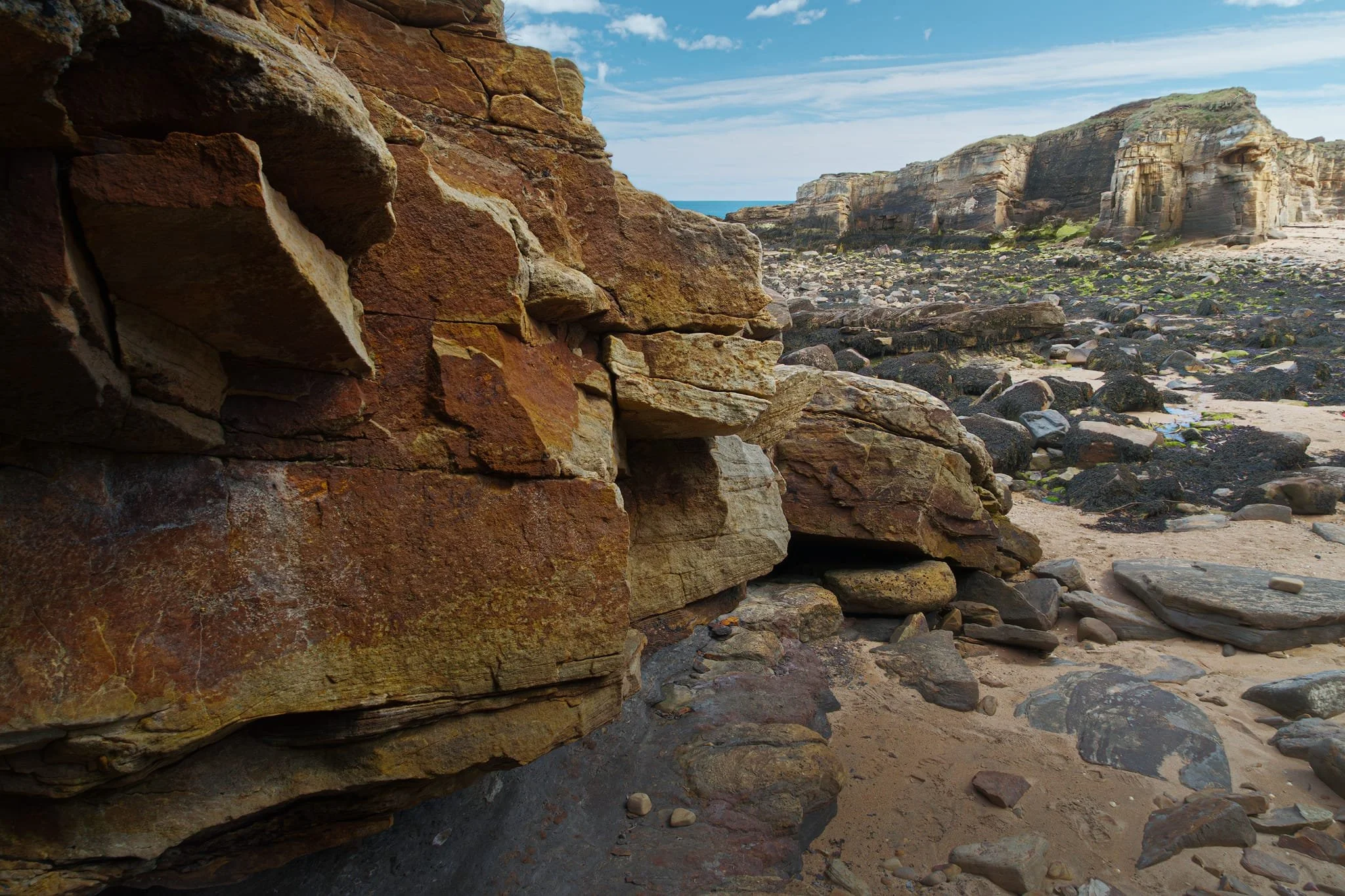
Heading back towards the beach, I tucked myself into a little cove to get this composition towards the sandstone cliffs.
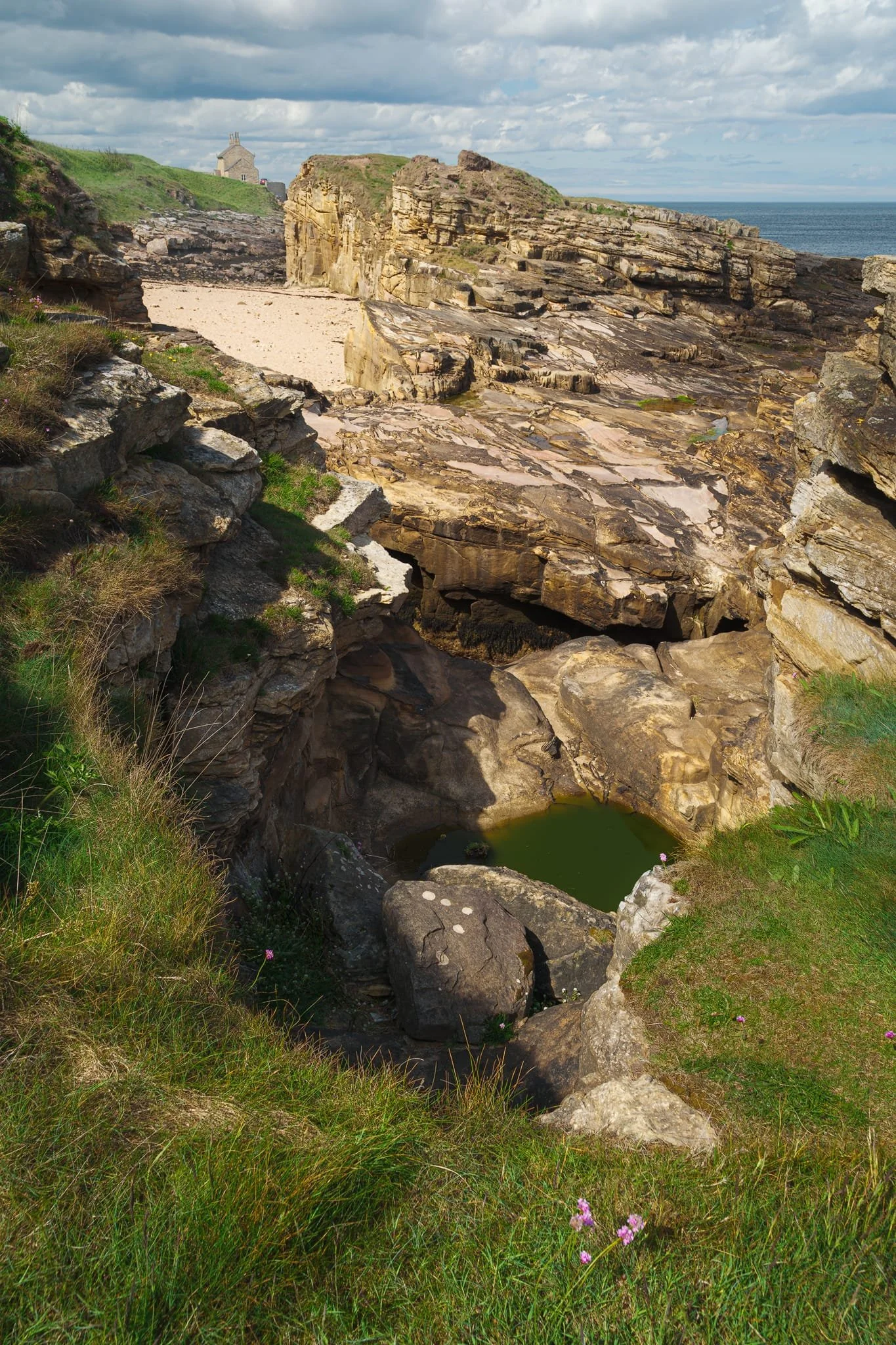
Turns out that a little further south you can clamber up and over an old quarry and you’re treated to these immense views towards the Rumbling Kern, its beach, and the Bathing House.
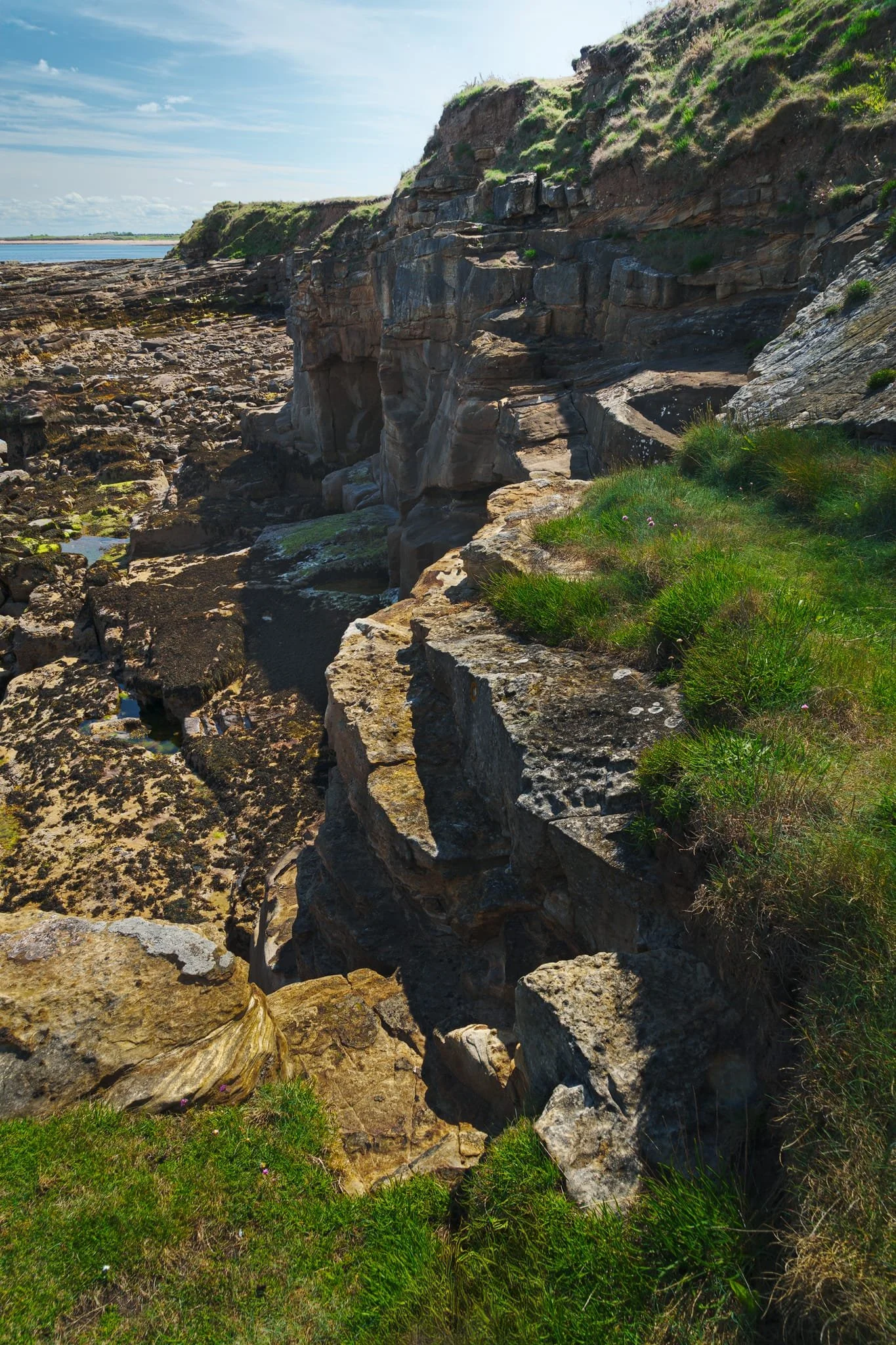
Looking south, some actual cliffs in Northumberland. We will definitely need to come back when both the light isn’t as harsh and when the tide is in. I think this area will look even better when filled with water.