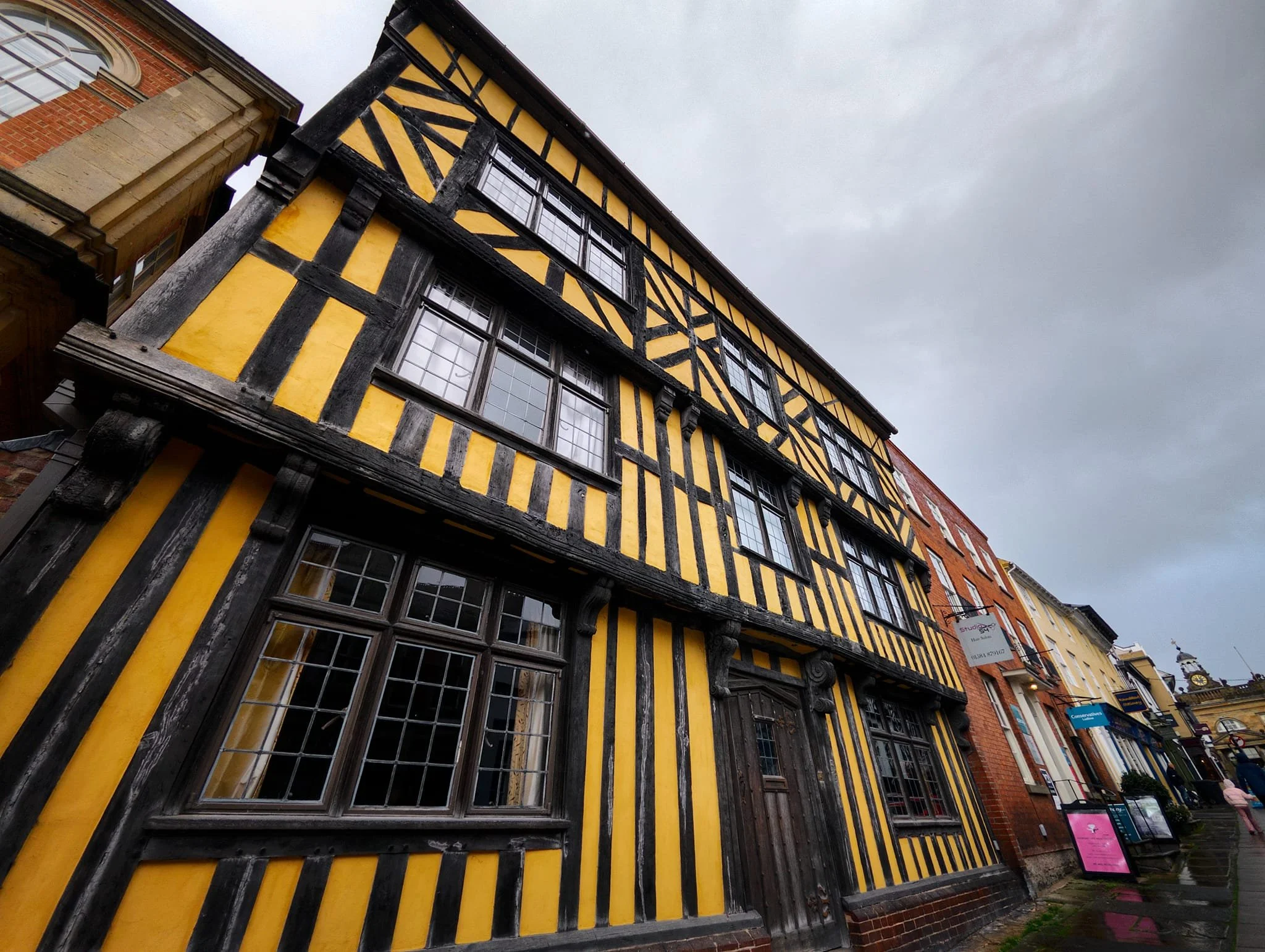
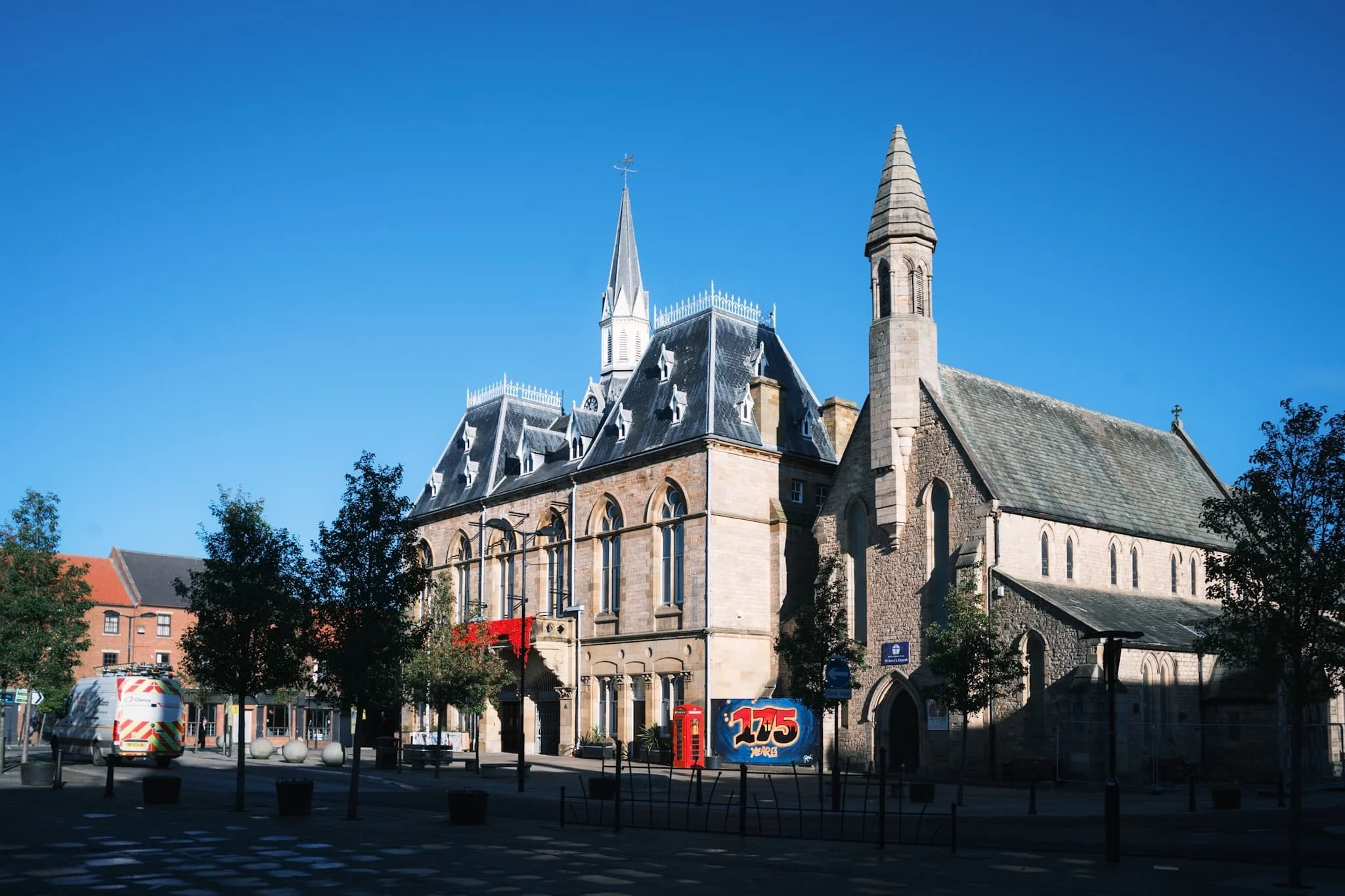
Another gem of preserved history.
We thought Ludlow was impressive with its 500 Listed Buildings. Then we went to Shrewsbury. According to its Wikipedia, “The centre has a largely undisturbed medieval street plan and over 660 listed buildings, including several examples of timber framing from the 15th and 16th centuries.”
Before the rains arrived we enjoyed some terrific light as we purposely wandered around the town, drinking in the sights and sounds, our gaze pulled repeatedly upward to the historic rooflines and ornate facades.
As well as being historically and architecturally beautiful and significant, Shropshire also enjoys fantastic shopping and an excellent food and drink offering.
All photos taken on my Google Pixel 9 Pro XL. RAWs developed in Lightroom, merged together in Photomatix, then edited and finalised in Photoshop.
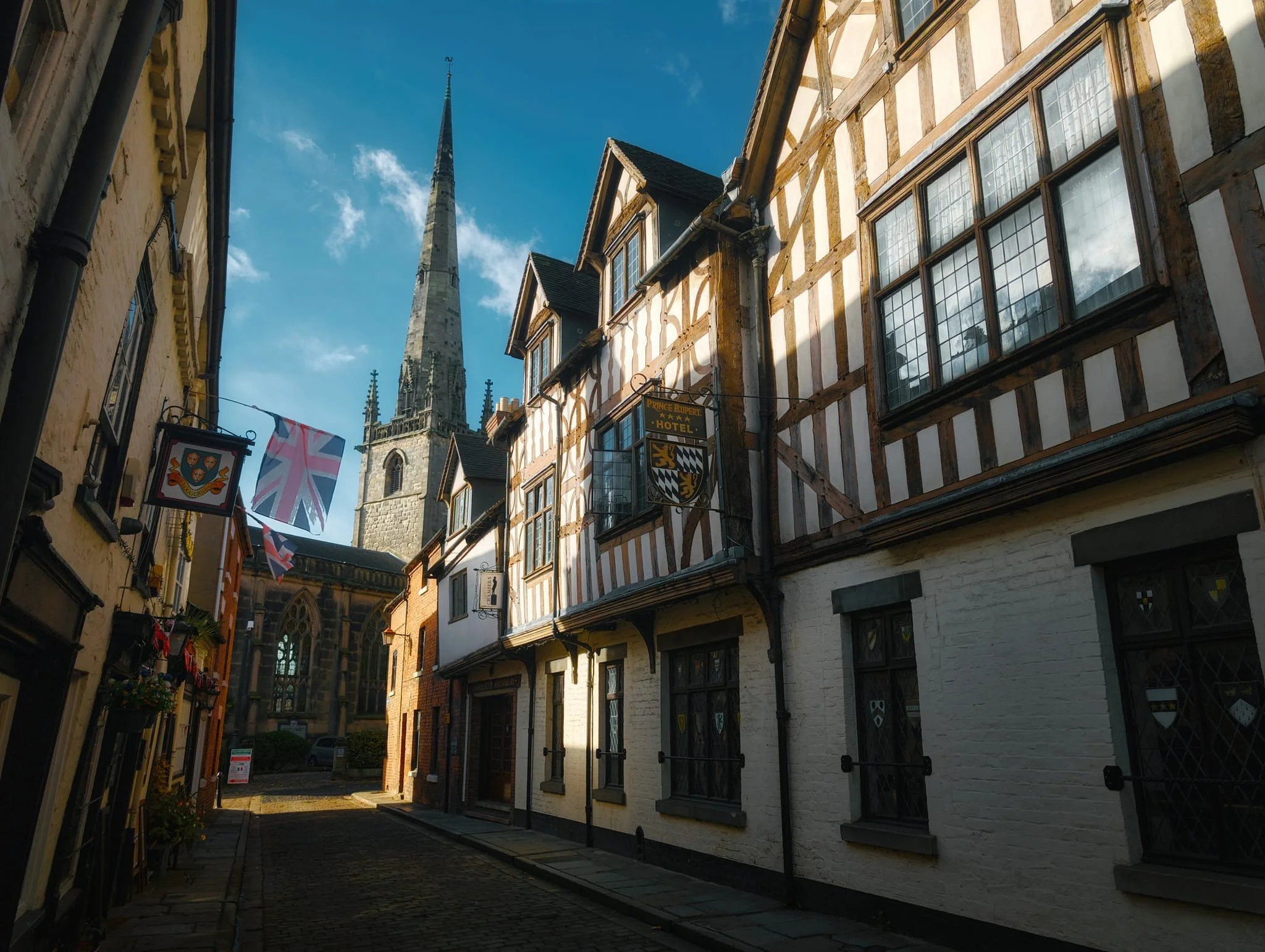
Built in the early 1600s, the Prince Rupert Hotel features, like much of Shropshire’s old buildings, timber-framing. The cellars of the hotel are reported to exist from the 1100s. Beyond, the pristine spire of St. Alkmund’s Church.
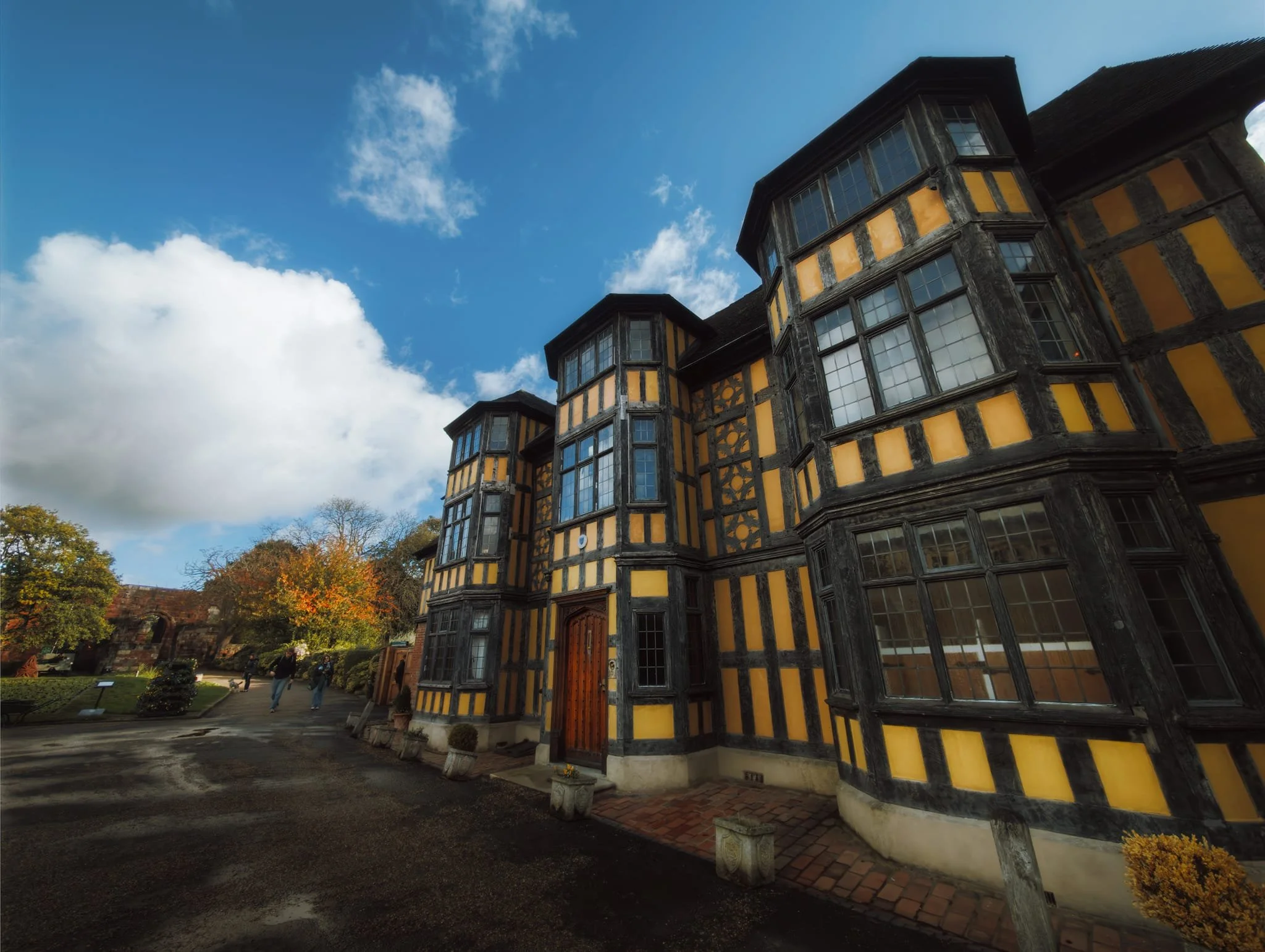
On the approach to the Soldiers of Shropshire Museum, you can find the beautiful Castle Gates House. Built in the late 1500s and restored around 1912, another striking timber-framed house. The 1912 restoration added a central arched doorway.
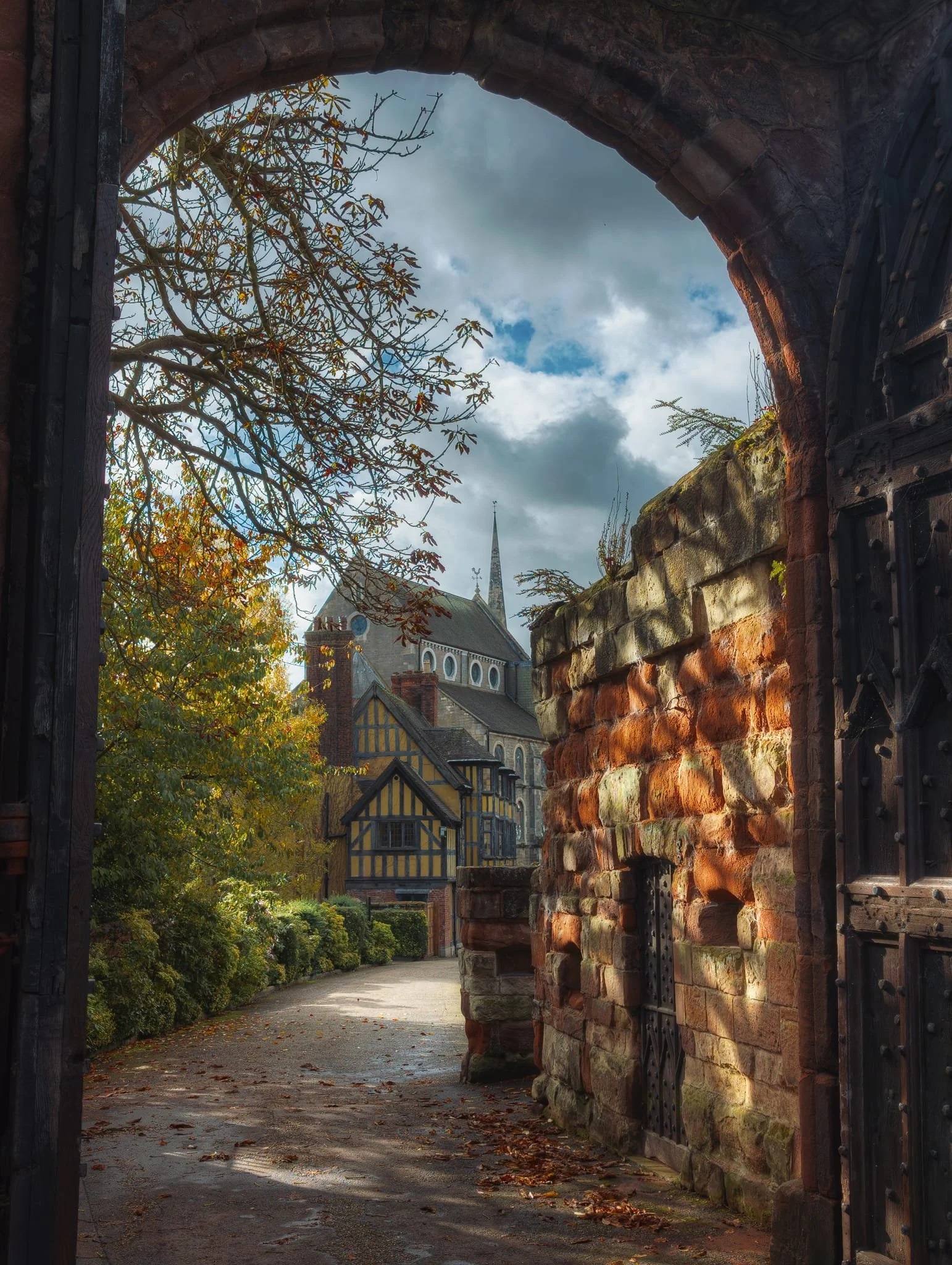
From the gateway of the Soldiers of Shropshire Museum, looking back towards the Castle Cates House.
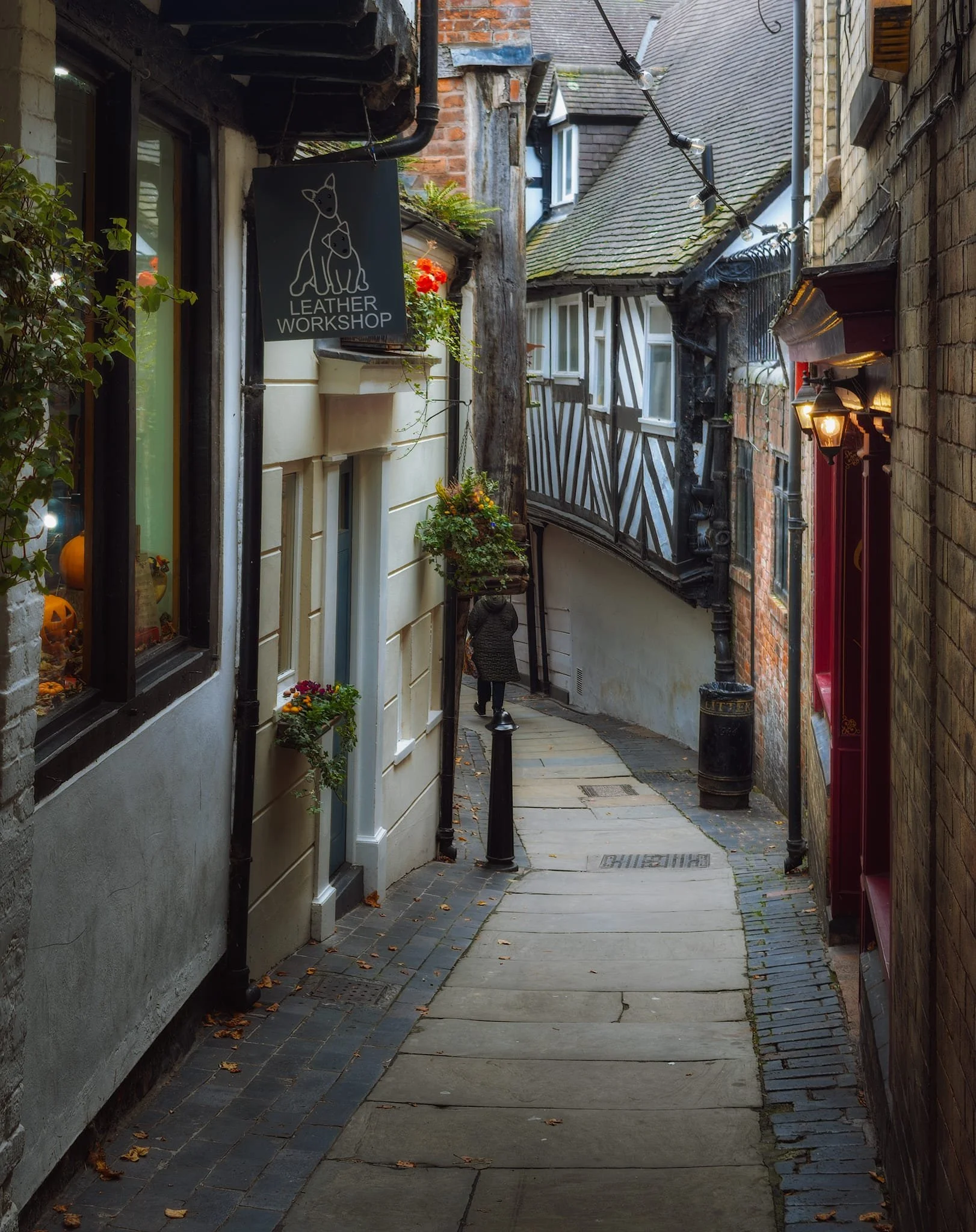
This is “Grope Lane”. Some medieval towns and cities in England have such a named lane, alternative names being “Gropecunt Lane”. Yeah.
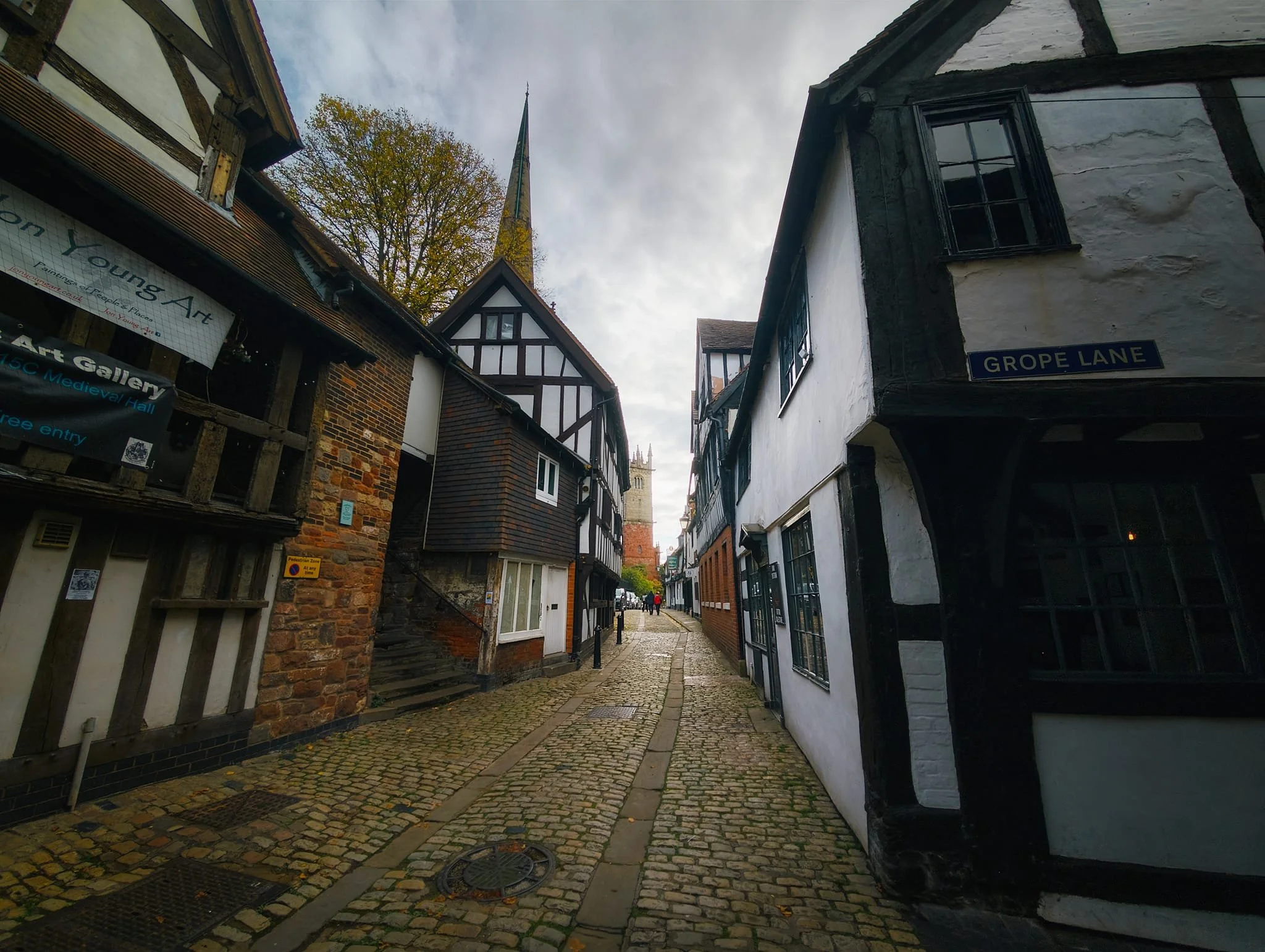
There are two theories for the origins of all the Grope or Gropecunt Lanes, one polite and one not. The polite version, certainly for Shrewsbury’s Grope Lane, is that the name was given because of the lane’s narrowness, which forced people to “grope” their way along it. The impolite version is that Grope/Gropecunt Lanes were prostitution areas.
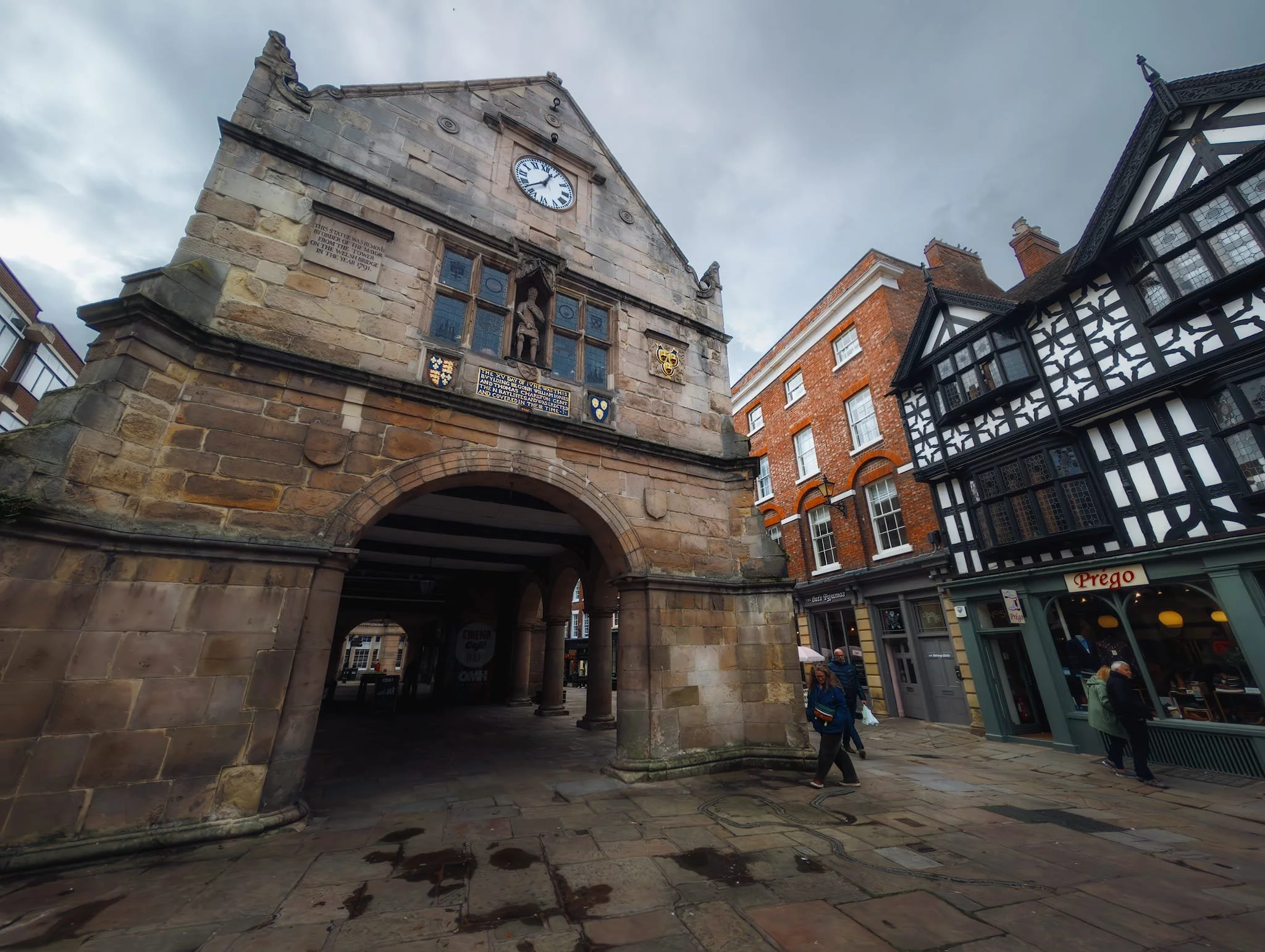
The Old Market Hall, built in 1596 by the Corporation of Shrewsbury. An older Market House was built on the same site in the 1260s. Rain clouds are brewing above.
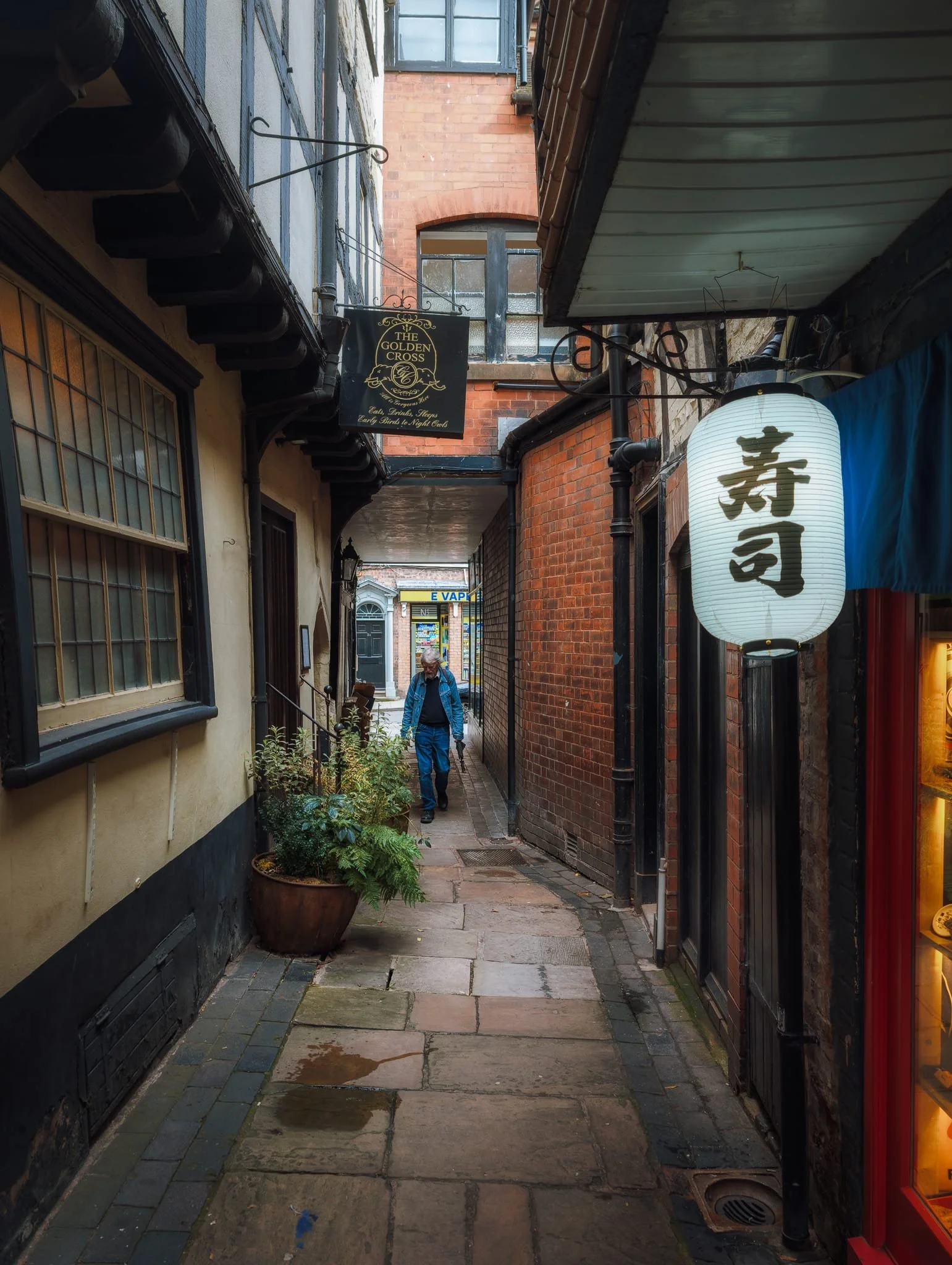
As the rain started to follow, we figured it was time for food. Down another narrow lane, Golden Cross Passage, we find Umai , a Japanese restaurant.
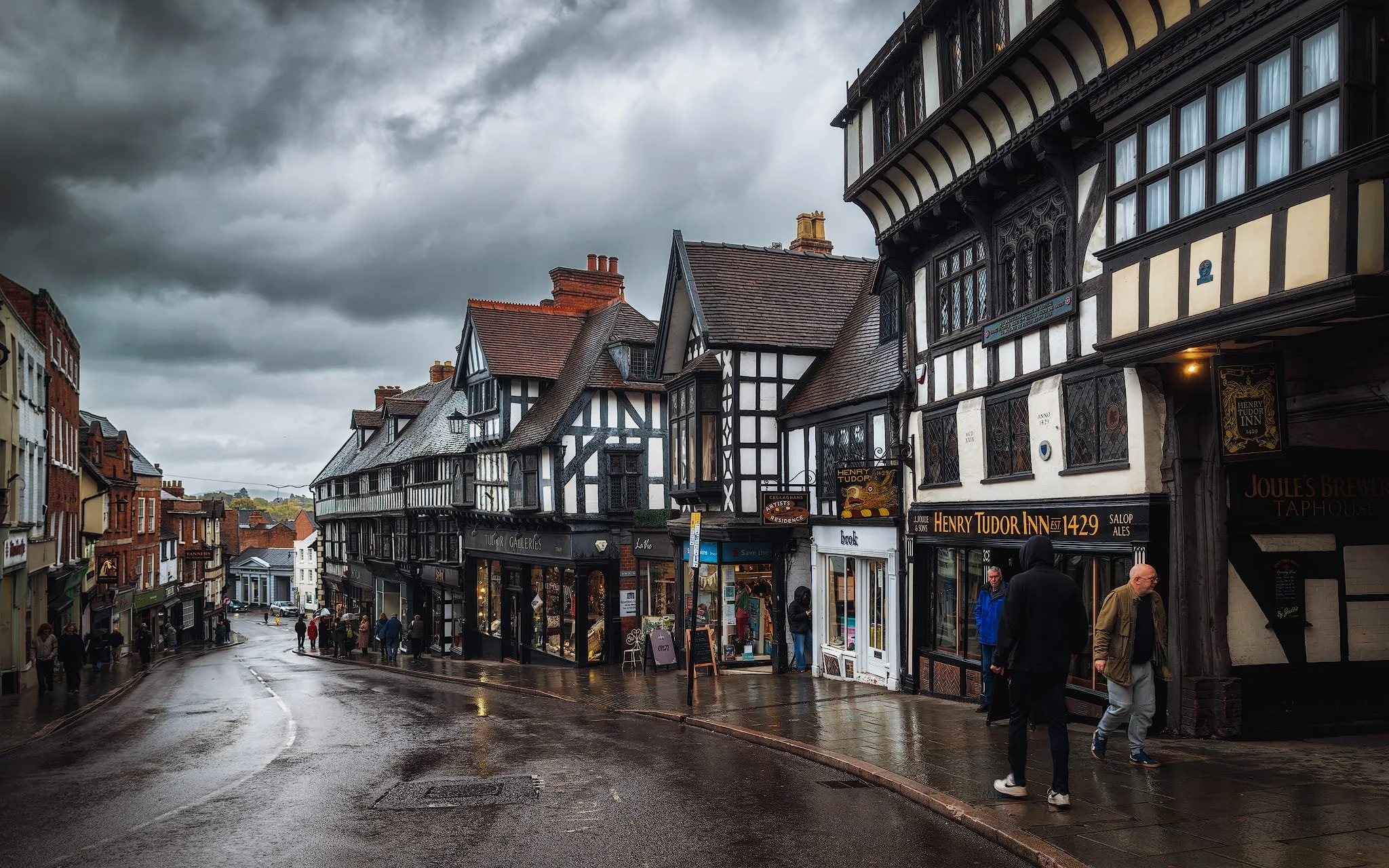
The Wyle Cop road is adorned with rows of timber-framed gorgeousness. As the rain fell, I quickly nabbed this moody shot looking down the road. Almost like stepping back in time.
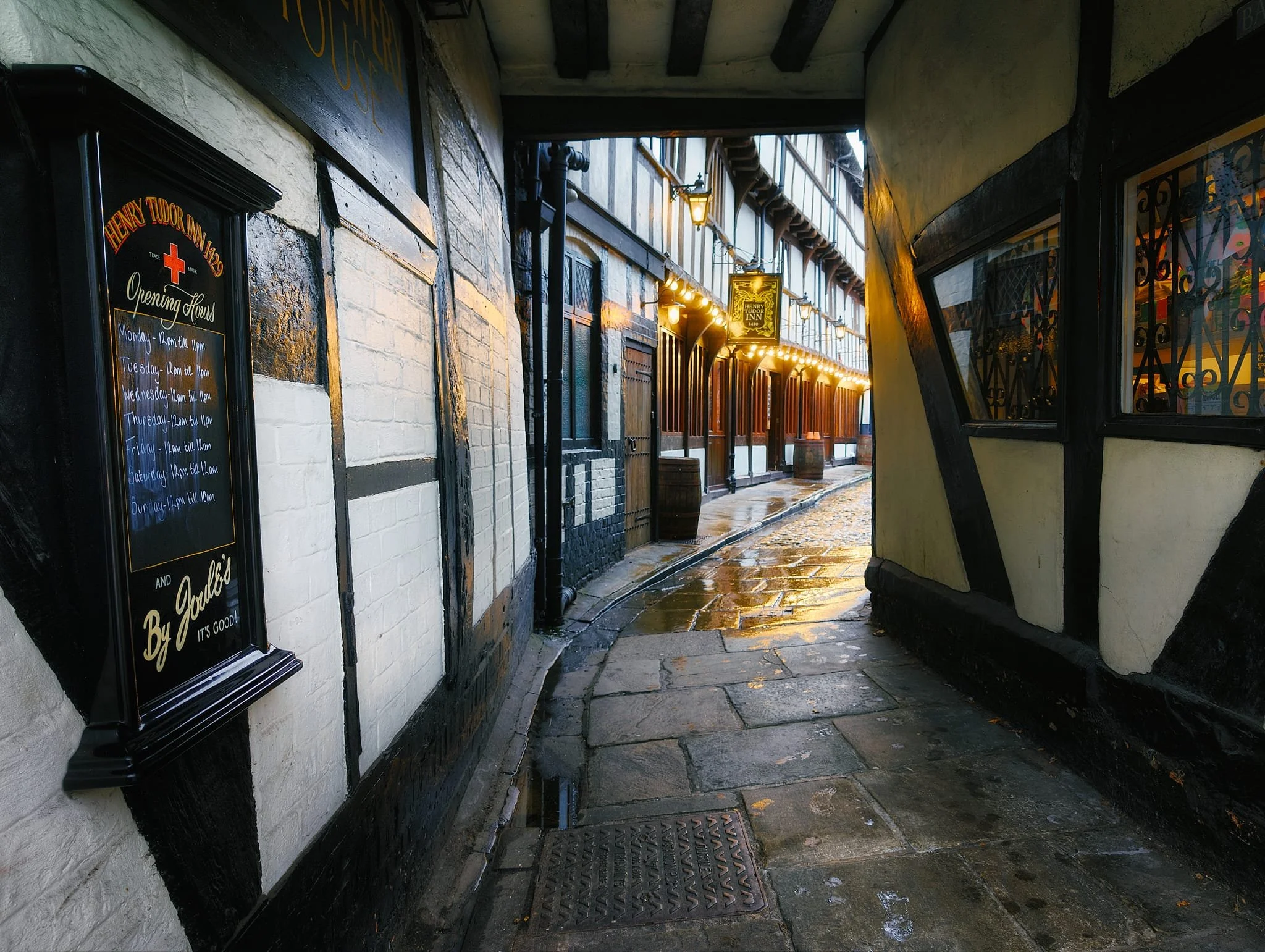
Built in the mid-1400s, the Henry Tudor Inn is an outstanding example of a late-medieval inn that retains super rare original features. A plaque records that Henry VII lodged here in 1485 before Bosworth. Originally a first-floor hall built over shops, with a rear wing connecting to the Trotting Horse building on Barracks Passage. As the light darkened blue, the lights of the inn flickered on and I nabbed this beautiful composition.