For our final full day of our mini-break, a trip to the coast was in order.
The weather forecast for the day had the fells of the Western Lake District blanketed in clouds. Instead, the westernmost point of Cumbria seemed like a good alternative.
St. Bees is a small village on the western coast of Cumbria. In comparison to the deep dales and high fells that characterise the Cumbrian landscape, most of Cumbria’s coastline consists of long sandy beaches, stretches of shingle, the occasional dune, and mudflats nearer Morecambe Bay. The exception to this rule lies at St. Bees, where St. Bees Head towers above the coastal village.
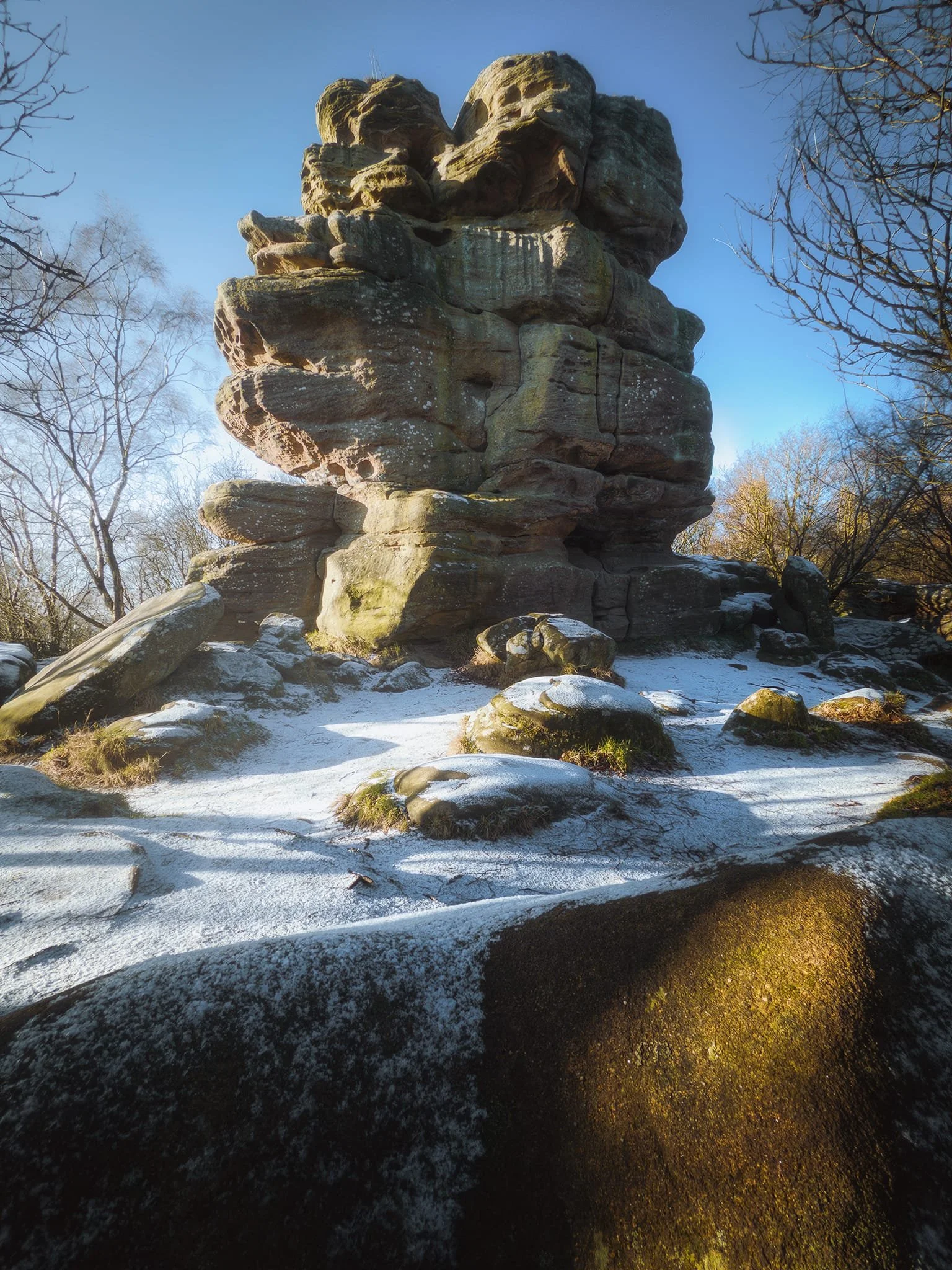
St. Bees Head is split into two sections: the South Head (which overlooks St. Bees village, and is known locally as the Tomlin), and the North Head. In between the two headlands is Fleswick Bay, accessible only by foot or sea. The small bay consists of deep shingle underfoot and towering sandstone cliffs in an array of otherworldly and seemingly impossible shapes and arrangements.
It’s been a good few years since we’ve hiked St. Bees Head, and it’s nice to reaffirm that our fitness has greatly improved since the last visit. St. Bees Head, and Fleswick Bay, did not disappoint.
All photos taken on my Fujifilm X-T2 using my three prime lenses: a Fujinon 23mm f/2.0, a Laowa 9mm f/2.8, and an adapted 55mm f/2.0. All images made in-camera using a custom Velvia-based recipe, finished for the web in Pixelmator and Darkroom.
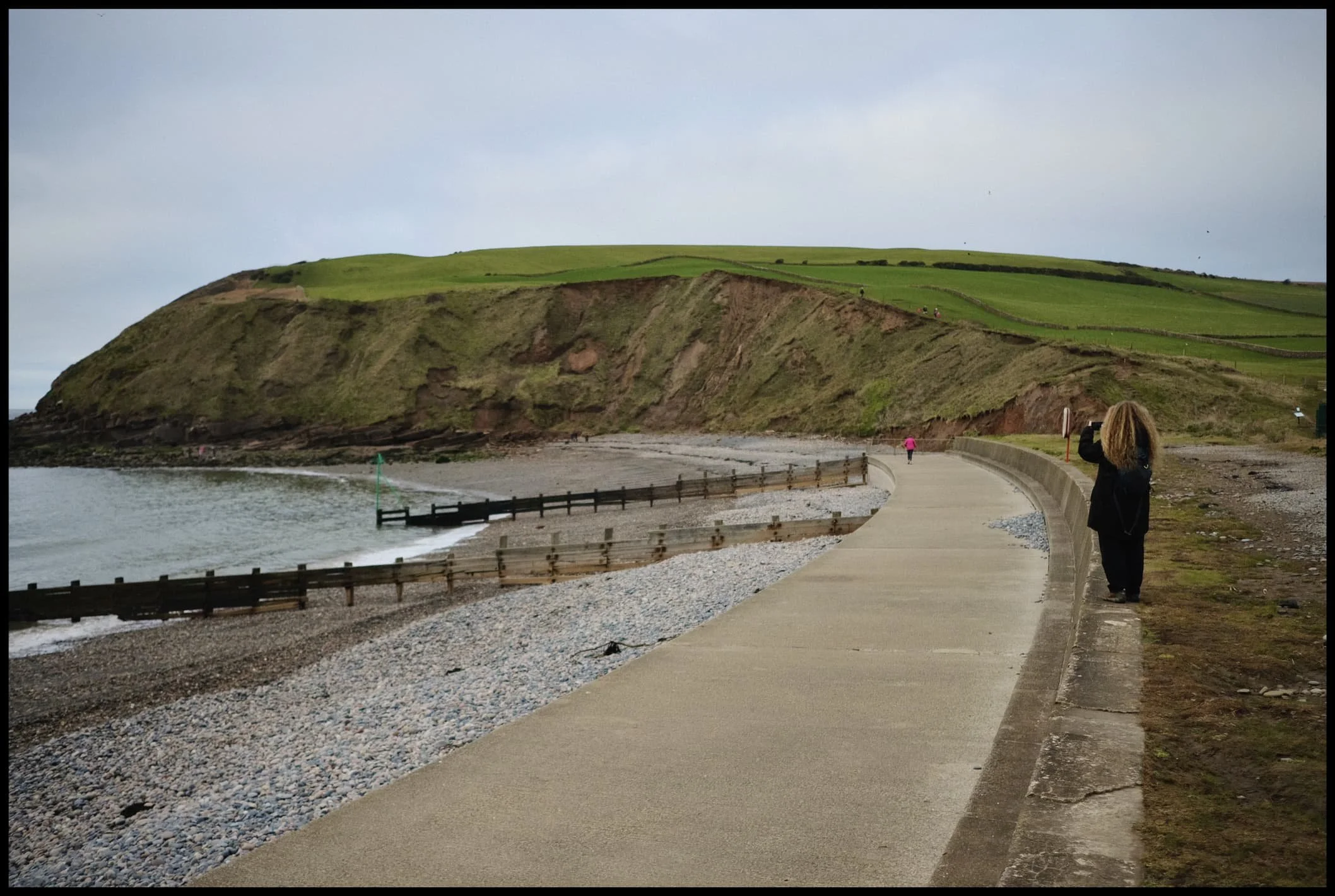
Our destination for the day: St. Bees Head from the shore at St. Bees.
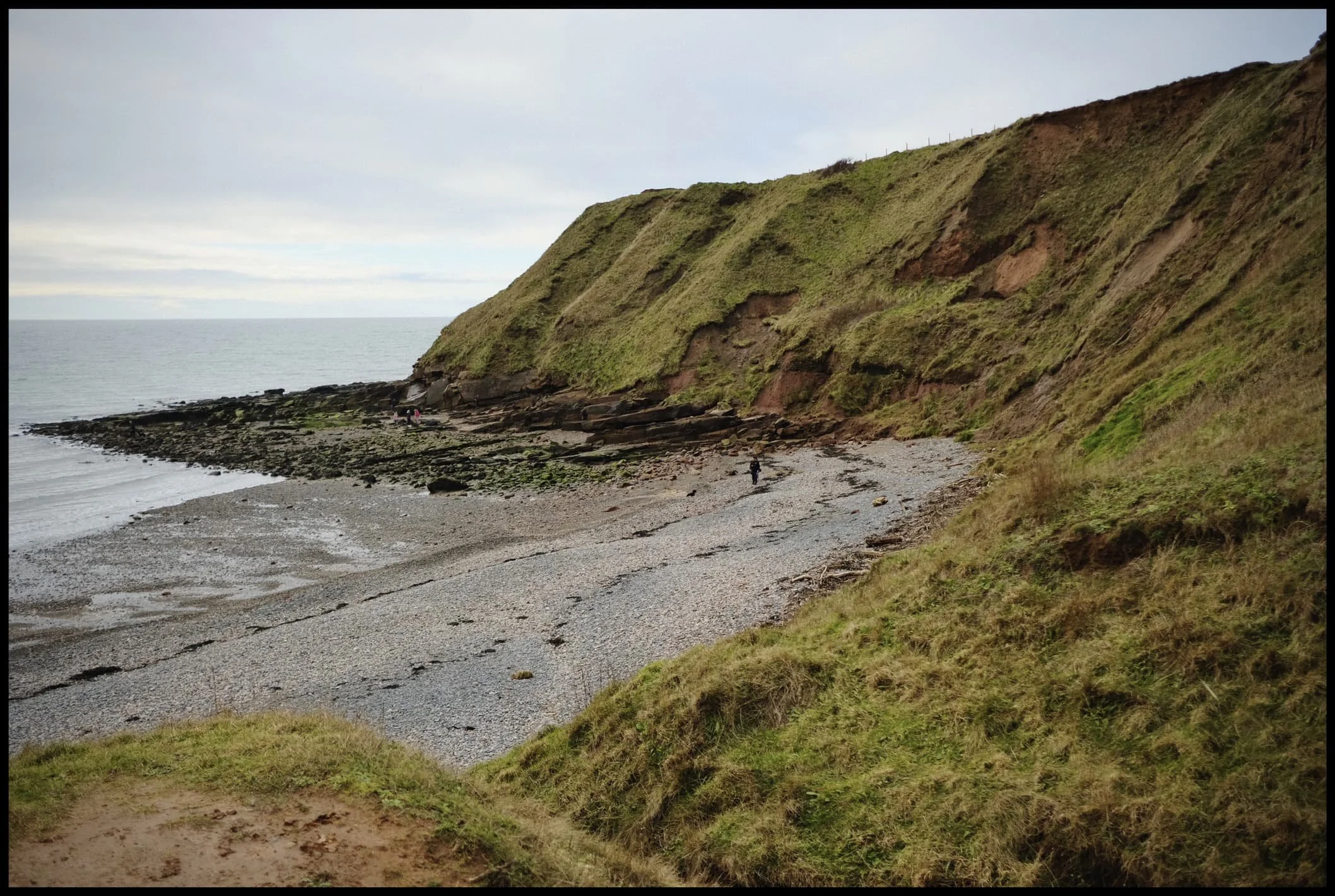
The views open up the minute you step on the cliff path. It’s fair to say that St. Bees Head has seen it’s fair share of erosion.
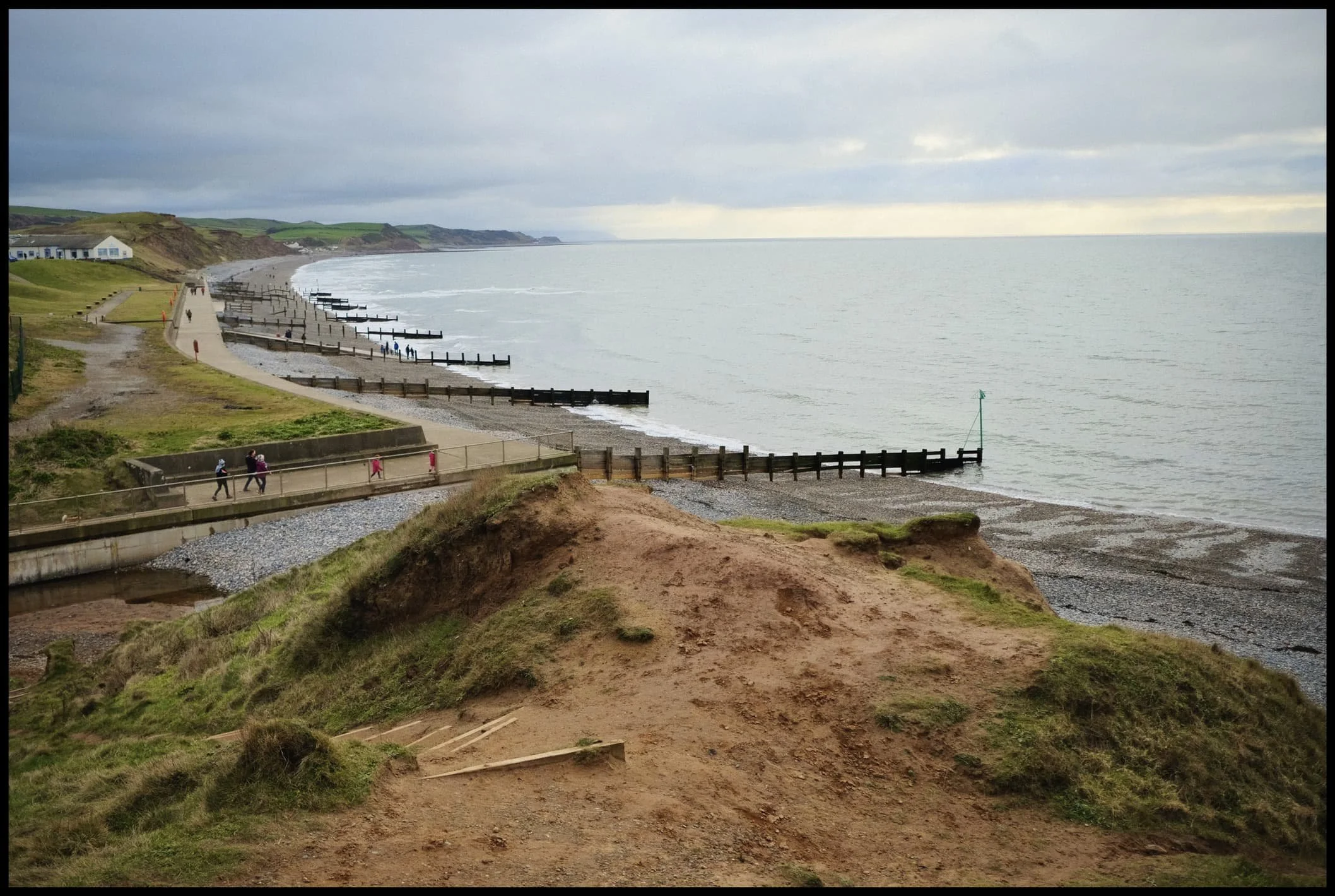
The cliff path reveals the extent of the St. Bees coastline. Much of the Cumbrian coastline is like this.
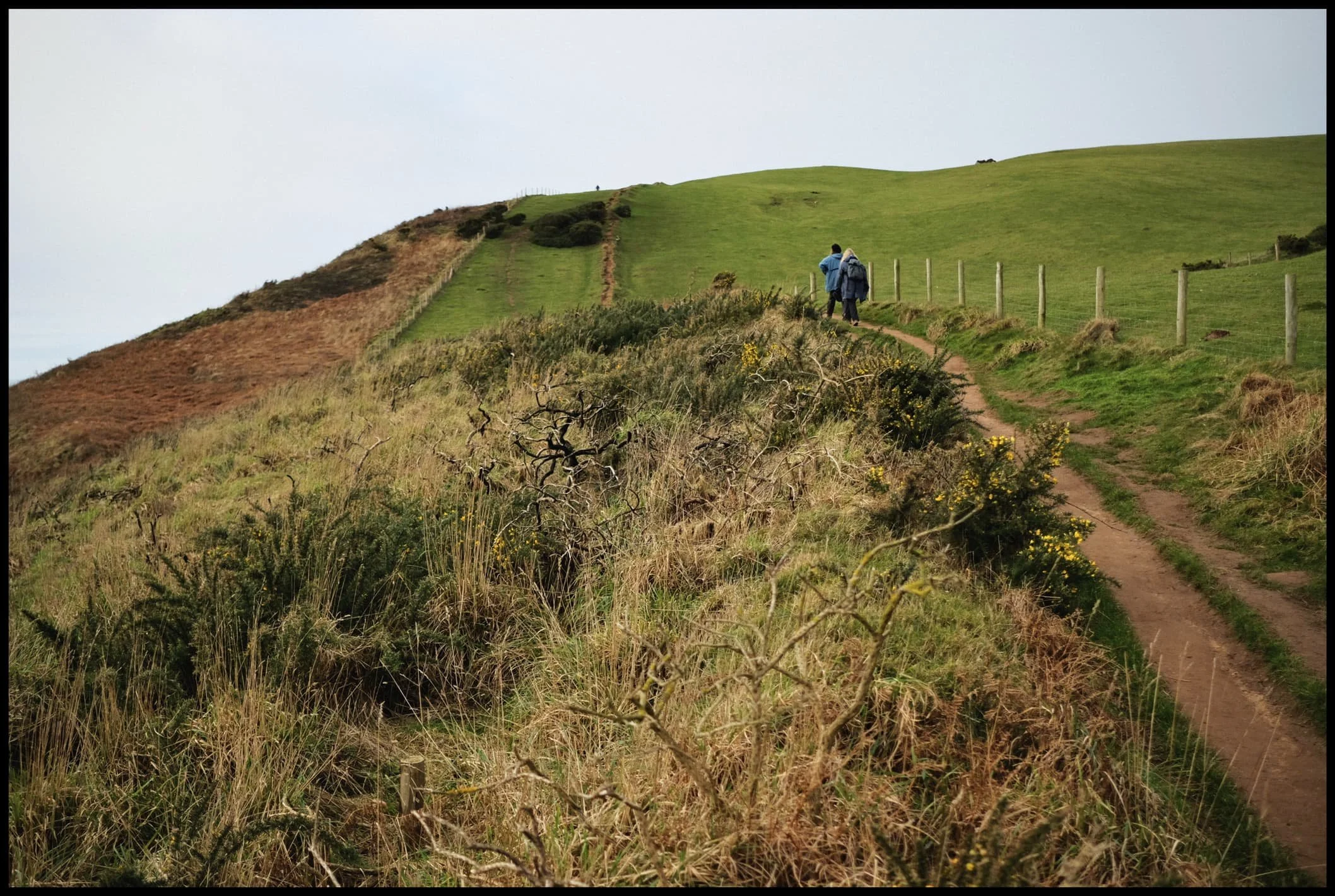
The first section up to the top of the South Head is quite the pull.
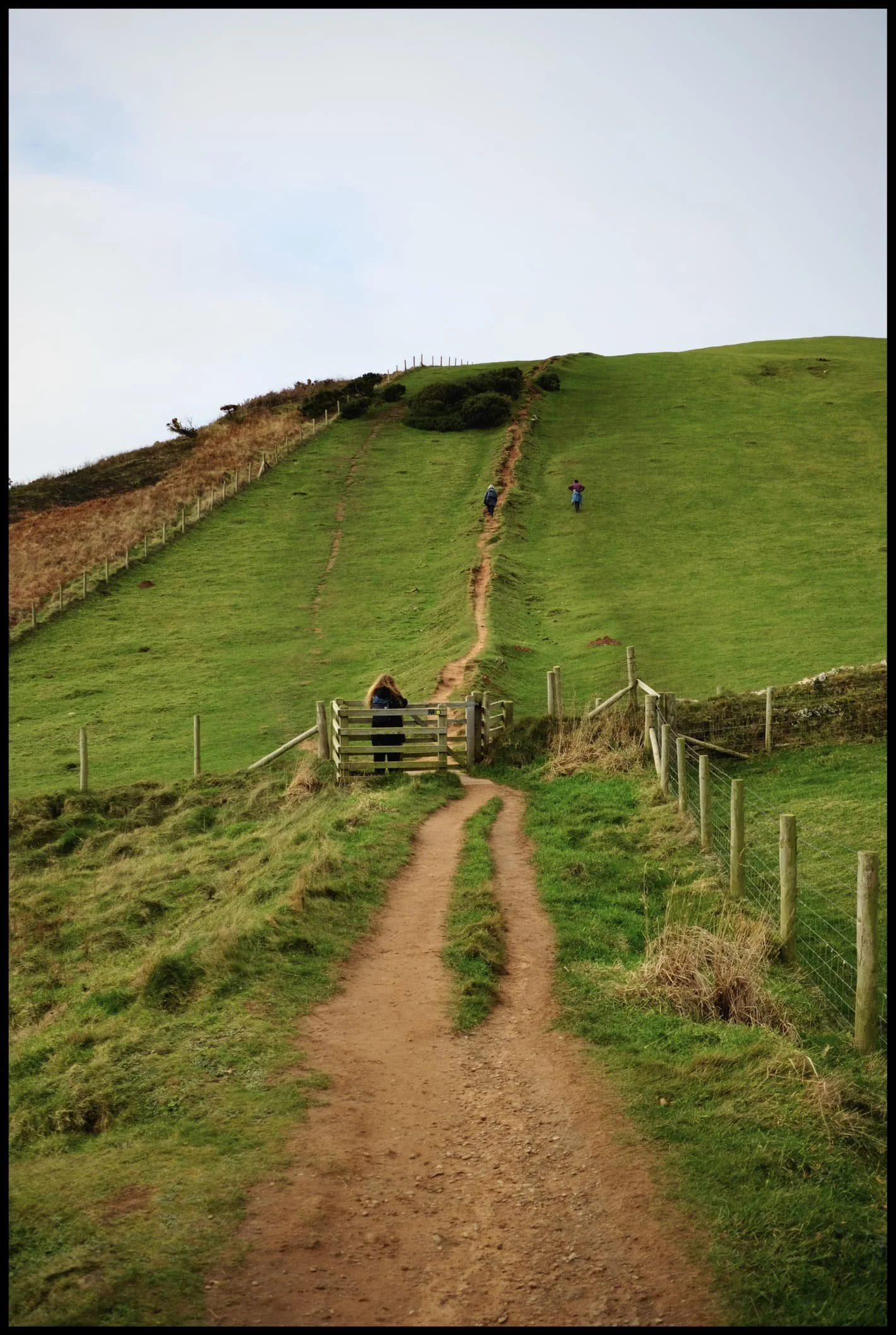
Yeah, that’s pretty steep. If the path were more wet and muddy, I’d have really struggled.
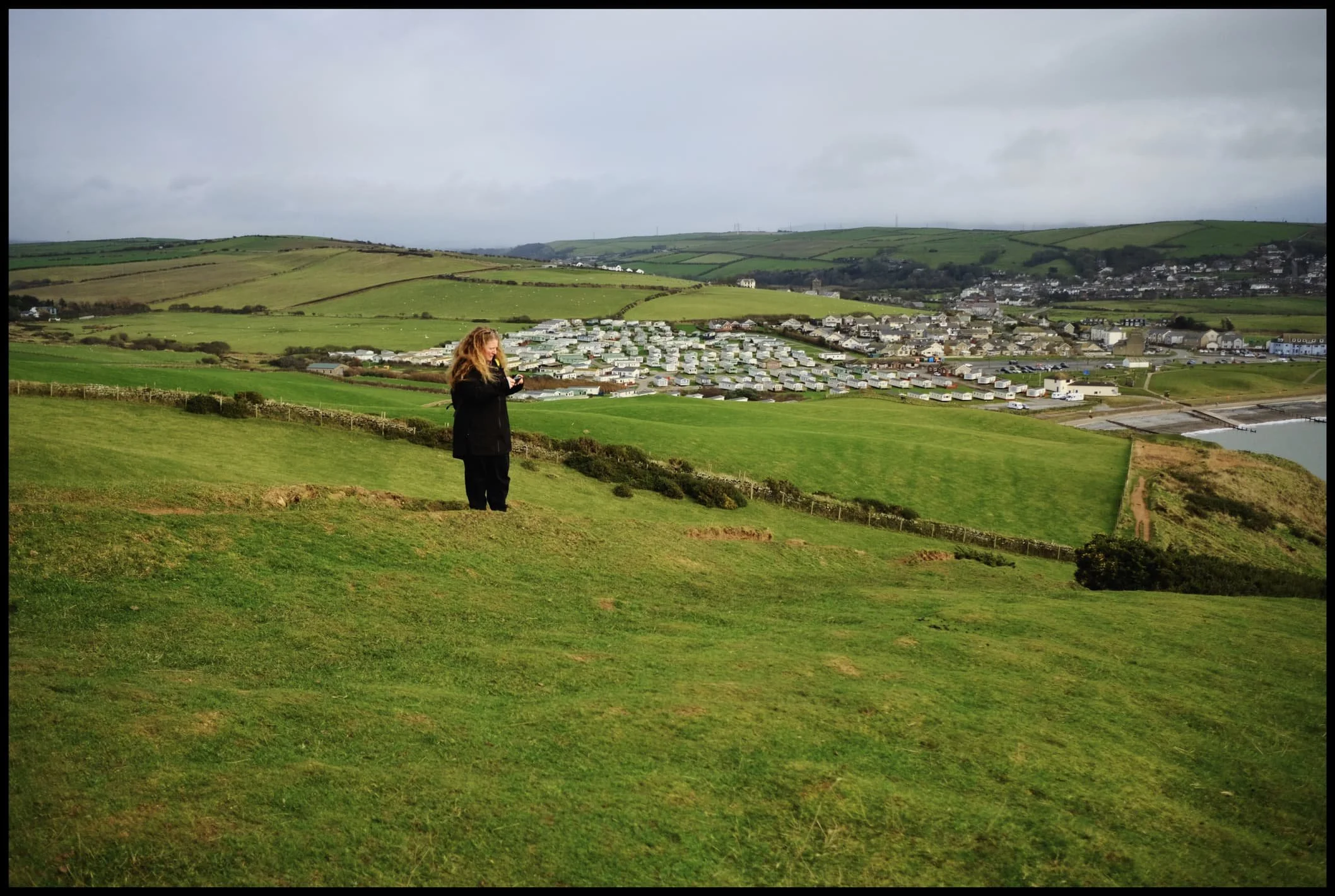
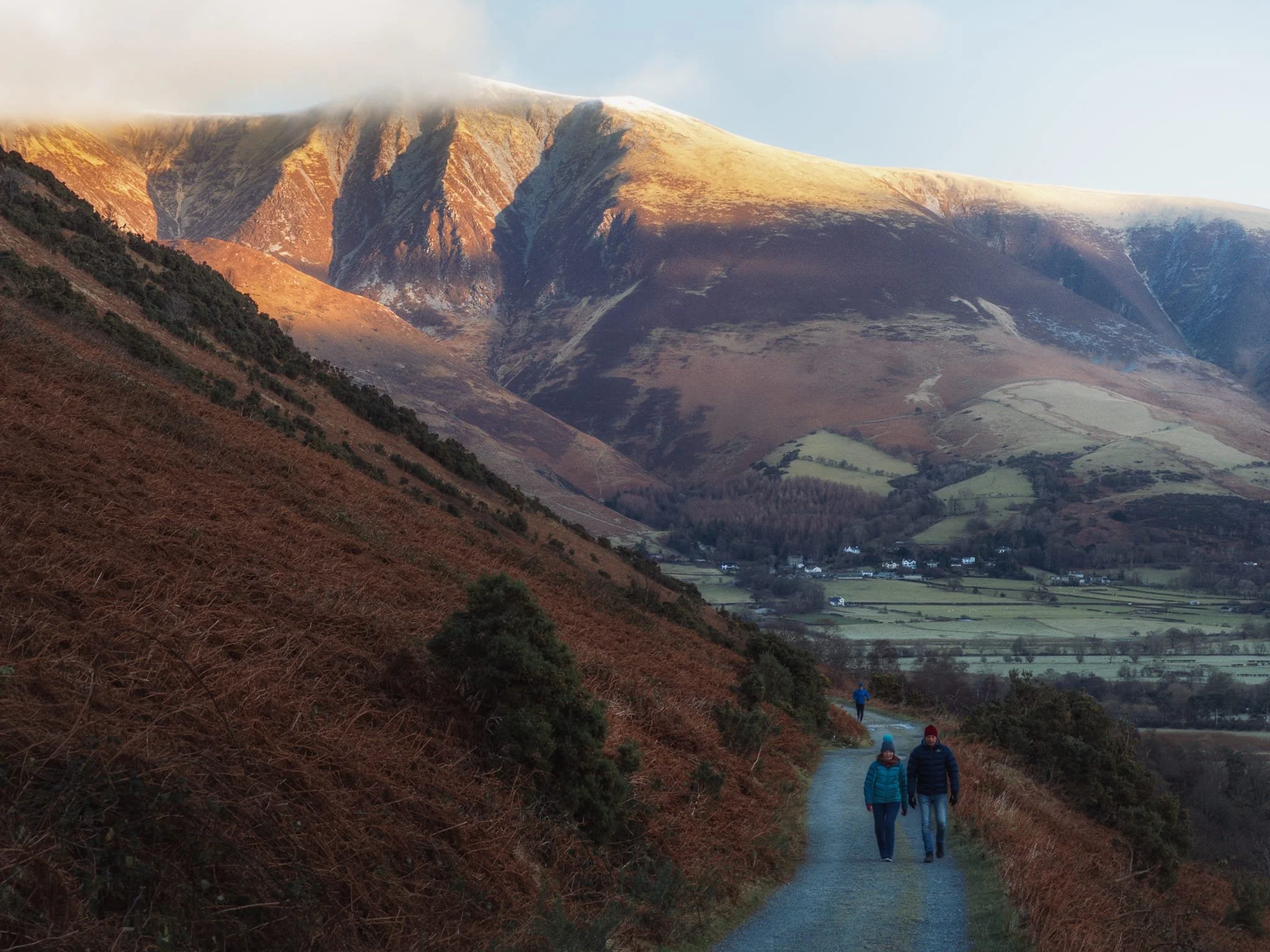
Thankfully it’s not long before the cliff path levels out, and gorgeous panoramas to St. Bees village and the Lakeland fells open up.
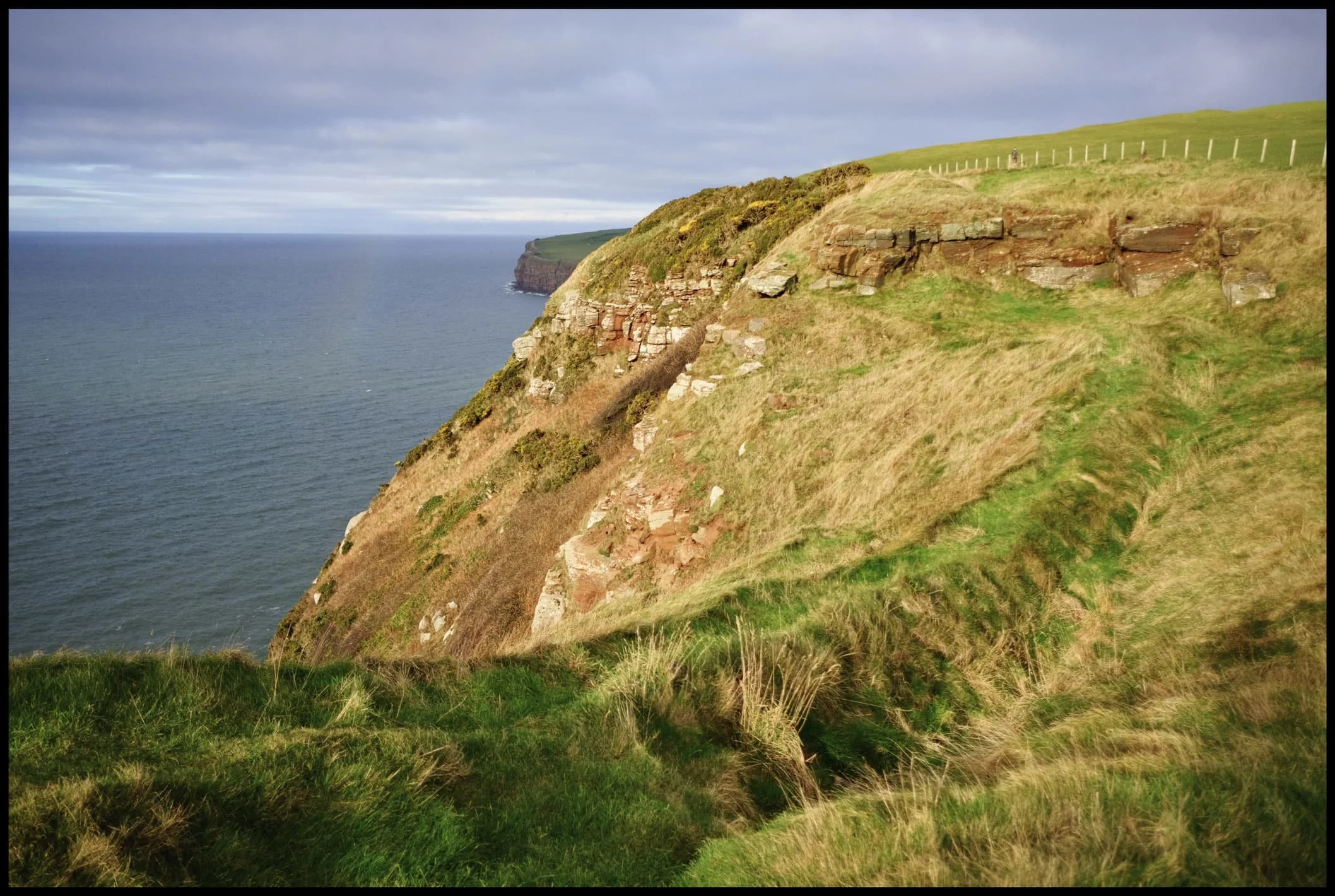
Near the old coastguard lookout, a fantastic view towards the headland’s sheer cliffs and Fleswick Bay beyond is possible. The path used to follow this cliff top quite closely, but erosion has meant the path has moved further inland.
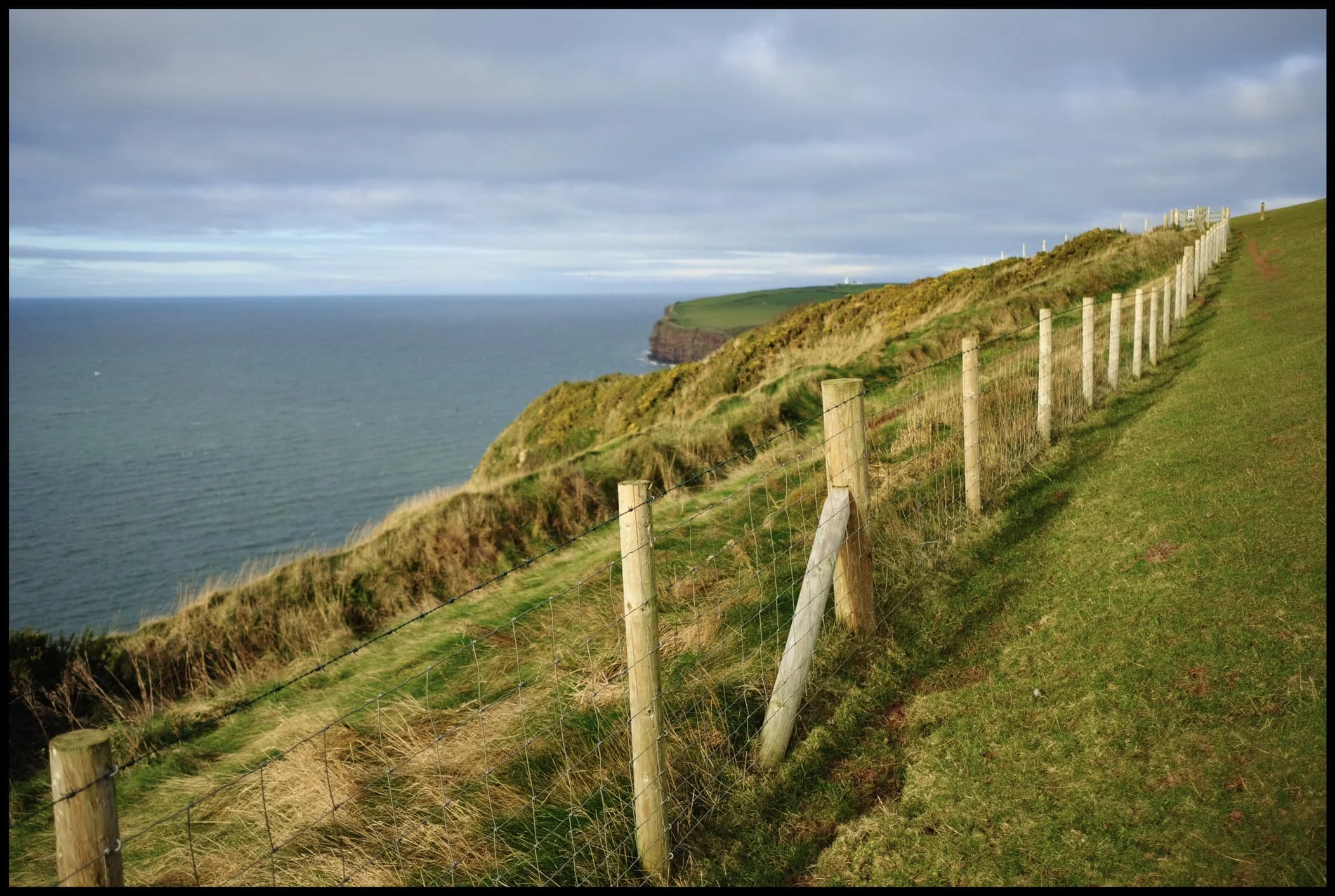
To be safe, we stayed on the inland side of the path. The cliffs surrounding Fleswick Bay become more visible.
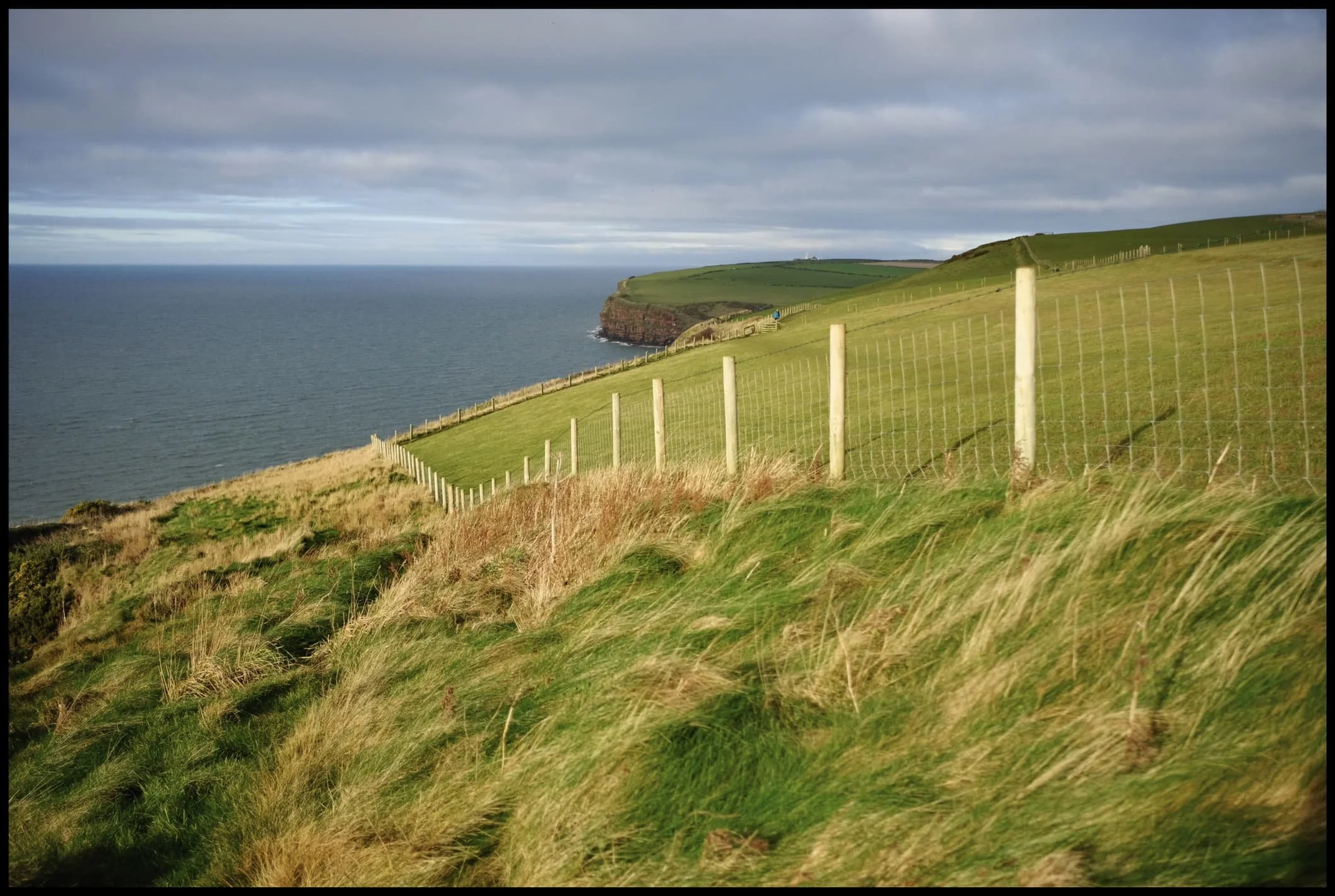
Despite the heavy cloud cover, the light conditions were being very cooperative.
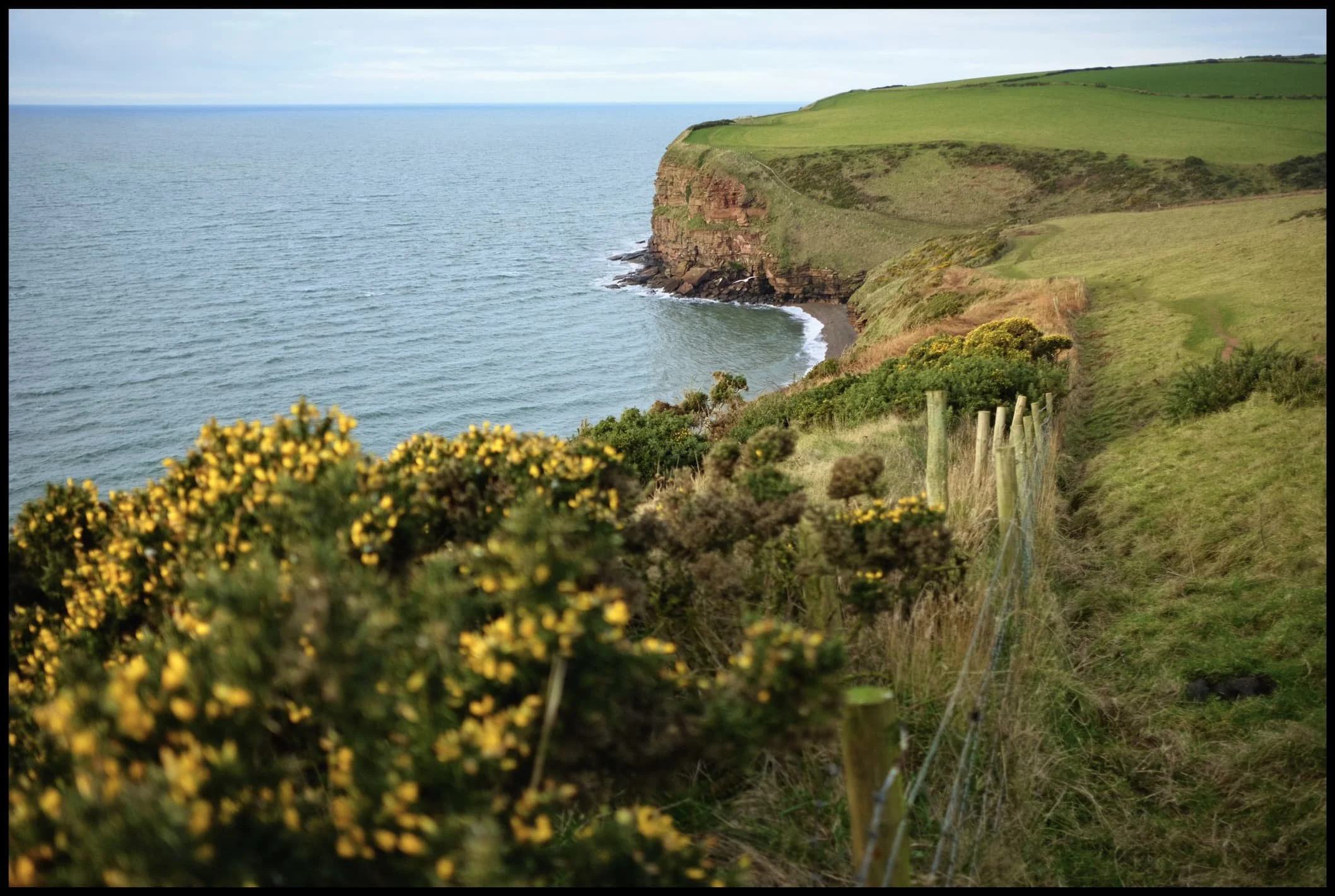
Lots of gorse, Ulex europaeus , can be around the cliff tops of St. Bees Head. They’re not quite flowering yet, but those that have offered a nice composition as we neared Fleswick Bay.
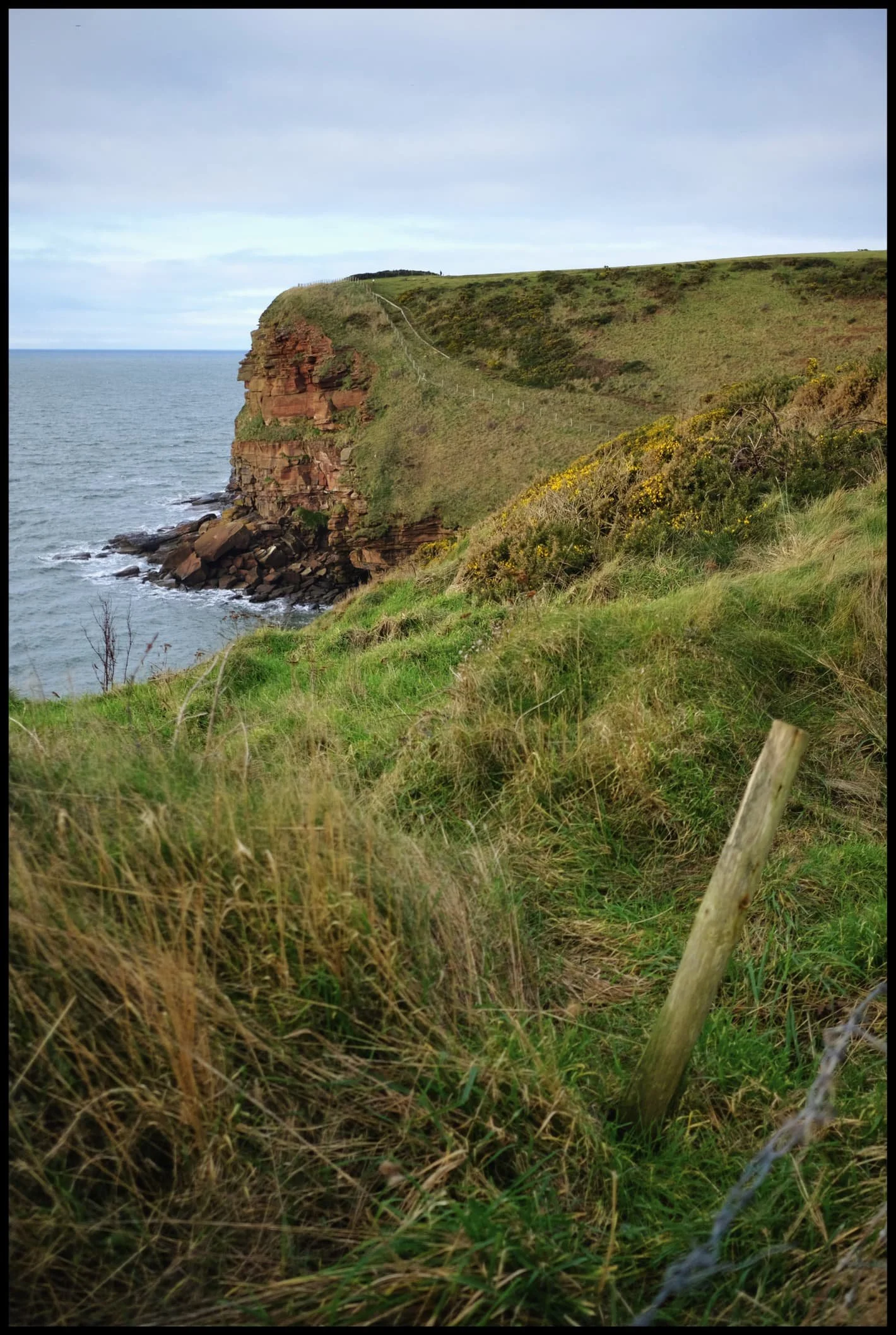
The way down to Fleswick Bay nears.
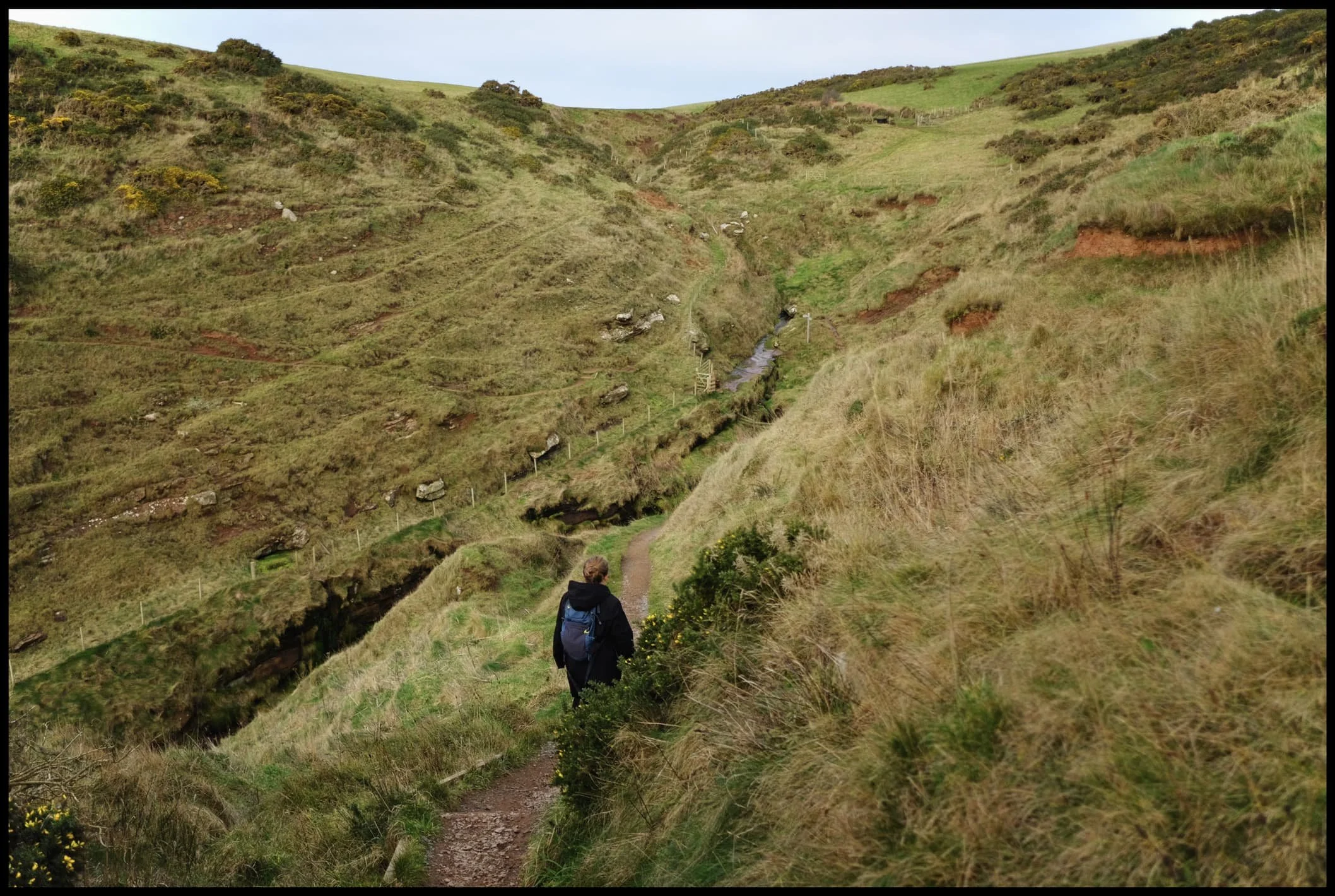
Getting down to Fleswick Bay can be tricky. The path is often muddy, and the deep gill leading out to the bay is lined with moss-covered loose boulders. I did, dear reader, fall on my ass trying to get to the bay.
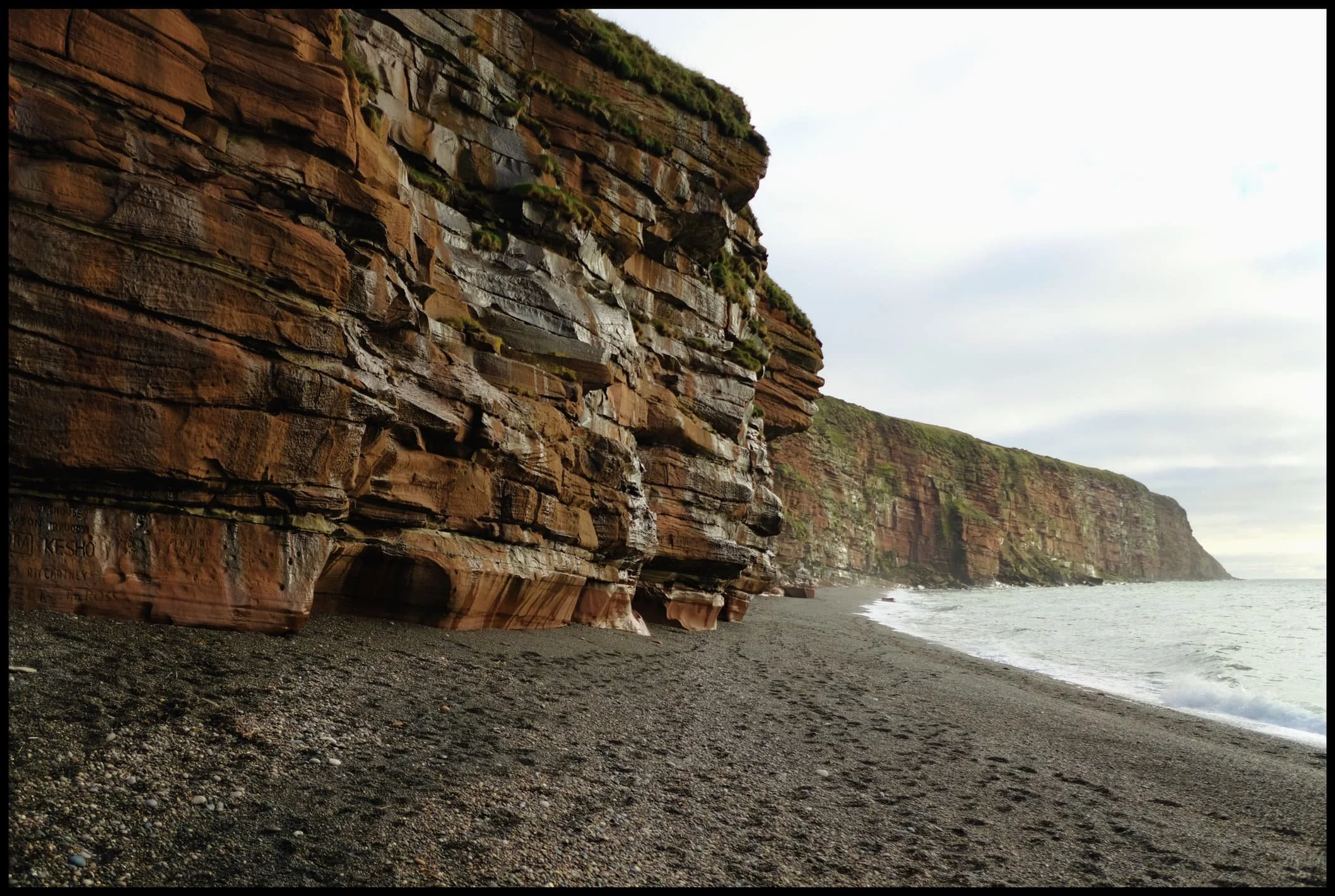
Our preservation paid off. This is Fleswick Bay and her incredible cliffs.
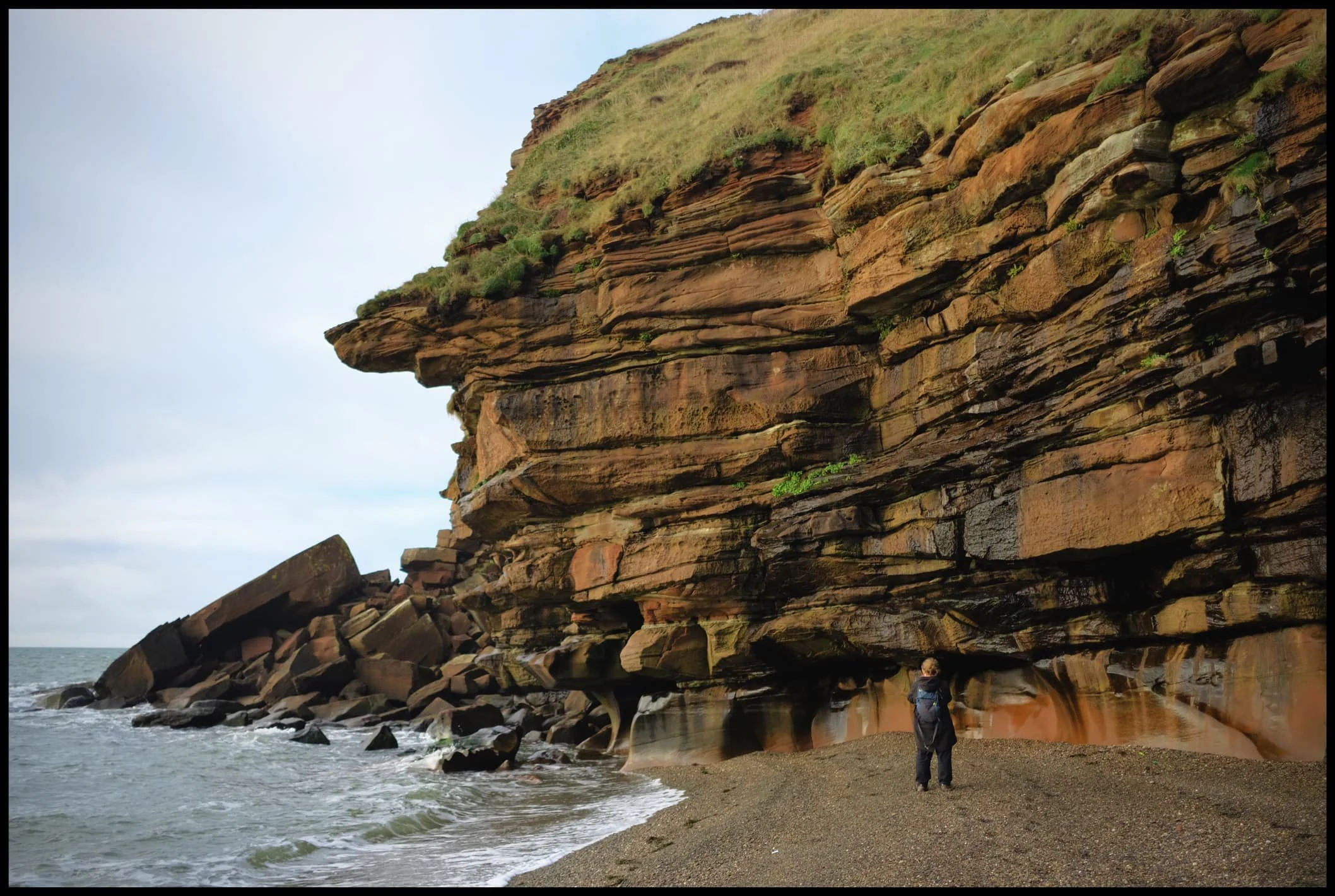
My lovely Lisabet, providing a sense of scale against the deep red jenga-like cliffs of Fleswick Bay.
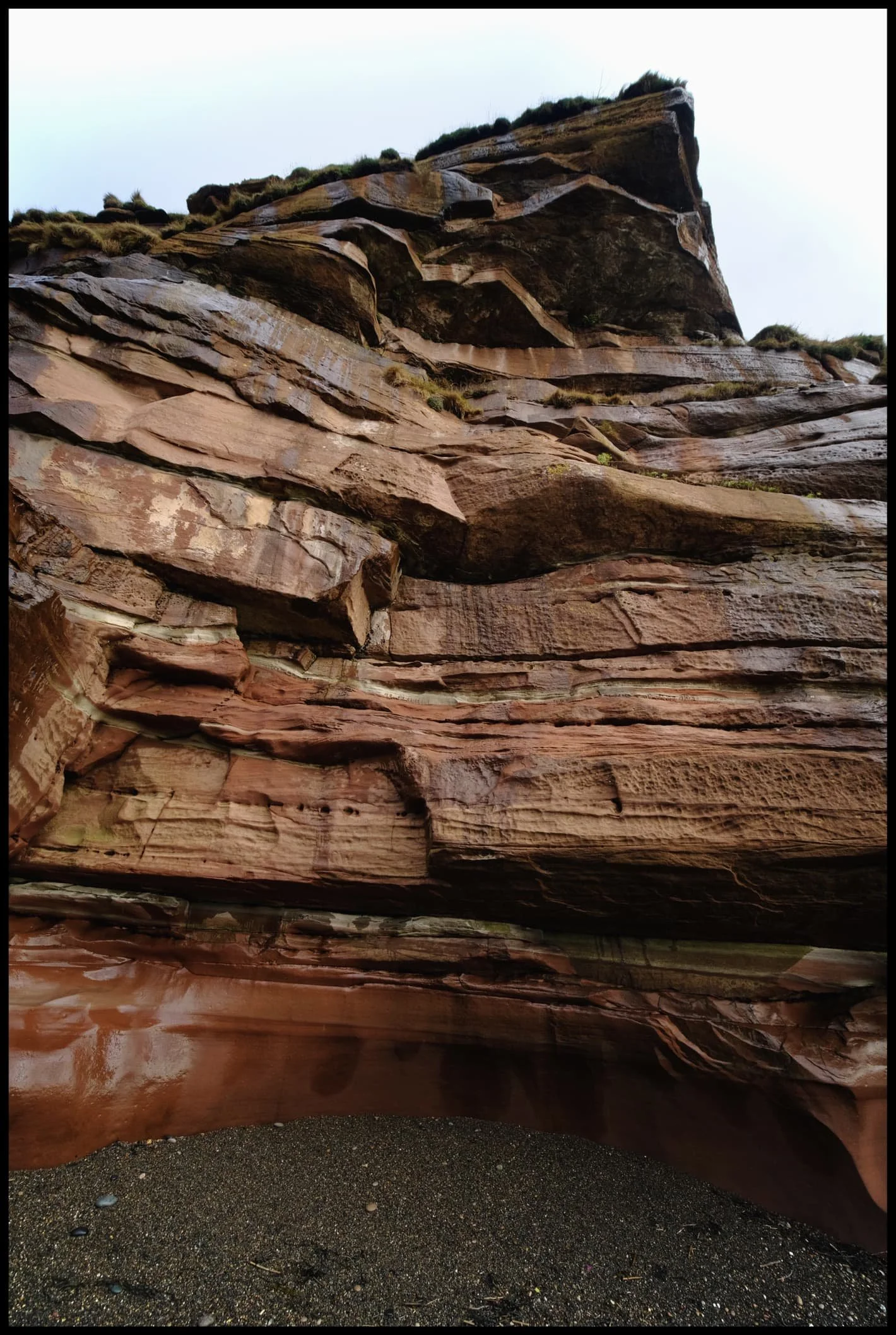
It was time to fit my ultra-wide 9mm lens on to nab some expansive compositions of Fleswick Bay’s strange cliff textures.
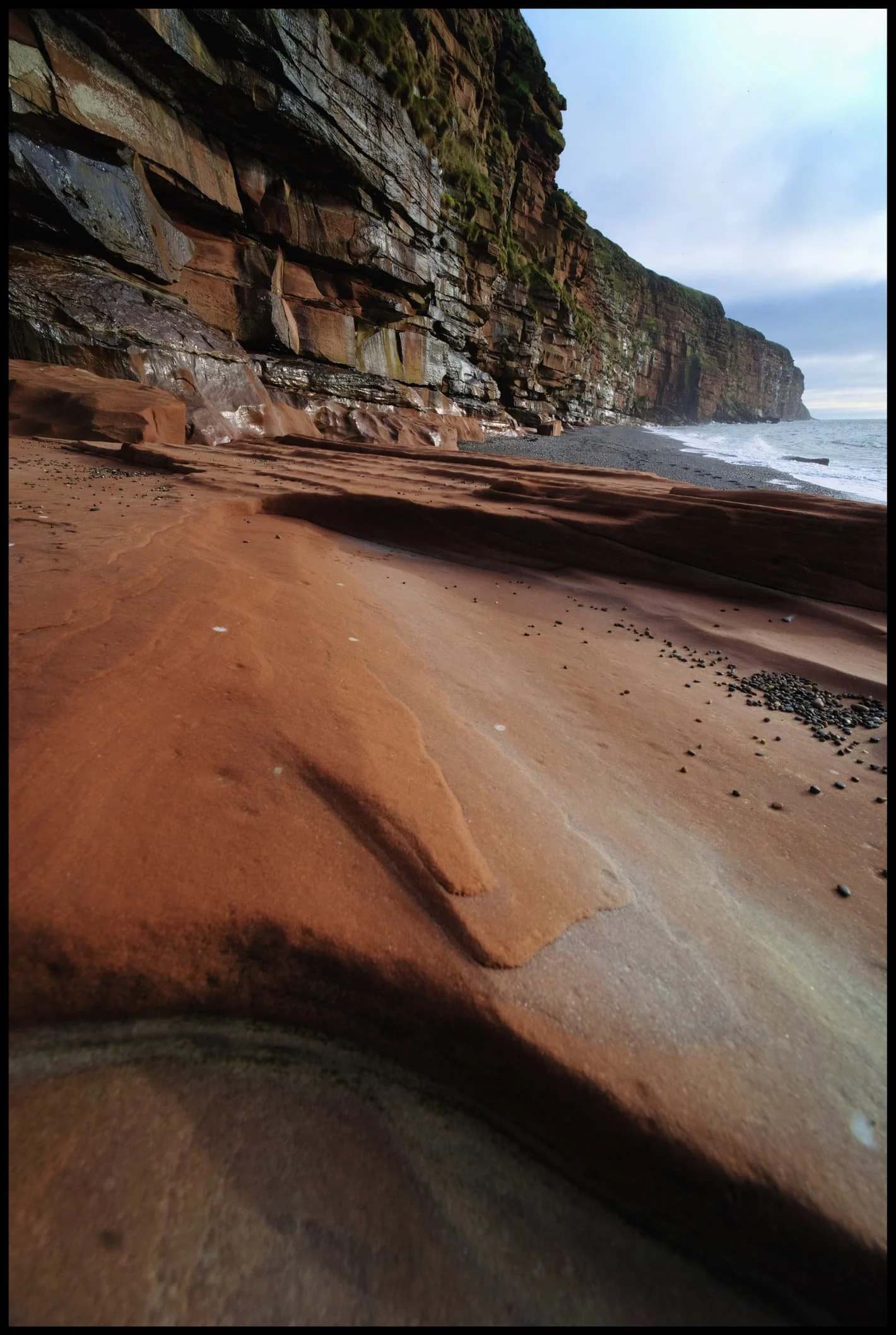
Millennia of wave action have torn chunks off the cliff face, and smoothed out boulders.
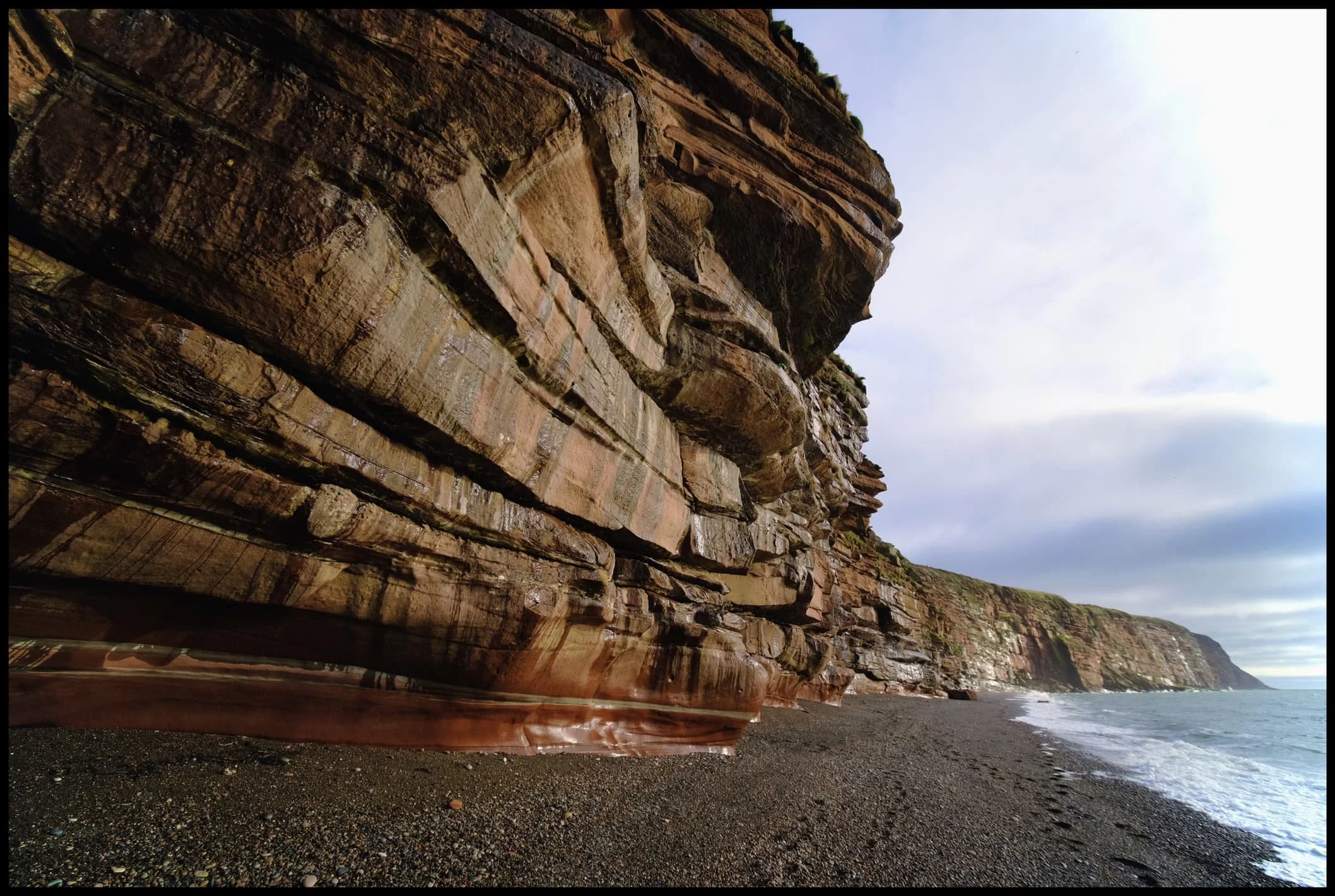
Getting right low and underneath the cliffs with my ultra-wide lens provided some incredible angles.
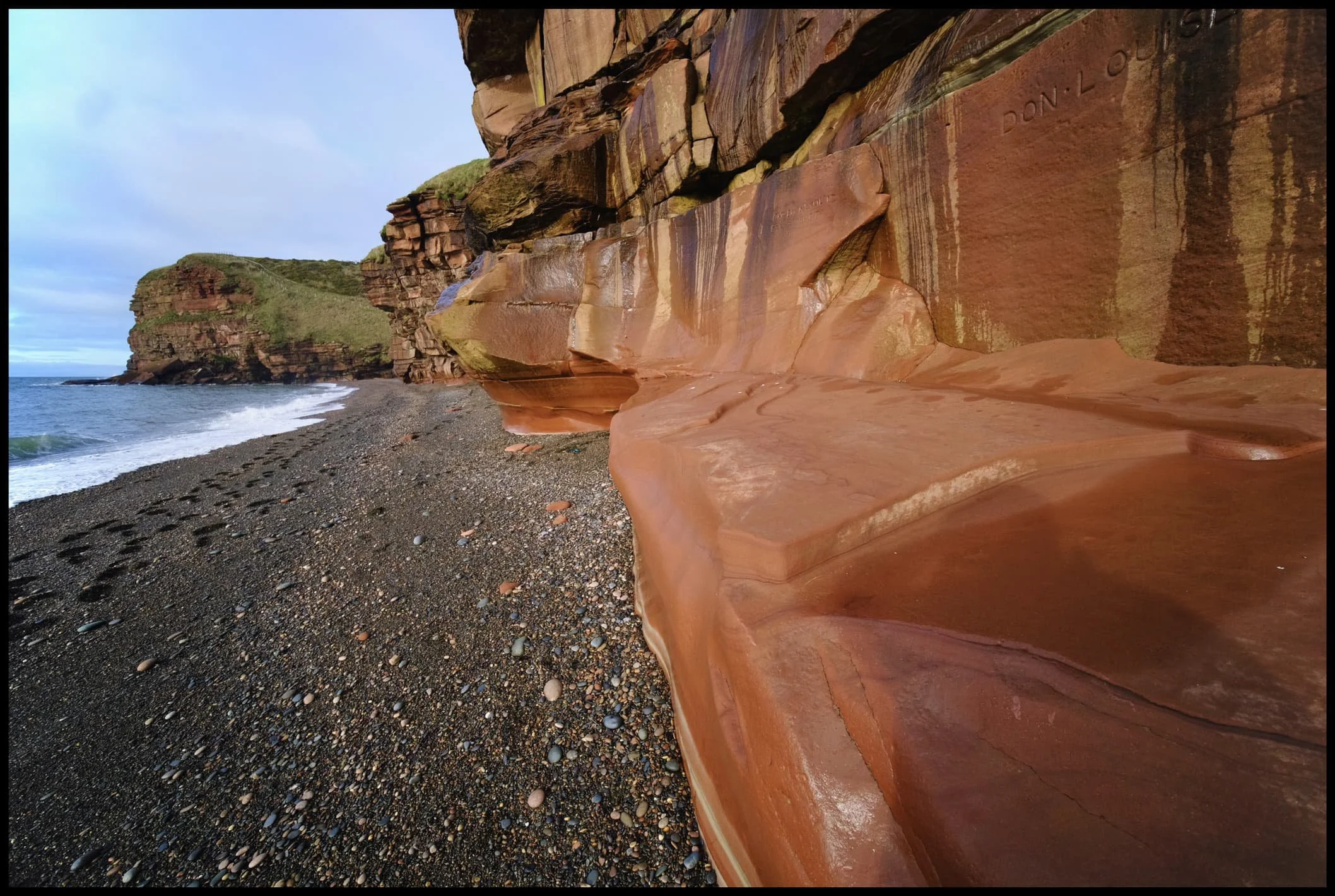
Most of the sandstone cliffs are wet and constantly dripping water from the grass and soil above.
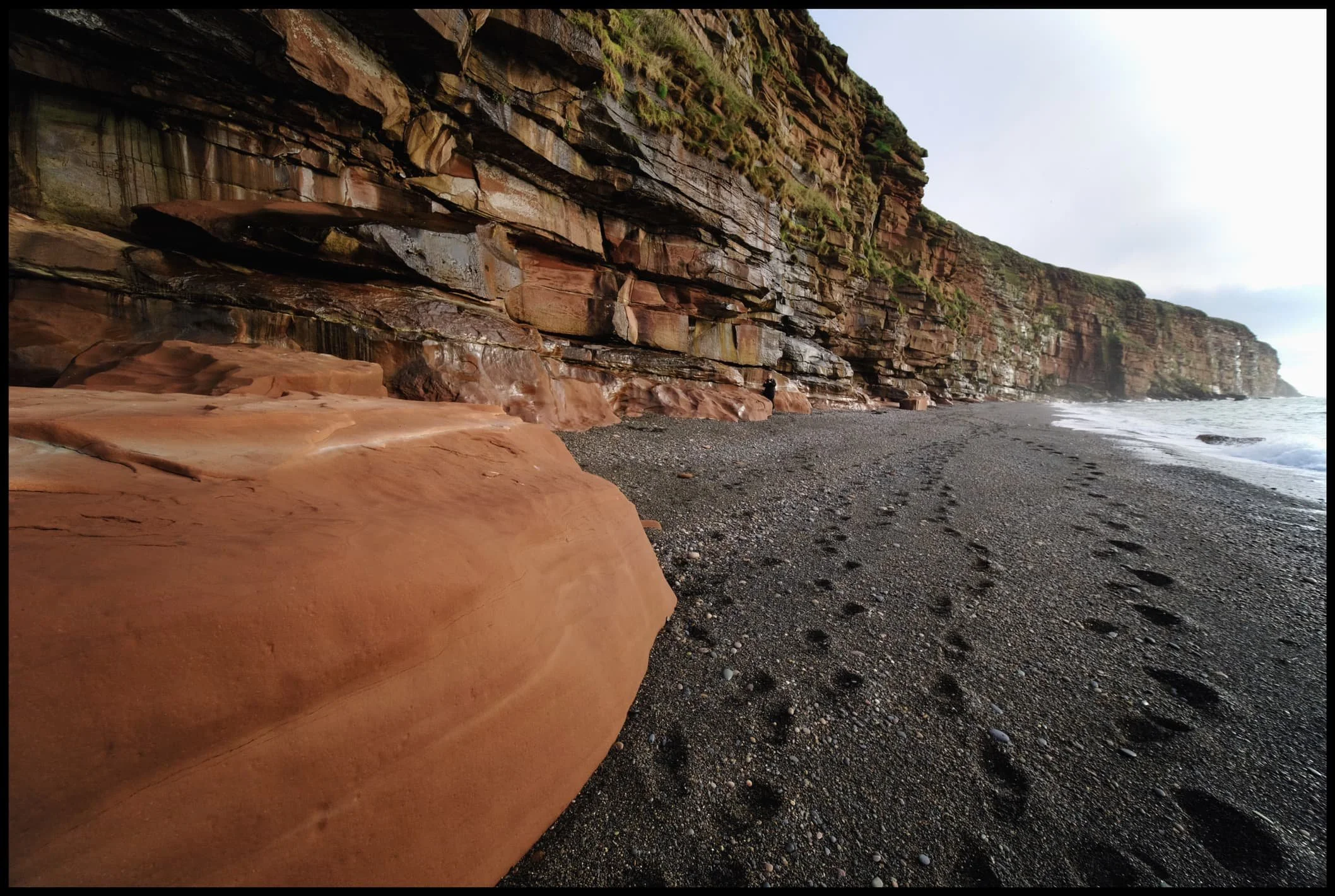
Our footprints are testament to how soft and deep the shingle goes. Really hard to walk in. We ventured as far out as we dared with the tide making its way in.
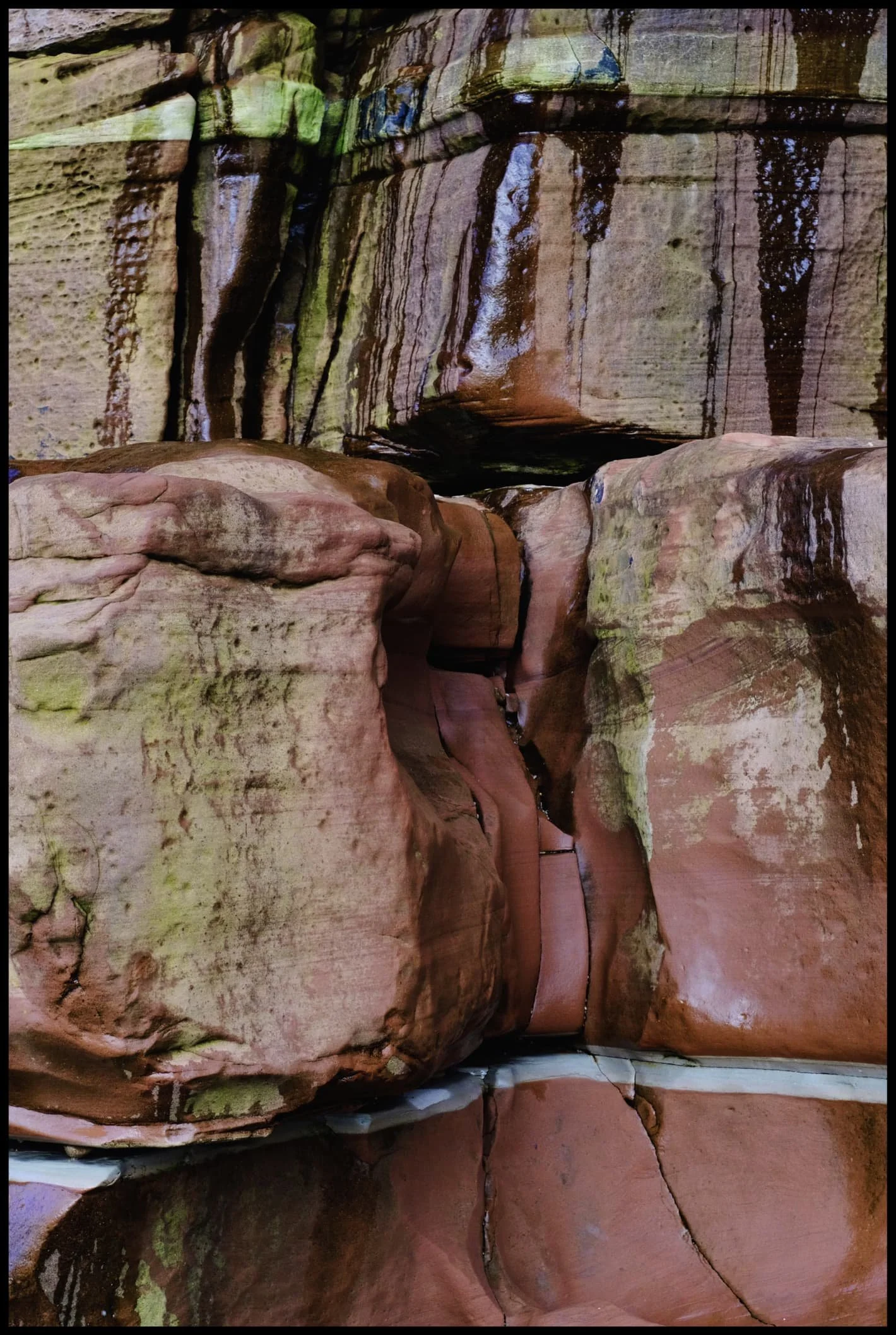
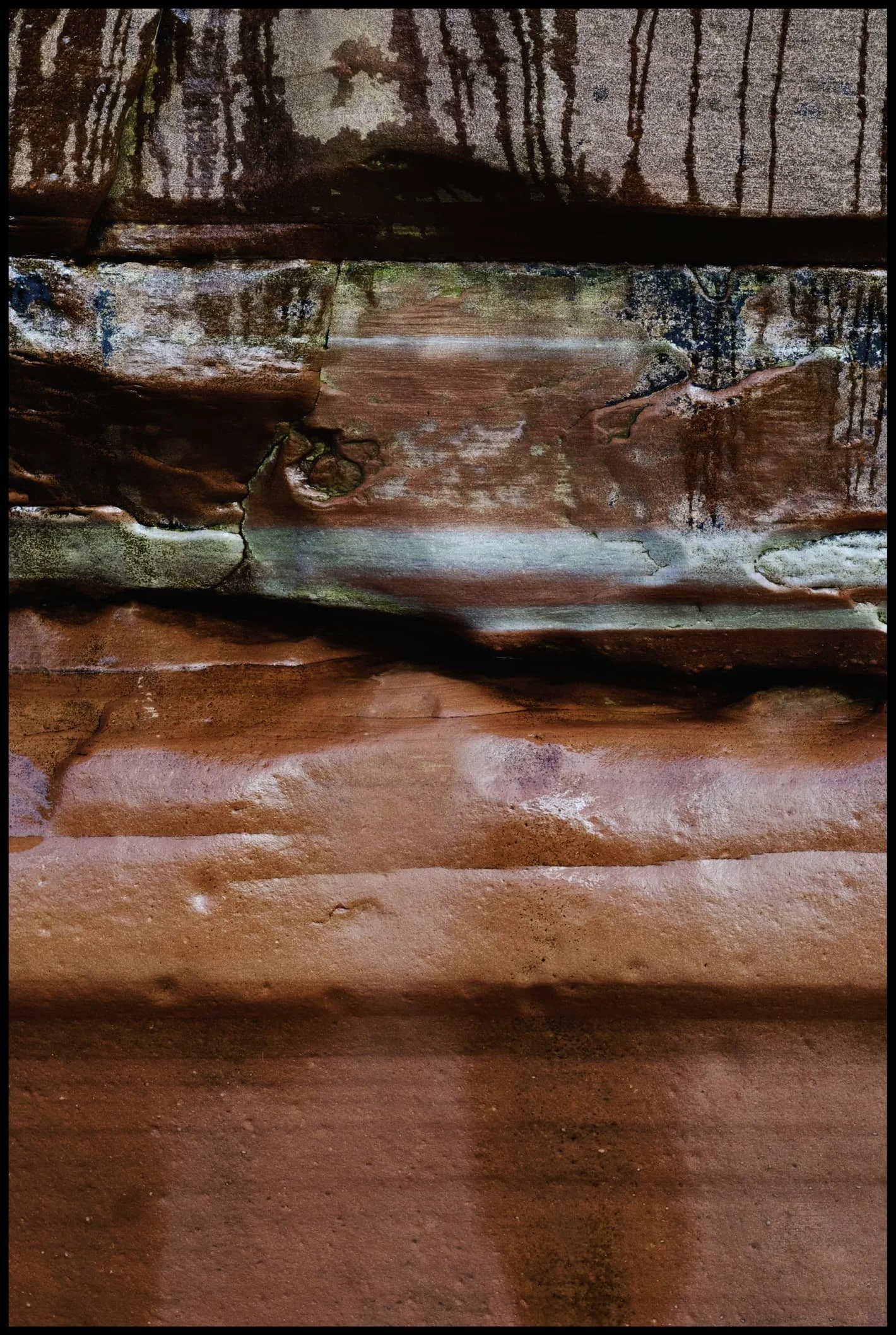
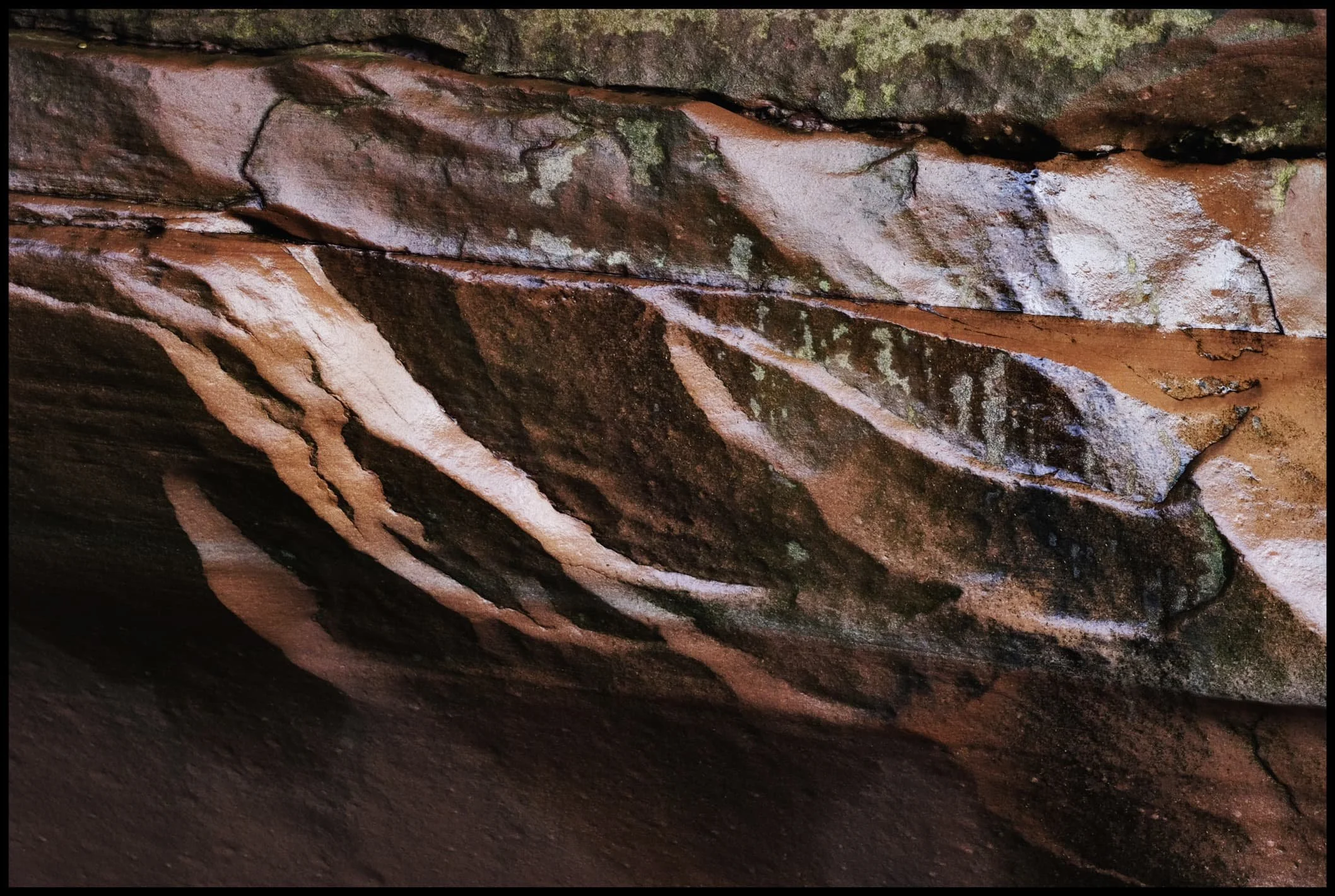
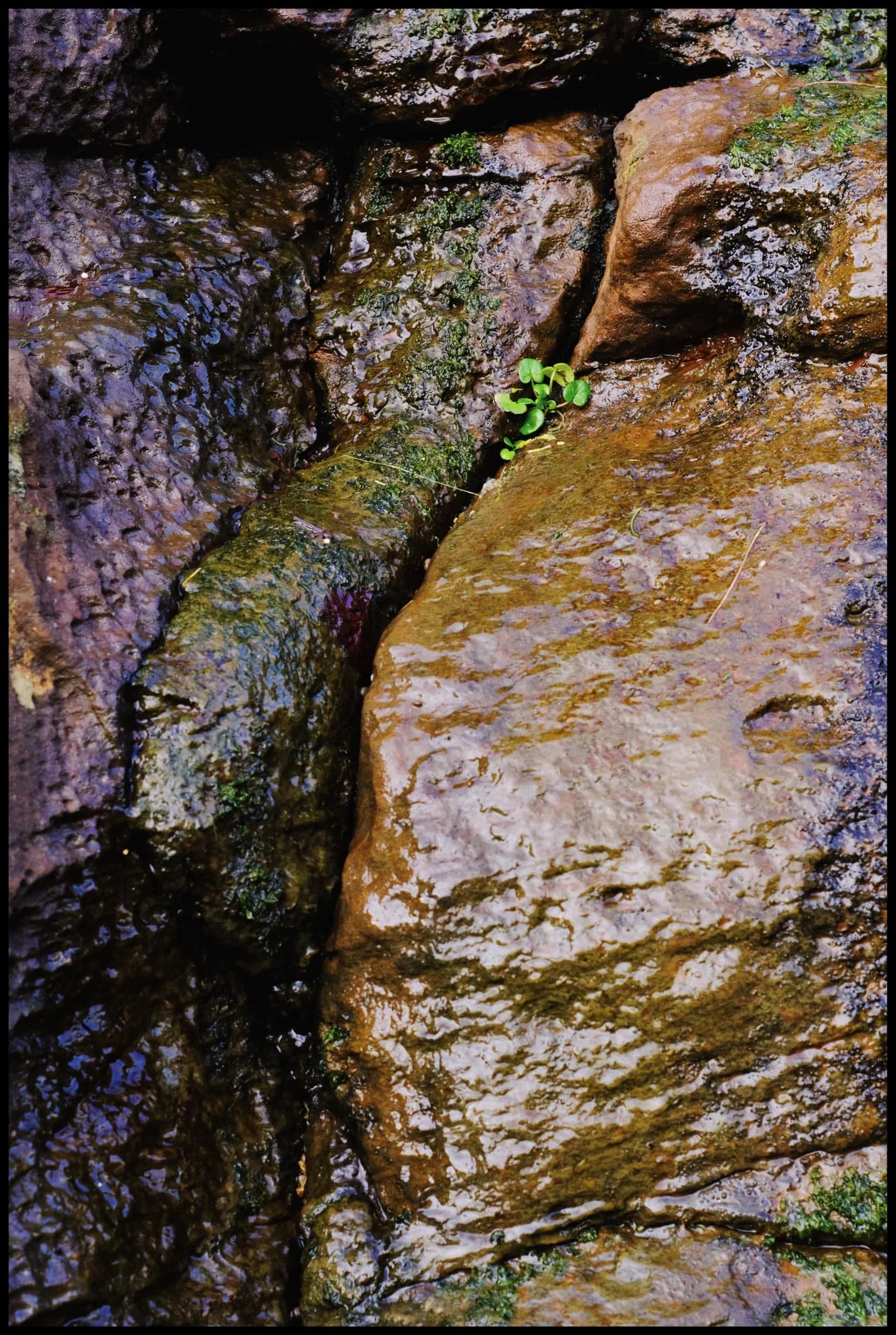
What now follows is a celebration of the weird and wonderful textures and patterns of Fleswick Bay’s sandstone cliffs.
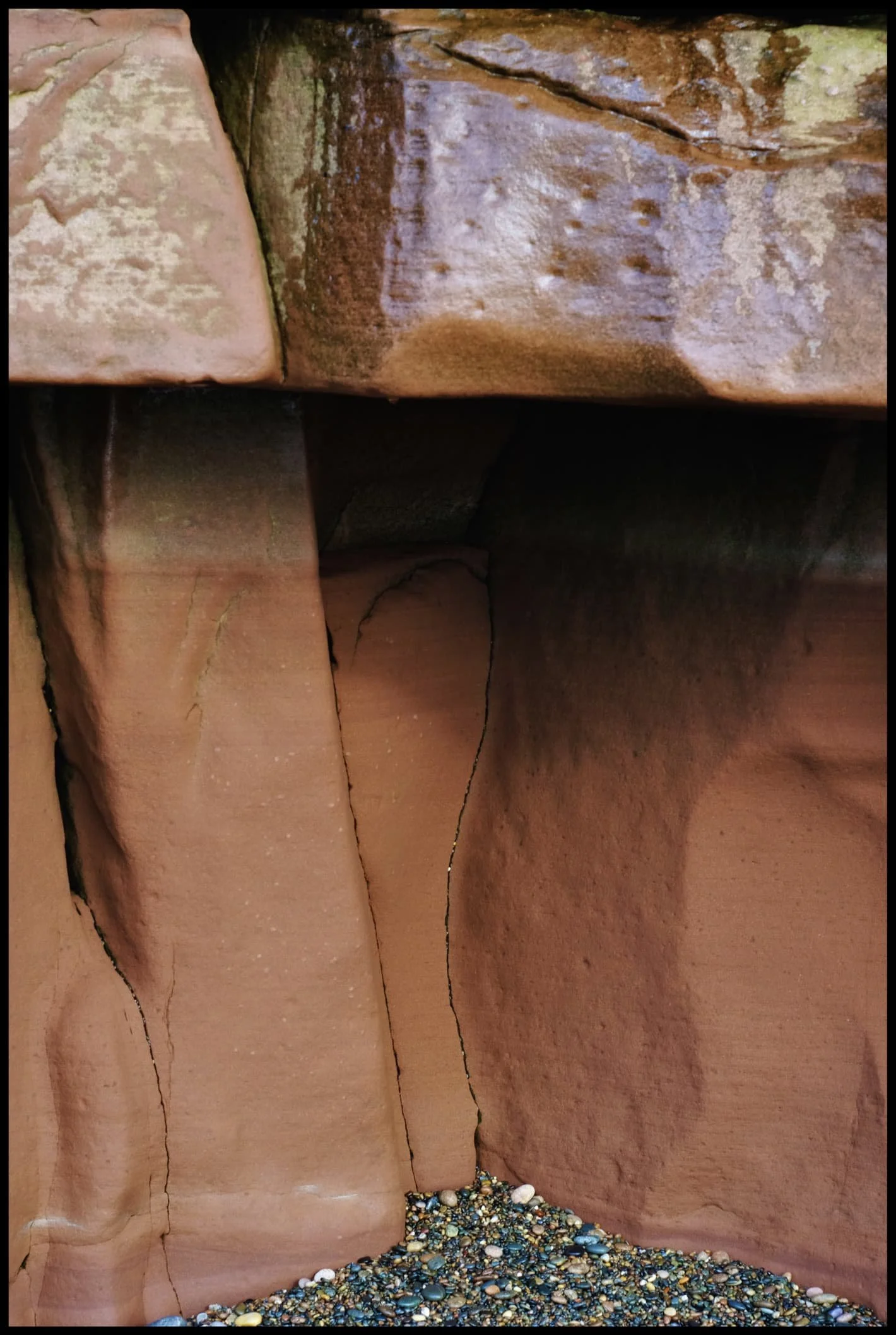
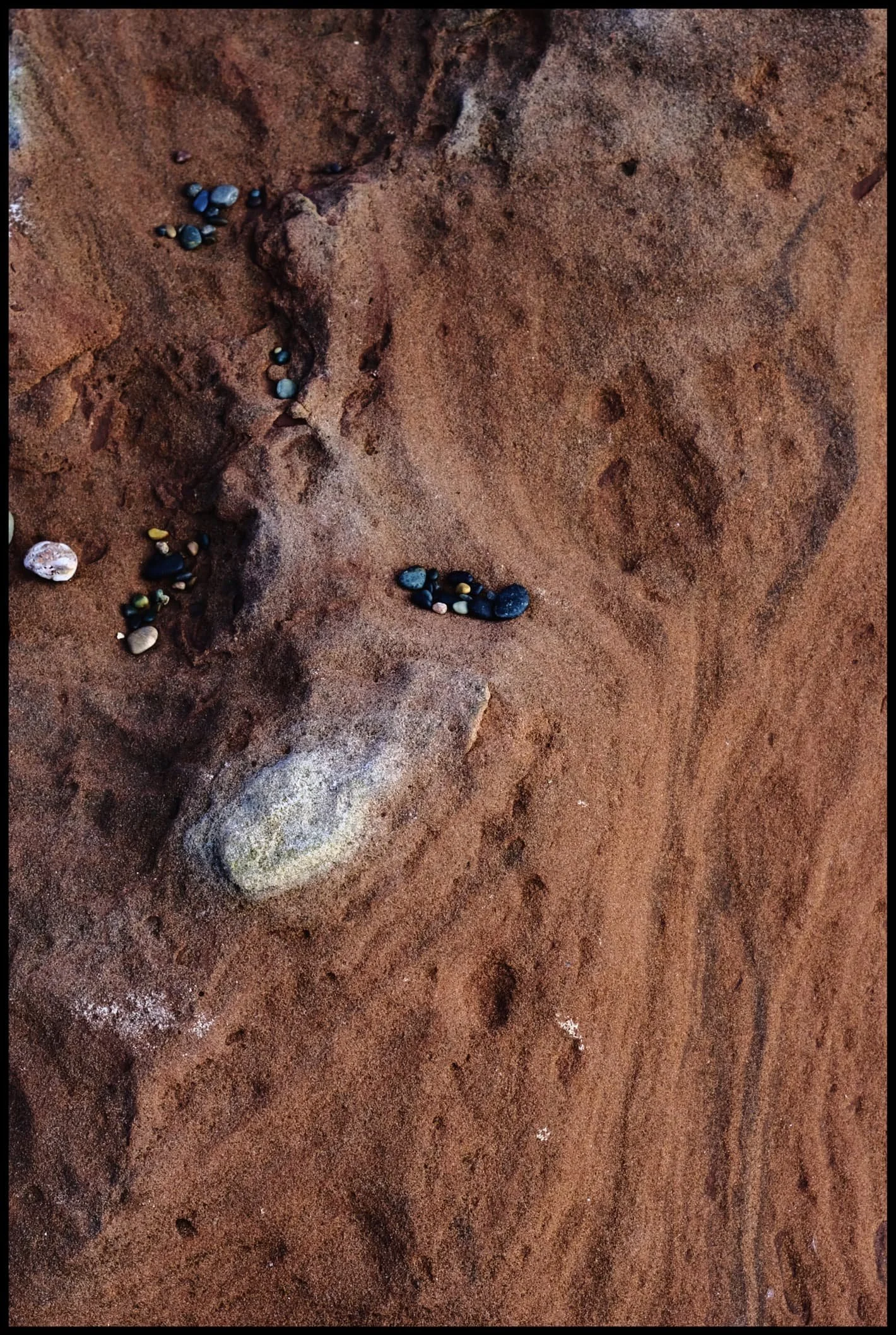
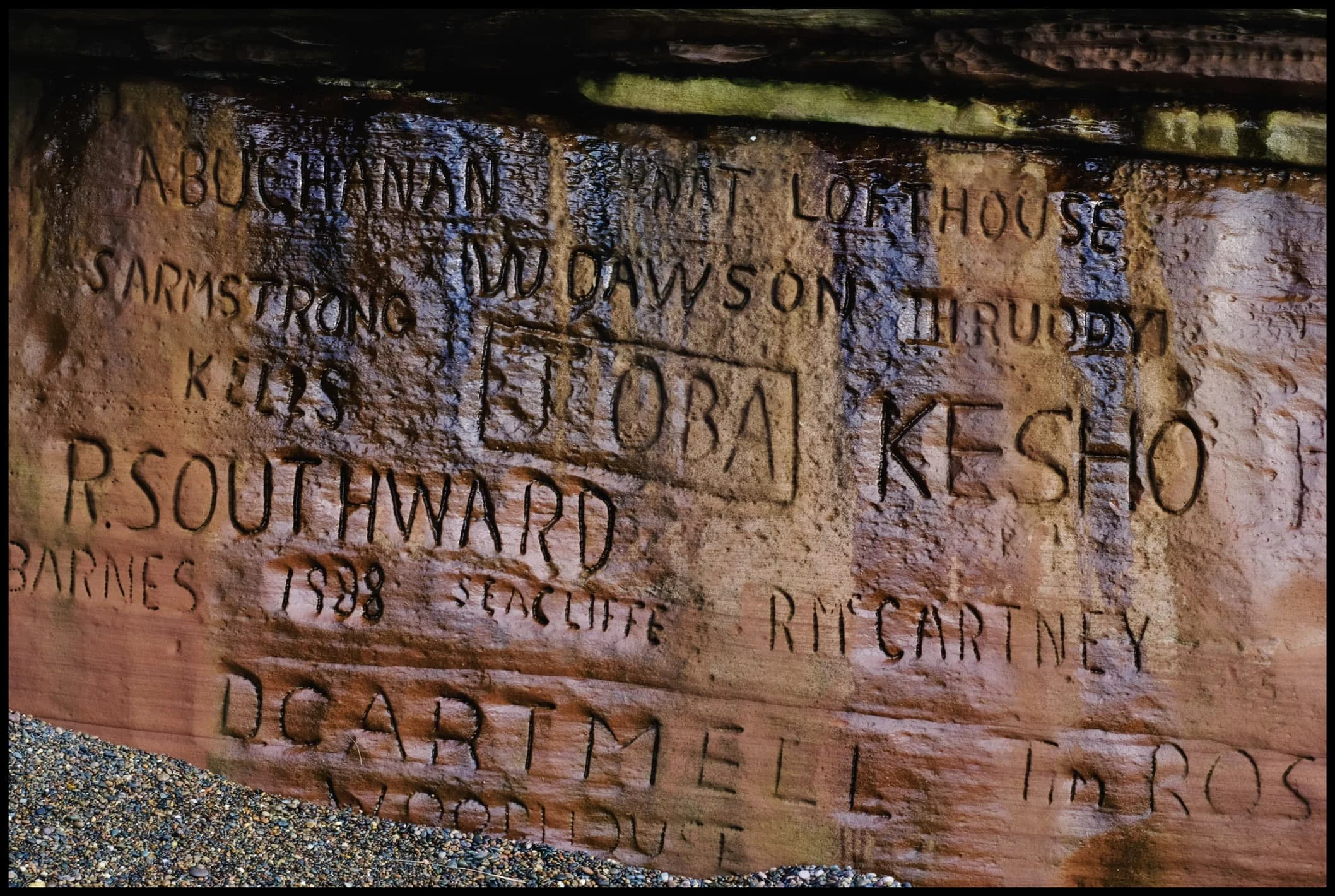
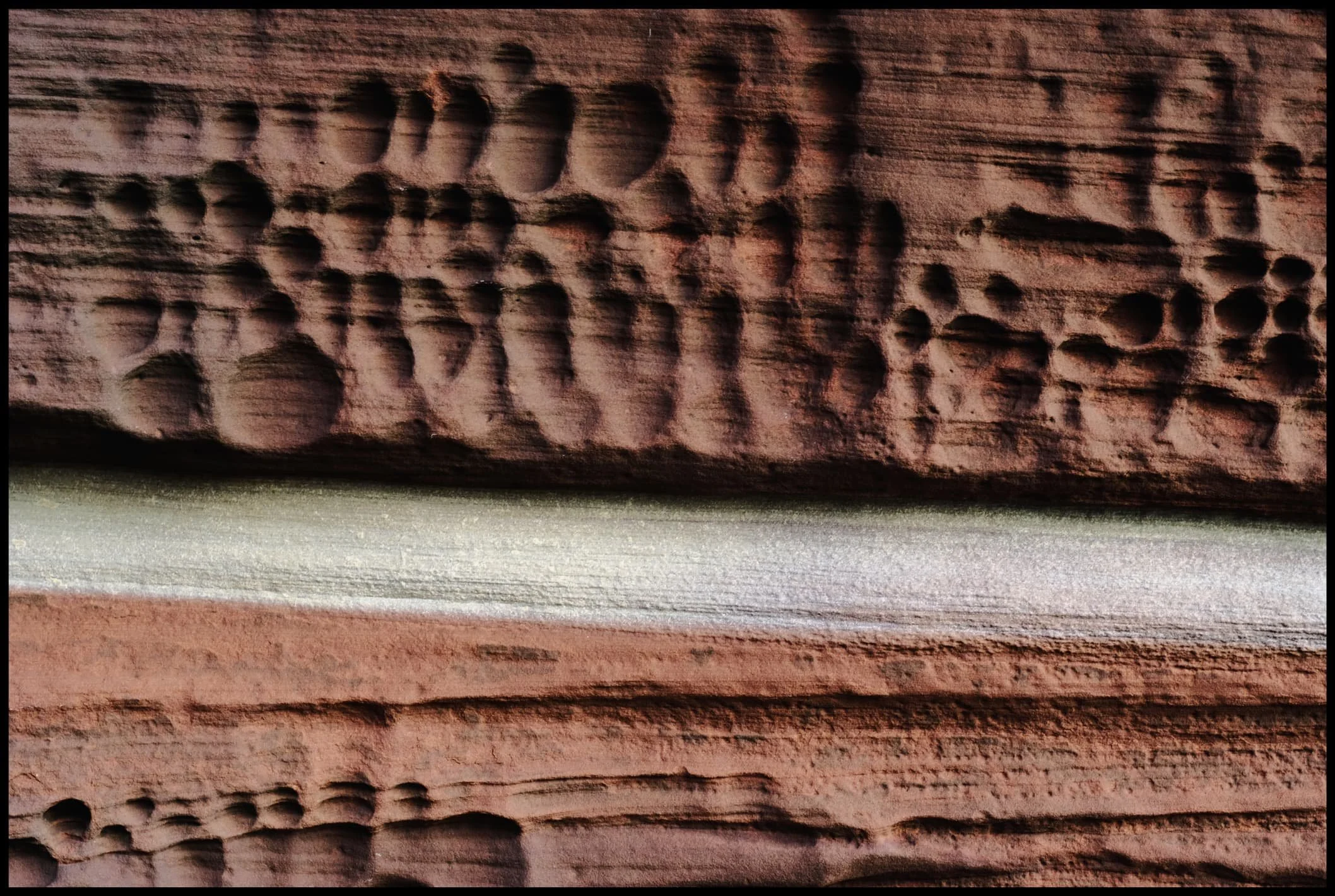
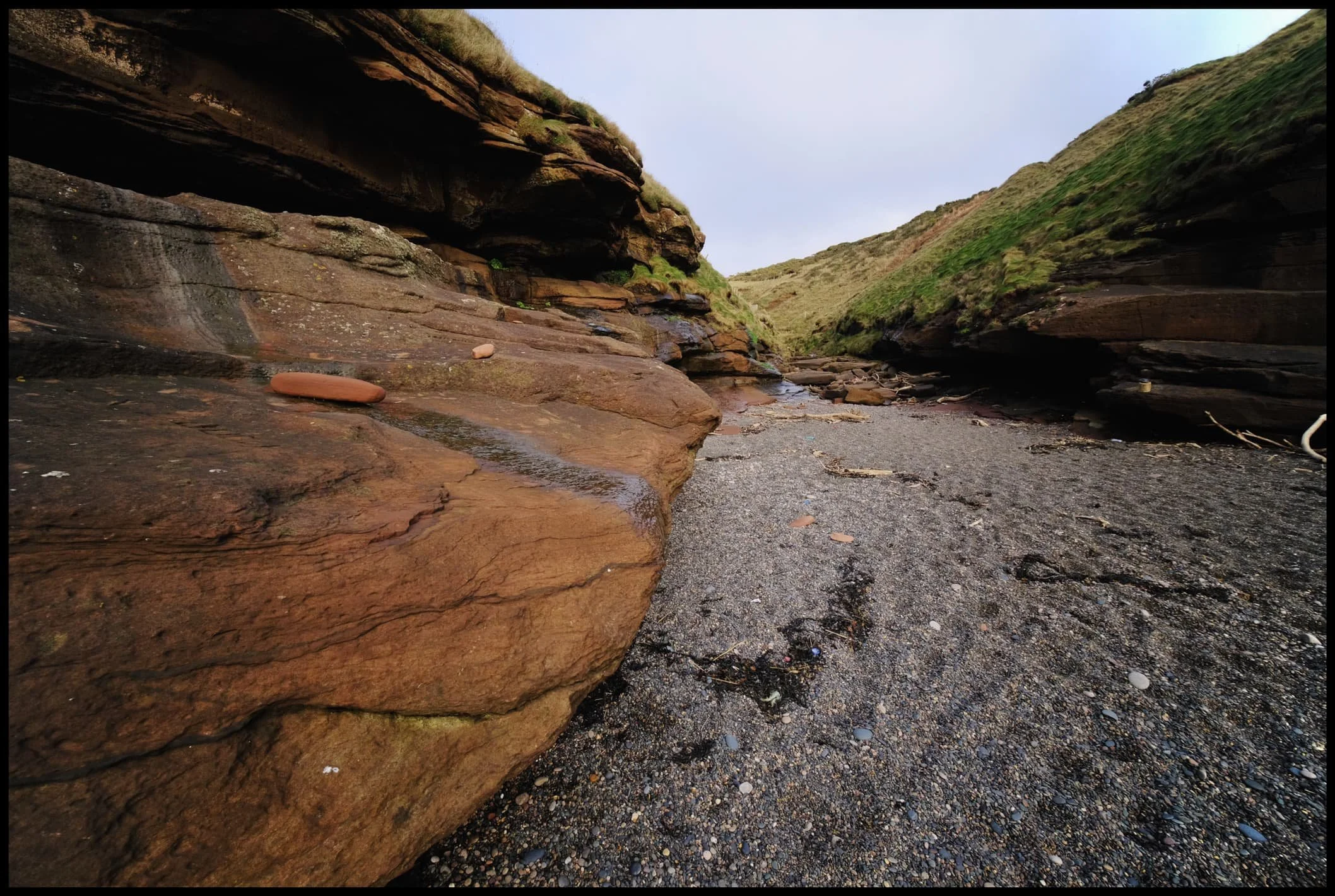
This is the deep gill that flows out into Fleswick Bay.
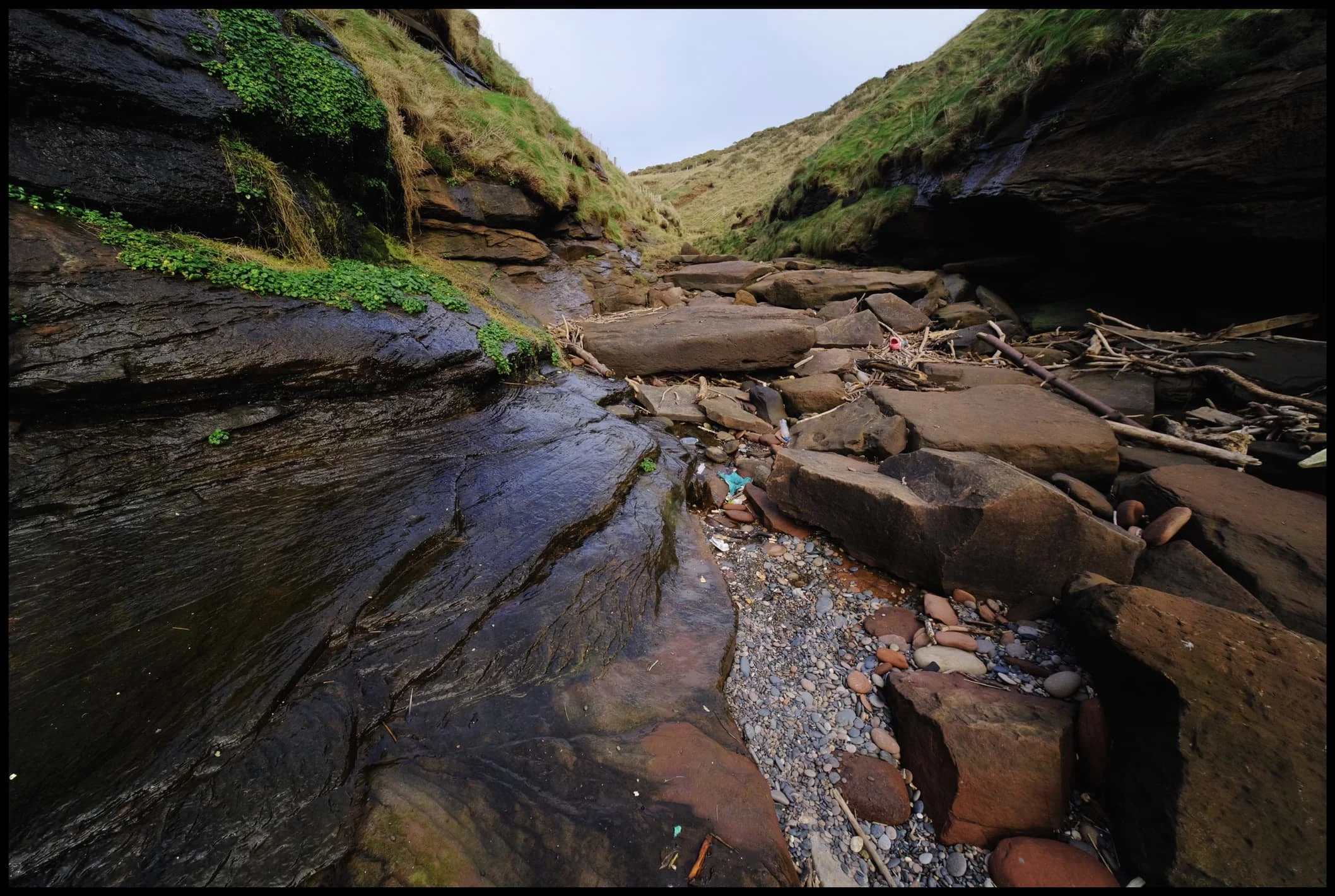
And this is the reason why it’s quite hazardous to navigate your way back onto the cliff path.
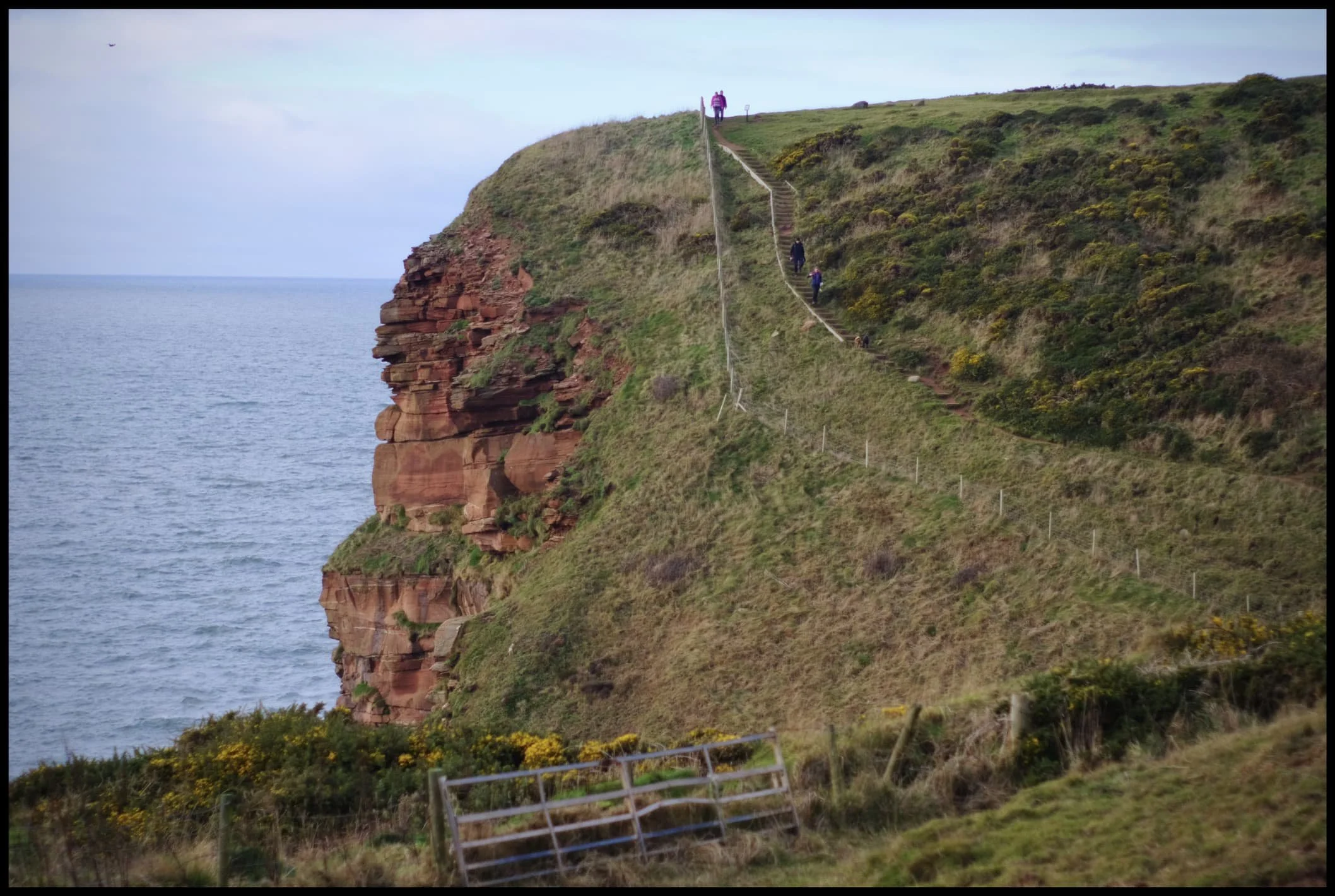
But navigate we did. We were the only ones at Fleswick Bay this whole time. Everyone else seemed more interested in sticking to the cliff path.
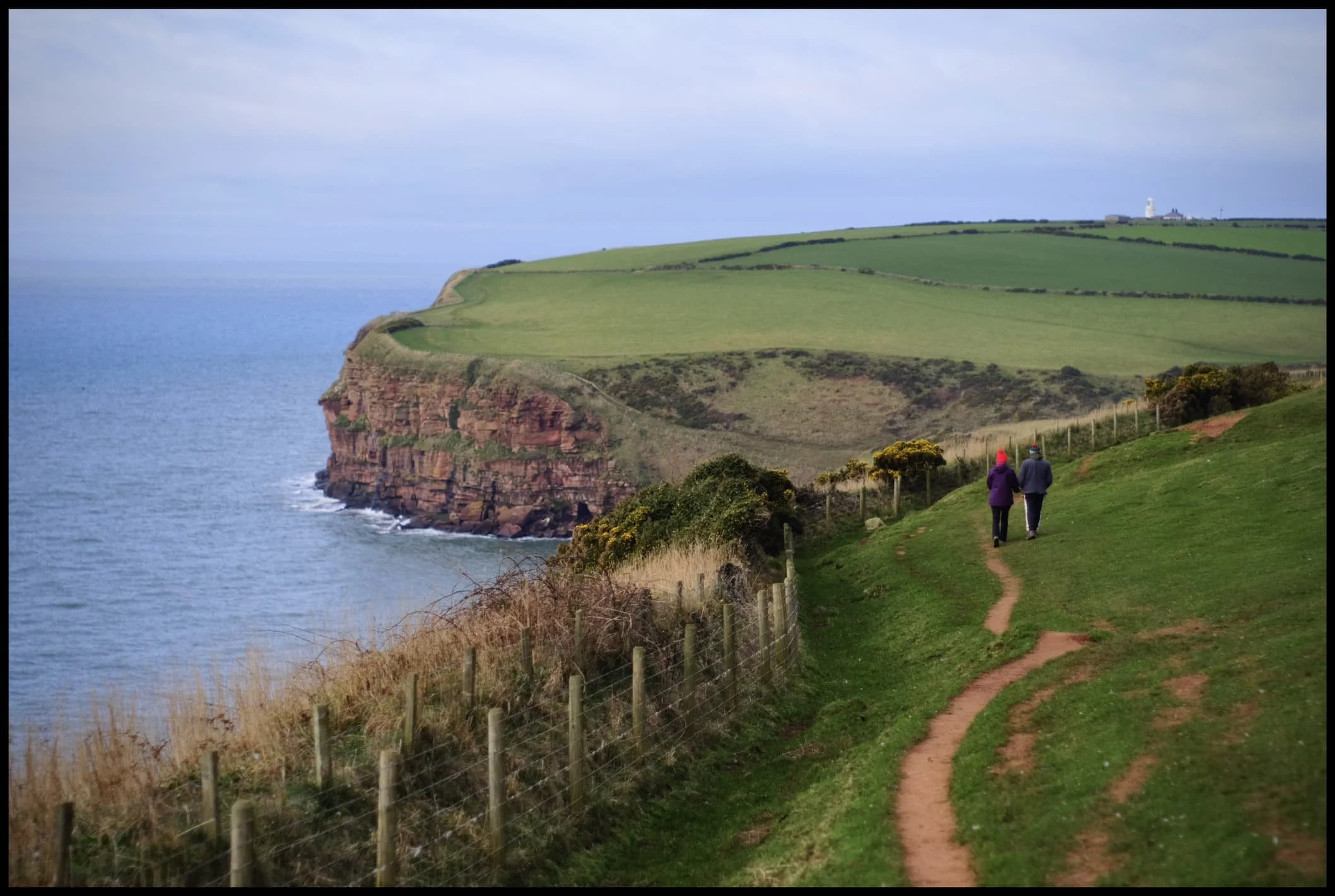
One last look back at the cliffs of Fleswick Bay before making our way back to St. Bees.
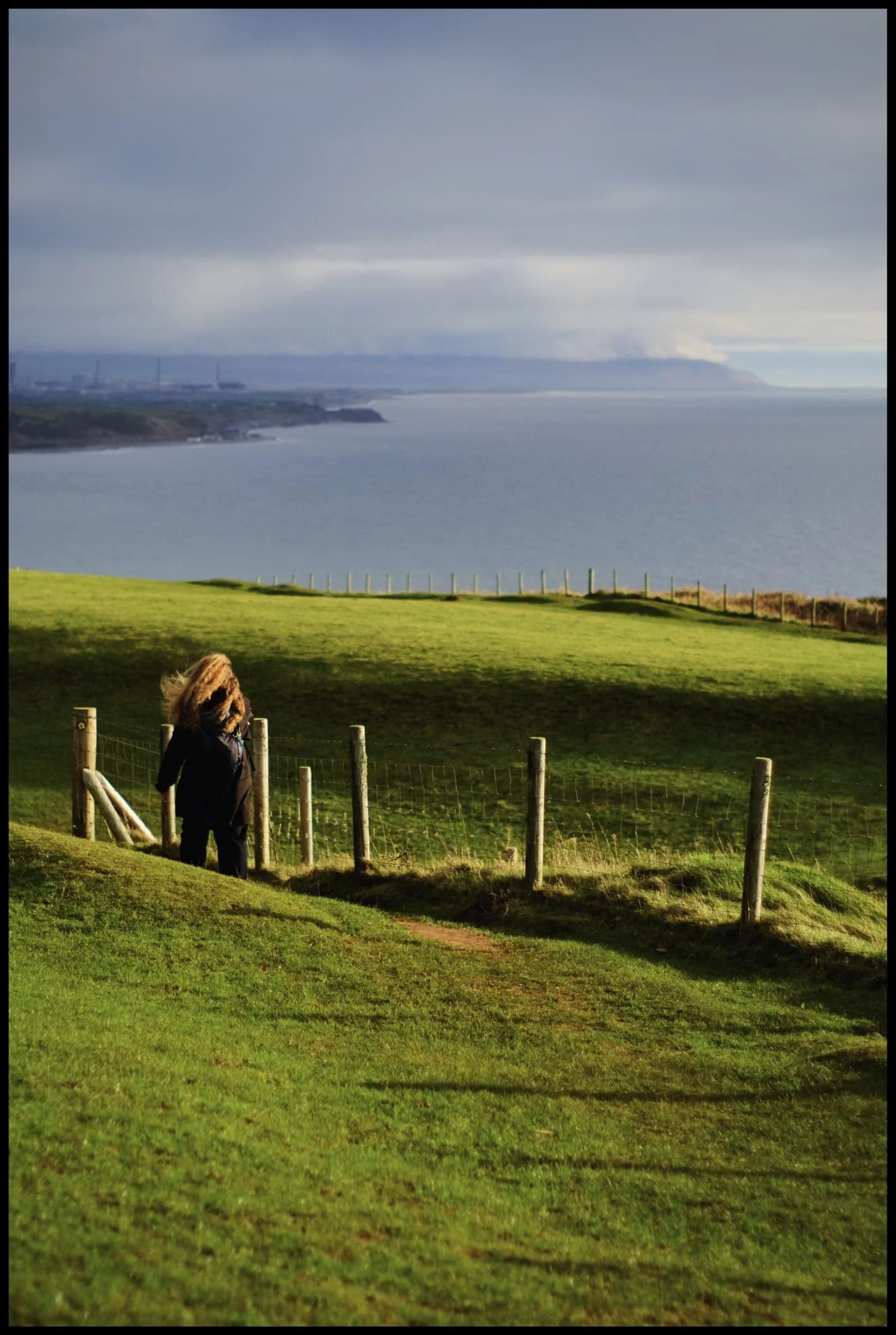
Heading back to St. Bees, the light got better and better and I went on a shooting spree whilst it lasted. In the distance, a think bank of cloud sits on top of the Black Combe fells.
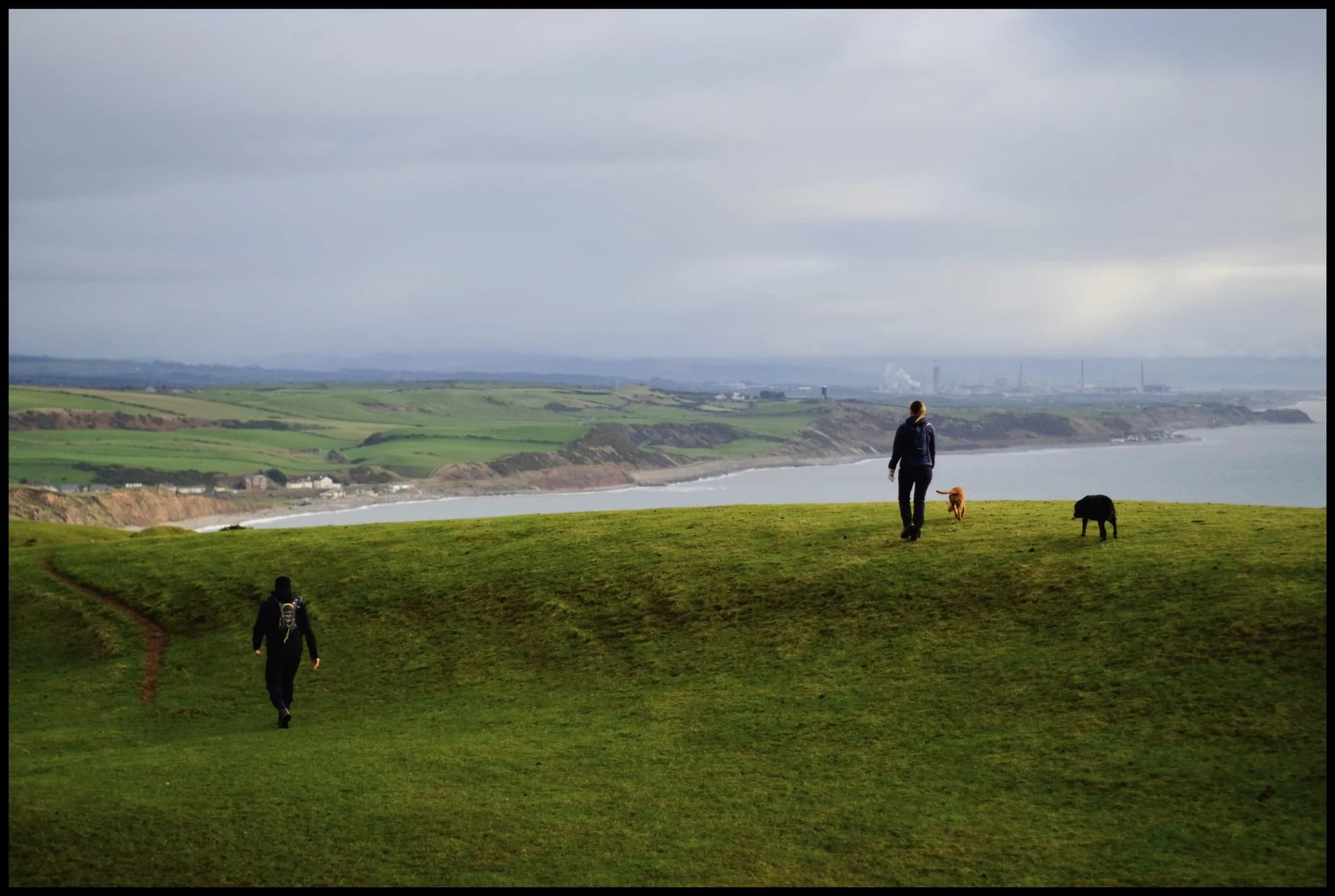
As the sun began its trajectory down into the sea, plenty of people will still heading up and down the cliffs of St. Bees Head.
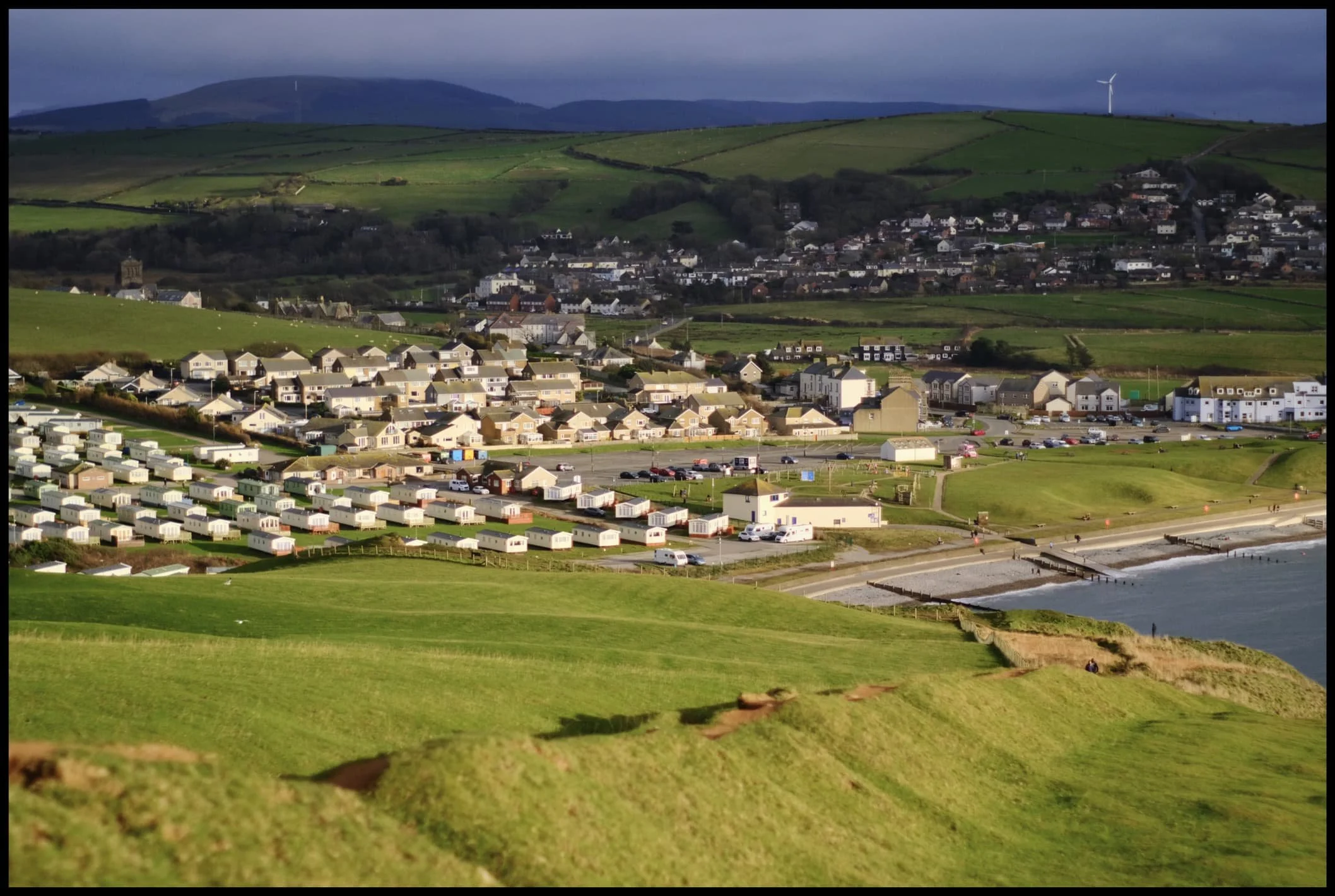
St. Bees getting drenched in golden wintersun with the dark Muncaster Fells behind.
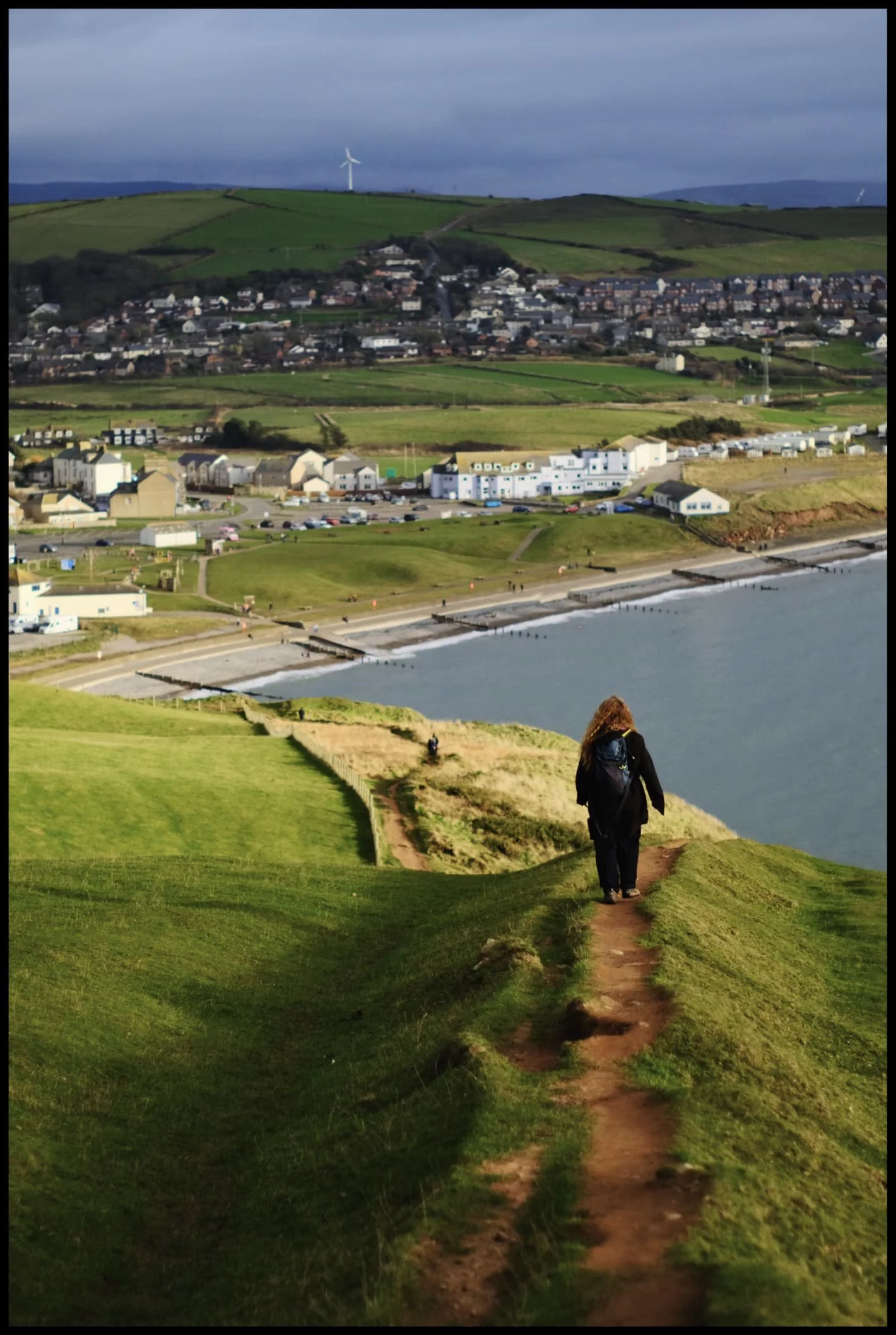
My lovely Lisabet, striding purposefully on towards St. Bees village as the sun bathed the land in light.
Then support me