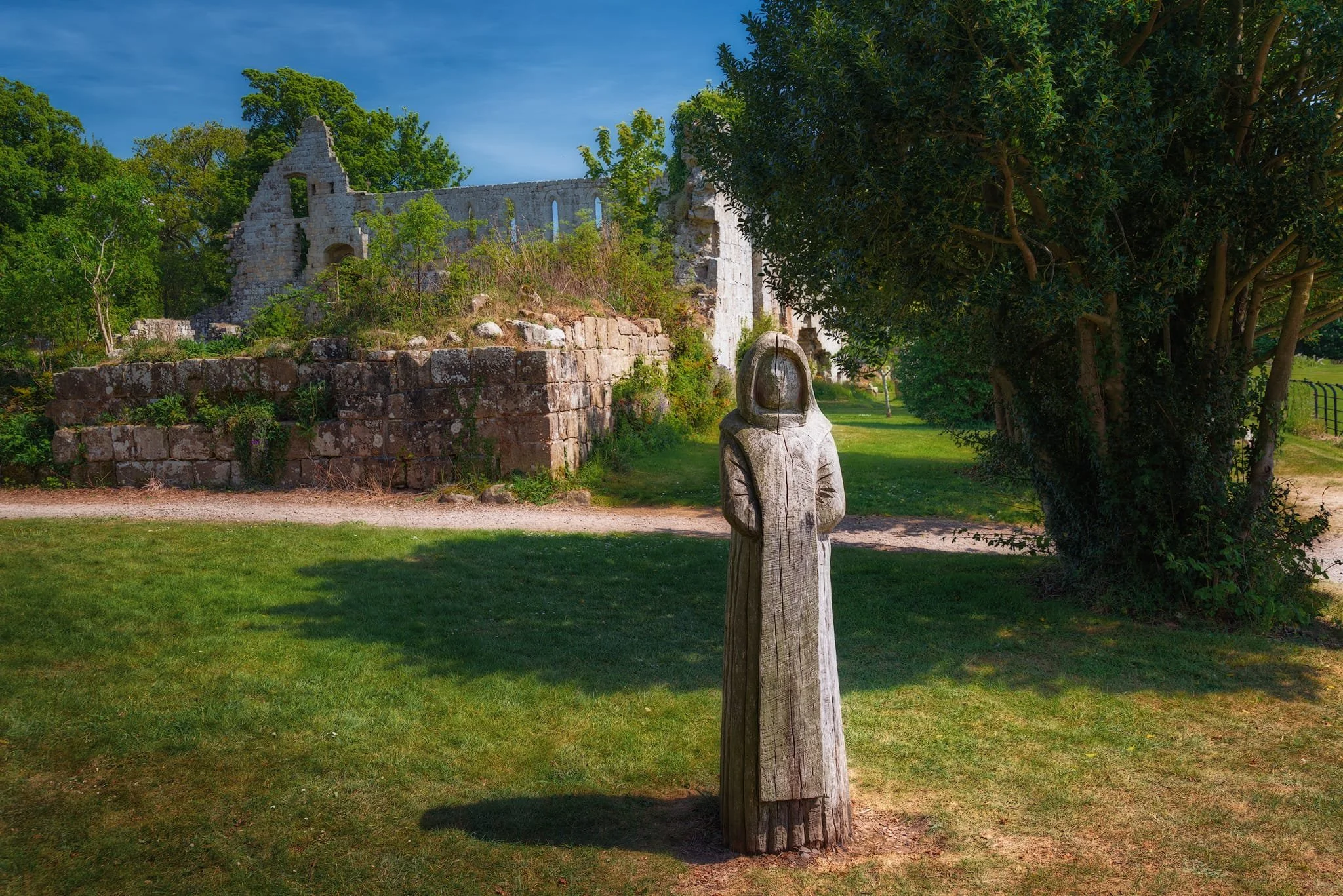
It’s been about 12 years since I last went to York.
That’s way too long.
A few days after our snowy hike around Brimham Rocks, Lisabet + extended family and I head east on a crisp clear day to one of England’s oldest cities: York.
I had a look in my photo library to find the last time I went to York: June 2014. Where has the time gone?! In any case, I managed to explore a lot more of York this time and was glad I did. There’s something mystical about York and its medieval streets, historical ruins, and grand minster.
You have to experience it for yourself.
All photos taken on my iPhone 17 Pro Max. RAWs developed in Lightroom, merged in Photomatix, then edited and finalised in Photoshop.
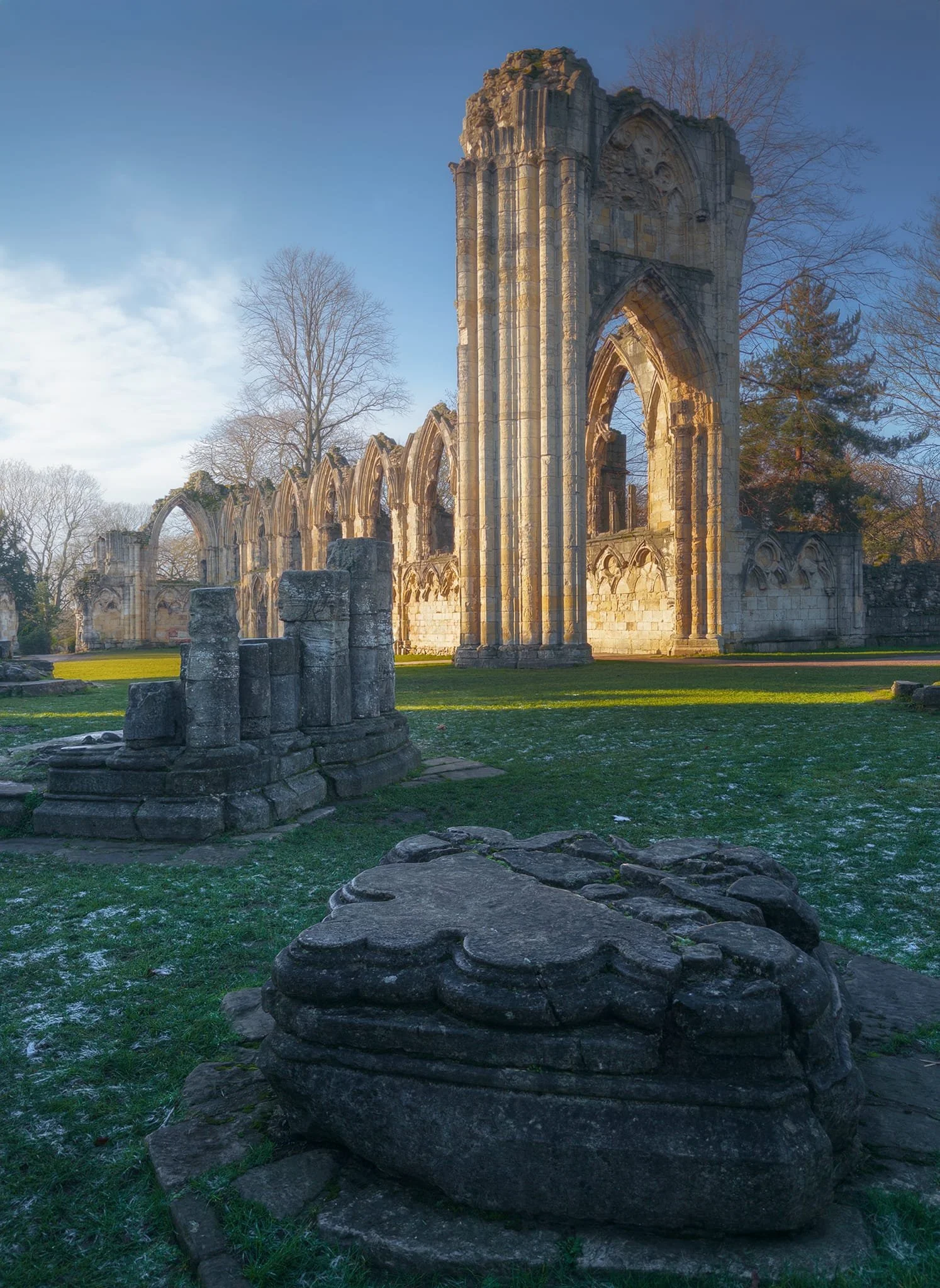
The ruins of St. Mary’s Abbey, as the rising sun hits the north and west walls. Once one of the most prosperous abbeys in Northern England, the site was originally occupied by a church founded in 1055 and dedicated to Saint Olaf. It was later refounded as an abbey church in 1088 when King William II of England visited York in January or February of that year and gave the monks additional lands.
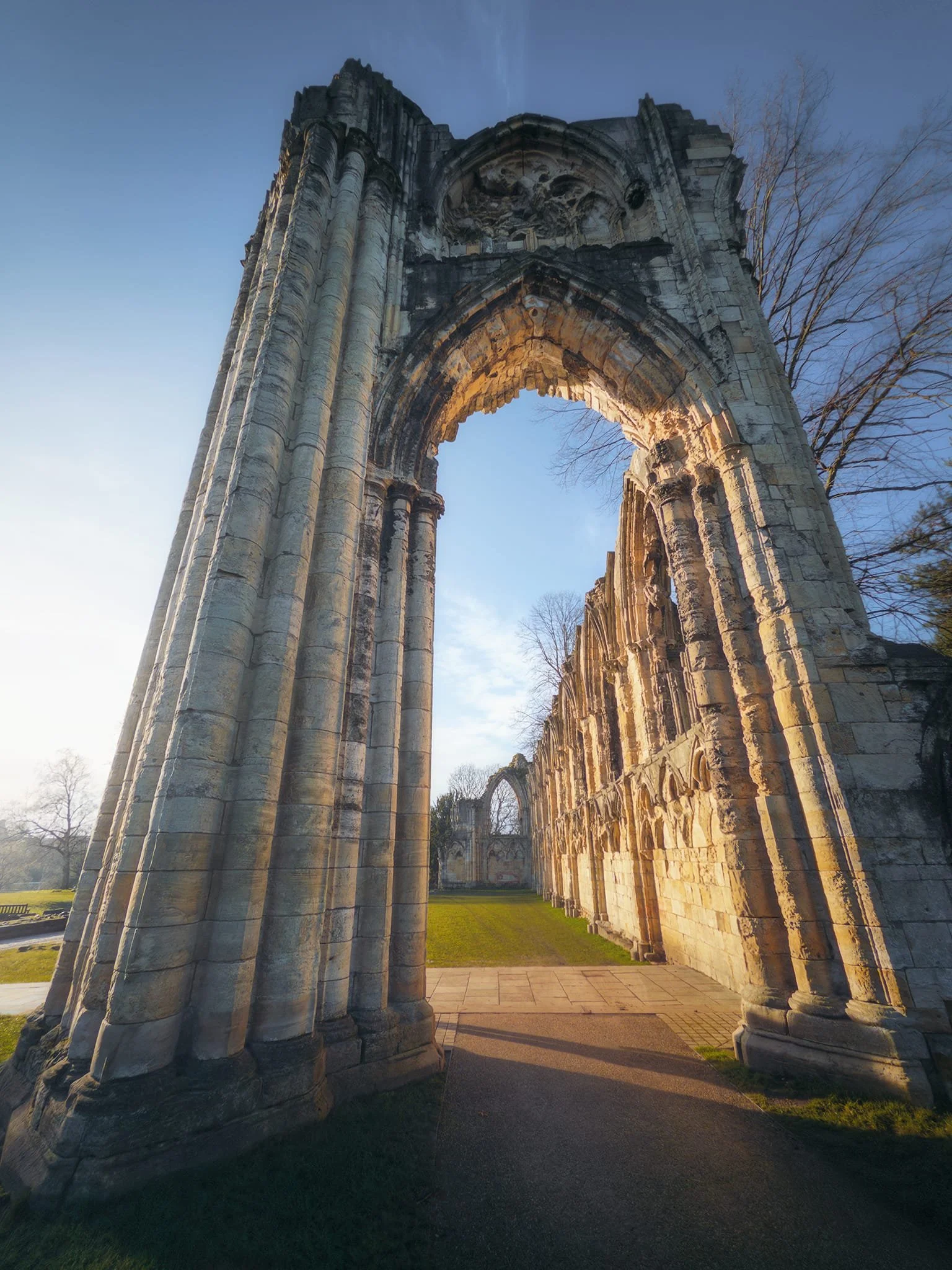
Like most abbeys in England , it was closed as a result of Henry VIII’s Dissolution of the Monasteries in 1539 CE, then destroyed. Only the north and west walls survive, along with the Pilgrims’ Hospitium, West Gate, and 14th-century Abbot’s House (now King’s Manor). The walls feature several towers, including St Mary’s Tower at the northwest corner and a water tower by the river.
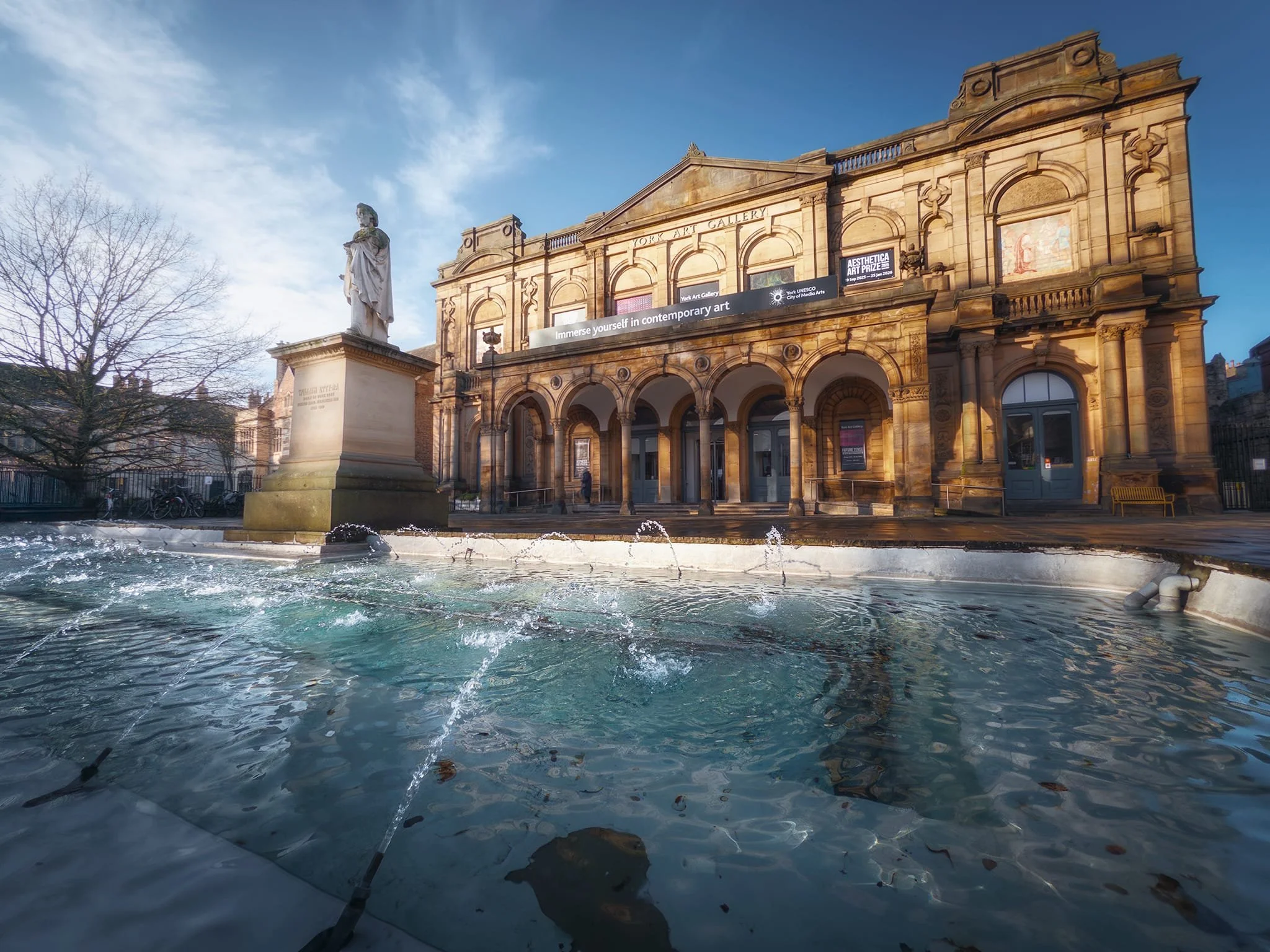
York Art Gallery with the statue of William Etty, a York native. Built between 1878–79 for the Yorkshire Fine Arts and Industrial Institution, the gallery is now home to over 1,000 paintings and more 5,000 pieces of studio pottery.
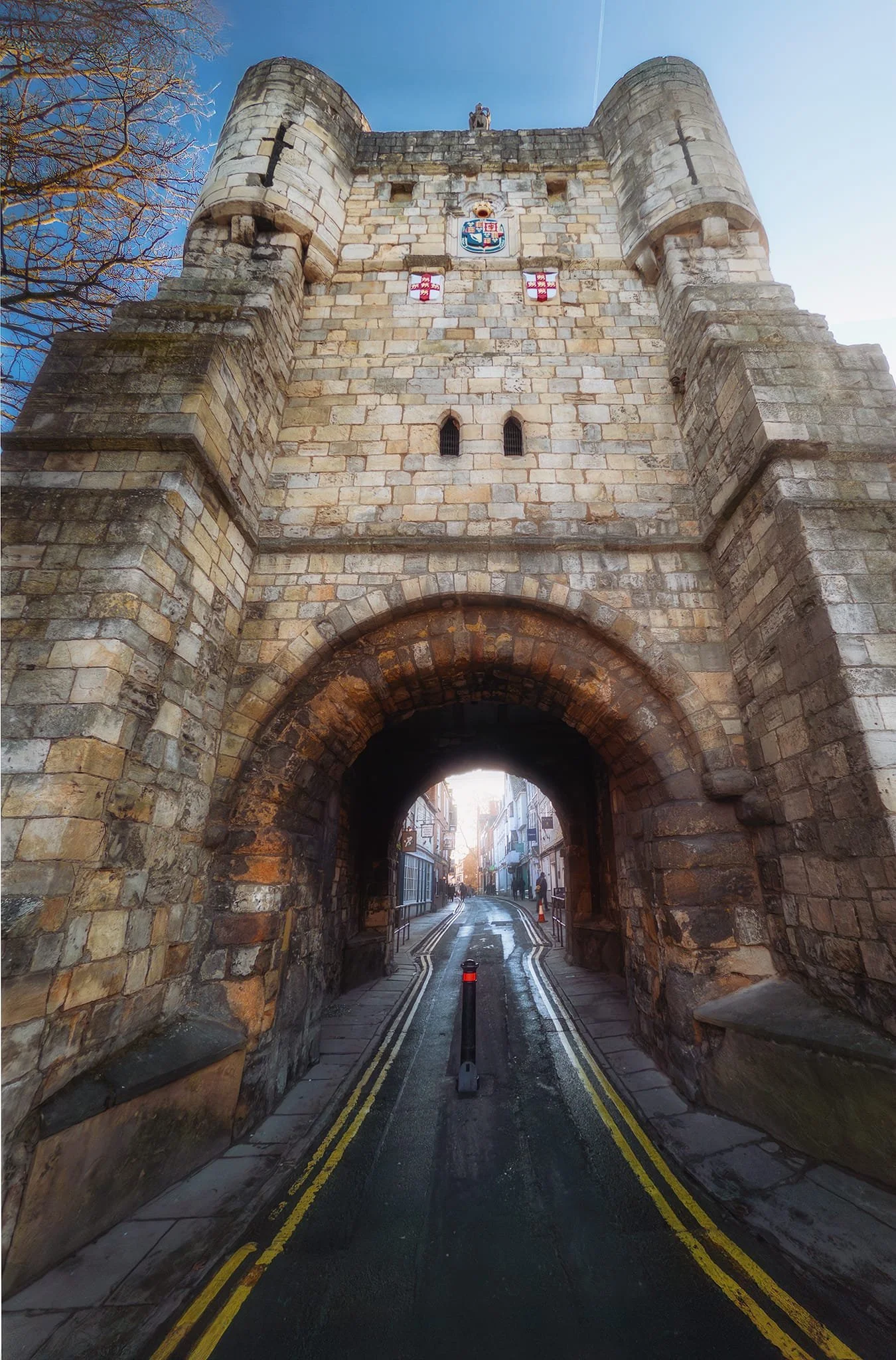
This gatehouse is Bootham Bar, one of four main “bars” that punctuate the ancient city walls of York. Though largely rebuilt in the 14th and 19th centuries, Bootham Bar retains 11th-century stonework, the oldest surviving. It stands near the site of the Roman northwest gate, taking its name from the 12th-century “bar at the booths” near market stalls. It was also the last gate to lose its defensive barbican, removed in 1835.
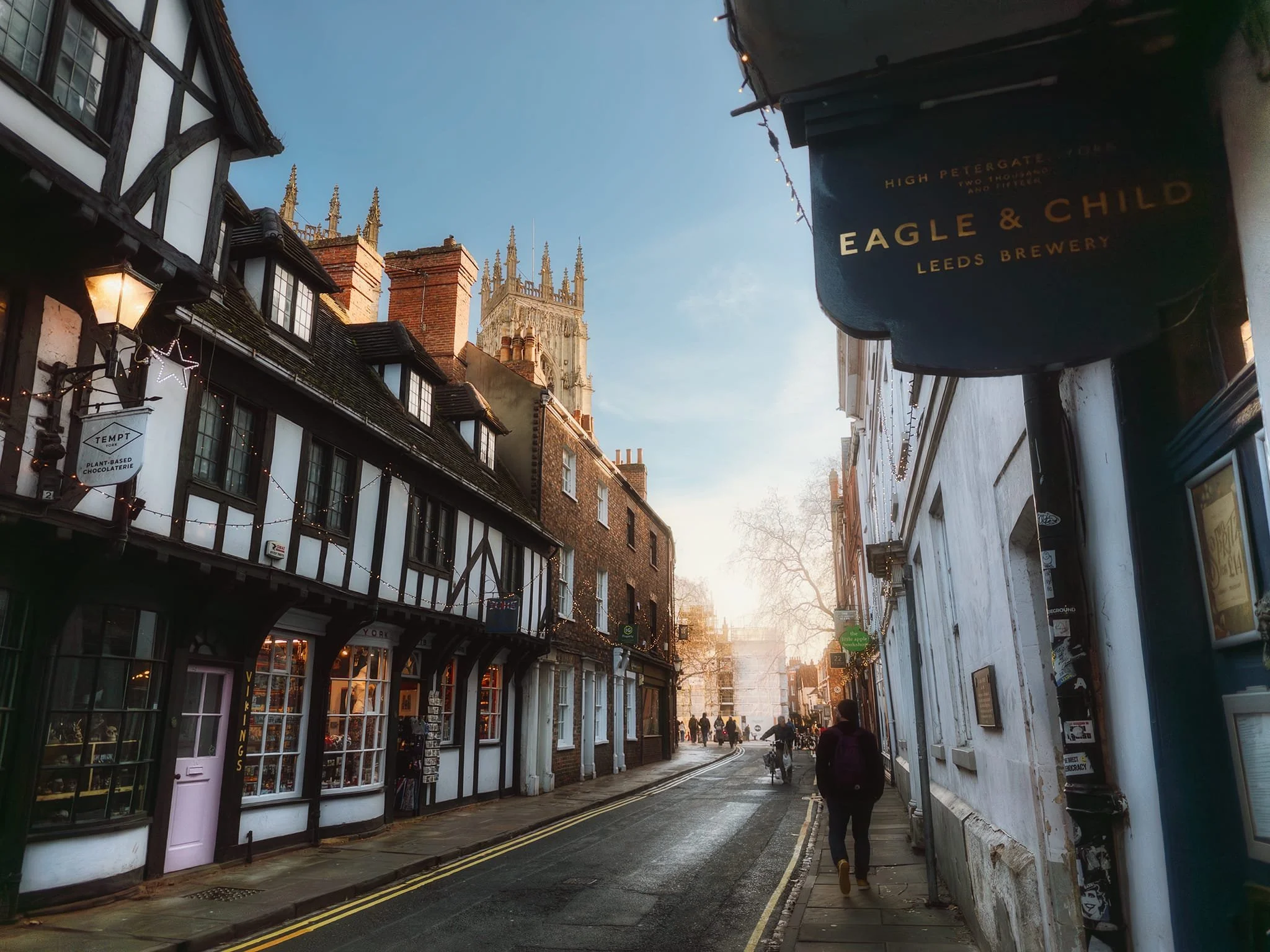
From Bootham Bar, High Petergate leads directly to York Minster, which rises high above the street’s buildings. You’ll note a fair few shops in York are related or dedicated to chocolate, I’ll explain why in a bit.
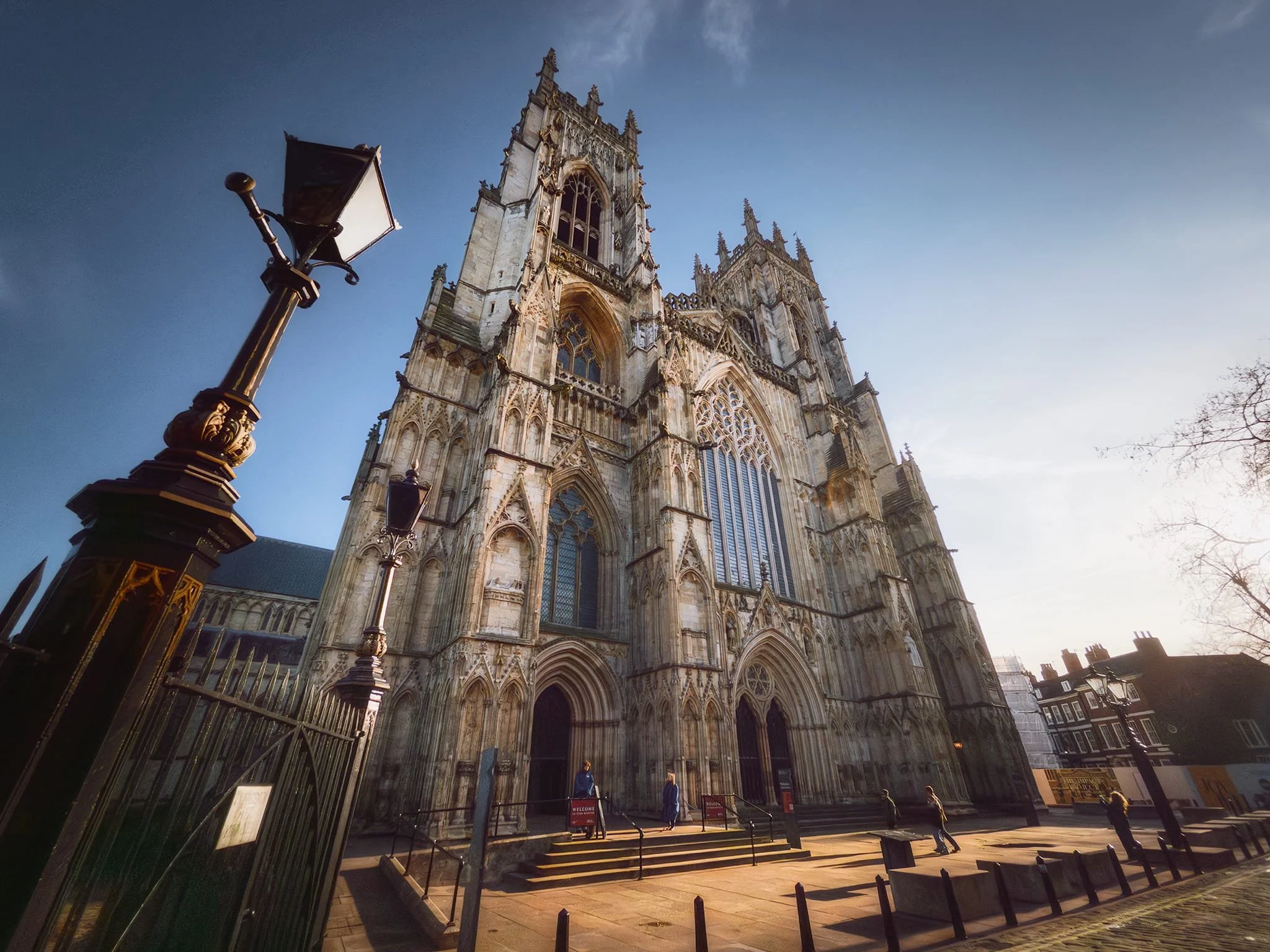
The imposing and awe-inspiring site of York Minster. Isn’t it ridiculous? Its origins date to a wooden church built in 627 AD for King Edwin’s baptism, evolving through successive Saxon, Viking, and Norman rebuilds before Archbishop Walter de Gray initiated the present Gothic cathedral in 1220 CE. It took 250 years to build. It has survived the 1407 tower collapse, Reformation iconoclasm, Civil War siege, and devastating fires in 1829, 1840, and 1984.
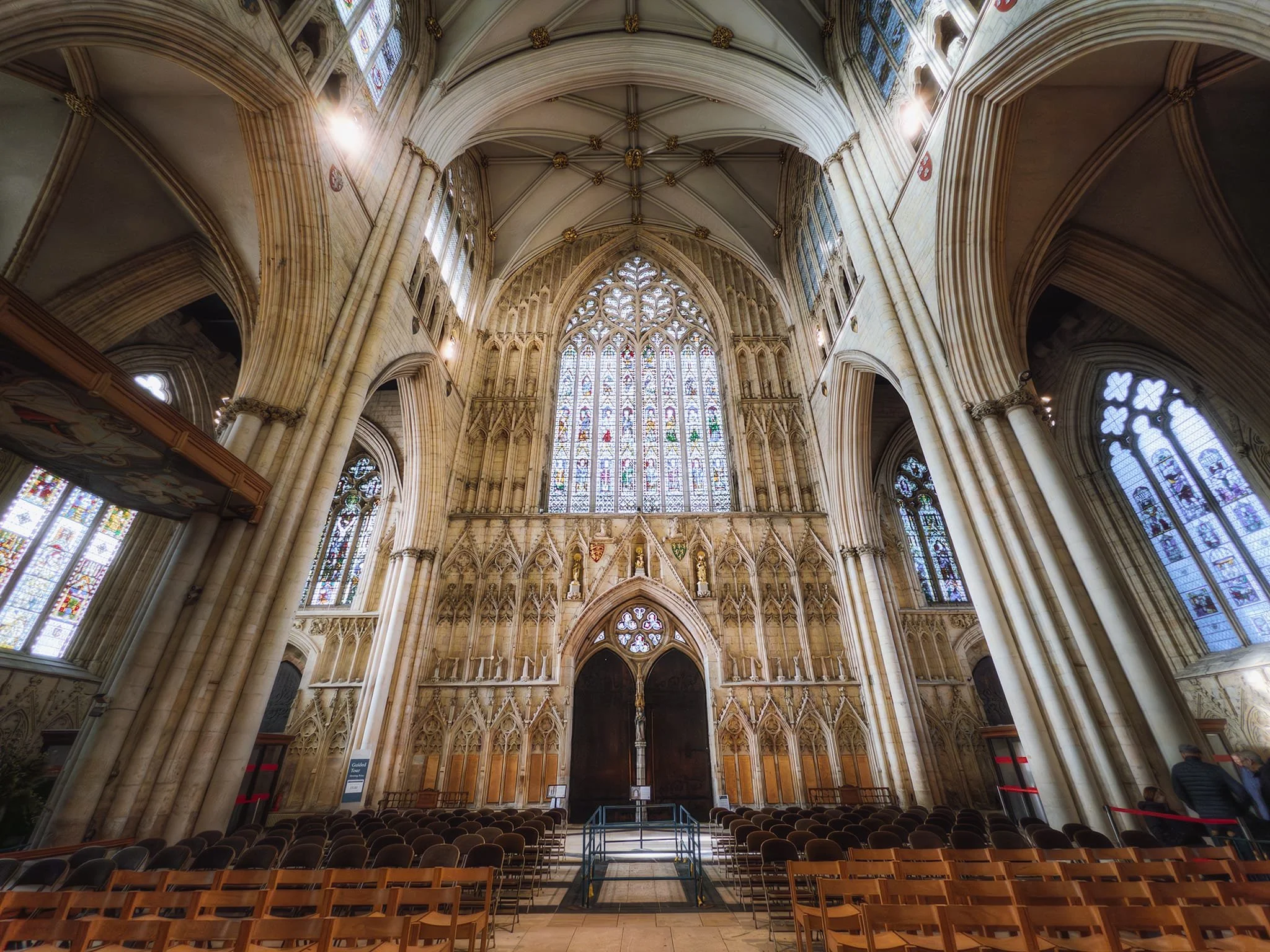
Looking towards the West Window in the Minster’s main nave. The Great West Window, or ‘Heart of Yorkshire’—the church’s second-largest of 128 windows—was built by master mason Ivo de Raghton in 1338–39 as part of the west front.
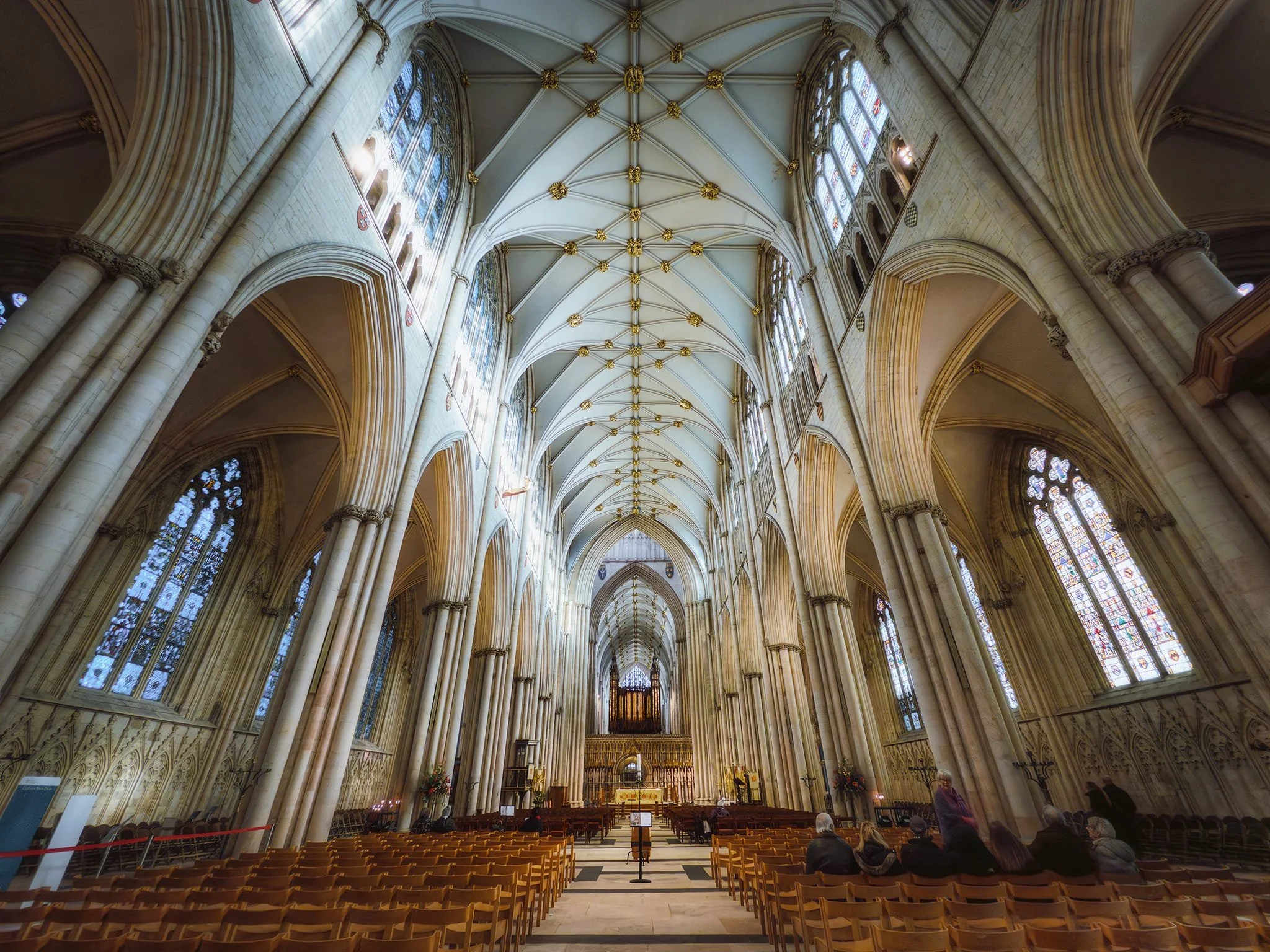
Looking all the way down York Minster’s nave. Built between 1291 and c. 1350 in the Decorated Gothic style, the nave is England’s widest Gothic nave, featuring a wooden roof painted to resemble stone and stone-vaulted aisles.
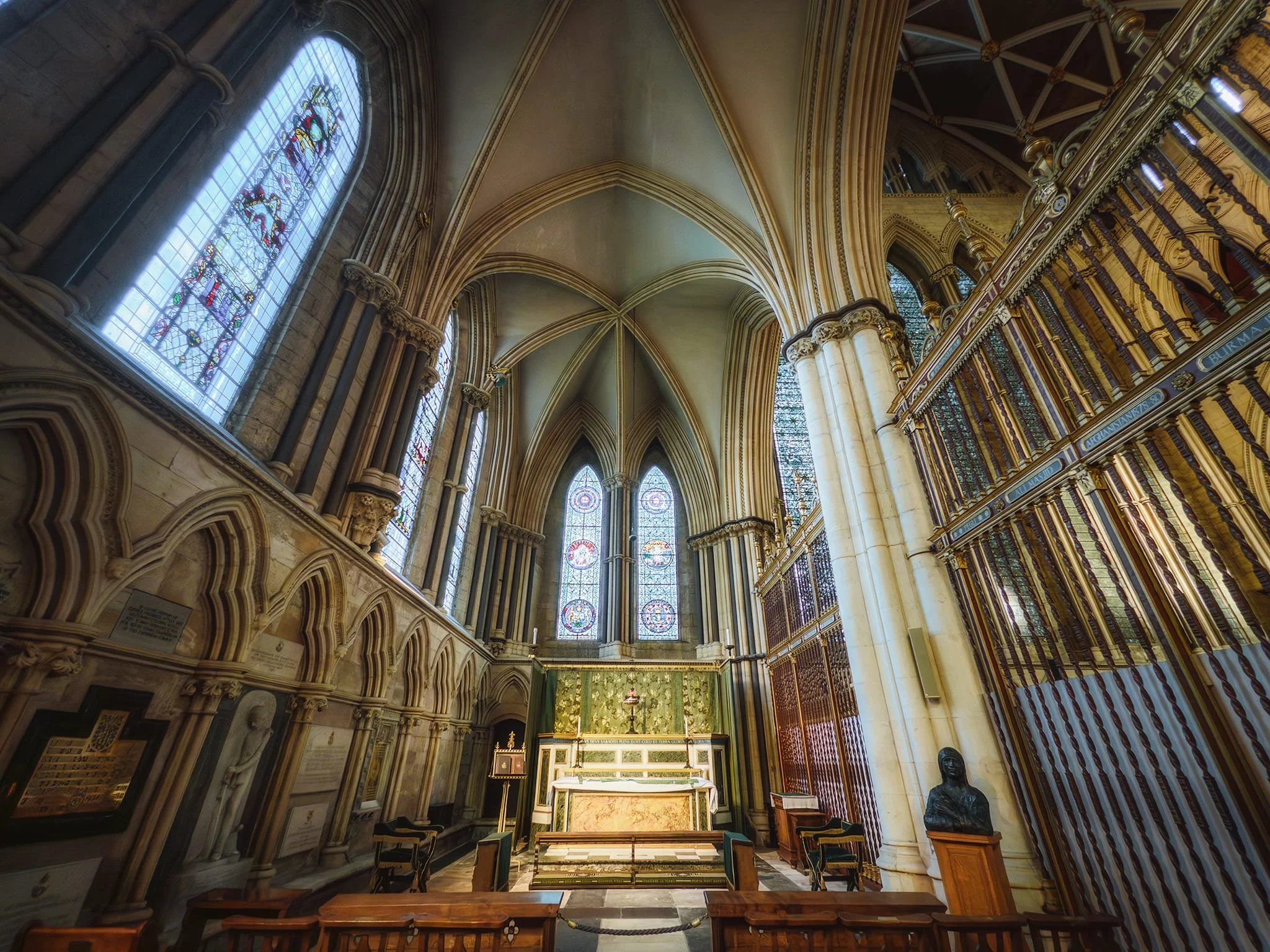
The Chapel of St John the Apostle and Evangelist serves as the King’s Own Yorkshire Light Infantry Memorial Chapel, with 14th-century stained glass from St. John’s, Micklegate, commemorating the regiment’s fallen in World War II (1939–1945).
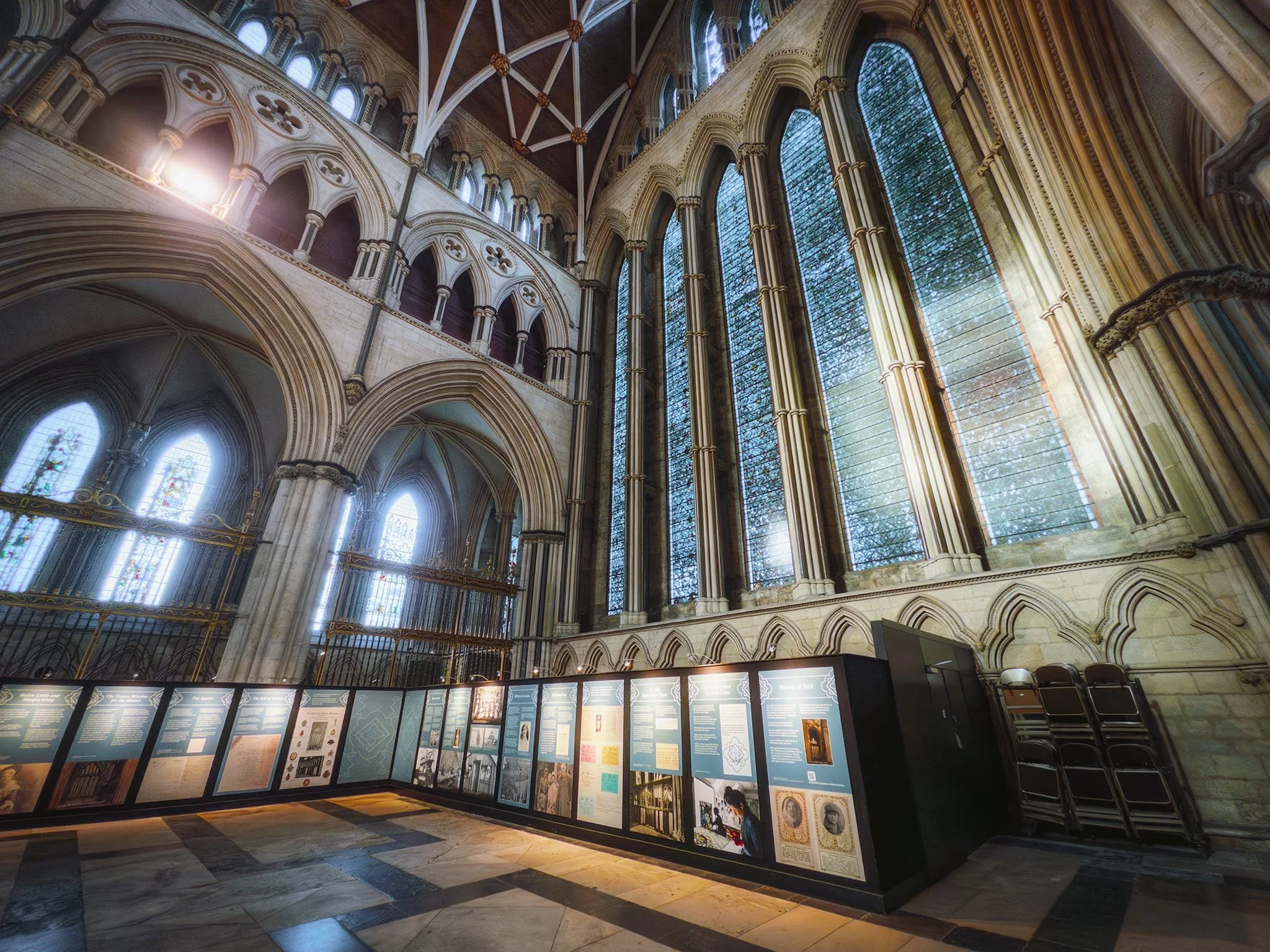
Built c.1250–1260 in the north transept, the Five Sisters window contains the world’s largest expanse of 13th-century grisaille glass and holds the Guinness record as the British Isles’ largest ancient stained-glass window. Restored 1923–1925, it is the UK’s only memorial to women of the British Empire killed in WWI line of duty.
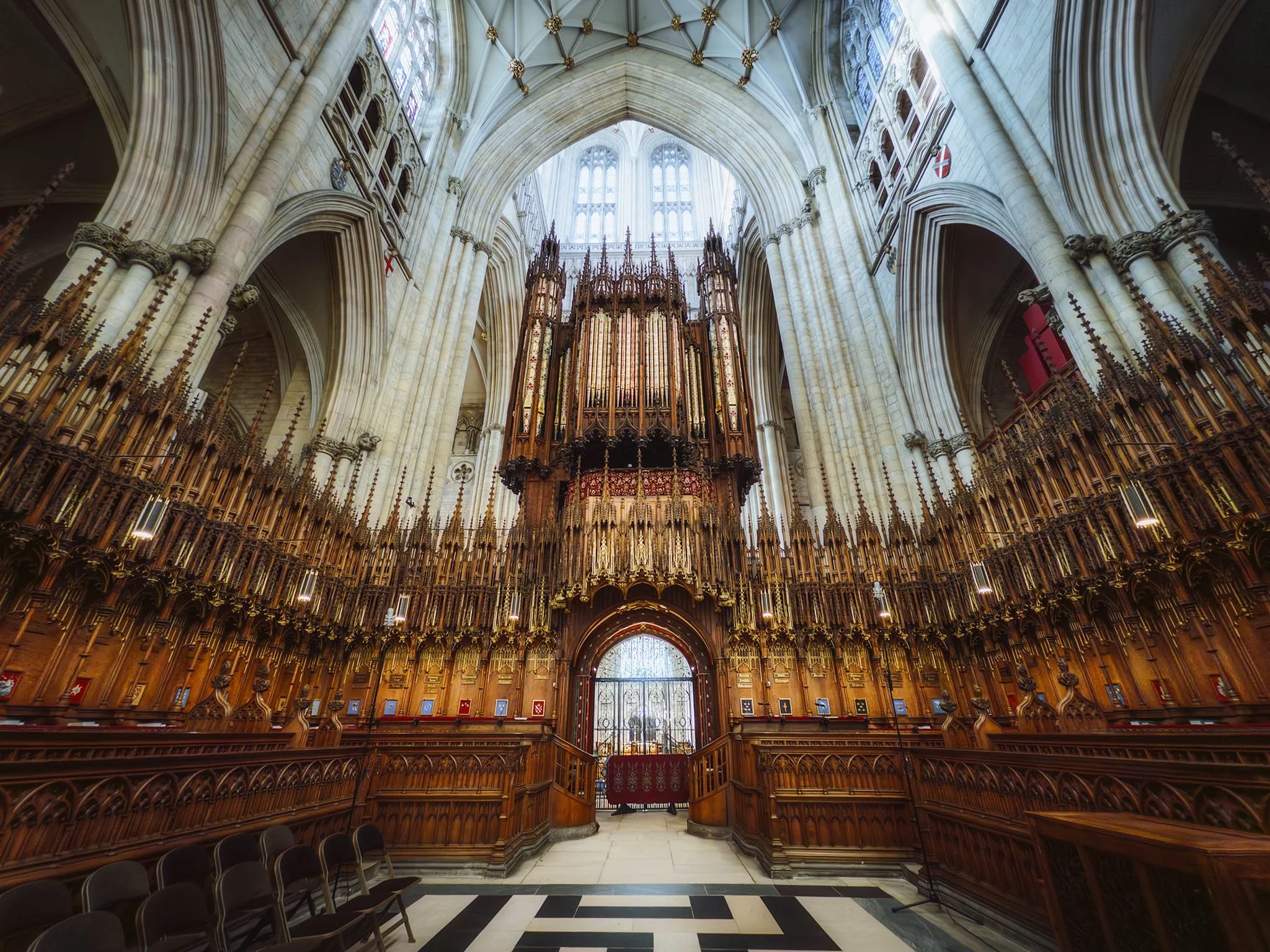
York Minster’s magnificent organ in the Quire. The organ dates to 1632 when Charles I funded its construction, moving from the choir’s north side to the screen in 1690. Described in 1730 as an elaborate instrument painted with the 150th Psalm, it was expanded by John Camidge into Britain’s largest before the 1829 fire destroyed it. Elliot and Hill built an 8,000-pipe replacement in 1832—then the world’s biggest—which was rebuilt in 1859 and 1903. It was modernided in 1918 and 1931, then more neo-classical elements added in 1960. Damaged in the 1984 fire, it was restored in 1991–1993 and completely refurbished in 2018–2021.
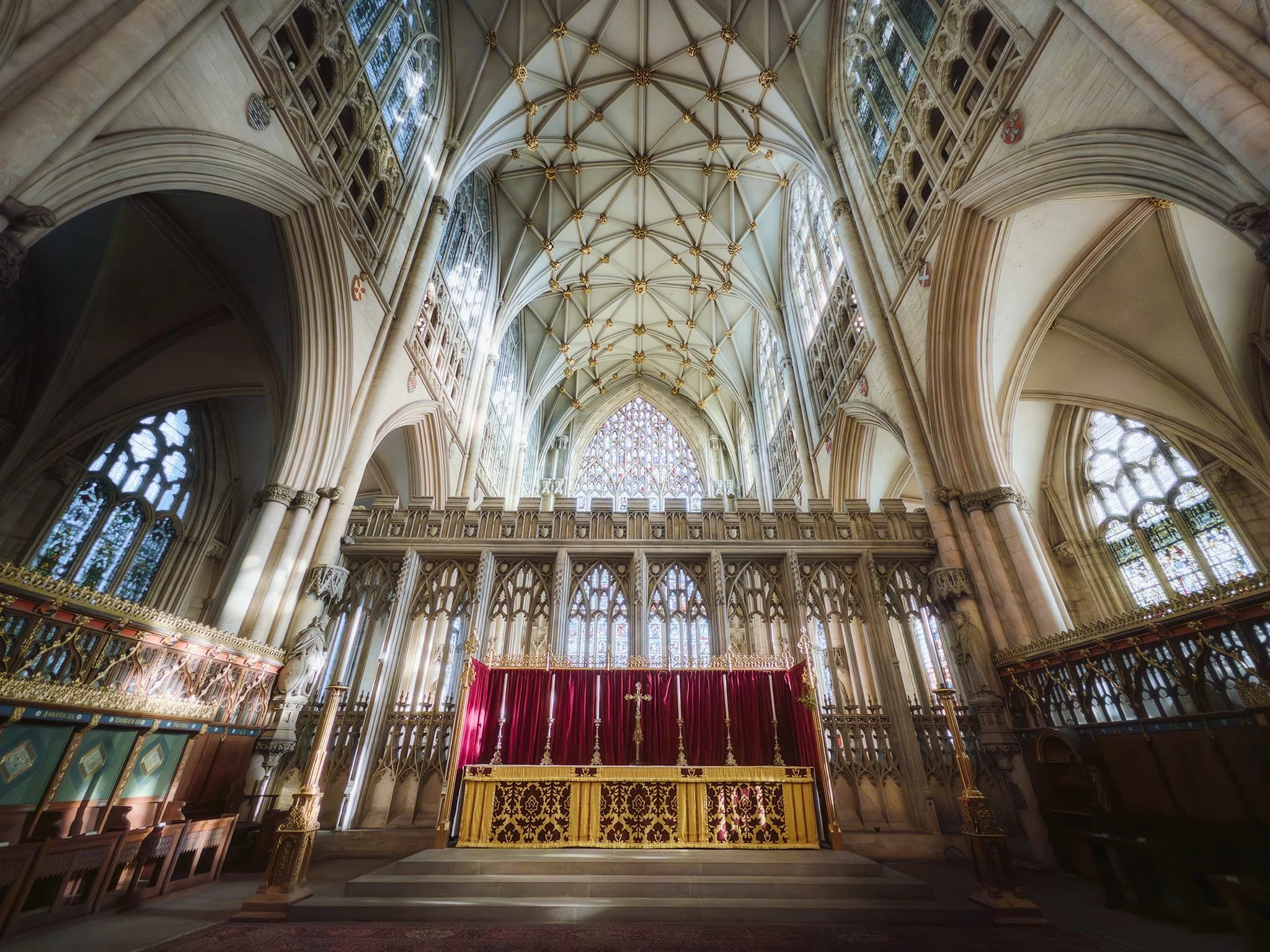
Looking west from the choir towards the ornate choir screen and crossing.
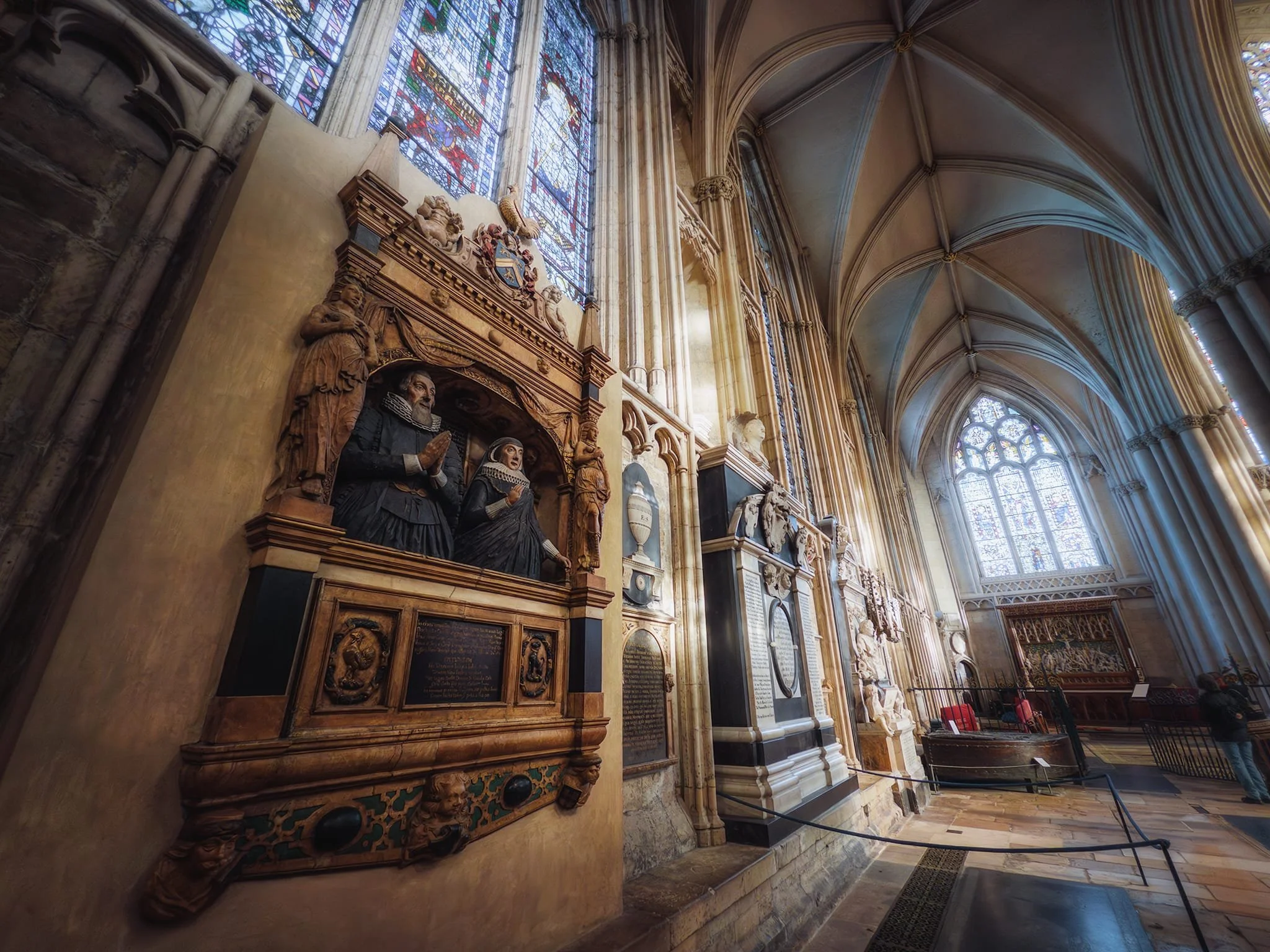
A wall monument to Sir William Ingram (c. 1560–1623) and his wife Catherine Edmonds (1567–1631).
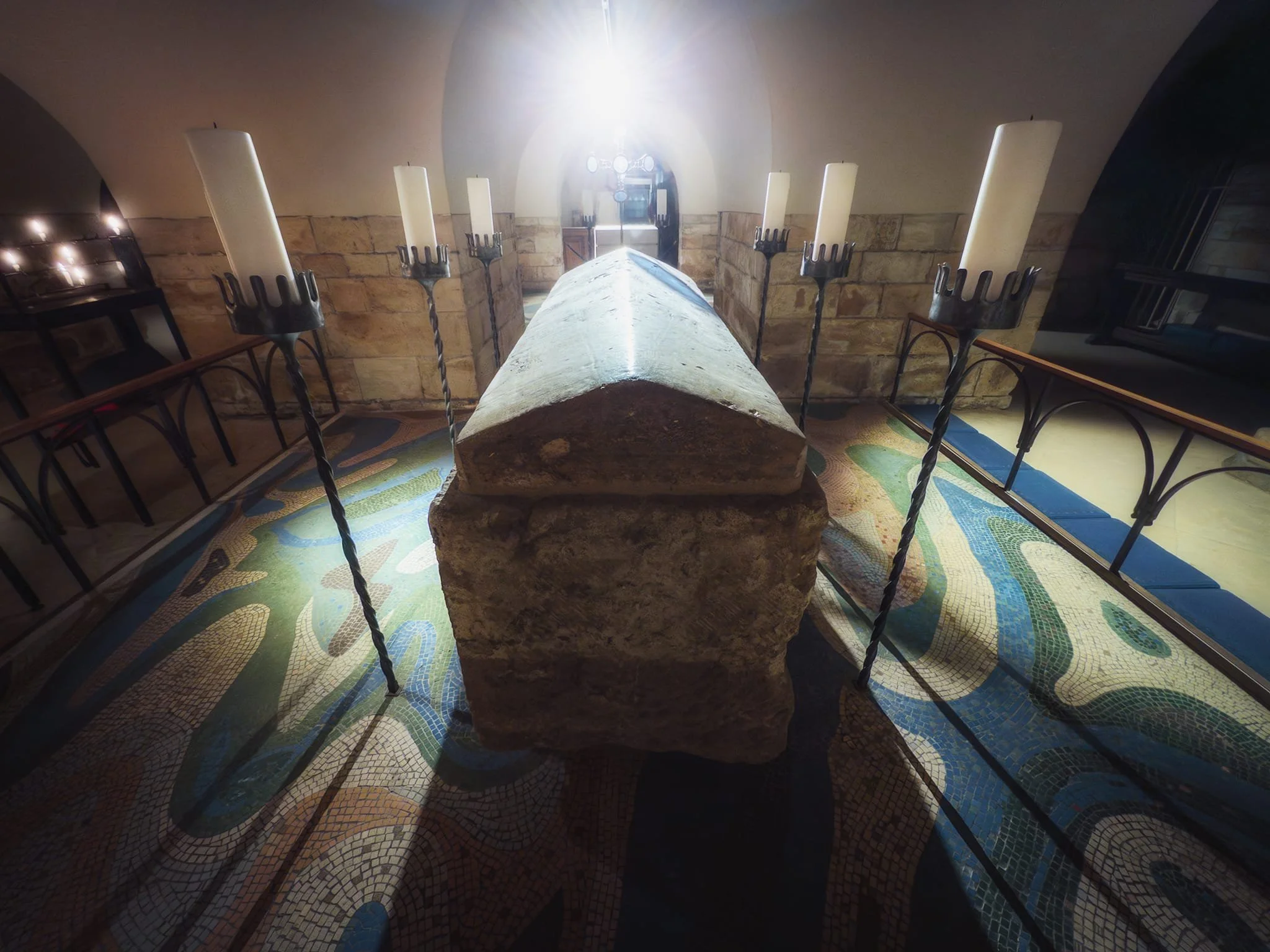
The shrine of St. William, William of York (late 11th century – 8 June 1154). Twice Archbishop of York before and after rival Henry Murdac, he was elected with King Stephen’s help after previous candidates failed papal confirmation. Deposed by the Cistercian Pope Eugene III, he was restored in 1153 following six years’ exile and both rivals’ deaths, only to die within weeks; allegedly poisoned during Mass. Miracles reported from 1177 led to his canonisation in 1226.
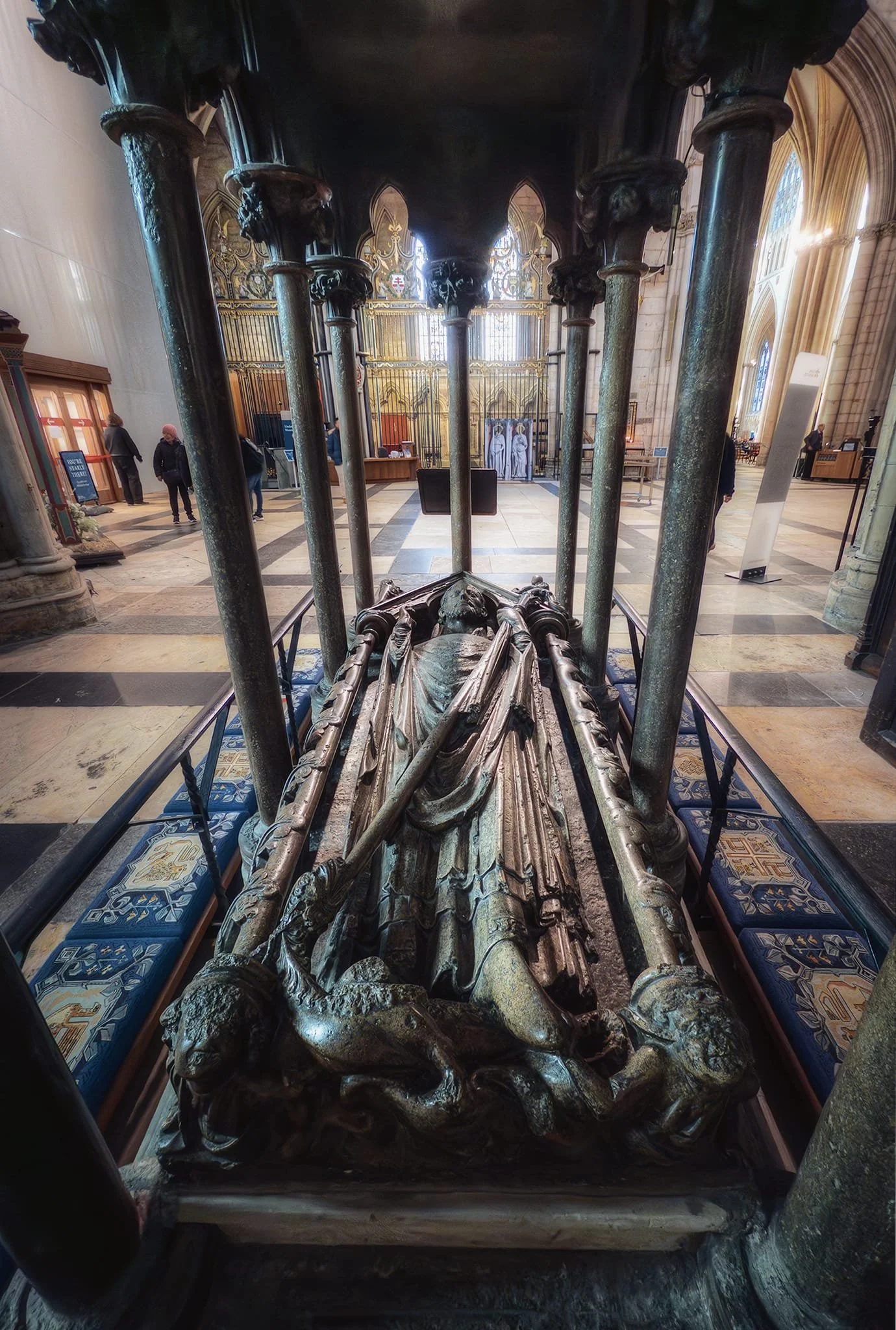
The tomb of Walter de Gray, Archbishop of York from 1215 to 1255 and Lord Chancellor from 1205 to 1214. He was present at the signing of Magna Carta in 1215.
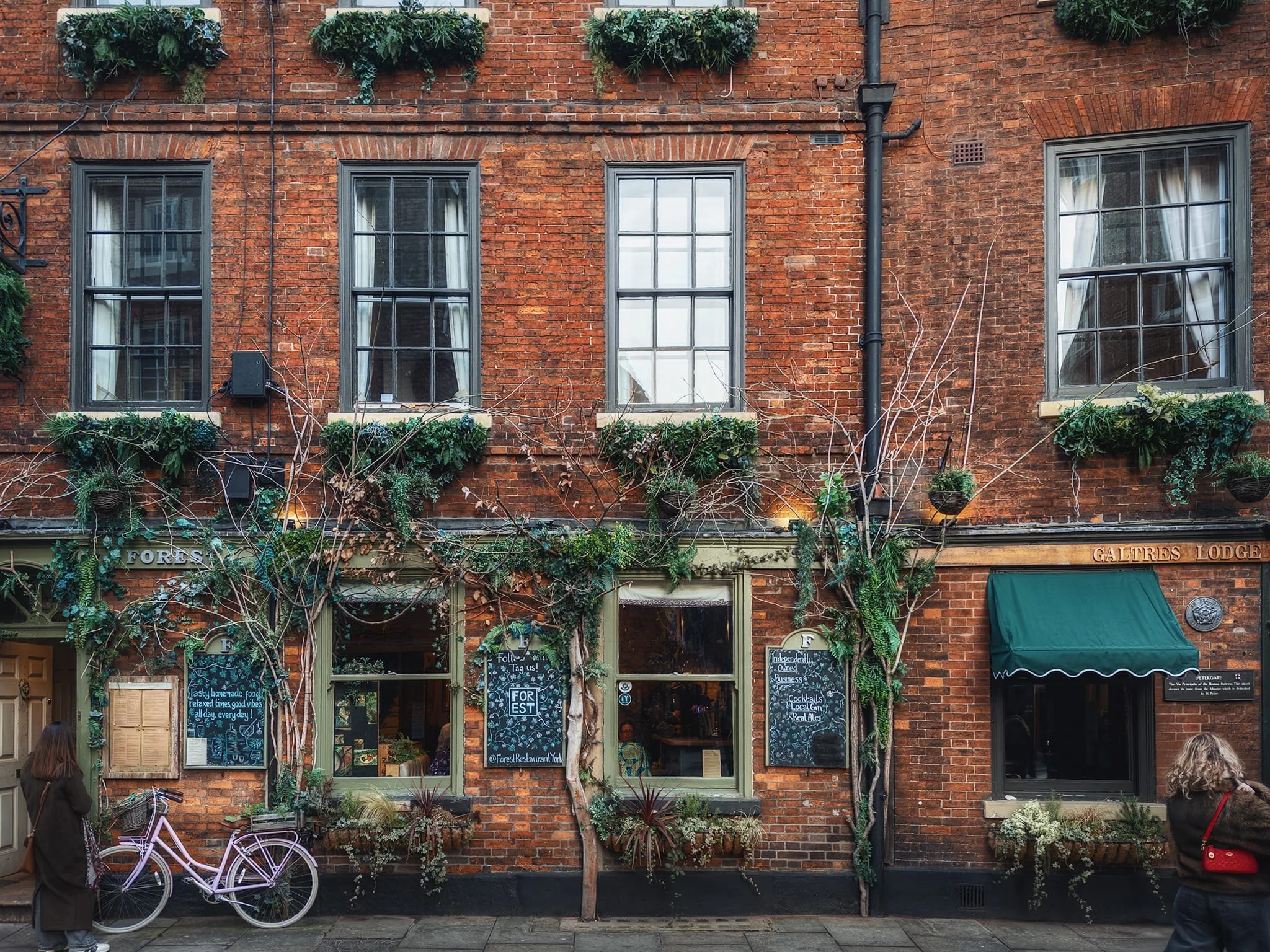
Back outside, Lisabet and I began wandering around the streets of York. This is the beautiful facade of Galtres Lodge Hotel, the building formerly being two Georgian townhouses.
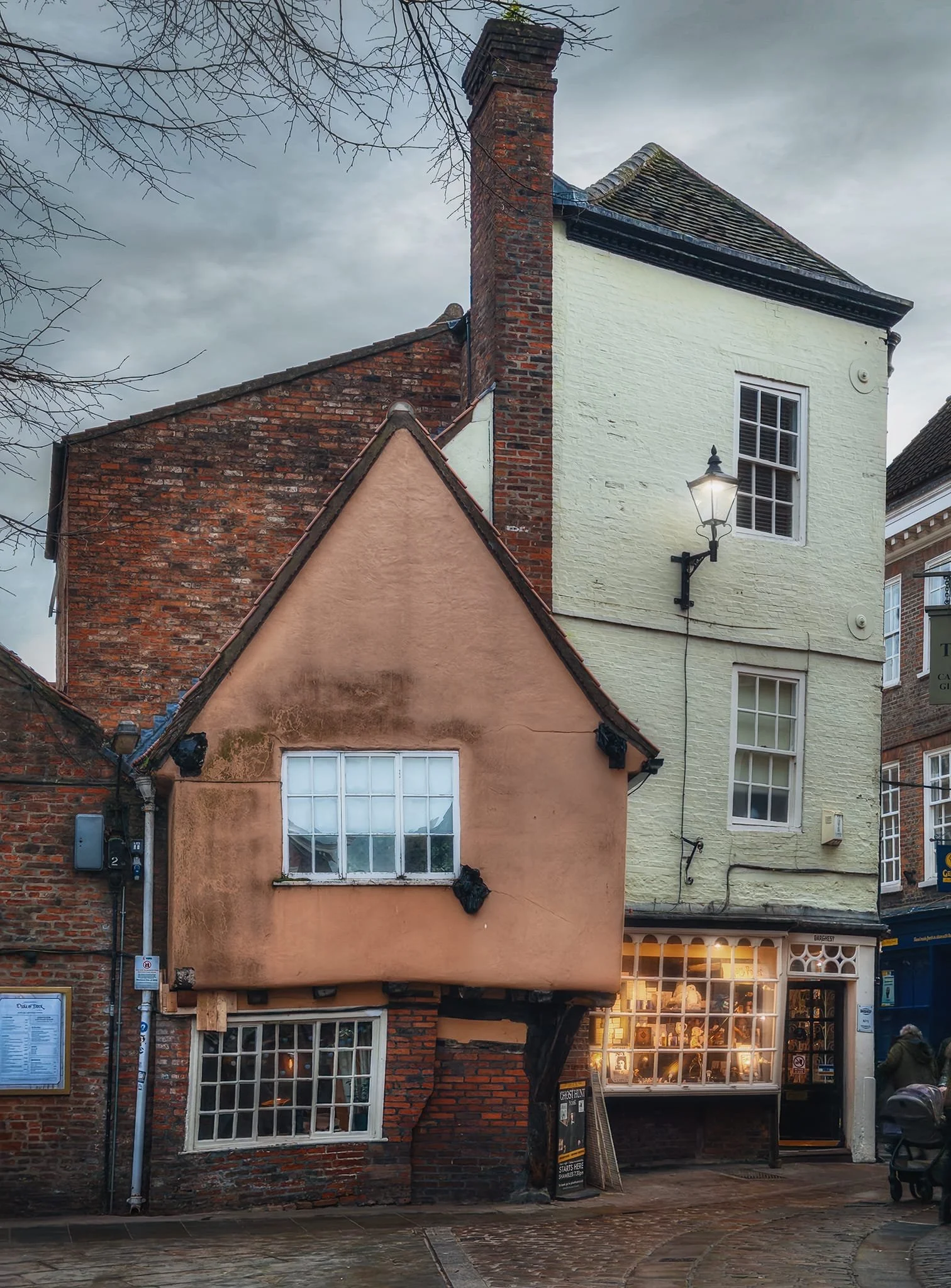
A visit to York is not complete without checking out the Shambles. Its northern entrance is recognisable for this fantastically wobbly building, home to a comedy “Ghost Hunt”.
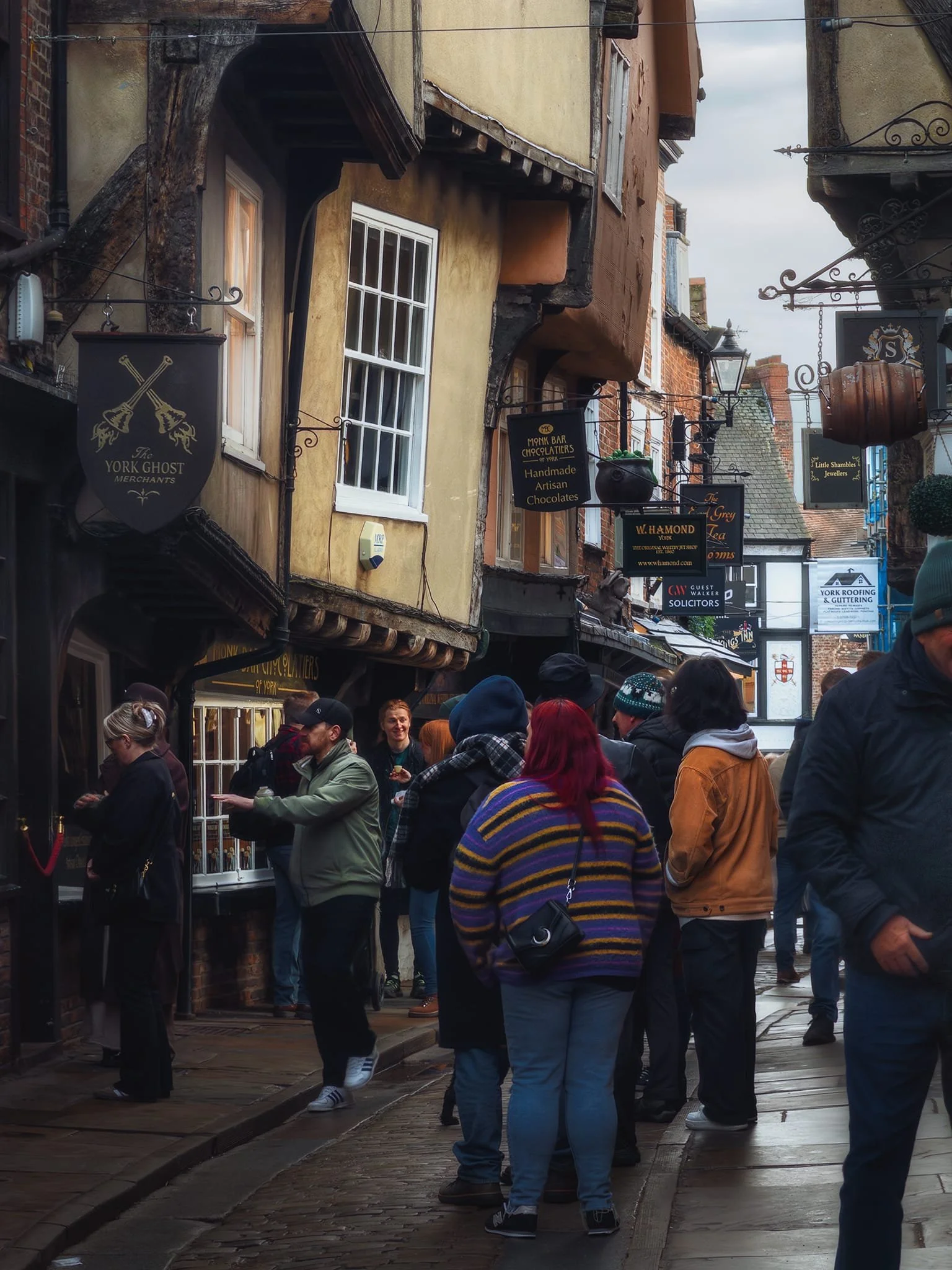
Packed with tourists as ever. The Shambles is one of Britain’s best preserved medieval streets, featuring a cobbled street, timber-framed buildings with overhanging jettied floors.
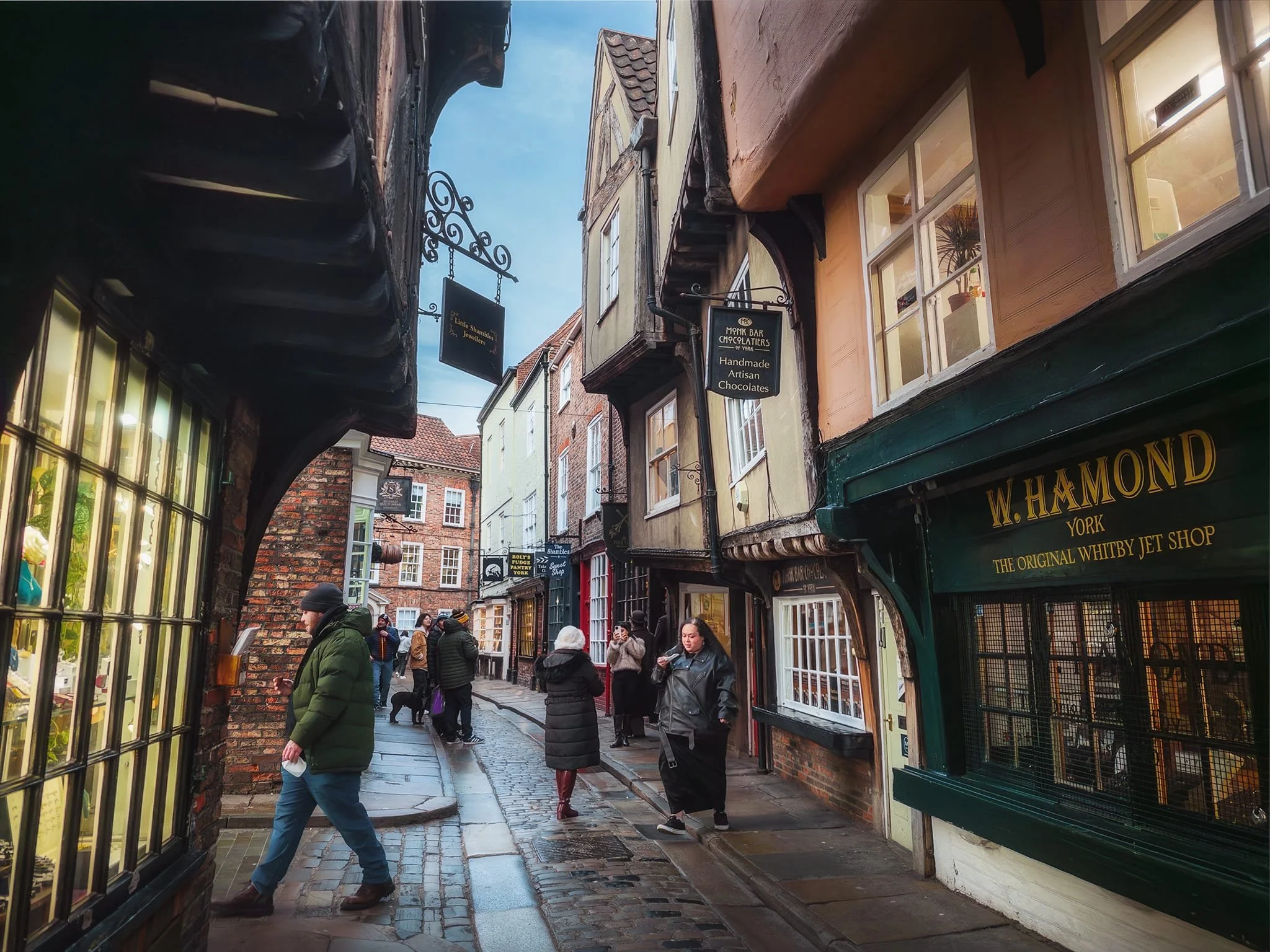
There are many “shambles” in the UK. They were often streets home to lots of butchers. In 1885, thirty-one butchers’ shops were located along the street. Nowadays you’ll instead shops dedicated to Whitby Jet, ghost tours, chocolate and more.
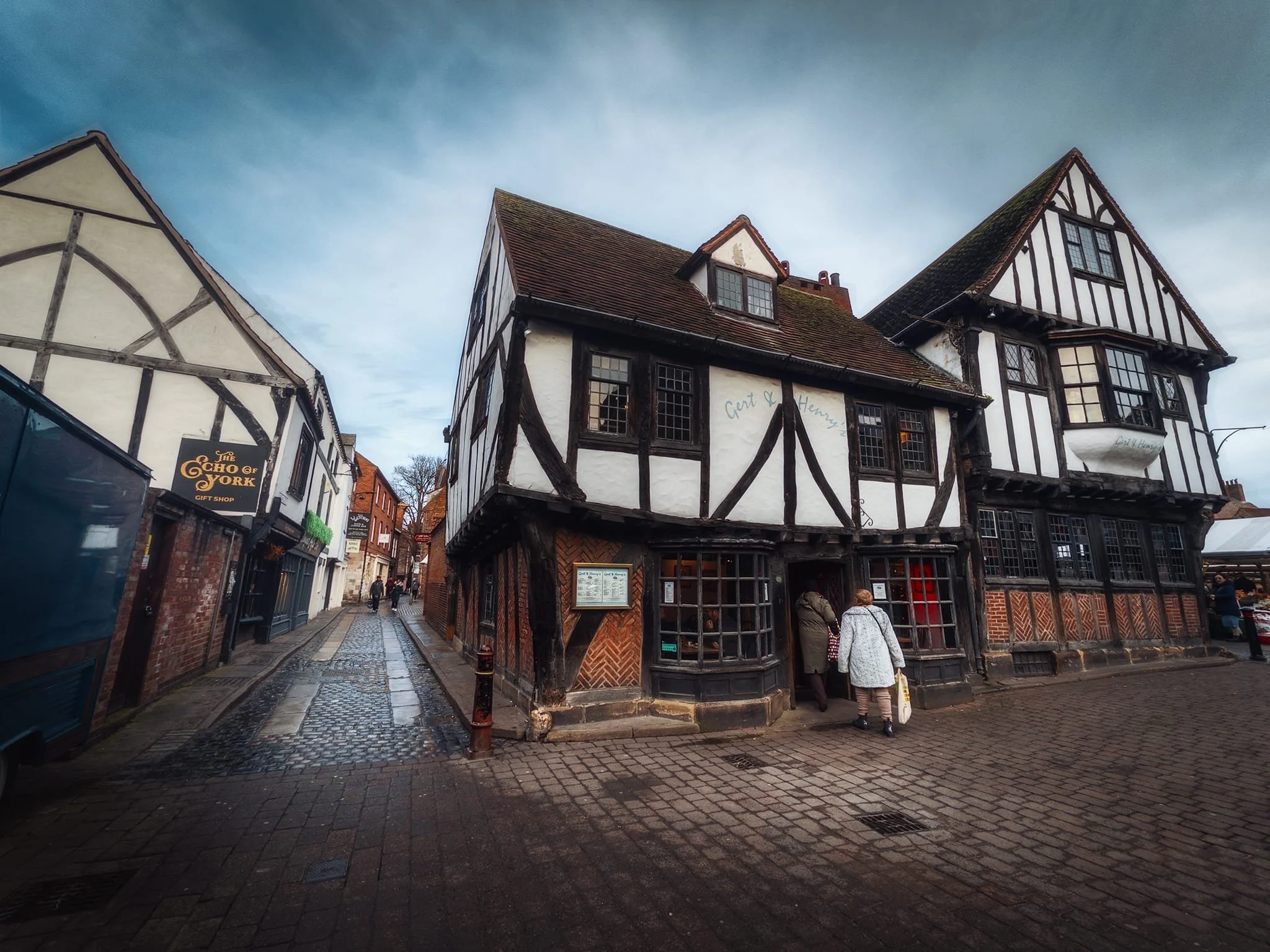
This old lovely building is 2 Jubbergate, originally built in the 1300s. The taller add-on was built in the 1600s. It’s now home to Gert and Henry’s restaurant.
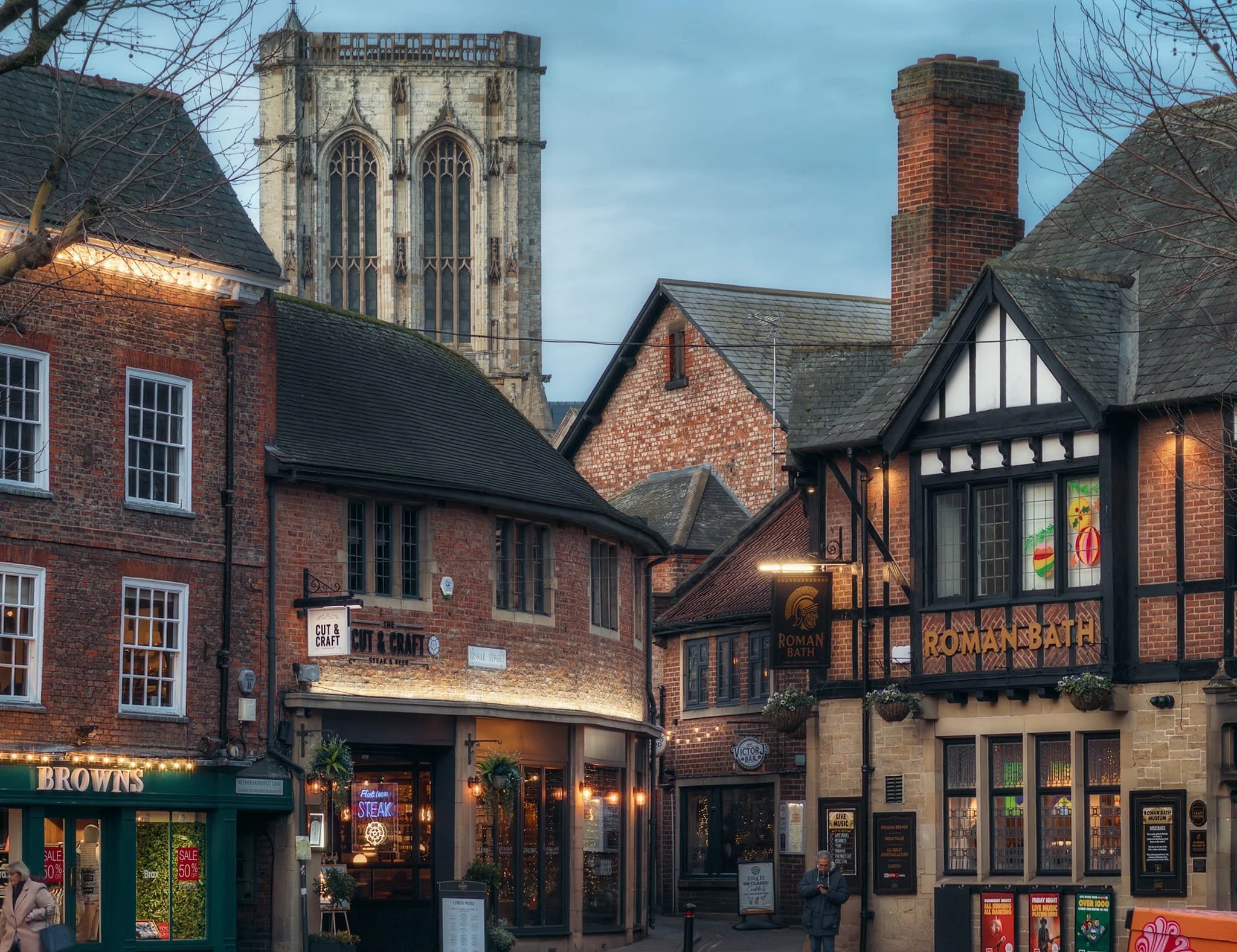
A quiet evening moment in St. Sampson’s Square, looking towards Finkle Street and the Minster. St. Sampson’s Square was historically a main retail space and a market was held here each Thursday. The Roman Bath Pub actually has a small Roman museum in its basement.
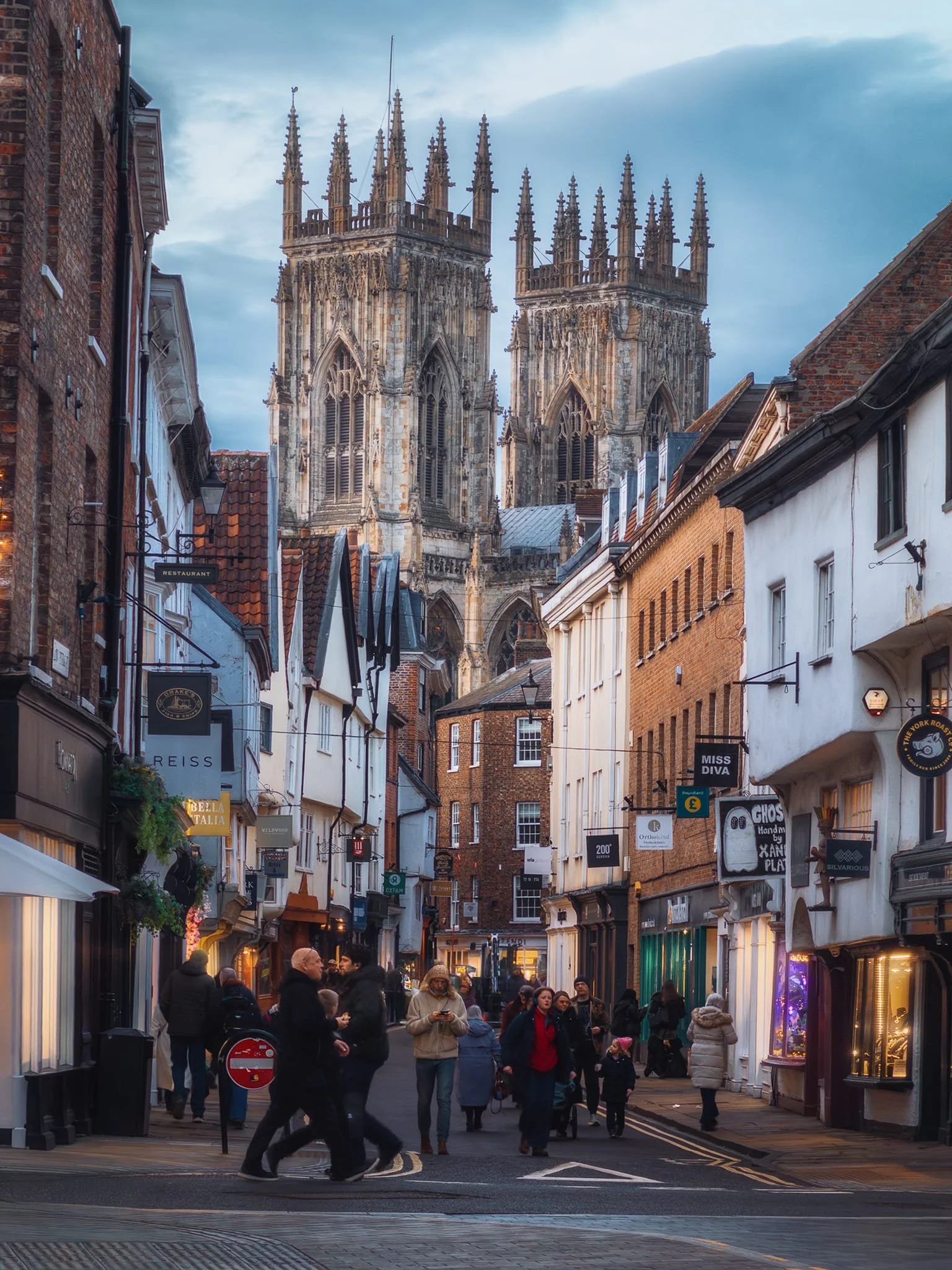
An incredible view, and one of York’s most famous, looking up Low Petergate towards the majestic towers of York Minster.
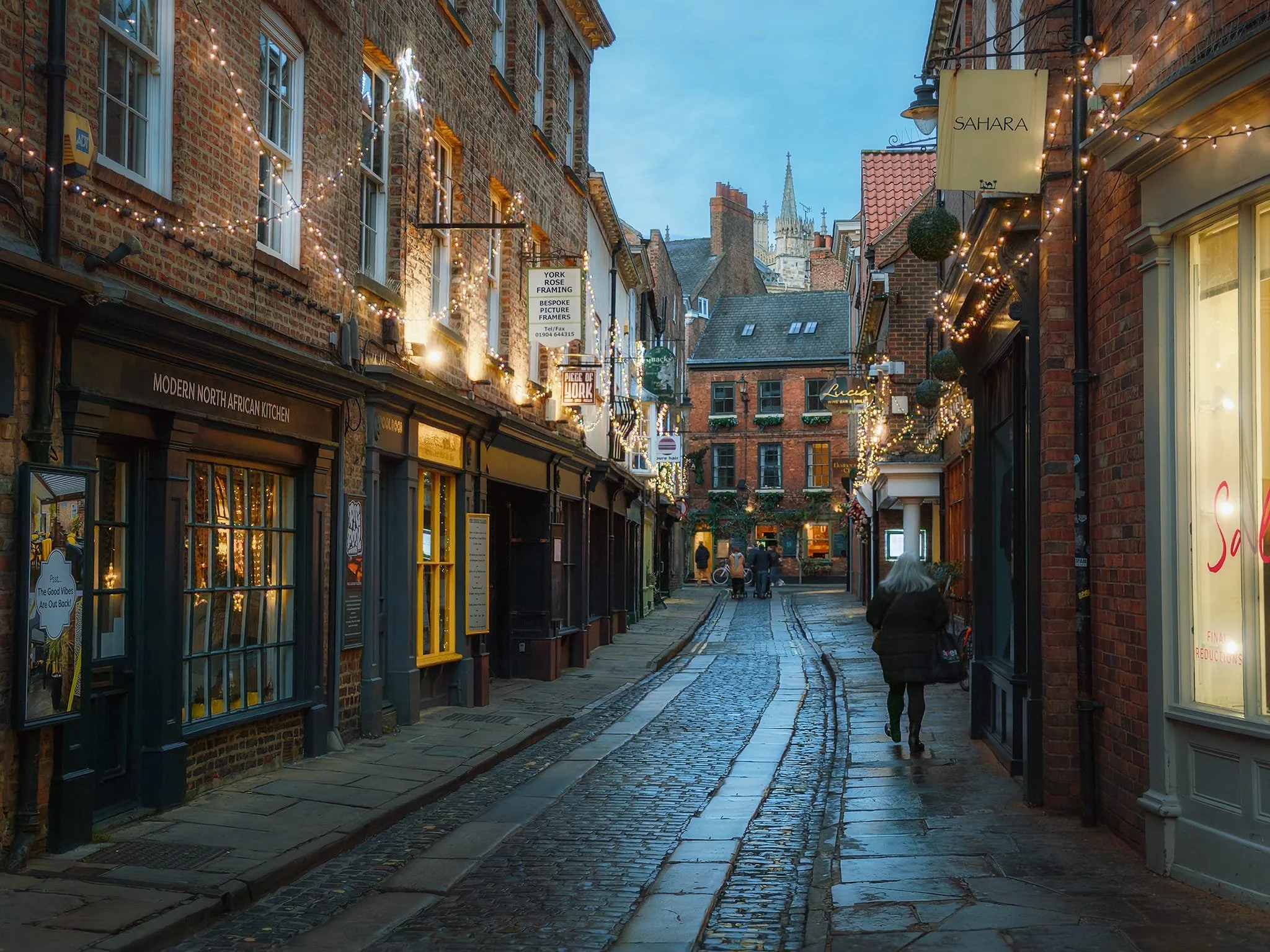
Grape Lane, as the sun set. This street is situated within the city walls of the Roman Eboracum . It was originally named “Grapcunt Lane”, a reference (like other similarly named streets in the UK) to prostitution in the street.
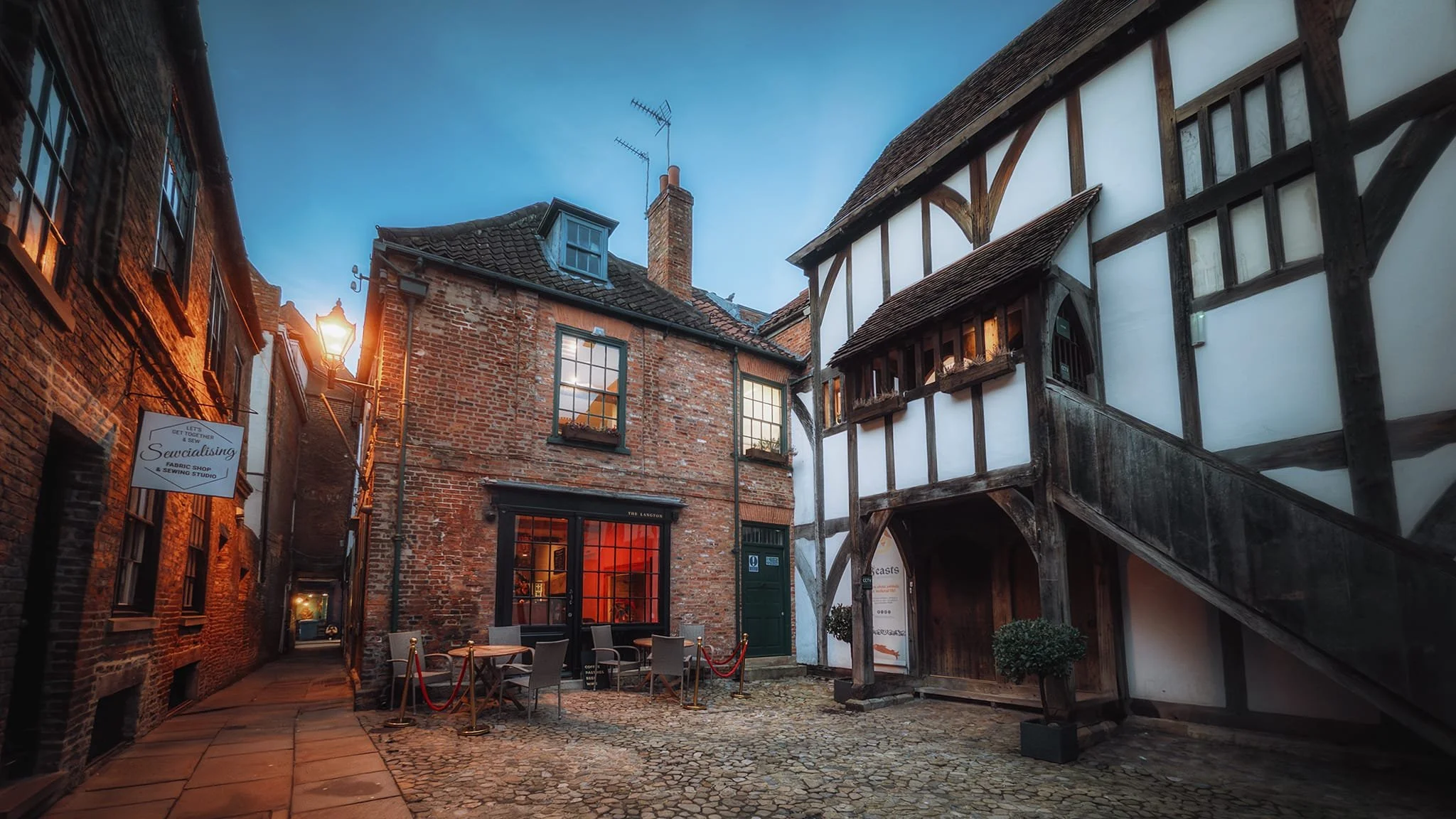
Hidden away down a narrow alley called Coffee Yard between Grape Lane and Stonegate, the timber-framed building is Barley Hall. Built around 1360 by monks of Nostell Priory and extended in the 15th century, the hall fell into decline over the centuries, becoming subdivided and dilapidated by the 20th century. The York Archaeological Trust purchased it in 1987, restored it extensively, and reopened it as Barley Hall museum.
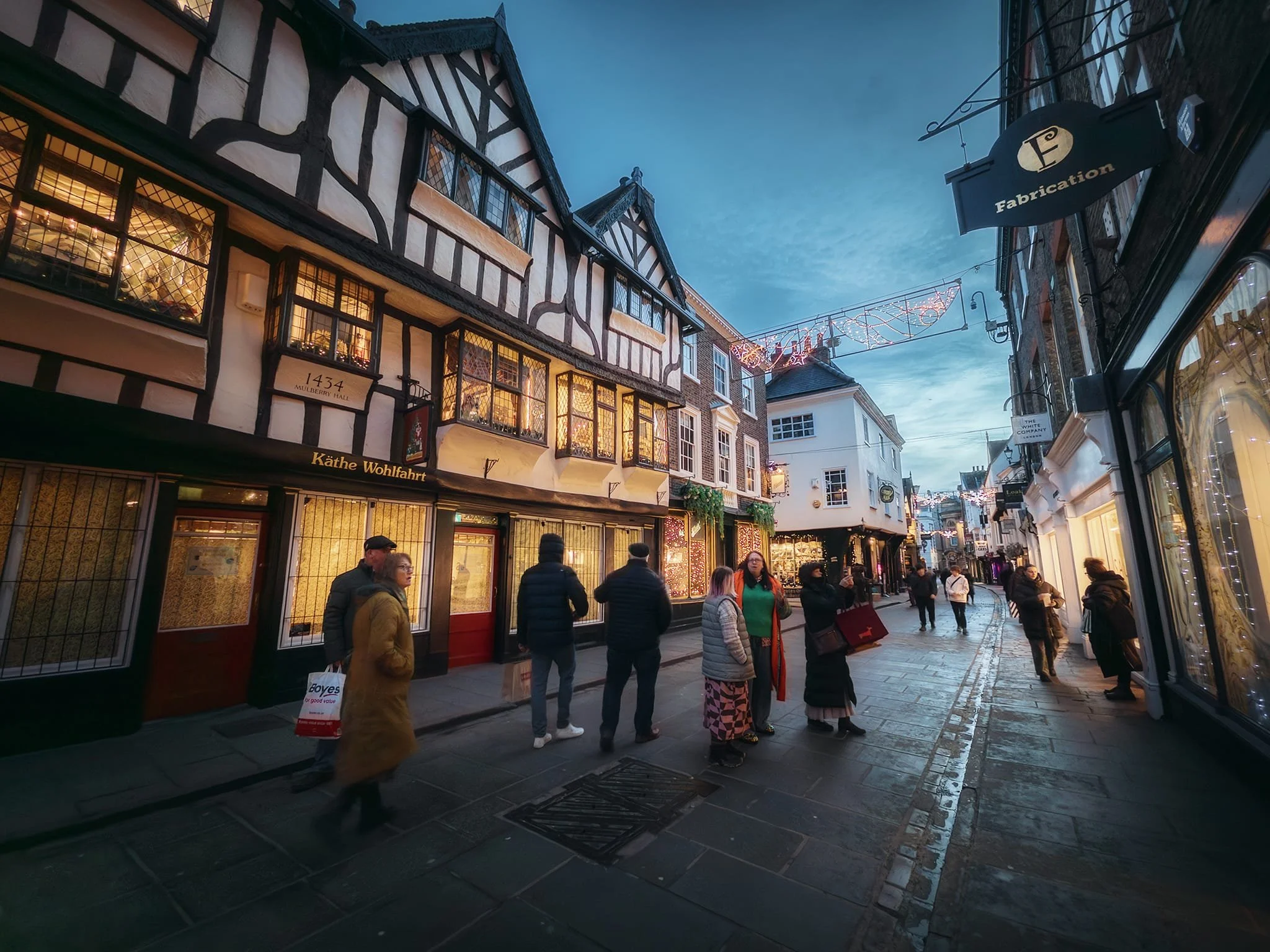
Wandering happily down Stonegate, another beauty of a building catches my eye. This is Mulberry Hall, dating back to 1434, which now houses the Käthe Wohlfahrt Christmas shop.
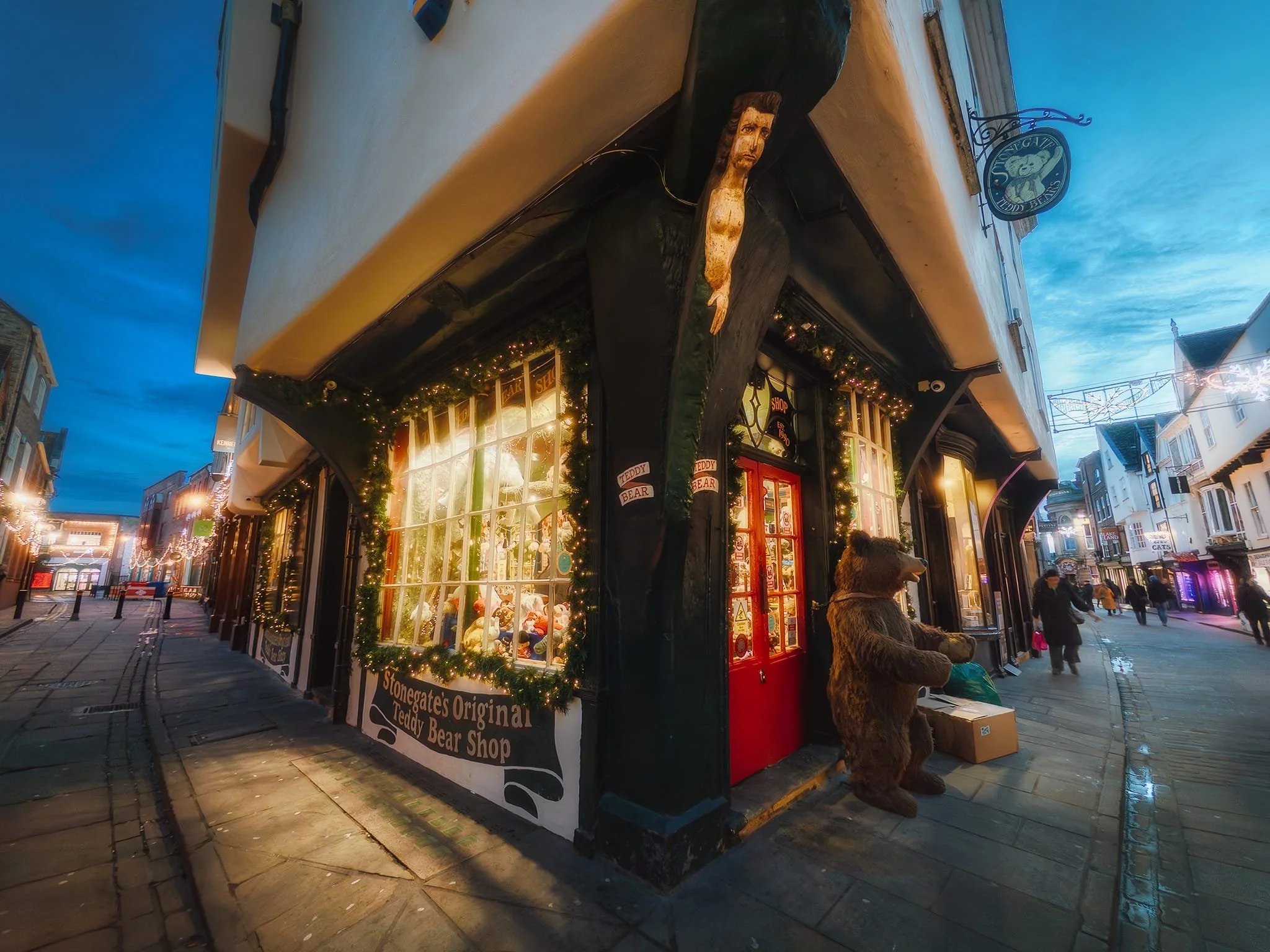
Stonegate’s Original Teddy Bear Shop . The shop is housed in a crooked 15th-century timber-framed building, additionally featuring a 17th-century corner post carving of a mermaid.
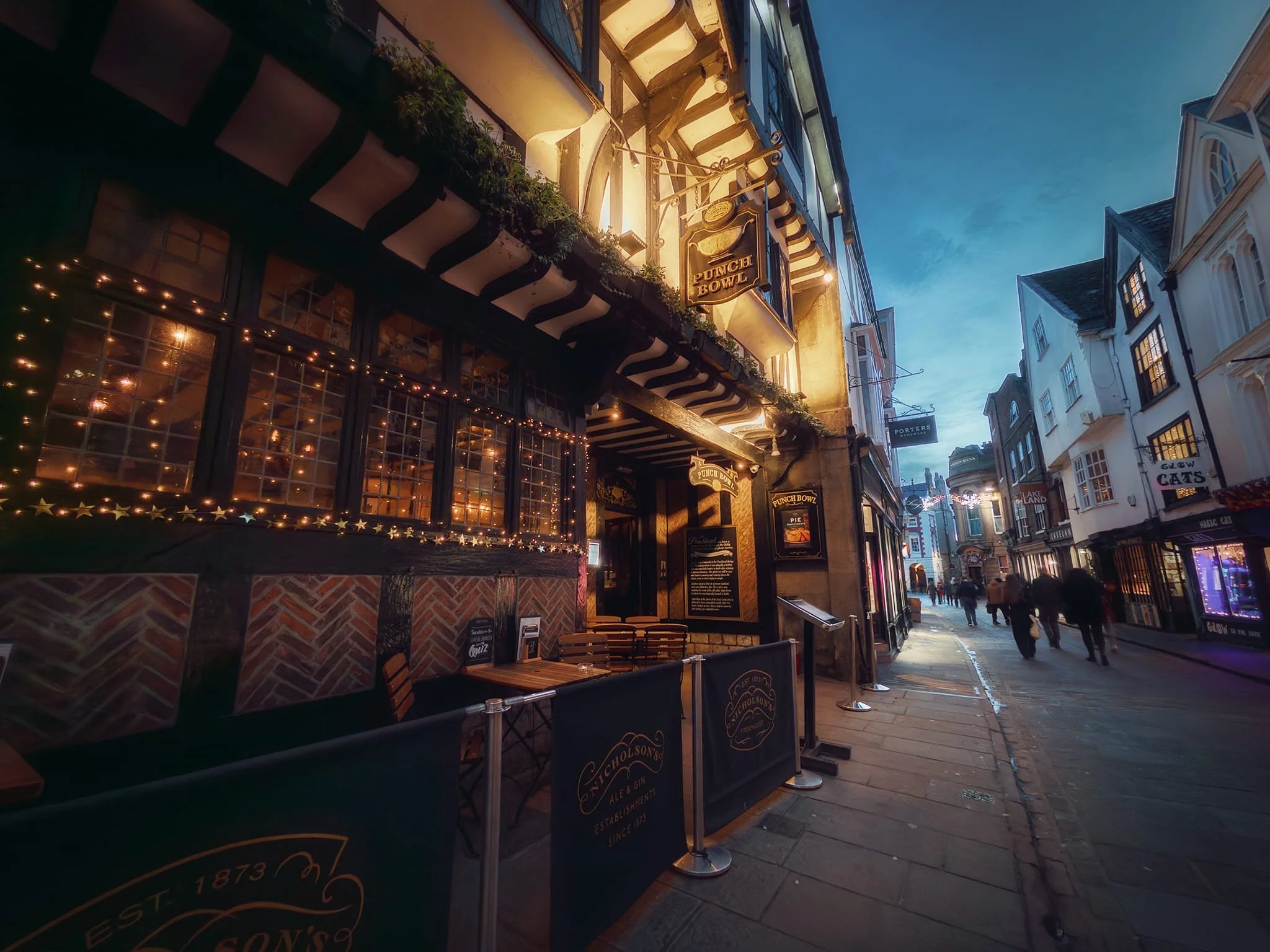
Further down Stonegate is the Punch Bowl , housed in a 17th-century building that’s previously been a coffeehouse, a coaching inn, a gentlemen’s club, and a Masonic lodge.
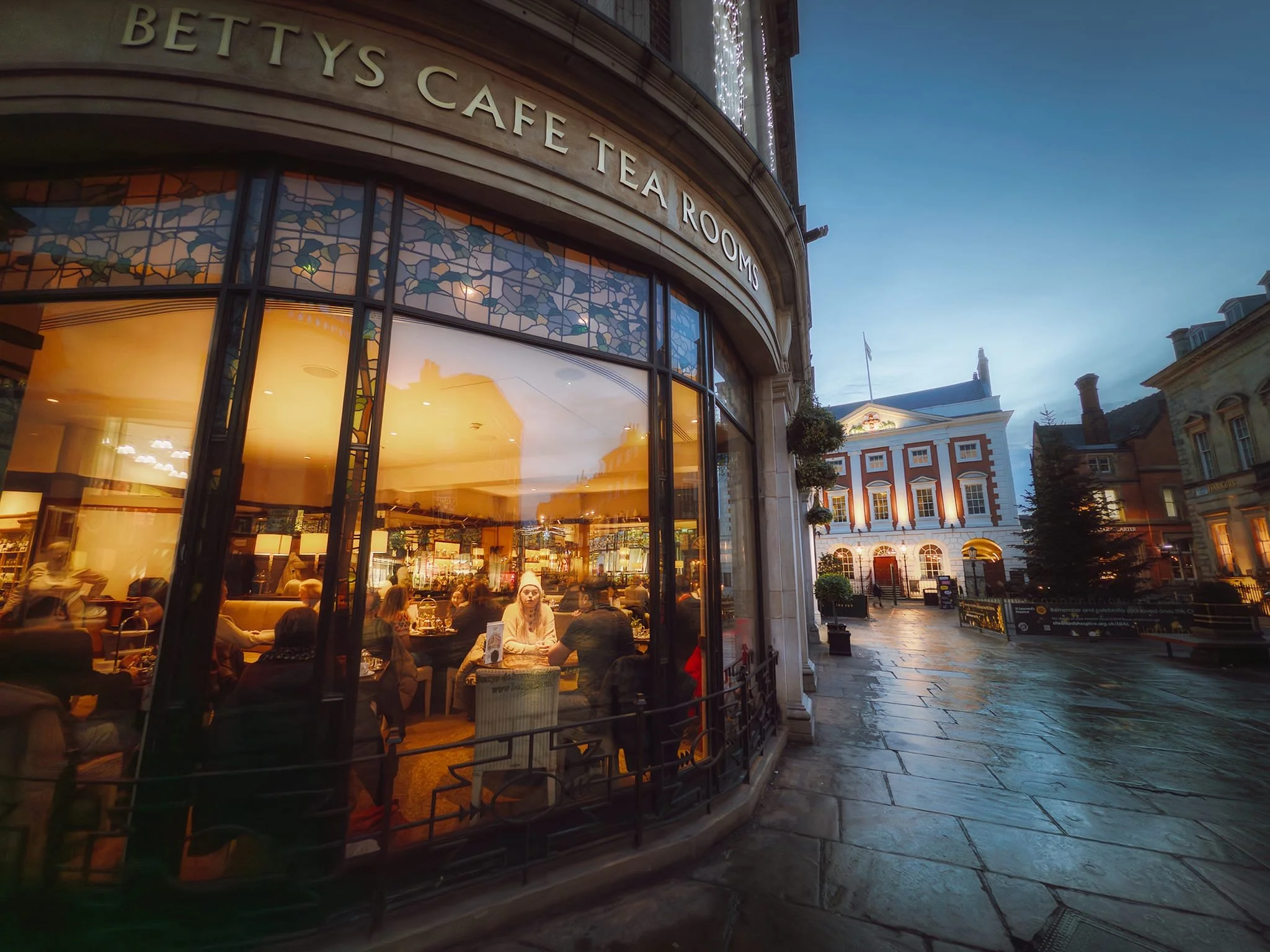
Betty’s Tea Rooms. You can’t get more Yorkshire than that.